
Indian cormorant
Phalacrocorax fuscicollis
A dark fish-eating bird of rivers, wetlands and mangroves. No sighting is ever a promise, but it often fishes where there is calm water.
Least Concern (IUCN; the assessment year was not shown in the sources I could open) means it is not close to being threatened at present.
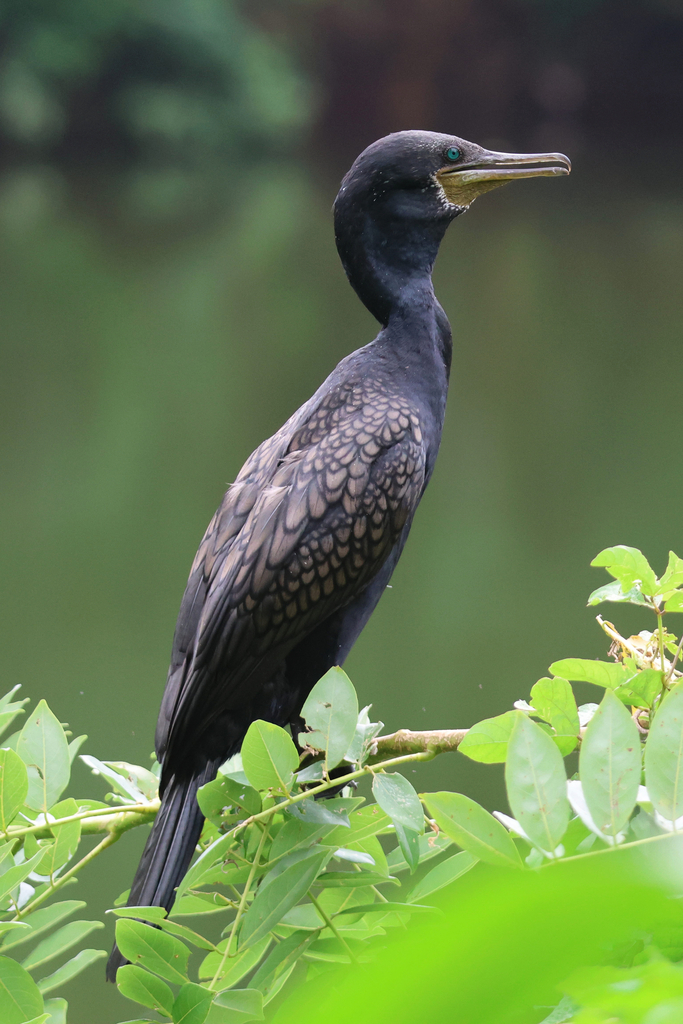
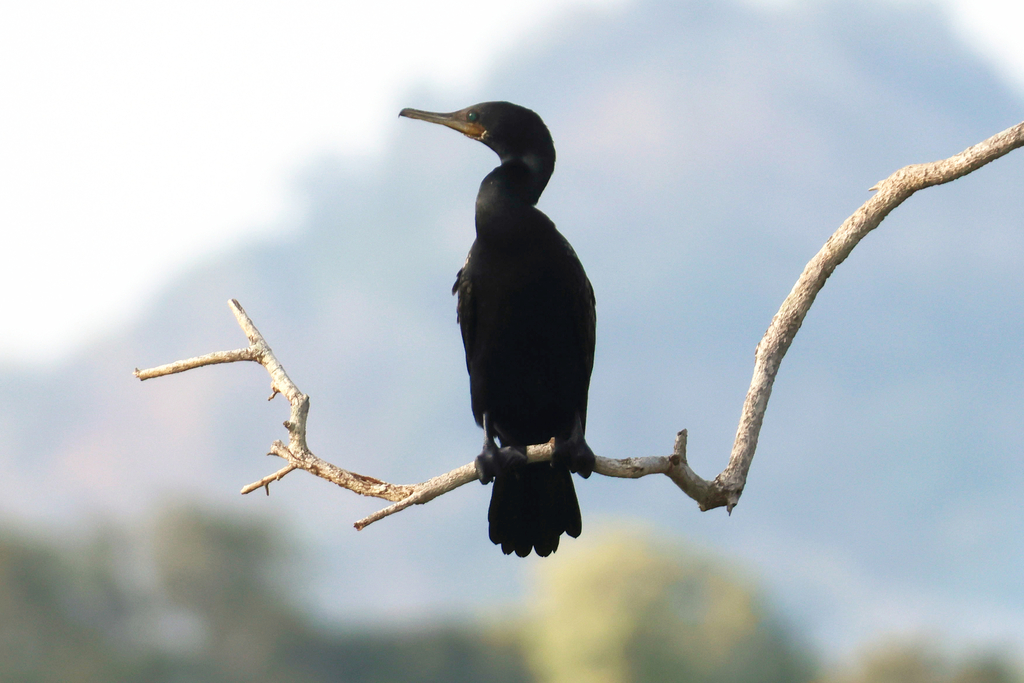
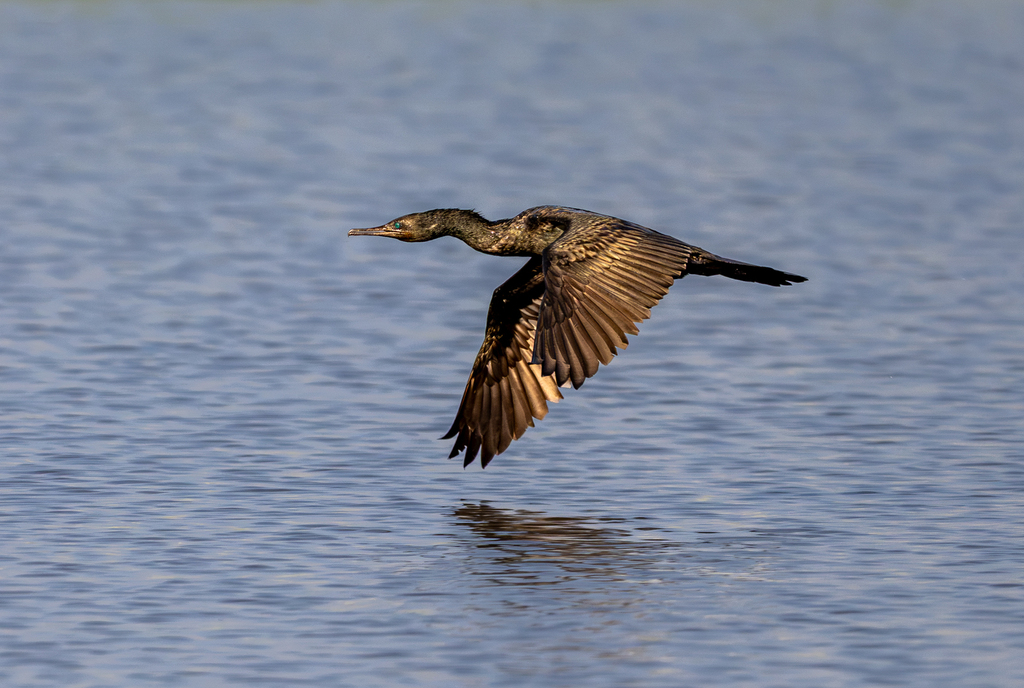
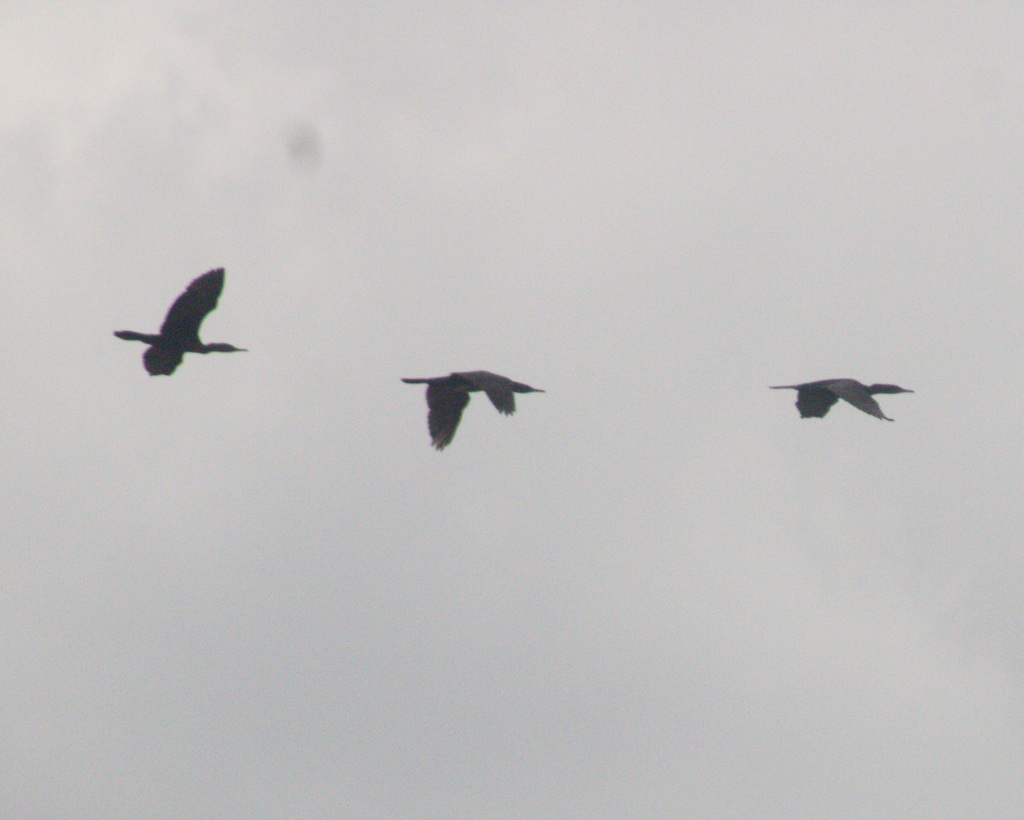
Photos show the species, not always the places on this page.
Length
Medium-sized, about the same as a little cormorant. I could not confirm a total length in the sources I read
Weight
Not given in the sources I read
Next to a person
A medium-sized waterbird, much smaller than a person is tall
What it eats
Fish. It makes short dives, and groups often fish together, forming a broad front to drive fish into a corner.
Around people
Shy, watch from afar
How it lives
It lives on inland rivers, large wetlands, estuaries and mangroves and is absent from open coasts. It breeds in mixed colonies with other waterbirds, on twig platforms in the forks of partly flooded trees or on island trees, sometimes in several tiers. Clutches are usually 3 to 5 bluish-green eggs. The breeding season runs from July to February, depending on rainfall and water conditions. It can be told from a little cormorant by its blue eye, small head with a sloping forehead and long narrow hooked bill.
Where it goes
The sources I read do not describe a long migration. Breeding time follows rainfall and water levels, so birds probably shift with local conditions. It ranges from Sind in Pakistan across India and Sri Lanka to Thailand and Cambodia.
We only draw a journey on the map when scientists have tracked it or clearly documented it. For this animal we have not found one yet.
Populations
Global: Least Concern (IUCN). The sources I could open give no population estimate, trend or main threats, so I will not guess. It has no recognised subspecies.
Meet it respectfully
Watch from the bank or boat at a calm distance. Colonies nest in trees over water, and noise or approaching boats can disturb eggs and chicks. Never chase, feed or flush birds from a nesting tree. I did not read any local rules, so follow your guide and local rules.
Fun fact
Tap the bulb to light it up.
It has a blue eye, which helps tell it from a little cormorant.
Groups can fish together, forming a broad front to drive fish into a corner.
It nests in dense, tiered colonies, often among storks and other waterbirds.
Indian cormorant in the Ocean Atlas
Places we have researched where this animal is recorded. It is never guaranteed, and some places are for watching from the boat only.
Travel with usComing soonTrusted referralExploringOn pause, story onlyEthics pass
Country colour: pink where we travel, blue where we are exploring or refer, grey for story only.
 Bangladesh
 Cambodia
 India
India Myanmar
 Pakistan
 Sri Lanka
 Thailand
 Vietnam
Sources for this page
- Wikipedia, Indian cormorant
- Cornell Lab, Birds of the World, Indian cormorant
- JungleDragon, Indian cormorant
- WealthyWaste, Indian cormorant
- GBIF, IUCN Red List category, 2026
Facts checked 5 October 2026. Photos: Unsplash licence, or Creative Commons as shown on each photo.
Work in ocean travel?
We are always happy to hear from exceptional local operators, accommodation, conservation organisations and destination experts. If your work fits responsible, small-group ocean travel, we would love to learn more.
Partner with Ocean CallingShop with Ocean Calling
Visit the Ocean Calling storefront on Amazon.
As an Amazon Associate I earn from qualifying purchases. You are not only choosing products that respect the ocean, you are also helping us keep going: paying our local partners fairly and keeping our retreats ethical, sustainable and honestly priced for you. 💗