
Irrawaddy dolphin
Orcaella brevirostris
A shy, round-headed dolphin of Asia's coasts and a few great rivers. We watch quietly from a boat or the bank, and sightings are never promised.
Endangered (IUCN, 2017) means it is at very high risk of extinction in the wild. Five river and bay populations, for example in the Mekong and Malampaya Sound, are Critically Endangered.
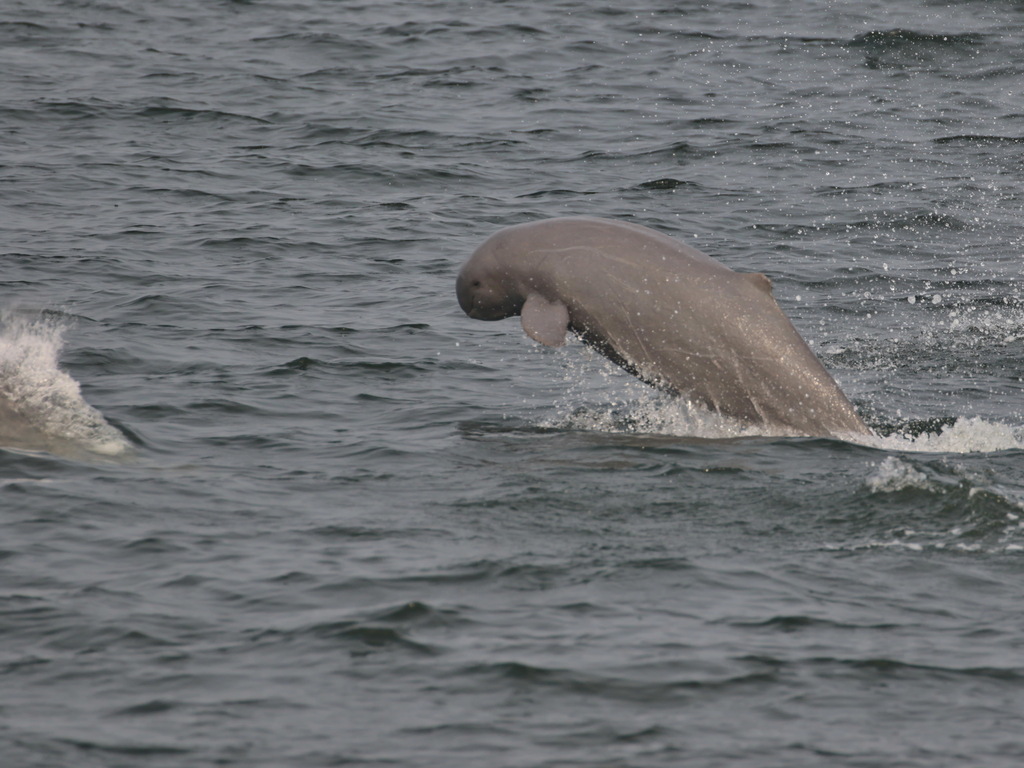
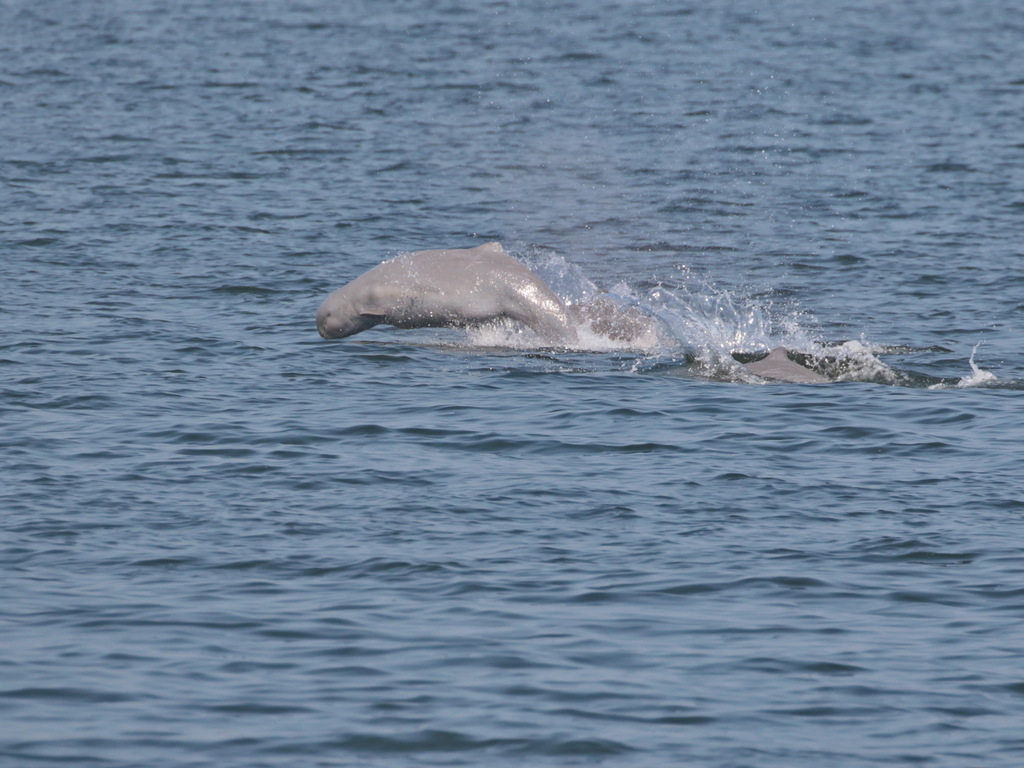
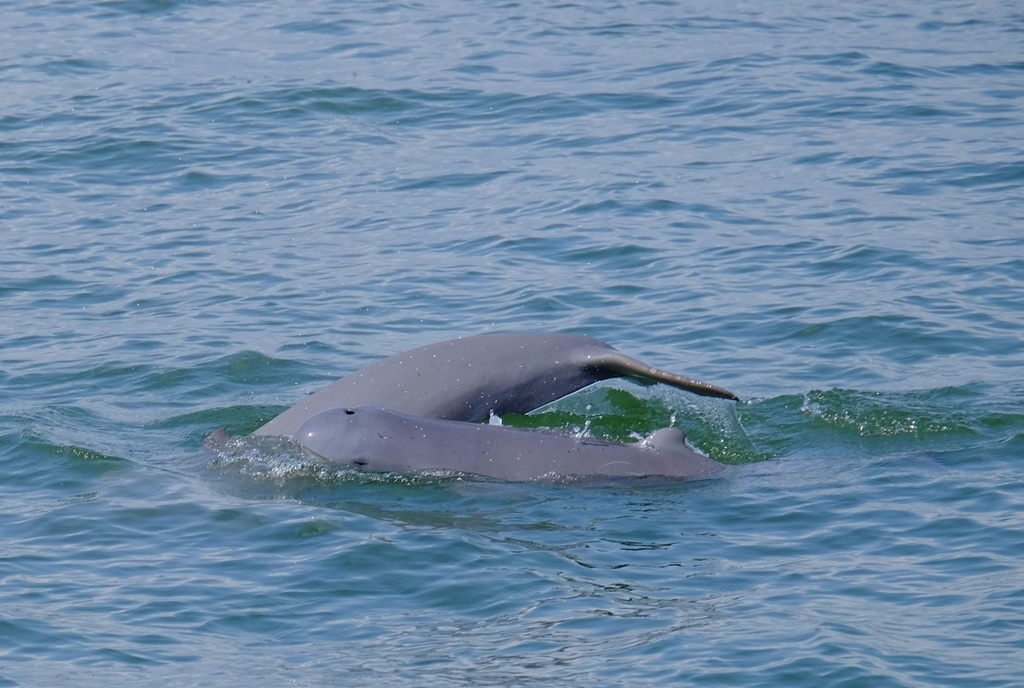
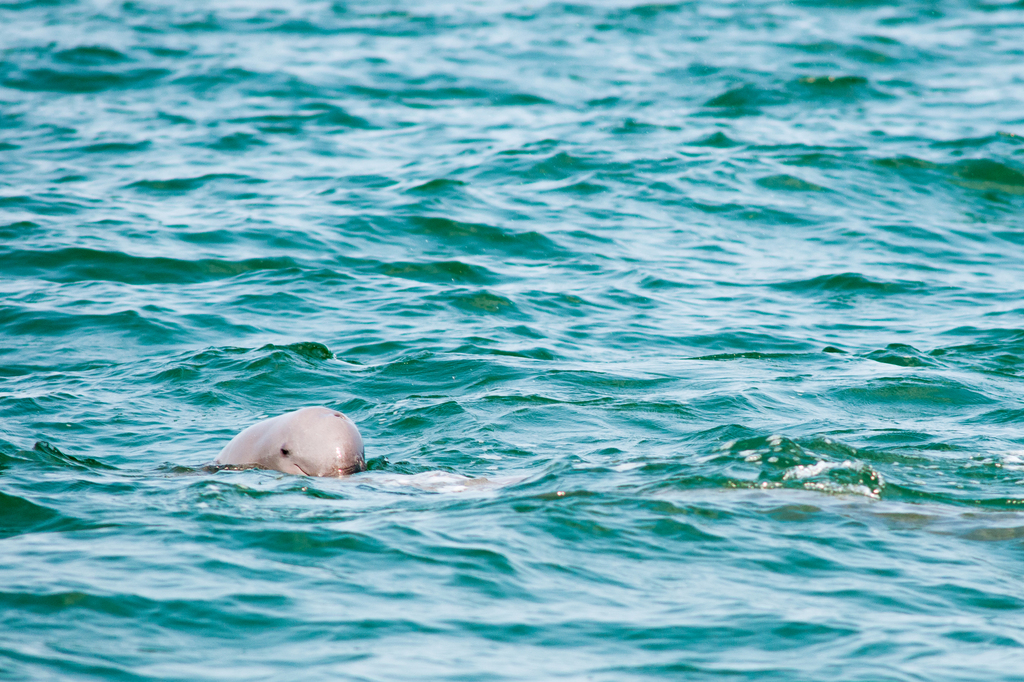
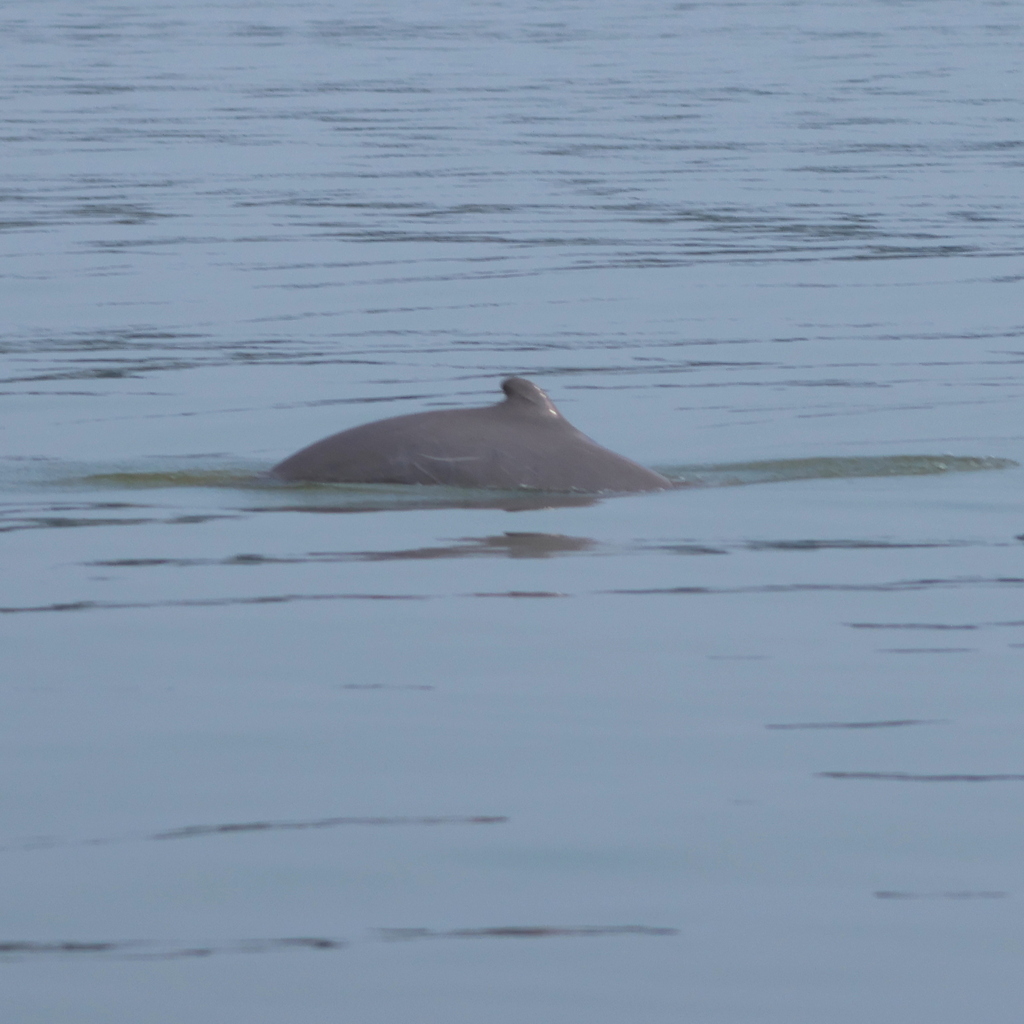
Photos show the species, not always the places on this page.
Length
Adults usually about 2 to 2.75 m (6.6 to 9 ft); the largest males about 2.7 to 2.8 m (8.9 to 9.2 ft)
Weight
Reported adult weight about 115 to 130 kg (254 to 287 lb); males up to about 130 kg (287 lb)
Next to a person
About as long as a tall person or a little longer, and at most about as heavy as two adults
What it eats
Many kinds of fish, including bottom fish and river fish, plus squid, cuttlefish, octopus and crustaceans in coastal waters.
Around people
Calm, give space
How it lives
The Irrawaddy dolphin lives in shallow coastal waters, estuaries, mangroves and a few big rivers and lakes, rarely far from shore. It is slow and shy, rarely leaps and often avoids boats. It can spit jets of water from its mouth, which seems to help it herd fish. In the Ayeyarwady River of Myanmar, cast-net fishers and dolphins have a documented partnership: fishers tap their boats, and dolphins herd fish and signal with their tails.
Where it goes
Most groups stay in the same river stretch, lagoon or coast all year. In the Mekong, dolphins use deep pools in the dry season along about 120 to 180 km of river between Kratie and Stung Treng in Cambodia. The last dolphin of the Cambodia and Laos border pool died on 15 February 2022, and there are now no dolphins on the Lao side.
We only draw a journey on the map when scientists have tracked it or clearly documented it. For this animal we have not found one yet.
Populations
The species is Endangered, and six small, isolated groups are Critically Endangered: the Mekong, Ayeyarwady and Mahakam rivers, Songkhla Lake, Malampaya Sound and Iloilo and Guimaras. News reports put the Mekong group in Cambodia at about 118 in April 2026, up from an estimated 89 in 2020. Chilika Lake in India counted about 159 in recent state counts. Bangladesh's coast and the Sundarbans hold the largest numbers.
Meet it respectfully
Watch from a slow boat or from the shore with engines off or idling, and keep well back. Never chase, surround, touch or feed dolphins, and choose trips that follow local dolphin protection rules. We do not swim with them. Several small groups are Critically Endangered, so every encounter is watch only.
Fun fact
Tap the bulb to light it up.
Irrawaddy dolphins can spit a jet of water from their mouths.
In the Ayeyarwady River, fishers call dolphins by tapping on their boats, and the dolphins help drive fish into their nets.
The last Irrawaddy dolphin in the Cambodia and Laos border pool of the Mekong was found dead on 15 February 2022. There were 17 there in 1993.
In Cambodia the Mekong dolphin count reached 118 in April 2026, after the sixth calf of the year was seen at Kampi pool.
Source: Phnom Penh Post, 28 Apr 2026, Kratie dolphin calf brings population to 118
Irrawaddy dolphin in the Ocean Atlas
Places we have researched where this animal is recorded. It is never guaranteed, and some places are for watching from the boat only.
Travel with usComing soonTrusted referralExploringOn pause, story onlyEthics pass
Country colour: pink where we travel, blue where we are exploring or refer, grey for story only.
 Bangladesh
 Brunei
 Cambodia
 India
India Indonesia
 Malaysia
 Myanmar
 Philippines
 Thailand
 Vietnam
Sources for this page
- Whale and Dolphin Conservation, Irrawaddy dolphin
- IUCN SSC Cetacean Specialist Group, 2022, Last Mekong dolphin in the Cambodia-Laos transboundary pool dies
- Phnom Penh Post, 28 Apr 2026, Kratie dolphin calf brings population to 118
- The Tribune, 2026, Chilika census counts 159 Irrawaddy dolphins
- Smith et al., 2006, Aquatic Conservation, Irrawaddy and Ganges river dolphins in the Sundarbans
- IUCN SSC Cetacean Specialist Group, Red List status of cetaceans
- IUCN SSC Cetacean Specialist Group, Mekong dolphins
- GBIF occurrence records by country, checked 26 Sep 2026
Facts checked 26 September 2026. Photos: Unsplash licence, or Creative Commons as shown on each photo.
Work in ocean travel?
We are always happy to hear from exceptional local operators, accommodation, conservation organisations and destination experts. If your work fits responsible, small-group ocean travel, we would love to learn more.
Partner with Ocean CallingShop with Ocean Calling
Visit the Ocean Calling storefront on Amazon.
As an Amazon Associate I earn from qualifying purchases. You are not only choosing products that respect the ocean, you are also helping us keep going: paying our local partners fairly and keeping our retreats ethical, sustainable and honestly priced for you. 💗