
Leopard seal
Hydrurga leptonyx
A long, spotted seal that is mostly a creature of the Antarctic ice, and no sighting is ever a promise.
Least Concern (IUCN, assessed 2015) means it is not currently considered at risk of extinction.
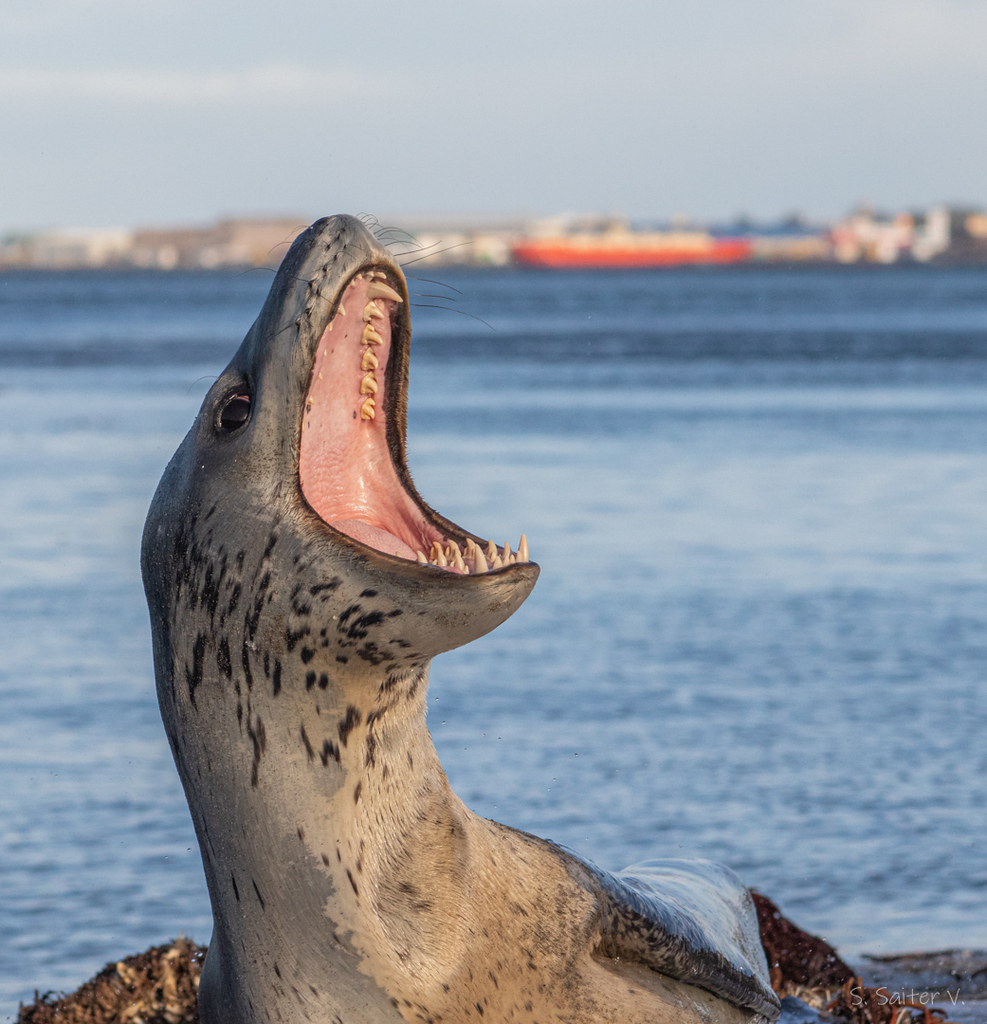
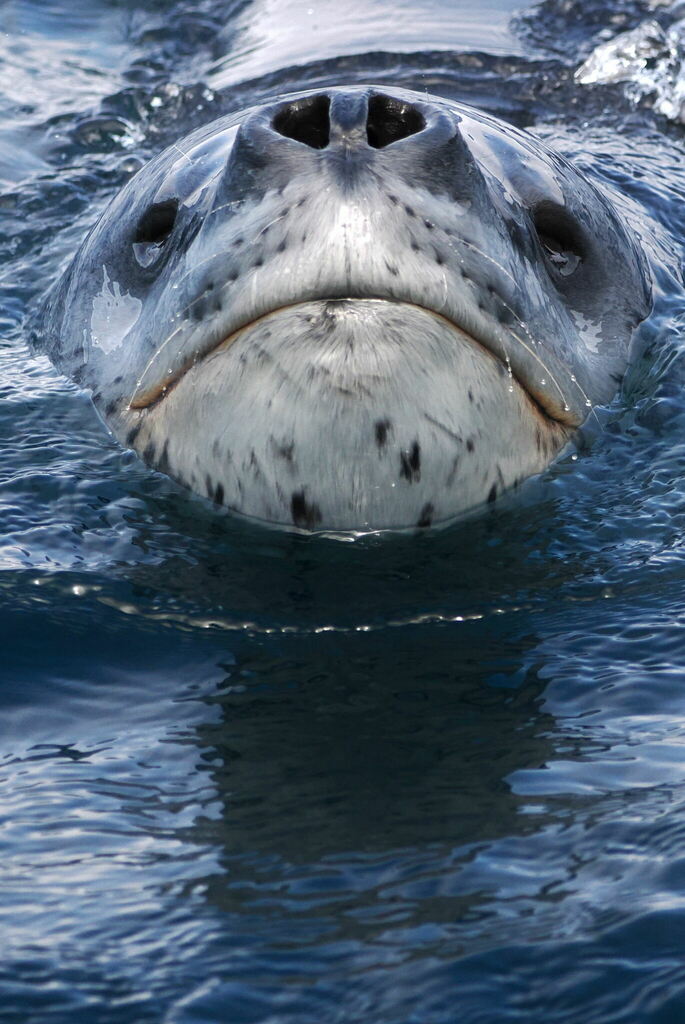
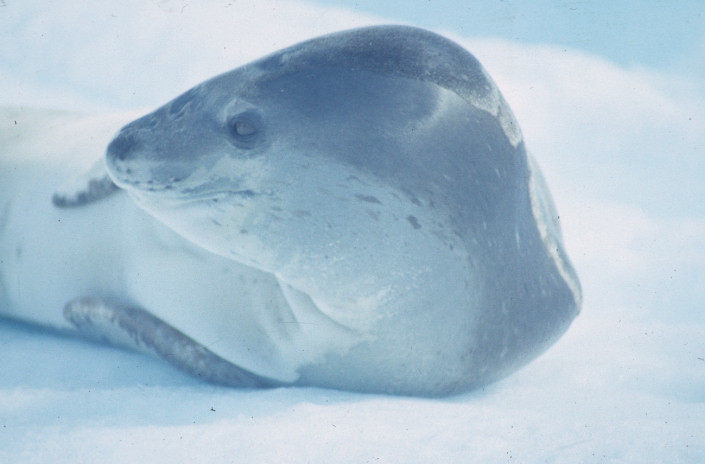
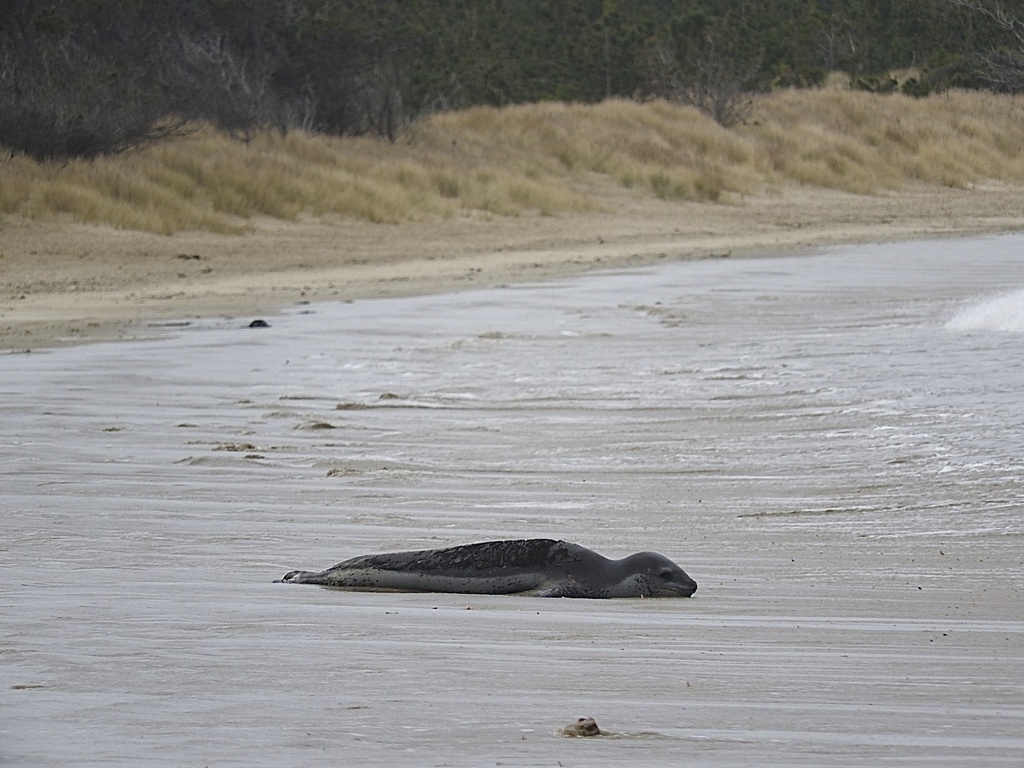
Photos show the species, not always the places on this page.
Length
Adults are about 2.4 to 3.5 m (7.9 to 11.5 ft); females are larger, and large females can exceed 3.5 m (11.5 ft)
Weight
About 200 to 600 kg (440 to 1,320 lb) overall; the Australian Antarctic Division gives about 320 kg (700 lb) for males and 370 kg (820 lb) for females, with large females over 500 kg (1,100 lb)
Next to a person
About as long as a small car, and as heavy as four or five adults
What it eats
Almost anything. Krill is a main food, which it strains through its teeth, and it also takes fish, squid, penguins and the pups of other seals. In Tasmanian waters, leopard seals have been reported preying on shearwaters, cormorants, little penguins, squid and fish.
Around people
Wild, give space
How it lives
Leopard seals live alone, apart from a mother and her pup. They may live for 26 years or more. A single pup is born on sea ice in about November, after a gestation of about 9 months. They make long underwater calls and rest on ice and beaches. The only natural predator named by the Australian Antarctic Division is the killer whale.
Where it goes
Most leopard seals live on and around the Antarctic pack ice. In autumn and winter, many disperse north across the Southern Ocean, and some reach southern Australia, New Zealand, South America and southern Africa. In Tasmania an average of five visit each year, up to 18 in 1990. They are often just resting and head south again afterwards.
We only draw a journey on the map when scientists have tracked it or clearly documented it. For this animal we have not found one yet.
Populations
The IUCN (assessed 2015) rates it Least Concern. Its population is estimated at roughly 220,000 to 440,000 seals, though it is hard to count because the animals are often underwater and spread over remote pack ice.
Meet it respectfully
Leopard seals are powerful wild predators, so stay well back and never approach one on a beach. In Tasmania, the government recommends keeping about 20 m away and not disturbing the animal, which is often just resting. Never touch, feed, chase or corner a seal, and keep dogs and children well away. Tasmanian guidance also asks people to report seals without external ears on beaches. Follow local rules and your guide.
Fun fact
Tap the bulb to light it up.
Its molars lock together so that it can strain krill from the water.
It may live for 26 years or more.
An average of five leopard seals visit Tasmania each year.
Leopard seal in the Ocean Atlas
Places we have researched where this animal is recorded. It is never guaranteed, and some places are for watching from the boat only.
Travel with usComing soonTrusted referralExploringOn pause, story onlyEthics pass
Country colour: pink where we travel, blue where we are exploring or refer, grey for story only.
 Antarctica
 Argentina
 Australia
 Chile
Chile Falkland Islands
 New Zealand
 South Africa
Sources for this page
- GBIF, with IUCN Red List category, 2015
- Tasmanian Government, Leopard seal
- Tasmanian Government, Seal watching guidelines
- Tasmania Parks and Wildlife Service, Marine mammals
- Australian Antarctic Division, Leopard seal
- New Zealand Department of Conservation, Leopard seal
- Wikipedia, Leopard seal, 2026
Facts checked 5 October 2026. Photos: Unsplash licence, or Creative Commons as shown on each photo.
Work in ocean travel?
We are always happy to hear from exceptional local operators, accommodation, conservation organisations and destination experts. If your work fits responsible, small-group ocean travel, we would love to learn more.
Partner with Ocean Calling7-day freediving course in Coron, Palawan
CHF 1,480