
Little black cormorant
Phalacrocorax sulcirostris
A sleek black fishing bird of lakes, estuaries and sheltered coasts, and as with all wildlife, no sighting is ever a promise.
Least Concern (IUCN, 2024) means it is not at high risk of extinction, and it is common and widespread across its range.
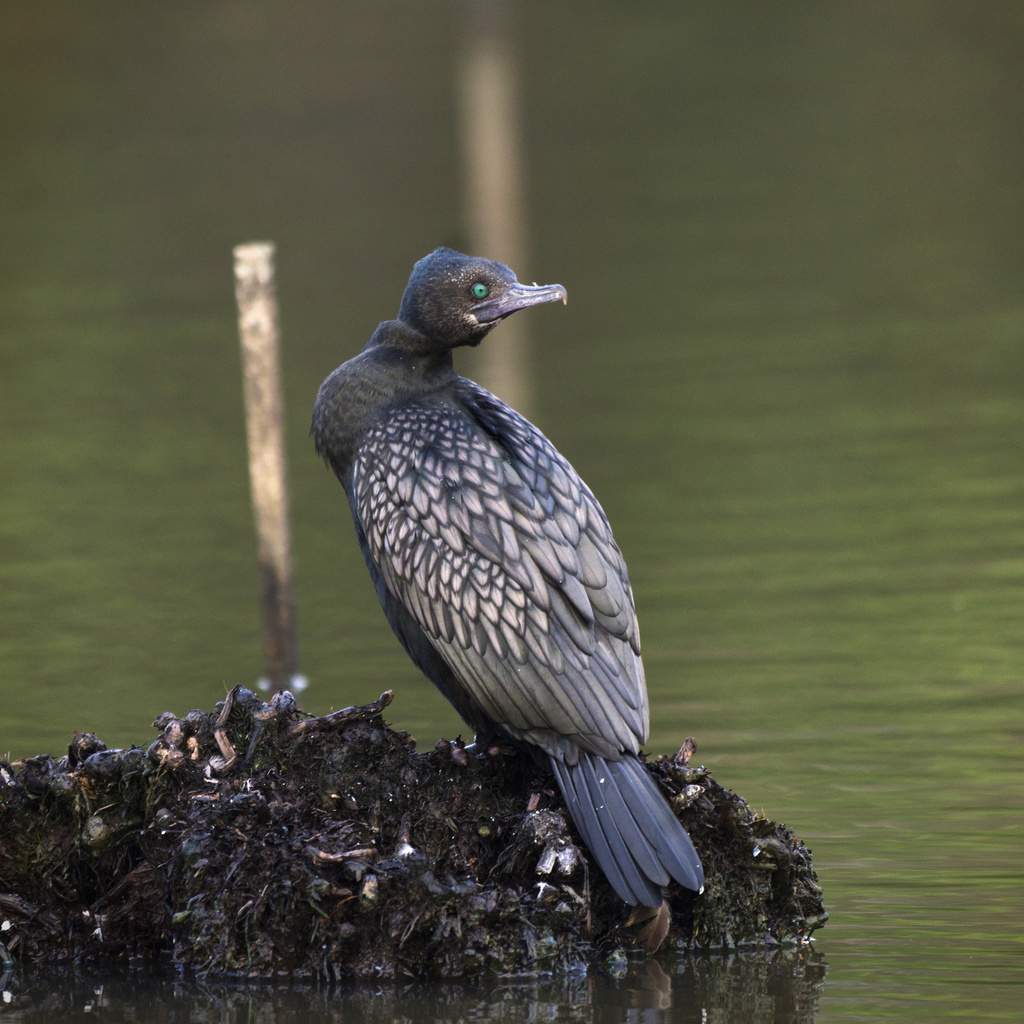
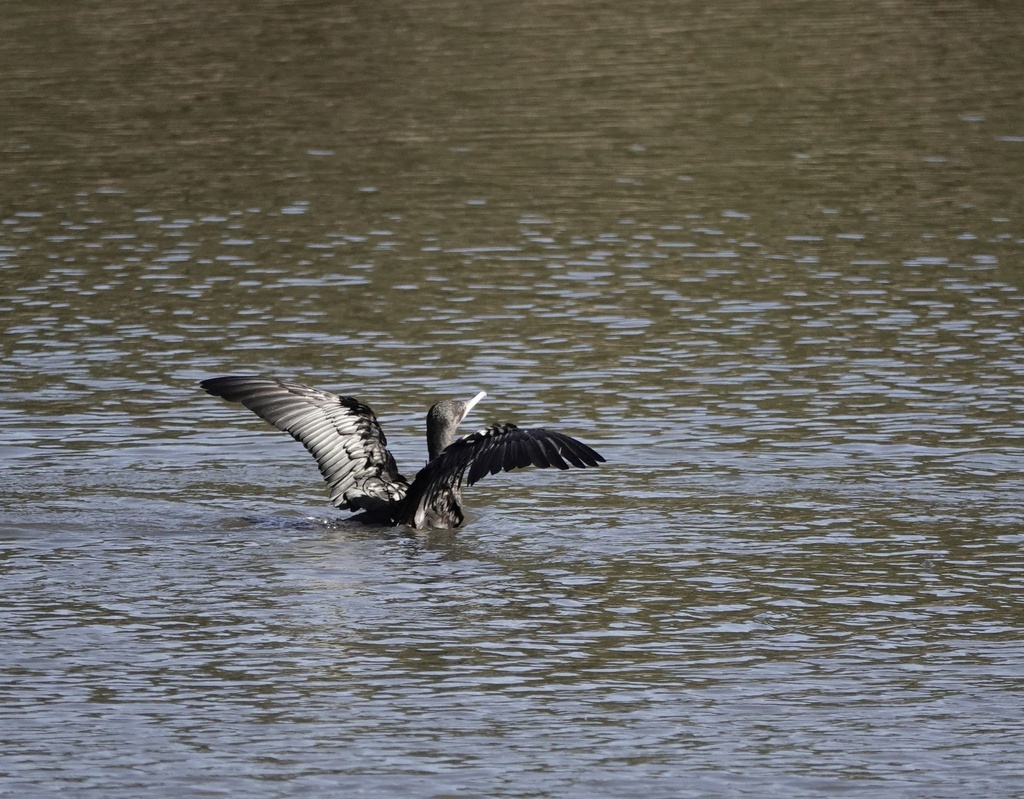
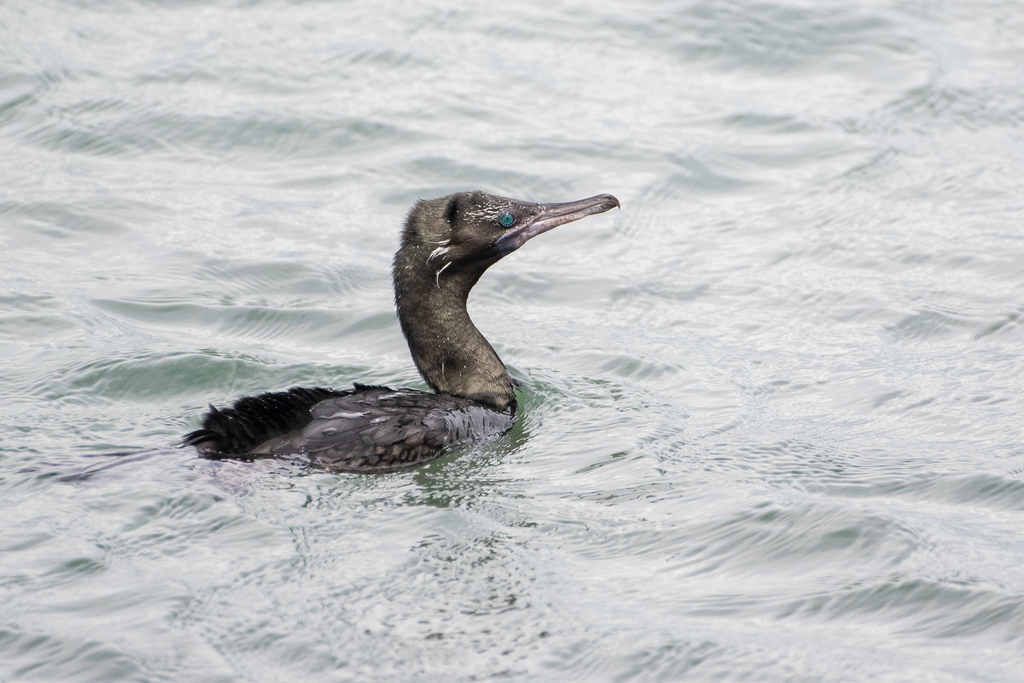
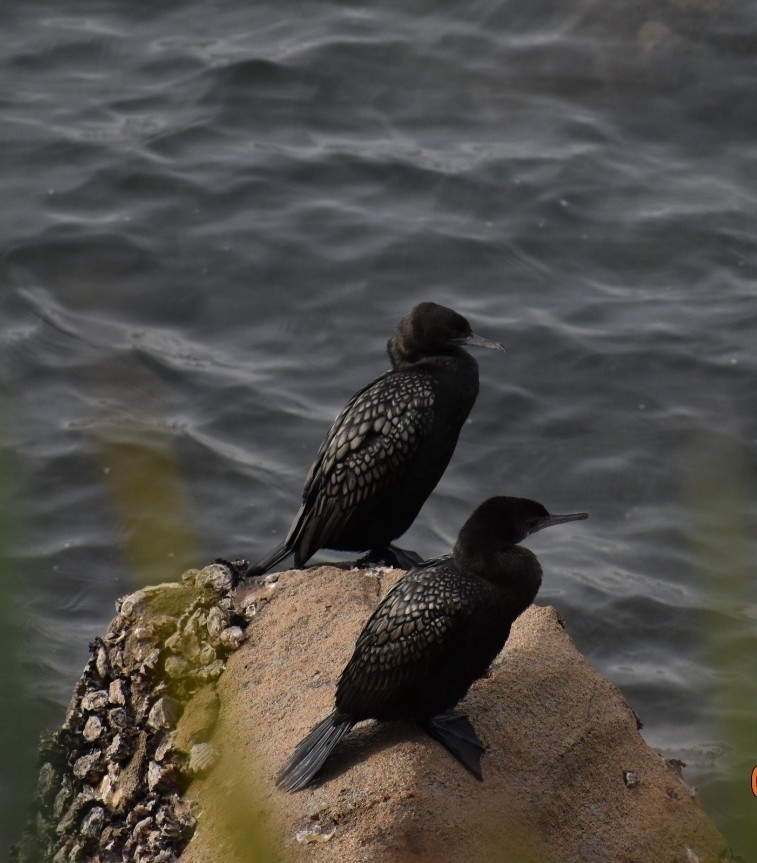
Photos show the species, not always the places on this page.
Length
About 60 to 65 cm (23.5 to 25.5 in) per Wikipedia; NZ Birds Online gives about 61 cm, and BirdLife Australia 60 to 75 cm
Weight
About 800 g (1.8 lb) typical in New Zealand; up to about 1.2 kg (2.6 lb) maximum reported by SeaLifeBase
Next to a person
About as long as an adult's leg from hip to floor stands, and a little lighter than a bag of sugar.
What it eats
Mostly small fish, caught by diving and swimming underwater. BirdLife Australia also lists crustaceans and aquatic insects. In Australian storage lakes, introduced common carp made up more than half of what they ate.
Around people
Calm, give space
How it lives
It nests in colonies, often in trees over water and sometimes near heron or ibis colonies. Nests are platforms of sticks, and clutches are usually 3 to 5 pale blue eggs. Breeding times differ: in New Zealand it breeds from October to December, in southern Australia in spring or autumn, and in the tropics around the monsoon. Adults have a green eye. It spends time on the water and dries its wings on perches.
Where it goes
Flocks travel and feed together, and they fly in V-shaped lines. BirdLife Australia says it ranges across Australia, including Tasmania, and through Indonesia, Papua New Guinea, Vanuatu, New Caledonia, Palau and New Zealand. Set migration routes are not described in the sources read.
We only draw a journey on the map when scientists have tracked it or clearly documented it. For this animal we have not found one yet.
Populations
Global: Least Concern (IUCN, assessed 2024). BirdLife Australia describes it as widespread across Australia. In New Zealand, the population is unknown but probably slowly increasing and may number several thousand, and it is classed Native, Naturally Uncommon. The sources read give no total world population number.
Meet it respectfully
Watch from a distance with binoculars. Keep boats and kayaks back so flocks are not scattered while they feed, and stay well clear of nesting colonies and roosts. Never feed the birds or flush them off their perches. Follow your guide and local rules.
Fun fact
Tap the bulb to light it up.
It hunts in flocks that herd fish together, and in New Zealand it is the only shag that does this regularly.
Adults have bright green eyes, which help tell it from other New Zealand shags.
Flocks can number hundreds or even thousands, and they fly in V-shaped lines.
Little black cormorant in the Ocean Atlas
Places we have researched where this animal is recorded. It is never guaranteed, and some places are for watching from the boat only.
Travel with usComing soonTrusted referralExploringOn pause, story onlyEthics pass
Country colour: pink where we travel, blue where we are exploring or refer, grey for story only.
 Australia
 Indonesia
 New Caledonia
 New Zealand
 Norfolk Island
 Papua New Guinea
 Timor-Leste
Sources for this page
- Wikipedia, Little black cormorant
- NZ Birds Online, Little black shag
- BirdLife Australia, Little black cormorant
- SeaLifeBase, 2025
- GBIF / IUCN Red List category, 2024
Facts checked 5 October 2026. Photos: Unsplash licence, or Creative Commons as shown on each photo.
Work in ocean travel?
We are always happy to hear from exceptional local operators, accommodation, conservation organisations and destination experts. If your work fits responsible, small-group ocean travel, we would love to learn more.
Partner with Ocean CallingNew: tiger sharks in Fuvahmulah, January or March 2027
from CHF 2,900