
Narrow-ridged finless porpoise
Neophocaena asiaeorientalis
A small, finless porpoise of shallow coastal seas, and no sighting is ever a promise.
Endangered (IUCN, 2017) means it faces a very high risk of extinction in the wild, mainly because it is caught by accident in fishing nets.

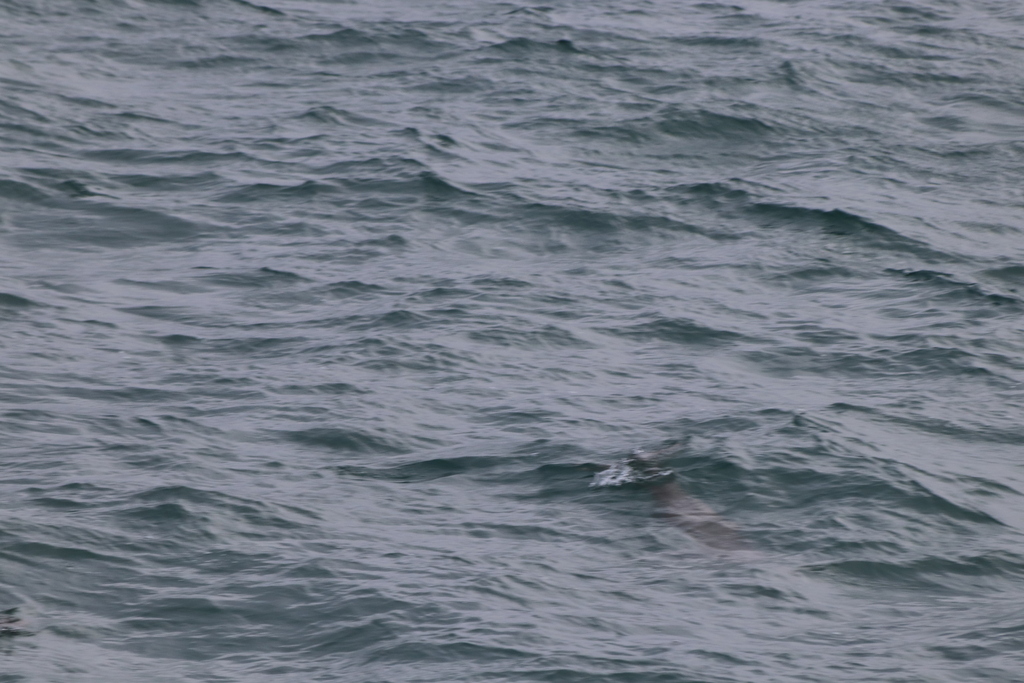
Photos show the species, not always the places on this page.
Length
In a Korean Yellow Sea study, mature females measured about 1.3 to 1.55 m (4.3 to 5.1 ft) and mature males about 1.25 to 2.29 m (4.1 to 7.5 ft). Wikipedia gives a maximum of 2.27 m (7.4 ft)
Weight
Adults are typically about 30 to 45 kg (66 to 99 lb); up to 72 kg (159 lb) is recorded (Wikipedia, East Asian finless porpoise)
Next to a person
Adult females are about as long as a tall child, and about as heavy as a small adult
What it eats
Small fish, crustaceans and squid or cuttlefish. In the Yellow Sea and Bohai area, fish, shrimp and squid are named.
Around people
Calm, give space
How it lives
Females and males mature at about 4 to 5 years, and animals up to 19 years old were examined in the Korean study. Across the species, lifespan averages 18 to 25 years, with one animal known to reach 33 in China. Gestation is about one year, with one calf at a time. In the Yellow Sea off Korea, calves are born from April to August, peaking in April and May.
Where it goes
Lives in shallow coastal water. Korean waters hold two genetically distinct groups, one in the West Sea (Yellow Sea) and one in the East and South seas. Detailed seasonal movements were not described in the sources I read.
We only draw a journey on the map when scientists have tracked it or clearly documented it. For this animal we have not found one yet.
Populations
IUCN moved it from Vulnerable to Endangered in 2017, saying numbers more than halved over 45 years. The Korean Yellow Sea is a key area, and bycatch in stow nets is described as its greatest threat there, with thousands of deaths a year. A 2025 environmental DNA study found porpoise DNA in 12 of 18 Yellow Sea samples in 2022 and 12 of 20 in 2023. I could not open the survey paper that gives the exact decline on Korea's west coast, so I give no figure for it here. Some experts treat the East Asian form as its own species, Neophocaena sunameri.
Meet it respectfully
If one is seen, keep boats slow and well back, cut the engine if it is close, and let the animal choose the distance. Never chase, surround, touch or feed it. Fishing gear is its biggest danger, so keep clear of nets and lines. I did not read Korean viewing rules, so follow local rules and your guide. A sighting is never a promise.
Fun fact
Tap the bulb to light it up.
One finless porpoise in China is known to have lived to 33 years, while the average across the species is 18 to 25.
Korean waters hold two genetically different groups of this porpoise, one on the west coast and one on the east and south coasts.
A porpoise excluder device is being tested in Korean stow-net fisheries to let porpoises escape the nets.
Narrow-ridged finless porpoise in the Ocean Atlas
Places we have researched where this animal is recorded. It is never guaranteed, and some places are for watching from the boat only.
Travel with usComing soonTrusted referralExploringOn pause, story onlyEthics pass
Country colour: pink where we travel, blue where we are exploring or refer, grey for story only.
 China
China Japan
Japan South Korea
Sources for this page
- IUCN, Red List update, 2017
- IUCN SSC Cetacean Specialist Group, 2025
- Porpoise Conservation Society, Narrow-ridged finless porpoise
- Porpoise Conservation Society, Age and reproduction in the Yellow Sea, Korea, 2013
- PLOS ONE, eDNA of finless porpoises in the Korean Sea, 2025
- Population structure of finless porpoise off Korea, 2022
- Wikipedia, East Asian finless porpoise, 2026
Facts checked 5 October 2026. Photos: Unsplash licence, or Creative Commons as shown on each photo.
Work in ocean travel?
We are always happy to hear from exceptional local operators, accommodation, conservation organisations and destination experts. If your work fits responsible, small-group ocean travel, we would love to learn more.
Partner with Ocean CallingNot sure where to go? Get your Ocean Match
from CHF 19