
Pelagic cormorant
Urile pelagicus
A slim, dark seabird of rocky North Pacific coasts. No sighting is ever a promise, and its nesting cliffs deserve distance.
Least Concern (IUCN, 2021) means it is not close to being threatened at present, though local colonies face oil spills, gillnets and disturbance.
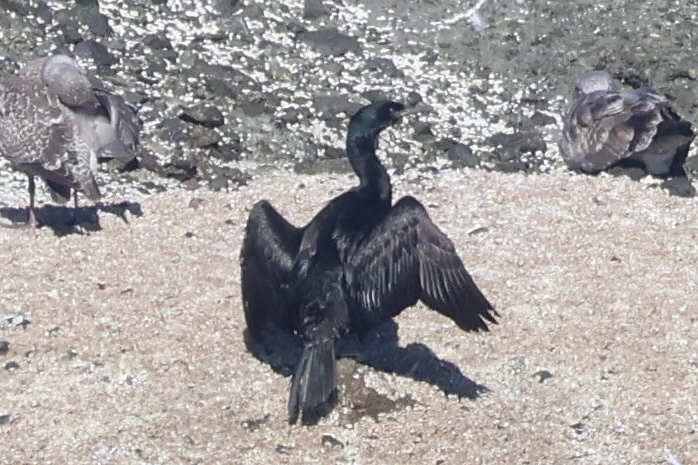
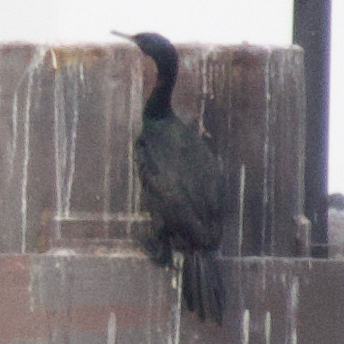
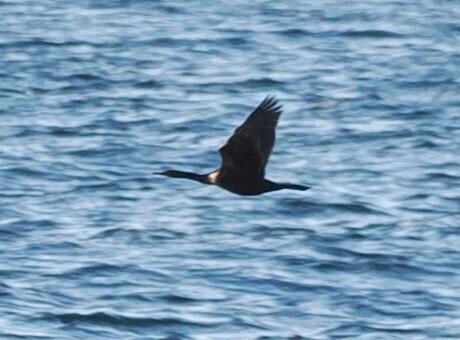
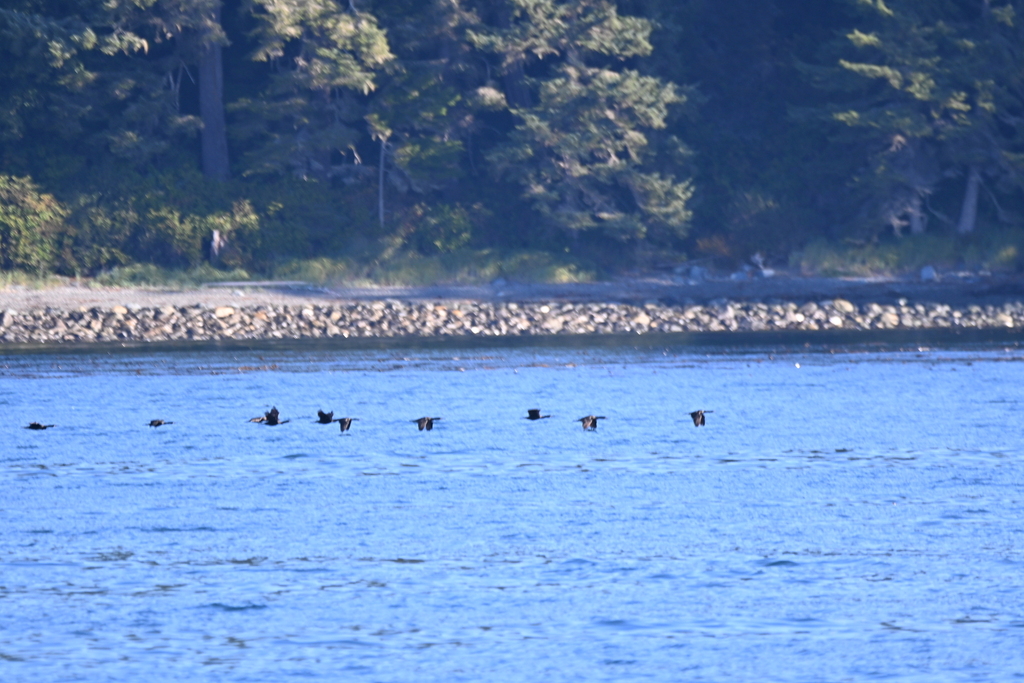
Photos show the species, not always the places on this page.
Length
About 61 to 89 cm (24 to 35 in); wingspan about 0.94 to 1.1 m (3.1 to 3.6 ft)
Weight
About 1.5 to 2.4 kg (3.3 to 5.3 lb)
Next to a person
Its wingspan is about as wide as a child's outstretched arms, and it weighs about as much as one to two bags of sugar
What it eats
Fish that live near the bottom, such as sculpins, sand lance, herring and rockfish, plus crabs, shrimp and marine worms.
Around people
Shy, keep off nests
How it lives
It dives from the surface and uses its feet to swim, usually hunting near rocky bottoms and kelp. Sources give dive depths of at least 36 m (120 ft) and up to about 55 m (180 ft). It nests in small groups on narrow ledges of steep sea cliffs, building a saucer of grass and seaweed that it fixes to the rock with its own droppings. Clutches are usually 3 to 5 eggs, incubated for about 3 to 5 weeks, and chicks fledge at about 40 to 50 days. Breeding adults grow white thigh patches, two crests and bright magenta skin near the eye.
Where it goes
Mostly resident. Birds leave frozen Alaskan waters in winter and move south toward California and Baja California. Detail for the Asian coasts is not given in the sources I read.
We only draw a journey on the map when scientists have tracked it or clearly documented it. For this animal we have not found one yet.
Populations
Global: Least Concern (IUCN, 2021). About 50,000 breed in each of the Kuril Islands, the Bering Sea islands and Alaska, and about 25,000 breed on the Pacific coast of North America south of Alaska, about 60 percent of them in California. An older US estimate gave more than 120,000 in North America in the 1980s and called the population probably stable. Local threats are oil spills, gillnets that drown birds, El Nino years that cut food, and disturbance at nests.
Meet it respectfully
Watch from a distance, especially near nesting cliffs. Fishers, kayakers and divers can disturb nests, and a scared bird can leave its eggs or chicks open to gulls. Never chase, feed or approach a nest, and keep boats and kayaks well away from breeding ledges. I did not read any local rules, so follow your guide and local rules.
Fun fact
Tap the bulb to light it up.
It is the smallest cormorant on the Pacific coast of North America.
It uses its own droppings as cement to fix the nest to the cliff.
It was long called Phalacrocorax pelagicus; since 2021 the IOC places it in the genus Urile.
Pelagic cormorant in the Ocean Atlas
Places we have researched where this animal is recorded. It is never guaranteed, and some places are for watching from the boat only.
Travel with usComing soonTrusted referralExploringOn pause, story onlyEthics pass
Country colour: pink where we travel, blue where we are exploring or refer, grey for story only.
 Canada
 China
China Japan
Japan Mexico
 Russia
 South Korea
 Taiwan
 United States
Sources for this page
- Wikipedia, Pelagic cormorant
- Wikipedia, Urile pelagicus
- Audubon, Pelagic cormorant
- US National Park Service, Pelagic cormorant
- GBIF, IUCN Red List category, 2026
Facts checked 5 October 2026. Photos: Unsplash licence, or Creative Commons as shown on each photo.
Work in ocean travel?
We are always happy to hear from exceptional local operators, accommodation, conservation organisations and destination experts. If your work fits responsible, small-group ocean travel, we would love to learn more.
Partner with Ocean Calling5-day freediving course in Bali
CHF 1,180