
South American fur seal
Arctocephalus australis
A dark, thick-furred seal on a rocky shore. Fur seals haul out where they choose, and no sighting is ever a promise.
Least Concern (IUCN, 2016) means it is not close to a threatened category worldwide. Many populations have recovered after historical hunting.

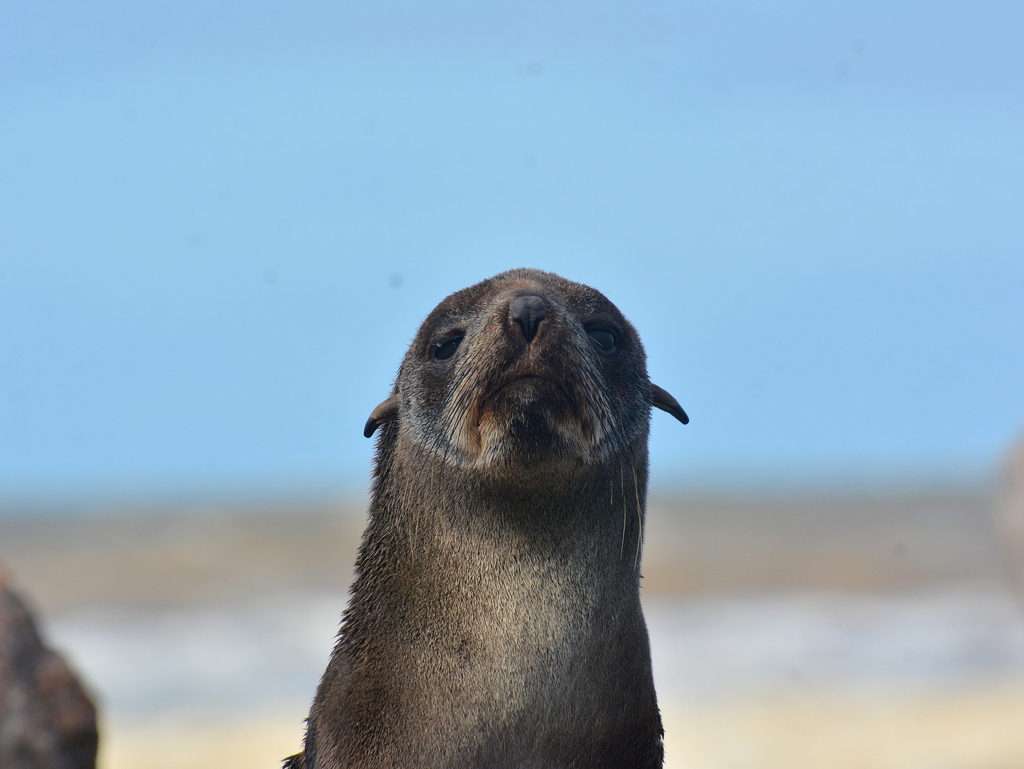
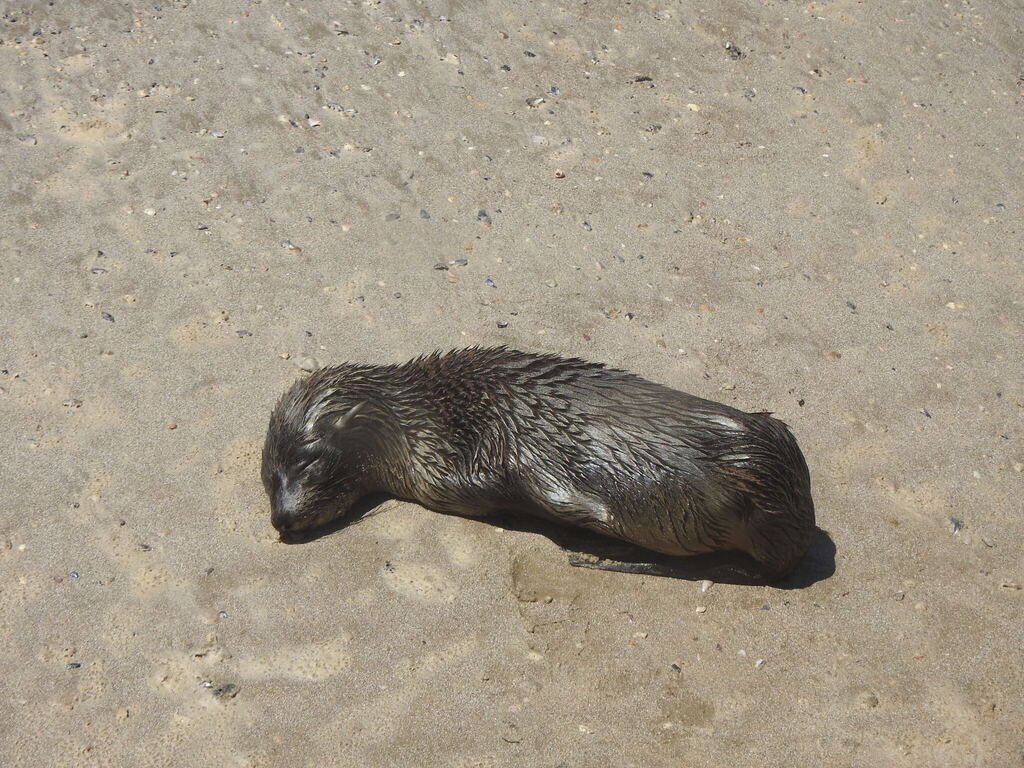
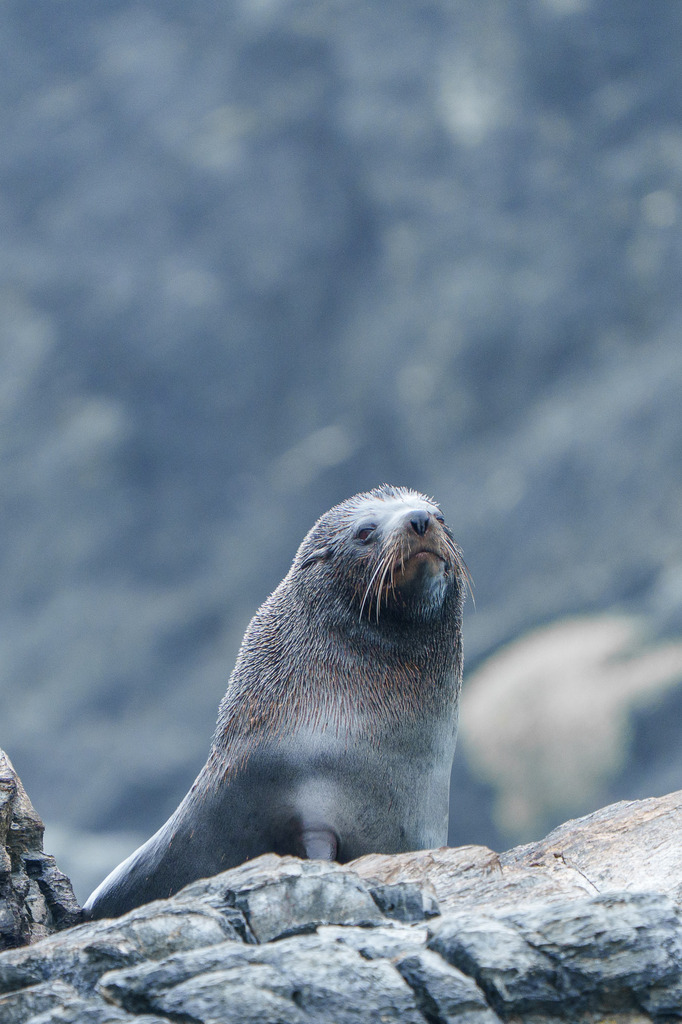
Photos show the species, not always the places on this page.
Length
Males up to about 1.9 to 2 m (6.2 to 6.6 ft); females up to about 1.4 to 1.5 m (4.6 to 4.9 ft); pups about 60 to 65 cm (24 to 26 in) at birth
Weight
Males about 150 to 200 kg (330 to 440 lb); females about 30 to 60 kg (66 to 130 lb); pups about 3.5 to 5.5 kg (8 to 12 lb). Sources differ slightly
Next to a person
A large male is longer than a tall adult and as heavy as two or three adults; a female weighs about as much as one adult or less
What it eats
Fish such as anchovies, plus shrimp, squid and krill, depending on the region: anchovies in Uruguay and Peru, shrimp in Brazil, krill in Chile and squid in the Falkland Islands. They feed mostly at night and can dive to about 170 m.
Around people
Calm, give space
How it lives
Seals gather in colonies, called rookeries, and breed from October to December. Males defend territories and mate with several females. Females mature at about 3 years and males at about 7, though males do not usually breed until 8. A female has one pup a year, and pups nurse for many months, about 11 months in the Falkland Islands. Lifespan is about 12 to 30 years, and data are limited.
Where it goes
Breeds on the coasts of Peru, Chile, Argentina, Uruguay, Brazil and the Falkland Islands, on both the Atlantic and Pacific sides of South America. Seals spend most of their time at sea and come ashore mainly in the breeding season. Southern Brazil sees only a few hundred seals a year.
We only draw a journey on the map when scientists have tracked it or clearly documented it. For this animal we have not found one yet.
Populations
Estimates of the world total differ, from about 219,000 (a Falklands habitat factsheet) to 300,000 to 450,000 (Wikipedia). The Falkland Islands census counted about 44,000 pups in 2021, up from about 36,500 in 2018, with 97% of pups on the Jason Islands. In Uruguay, 2013 aerial surveys counted about 45,588 seals, with 67% at Punta del Este, and corrected pup counts of 18,419 at Isla de Lobos and 12,741 at Cabo Polonio. Populations recovered after historical hunting, but an El Nino event in Peru in 2012 reportedly killed about 80% of females and pups. Gillnets and oil spills remain risks.
Meet it respectfully
Watch from a distance and keep well back from pups and from males guarding territory. Never get between a seal and the water, and never chase, touch or feed seals. Keep voices and movements low on shore. I did not read local rules for Uruguay or the Falkland Islands, so follow local rules and your guide.
Fun fact
Tap the bulb to light it up.
The thick fur that gave fur seals their name once made them a target for commercial hunting.
Males are much larger than females and carry a thicker neck and a mane of longer guard hairs.
A seal can dive to about 170 m, and a typical dive lasts around 7 minutes.
South American fur seal in the Ocean Atlas
Places we have researched where this animal is recorded. It is never guaranteed, and some places are for watching from the boat only.
Travel with usComing soonTrusted referralExploringOn pause, story onlyEthics pass
Country colour: pink where we travel, blue where we are exploring or refer, grey for story only.
 Argentina
 Brazil
 Chile
Chile Ecuador
 Falkland Islands
 New Caledonia
 Peru
Peru Uruguay
Sources for this page
- University of Michigan, Animal Diversity Web, Arctocephalus australis
- Marine Mammal Protected Areas Task Force, Falkland Islands Inner Shelf Waters IMMA
- Marine Mammal Protected Areas Task Force, Southern Brazil and Uruguay IMMA
- Wikipedia, South American fur seal, 2026
Facts checked 5 October 2026. Photos: Unsplash licence, or Creative Commons as shown on each photo.
Work in ocean travel?
We are always happy to hear from exceptional local operators, accommodation, conservation organisations and destination experts. If your work fits responsible, small-group ocean travel, we would love to learn more.
Partner with Ocean CallingNot sure where to go? Get your Ocean Match
from CHF 19