
Spinner shark
Carcharhinus brevipinna
Spinner sharks follow the fish schools and come and go as they please, so no sighting is ever a promise.
Vulnerable (IUCN, 2020) means it is at high risk of extinction in the wild.
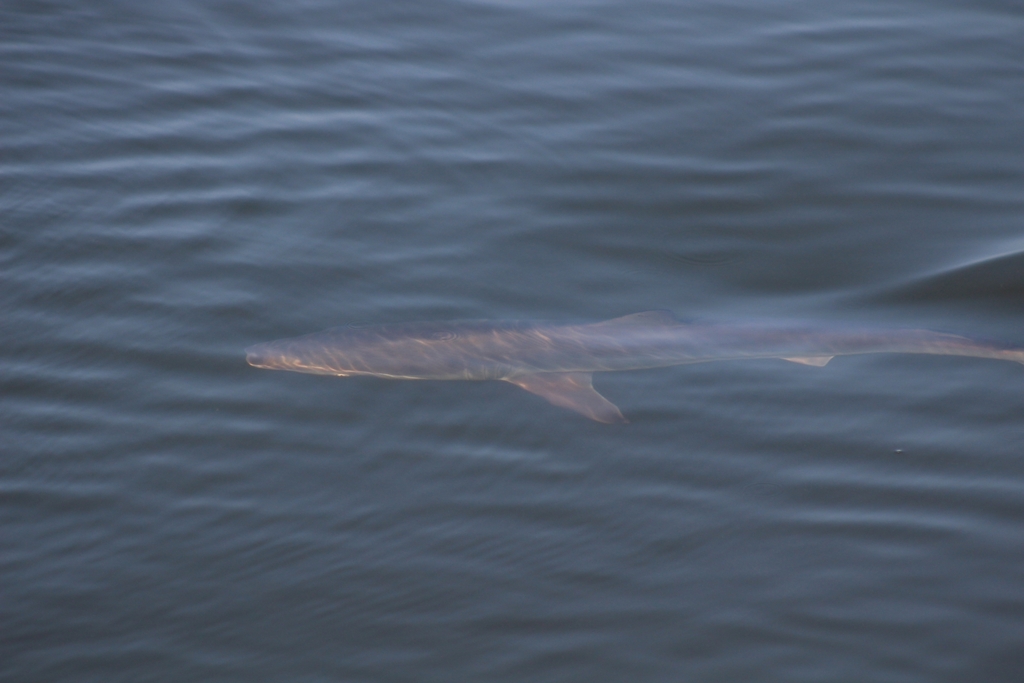
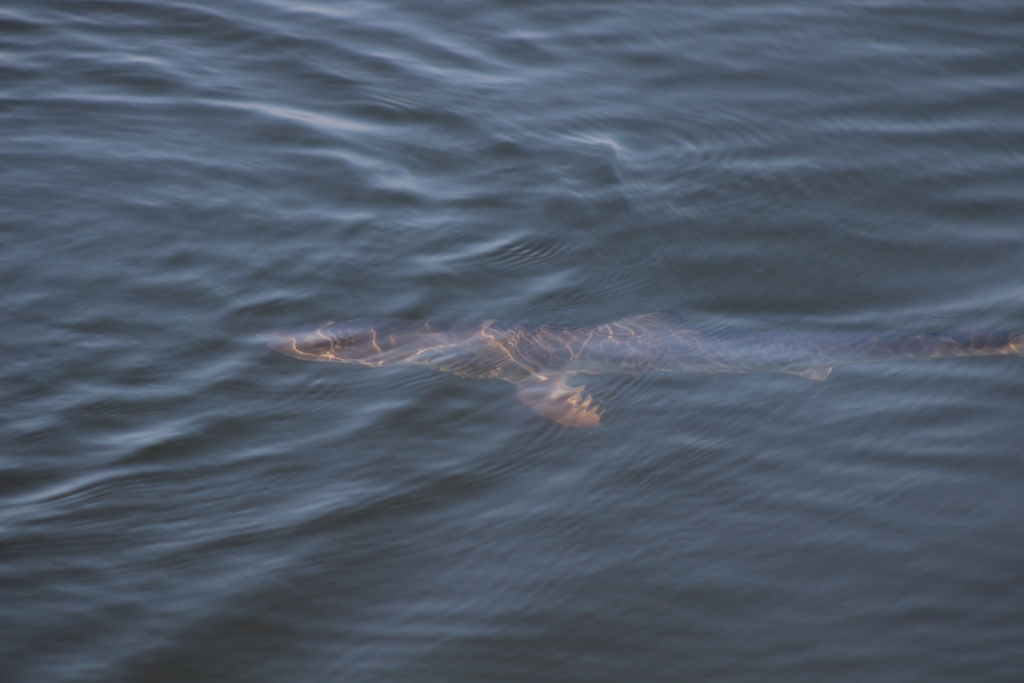
Photos show the species, not always the places on this page.
Length
Usually about 2 m (6.6 ft). The largest reported are about 2.8 to 3.1 m (9.2 to 10.1 ft). Sharks in the Indo-Pacific tend to be larger than those in the northwest Atlantic
Weight
Average about 56 kg (123 lb). Sources give a maximum of about 90 kg (198 lb) up to 193 kg (425 lb), so the true maximum is not settled
Next to a person
About as long as a tall adult, and about as heavy as one adult
What it eats
Mostly small schooling bony fishes such as sardines, herring and anchovies, plus squid, octopus and cuttlefish. It also takes small sharks and stingrays. It hunts by charging up through a school with its mouth open, spinning on its axis, and it often leaps out of the water.
Around people
Calm, give space
How it lives
Spinner sharks live in warm temperate and tropical waters over continental shelves, mostly in the top 100 m, and often form schools. Females carry pups for 11 to 15 months and breed about every other year. Litters are usually 7 to 11 pups, with a reported range of 3 to 20. Pups are born in shallow coastal nursery areas at about 60 to 77 cm (24 to 30 in). They mature at about 4 to 8 years old. The oldest age recorded in FishBase is 16 years.
Where it goes
Spinner sharks move seasonally. Along the Florida and Louisiana coasts, schools move inshore in spring and summer to breed and feed. I did not find a full account of their movements in other regions.
We only draw a journey on the map when scientists have tracked it or clearly documented it. For this animal we have not found one yet.
Populations
Worldwide: Vulnerable (IUCN, 2020). The species lives in tropical and warm temperate waters of the Atlantic, Mediterranean and Indo-West Pacific, and is absent from the eastern Pacific. It is fished for meat, fins, liver oil and skin, and is also a sport fish. Its habit of using shallow coastal waters, including nursery areas, leaves it open to fishing and to coastal habitat loss. I did not read any regional assessments, and I found no global population count.
Meet it respectfully
If you meet a spinner shark, stay calm, keep your distance and let it pass. Never chase, touch, feed or bait it. These sharks can leap while they feed, so keep boats and swimmers well clear of a feeding school. Rules differ by place, so follow local rules and your guide.
Fun fact
Tap the bulb to light it up.
It is named for its hunting move: it spins through a school of fish with its mouth open and often leaps clear of the water.
Adults have black tips on their fins, including a black tip on the anal fin. This helps tell them apart from blacktip sharks, which lack the black anal fin tip.
The International Shark Attack File lists 16 unprovoked bites from this species, none of them fatal.
Spinner shark in the Ocean Atlas
Places we have researched where this animal is recorded. It is never guaranteed, and some places are for watching from the boat only.
Travel with usComing soonTrusted referralExploringOn pause, story onlyEthics pass
Country colour: pink where we travel, blue where we are exploring or refer, grey for story only.
 Brazil
 Côte d'Ivoire
 Faroe Islands
 Ghana
Ghana Indonesia
 Japan
Japan Madagascar
 Maldives
 Mexico
 Nigeria
 Oman
Oman Papua New Guinea
 United Kingdom
 United States
Sources for this page
Facts checked 5 October 2026. Photos: Unsplash licence, or Creative Commons as shown on each photo.
Work in ocean travel?
We are always happy to hear from exceptional local operators, accommodation, conservation organisations and destination experts. If your work fits responsible, small-group ocean travel, we would love to learn more.
Partner with Ocean CallingSwim with humpback whales in Moʻorea, September 2027
from CHF 4,500