
Strap-toothed whale
Mesoplodon layardii
A shy beaked whale that rarely shows itself. Most are never seen at all, and no sighting is ever a promise.
Least Concern (IUCN Red List) means it is not judged to be at high risk of extinction; the true population size is unknown and the assessment year was not confirmed.

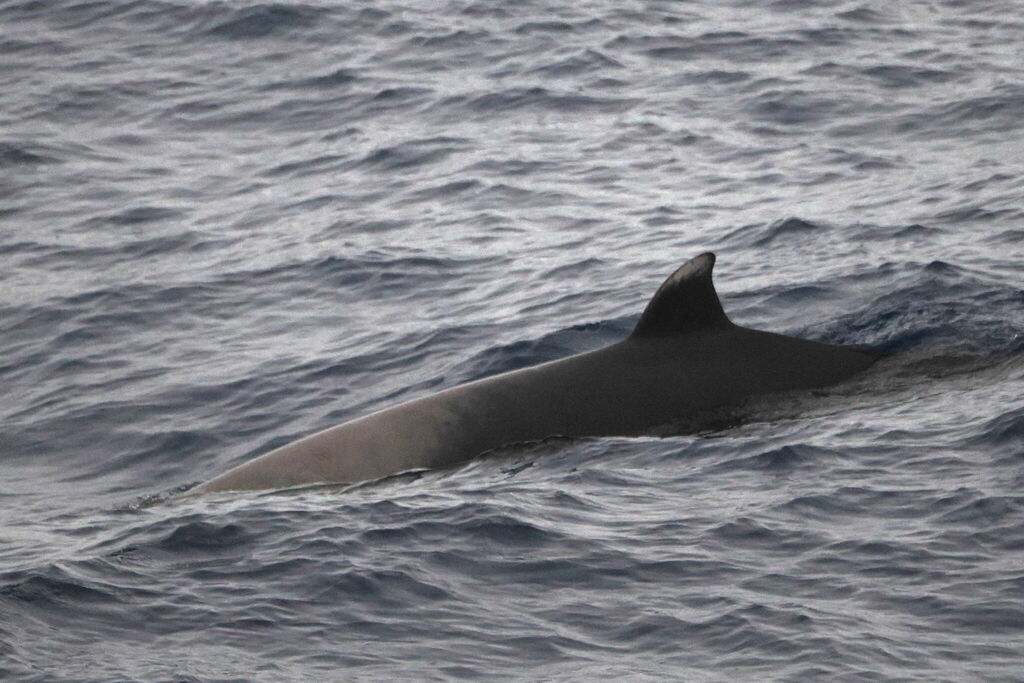
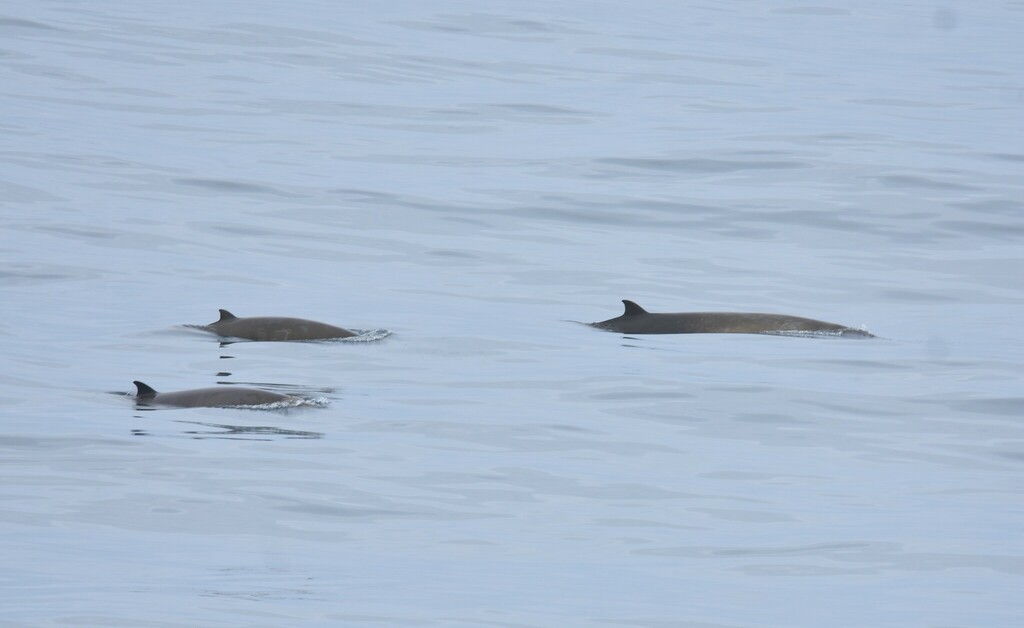
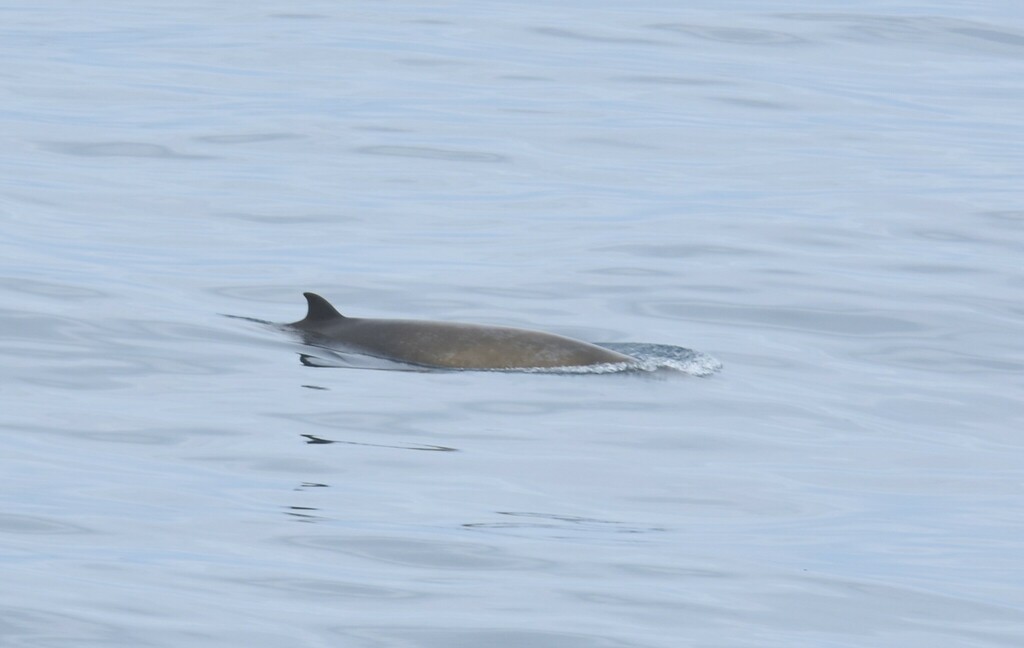
Photos show the species, not always the places on this page.
Length
Adults about 5.9 to 6.2 m (19.4 to 20.3 ft); females reach at least 6.2 m and males about 5.9 m. Newborns about 2.8 to 3 m (9.2 to 9.8 ft).
Weight
About 1,000 to 1,300 kg (2,200 to 2,900 lb)
Next to a person
More than three times as long as an adult is tall, and about as heavy as a small car
What it eats
Mainly oceanic squid. In stranded animals, about 95% of stomach contents were cephalopods, with some fish and crustaceans.
Around people
Calm, give space
How it lives
Little is known about living animals because they are hard to approach. Groups of up to three have been recorded. Dives typically last 10 to 15 minutes, according to one summary. Calving is thought to happen in spring and summer. Adult males grow two tusk-like teeth from the lower jaw that arch over the upper jaw.
Where it goes
The strap-toothed whale lives in cold temperate and subantarctic waters of the Southern Hemisphere, possibly all the way round. Almost nothing is known about its seasonal movements, because most records come from stranded animals.
We only draw a journey on the map when scientists have tracked it or clearly documented it. For this animal we have not found one yet.
Populations
The total population is unknown, but the strap-toothed whale is described as one of the more common beaked whales in the Southern Ocean. The IUCN category is Least Concern, and the species is on CITES Appendix II. Older sources list it as Data Deficient, and New Zealand's Department of Conservation notes that most beaked whales there are Data Deficient. Entanglement in fisheries, plastic, sonar and climate change are named as possible threats.
Meet it respectfully
Strap-toothed whales avoid boats, so a calm approach matters more than closeness. Keep your distance, keep the boat steady and quiet, and never chase, circle or follow a whale that dives. Beaked whales are thought to be sensitive to underwater noise. I did not read local whale-watching rules for these countries, so follow your guide and local regulations.
Fun fact
Tap the bulb to light it up.
Adult males have two long tusk-like teeth that curl up over the upper jaw and limit how far the mouth can open, to about 3 to 4 cm.
It is the largest beaked whale in its genus.
Most of what is known about it comes from stranded animals, because living ones are shy of boats.
Strap-toothed whale in the Ocean Atlas
Places we have researched where this animal is recorded. It is never guaranteed, and some places are for watching from the boat only.
Travel with usComing soonTrusted referralExploringOn pause, story onlyEthics pass
Country colour: pink where we travel, blue where we are exploring or refer, grey for story only.
 Argentina
 Australia
 New Zealand
 South Africa
Sources for this page
- Wikipedia, Strap-toothed whale
- OBIS-SEAMAP, Duke University
- New Zealand Department of Conservation, Beaked whales
- GBIF, IUCN Red List category lookup, 2026
Facts checked 5 October 2026. Photos: Unsplash licence, or Creative Commons as shown on each photo.
Work in ocean travel?
We are always happy to hear from exceptional local operators, accommodation, conservation organisations and destination experts. If your work fits responsible, small-group ocean travel, we would love to learn more.
Partner with Ocean CallingNot sure where to go? Get your Ocean Match
from CHF 19