
White-eyed gull
Ichthyaetus leucophthalmus
A dark-hooded gull found only around the Red Sea and nearby waters. Its island colonies are remote, and no sighting is ever a promise.
Least Concern (IUCN, most recent assessment) means it is not at high risk of extinction now. It was Near Threatened earlier, and the GBIF record is listed under the former name Larus leucophthalmus.
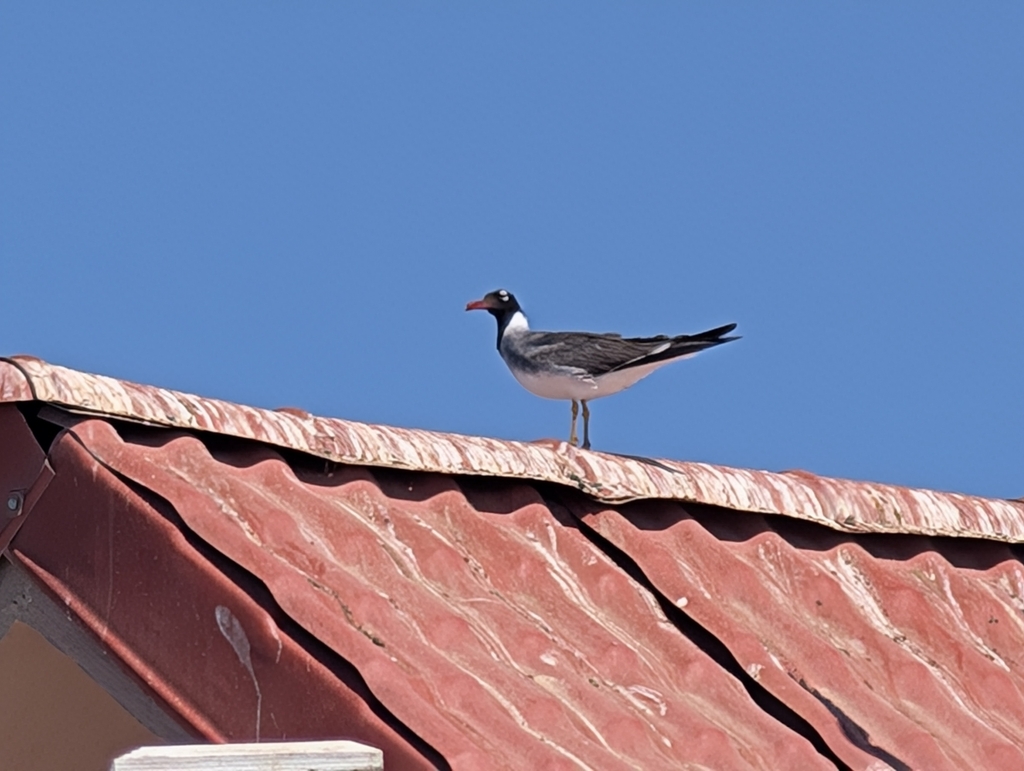
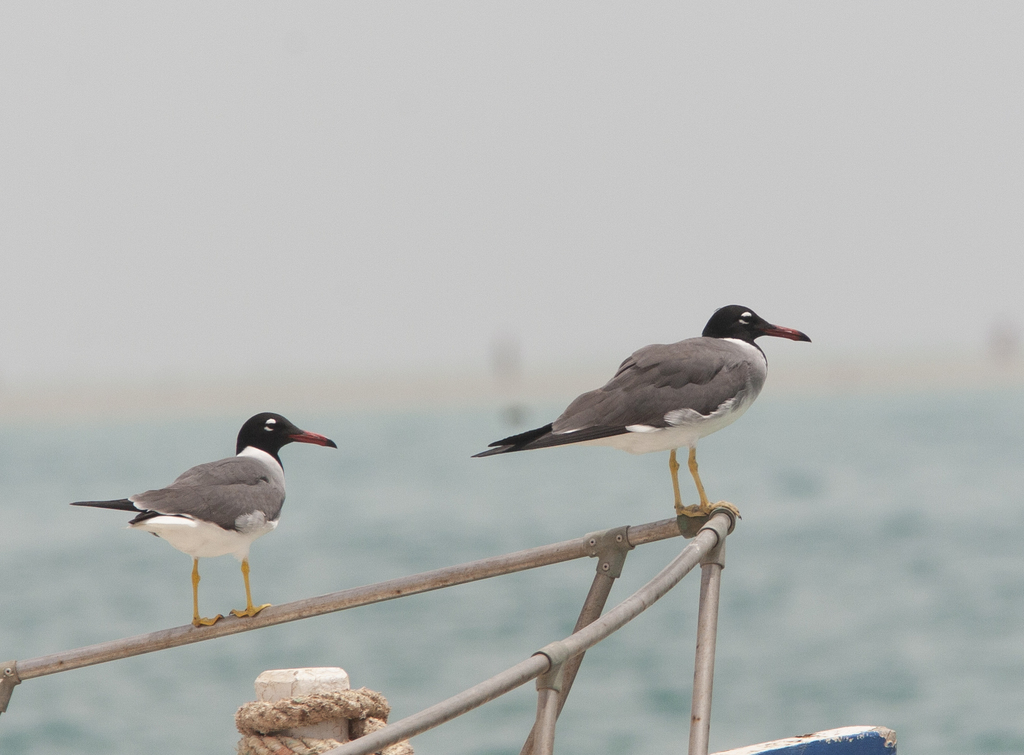
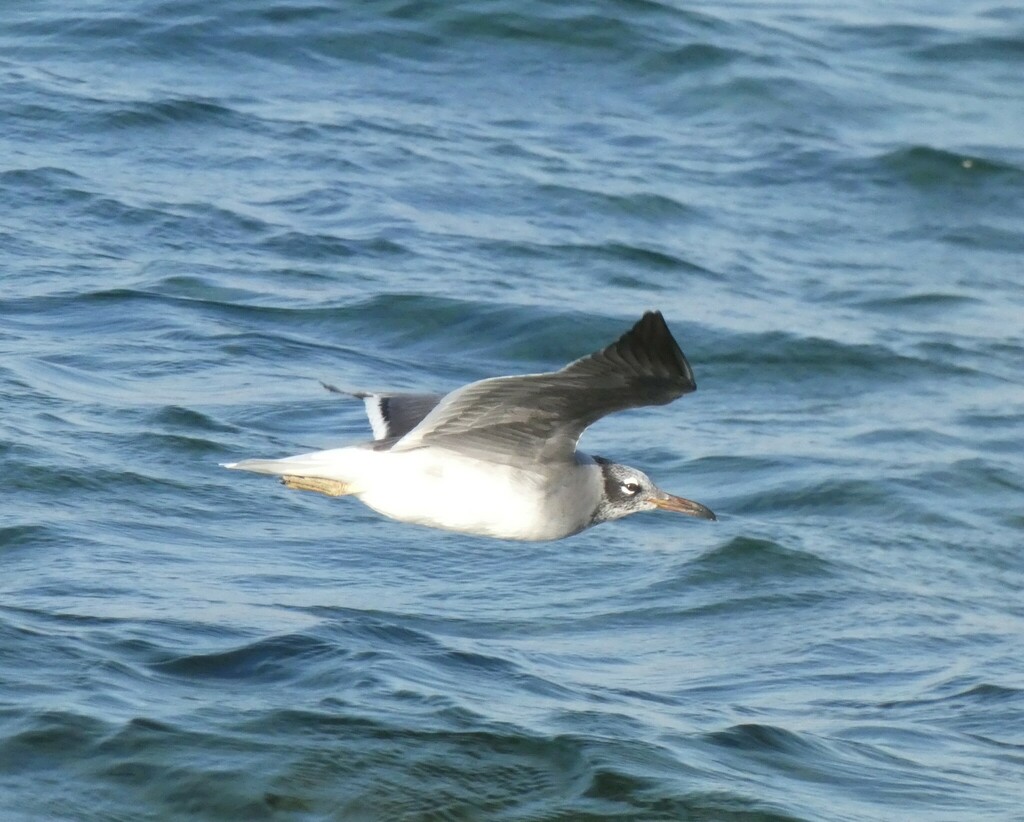
Photos show the species, not always the places on this page.
Length
About 39 to 43 cm (15 to 17 in) long, with a wingspan of about 110 to 115 cm (43 to 45 in)
Weight
About 357 to 415 g (12.6 to 14.6 oz)
Next to a person
About as long as a school ruler plus a hand, and as heavy as a couple of apples
What it eats
Mostly fish, plus crustaceans, molluscs and some insects. It feeds from the water surface and also scavenges around ports, fishing boats and rubbish dumps.
Around people
Calm, give space
How it lives
White-eyed gulls nest in small loose colonies, usually fewer than 25 pairs, on rocky or sandy islands. Pairs lay two or three eggs. Breeding runs from about June to August or September, and colonies break up by October. Adults have a black hood, a white ring around the eye, a grey back and a dark red bill with a black tip. Young birds are brown and take two to three years to get adult plumage.
Where it goes
The species is mostly sedentary and stays around the Red Sea and the Gulf of Aden. After breeding it spreads along coasts, including the Gulf of Suez and the Gulf of Aqaba. Some birds reach Oman and Somalia.
We only draw a journey on the map when scientists have tracked it or clearly documented it. For this animal we have not found one yet.
Populations
IUCN lists the species as Least Concern in its most recent assessment. Earlier assessments listed it as Near Threatened, and several older pages still use that label. The world total is about 37,000 to 44,000 birds, according to a gull research page. The breeding range covers Egypt, Sudan, Eritrea, Djibouti, Saudi Arabia, Yemen and Somalia. A 2001 to 2007 survey of the Eritrean Red Sea islands counted about 5,900 breeding pairs on 49 islands, with about 3,000 pairs on one island, Abeilat. That is roughly one third of the world population. Egg collection by sea cucumber fishermen was the main threat there, and oil pollution and human pressure are named threats for the species.
Meet it respectfully
Keep well back from island colonies, because adults that are flushed leave eggs and chicks exposed. Never land on a nesting island during breeding, and never collect eggs. Do not chase, feed or bait gulls from a boat. I did not open a specific Eritrean visitor rule, so follow your guide and national park staff.
Fun fact
Tap the bulb to light it up.
It breeds only around the Red Sea and Gulf of Aden, so it is endemic to that region.
Its closest relative is the sooty gull. The white-eyed gull is smaller, with an all-black hood.
It follows fishing boats and visits ports and rubbish dumps for scraps.
White-eyed gull in the Ocean Atlas
Places we have researched where this animal is recorded. It is never guaranteed, and some places are for watching from the boat only.
Travel with usComing soonTrusted referralExploringOn pause, story onlyEthics pass
Country colour: pink where we travel, blue where we are exploring or refer, grey for story only.
 Djibouti
 Egypt
 Eritrea
 Israel
 Jordan
 Saudi Arabia
 Somalia
 Sudan
 United Arab Emirates
 Yemen
Sources for this page
- Wikipedia, White-eyed gull, 2026
- Oiseaux.net, White-eyed gull, 2026
- Gull Research Organisation, White-eyed gull and sooty gull, 2026
- Semere et al., Bulletin of the African Bird Club, Eritrean Red Sea islands breeding seabirds, 2008
- GBIF, IUCN Red List category lookup (Larus leucophthalmus), 2026
Facts checked 5 October 2026. Photos: Unsplash licence, or Creative Commons as shown on each photo.
Work in ocean travel?
We are always happy to hear from exceptional local operators, accommodation, conservation organisations and destination experts. If your work fits responsible, small-group ocean travel, we would love to learn more.
Partner with Ocean Calling5-day freediving course in Bali
CHF 1,180