Home / Retreats / Coron scuba
Coron, Palawan, Philippines

Scuba diving certification in Coron

WWII wrecks, PADI course and dugong waters

Learn to dive beside a sunken fleet.

Seven days in Coron, Palawan, to learn scuba diving slowly and safely. You take your PADI course with a licensed local dive centre, then dive the Lusong Gunboat, a WWII wreck close to the surface. There is also a guided lagoon day and a slow day in dugong waters. Beginners are welcome. Small groups, four per instructor.

Scuba certification7 days / 6 nightsMax 6 guests · 4 per instructorLocal team, matched by Rocío
WhenDates on request
How it worksReferral trip · Ocean Match from CHF 19
BookingAsk Rocío to match you

Not sure yet? Tell us about you and ask a question.

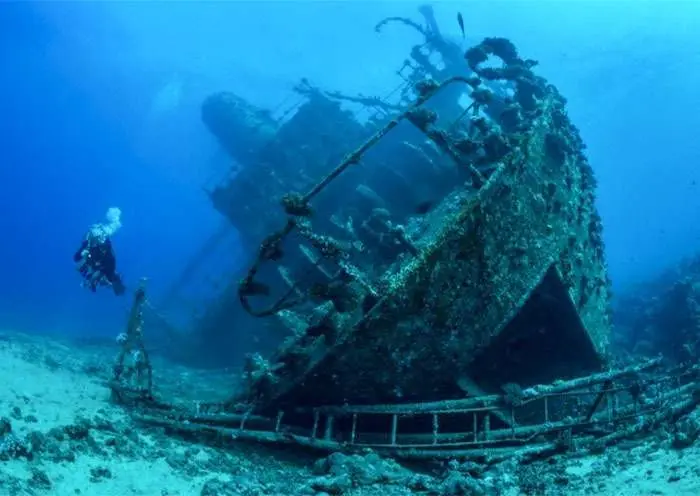
A shipwreck underwater with a diver beside it
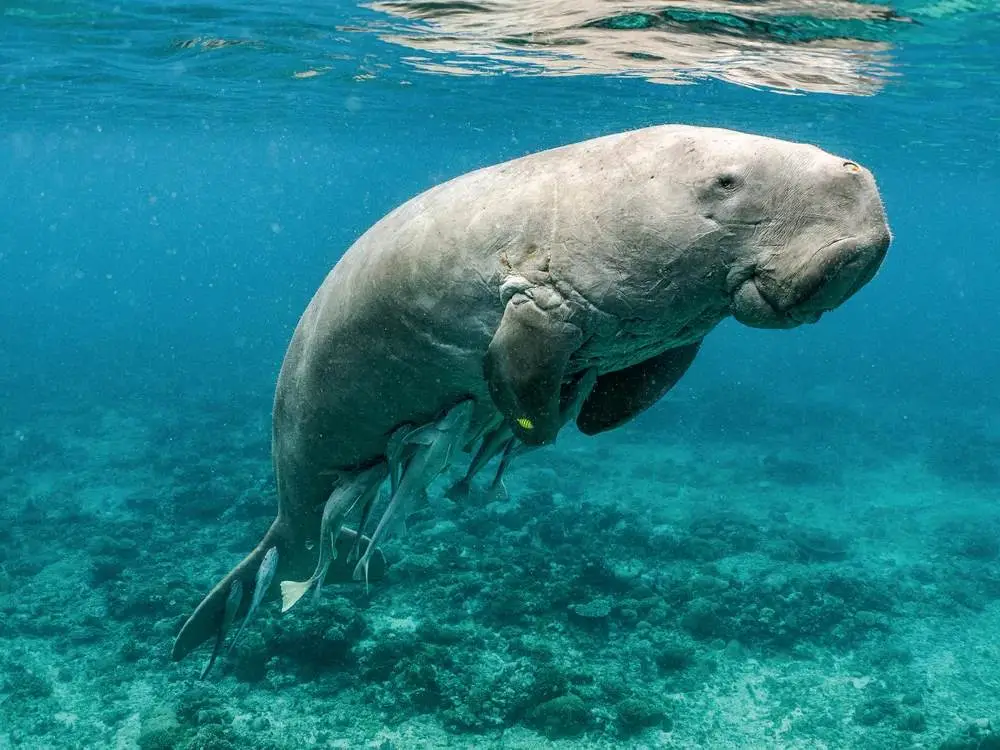
A dugong swimming over a seagrass bed
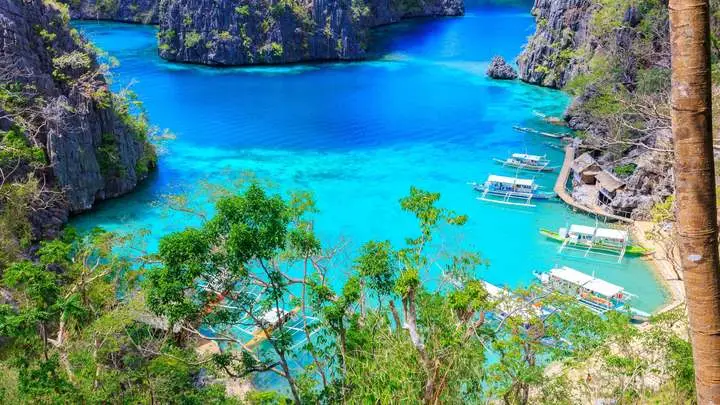
Turquoise lake surrounded by limestone cliffs, seen from above
How this trip works

Rocío matches you, the local team hosts you

Rocío does not host a group here at the moment. She knows the place and the local team, so she matches you with the right people, and you book and pay them directly.

With Ocean Match, from CHF 19, Rocío reads your answers herself and sends you your match or a personal plan. If you later join a trip that Rocío hosts, the fee comes off that price.

Ask Rocío to match youAsk on WhatsApp

  • 5.00 from 33 public reviews on BookRetreats · Read guest stories
  • Small groups with the local team
  • Certified local dive instructors
  • Travel insurance required (water-activity cover from your own policy or the dive centre’s insurance)
  • Pause or skip any activity, any time
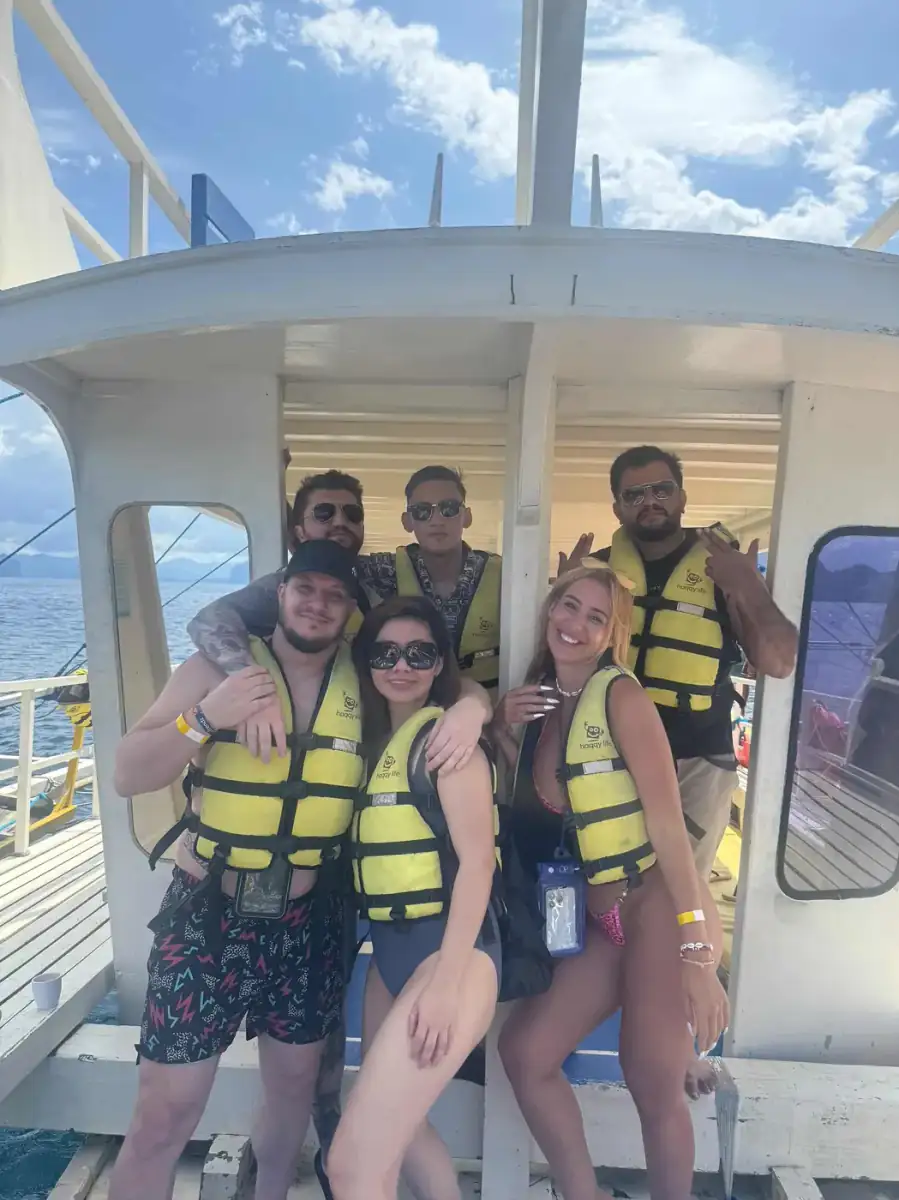
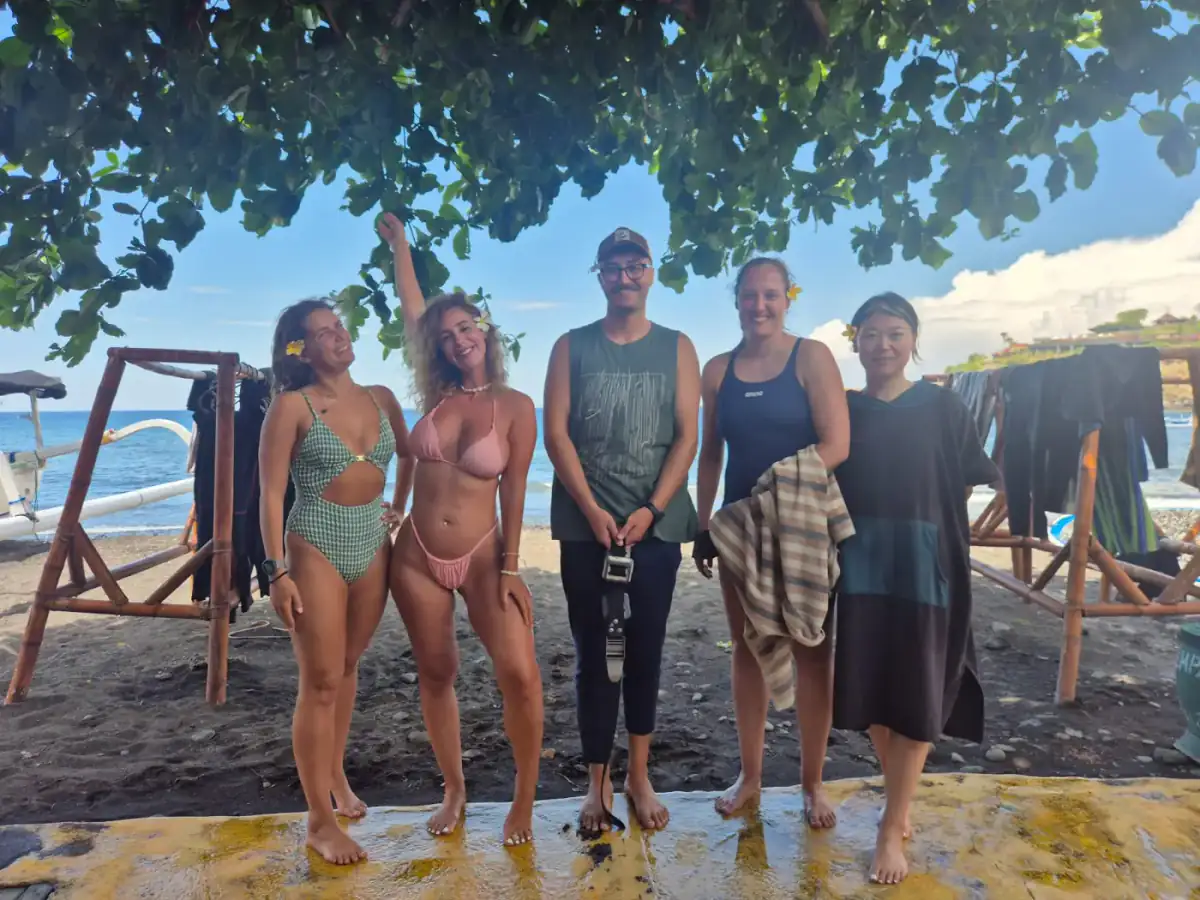
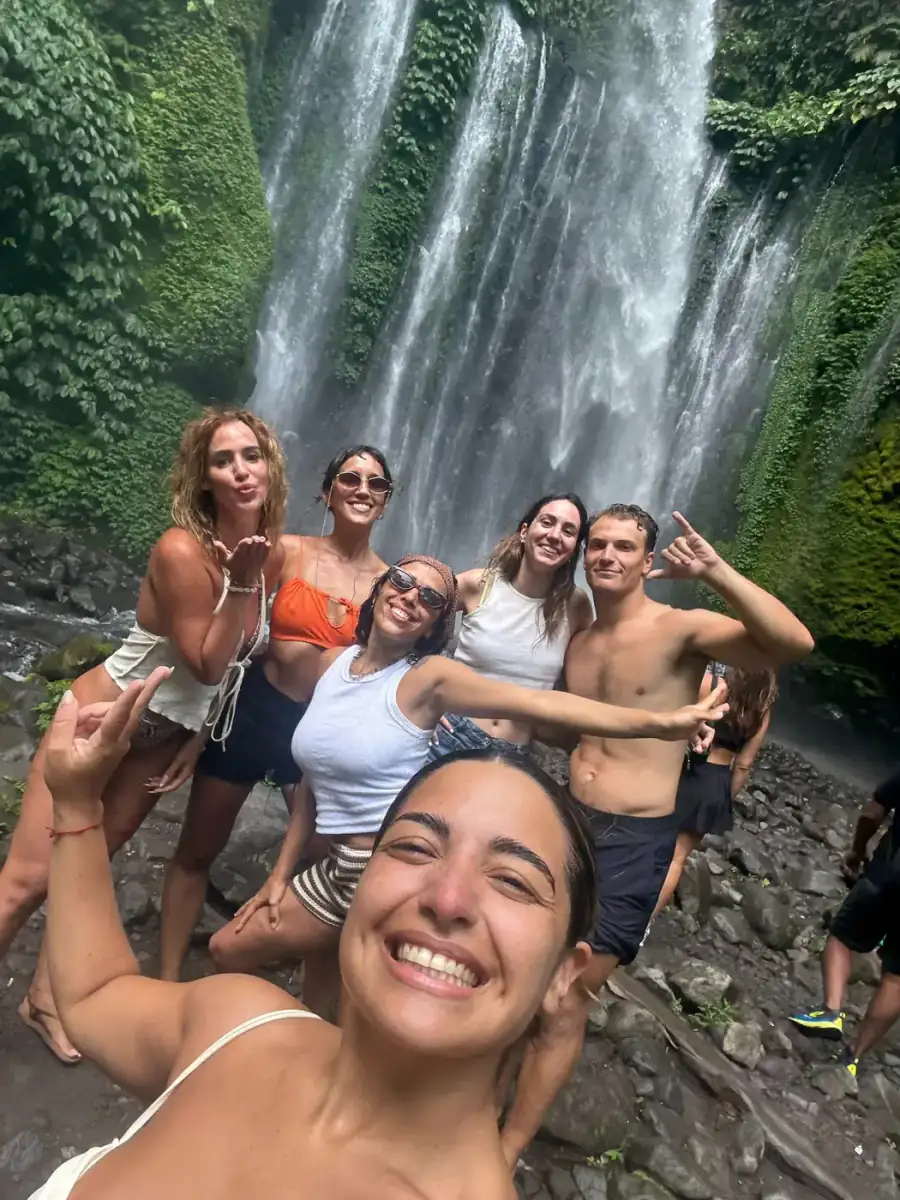
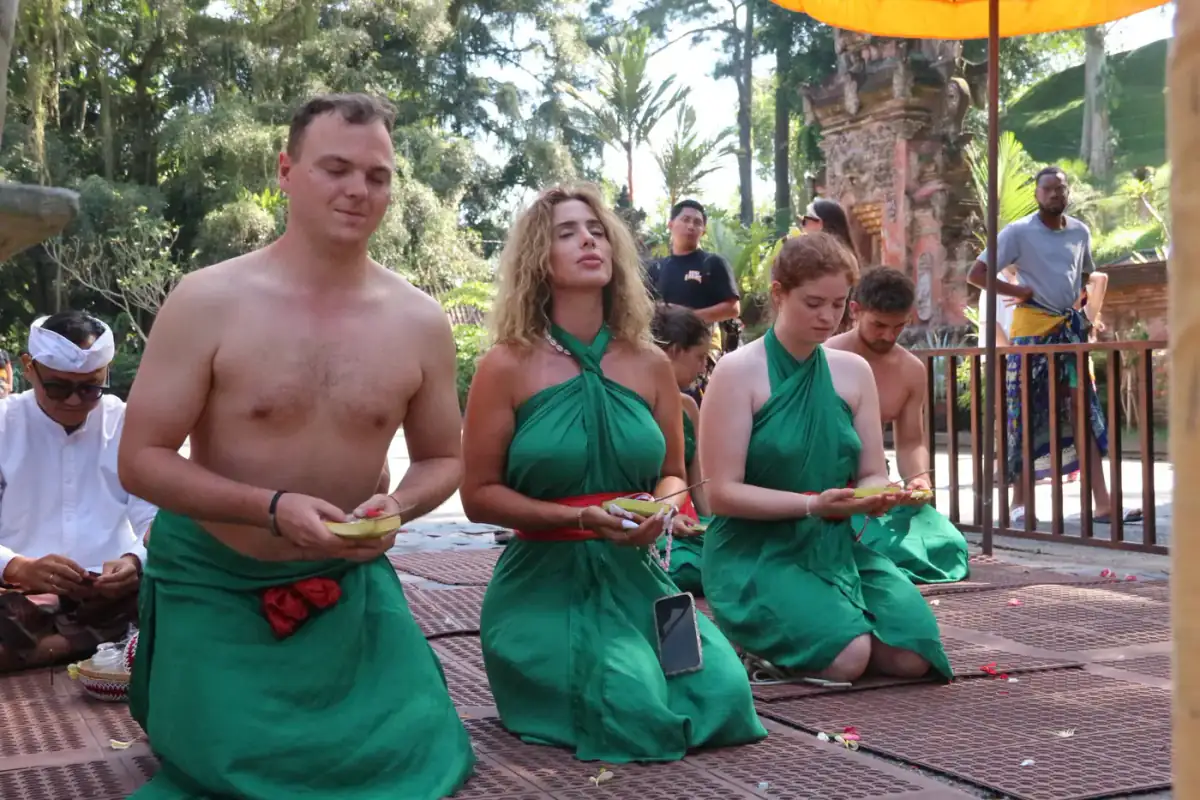
Guests laughing together in a kitchen after a morning on the waterA group of guests in life jackets on the boatGuests and a guide together on the beach after snorkellingGuests together at a waterfallGuests wearing matching green sarongs togetherRocío with guests around a table at the end of the dayReal guests on past trips

“Amazing girl and super organised. Would book trips with her over and over if I could. 100% recommend!”

Katie H., public review on BookRetreats, March 2026

“Rocío is amazing at organizing trips and ocean experiences. Everything was very well planned, and she helped find great diving spots. I highly recommend Ocean Calling Retreats.”

Harry L., public review on BookRetreats, March 2026

Quotes are copied as written from public reviews on BookRetreats. See all guest photos · Read all reviews

Check dates on WhatsAppSend an enquiry

At a glance

Length7 days / 6 nights
LevelEasy
StayA private room in a small hotel in or near Coron town, chosen with you at booking
MealsBreakfast daily
CertificationPADI Open Water L1 (3 days) or Advanced L2 (2 days)
Water levelBeginners welcome. No experience required
EffortLow to moderate
Led byA PADI instructor at a licensed local dive centre
Who it’s forOpen to all

Dates are on request. Tell Rocío when you would like to come, and she checks it for you.

Flexible payment plan The non-refundable deposit secures your place. The balance is due 60 days before departure. Where possible, you can pay it in monthly instalments, with the last one paid by that date. Ask Rocío for a schedule.

Ask Rocío to match youAsk on WhatsApp

To book, message Rocío by email or WhatsApp. No payment here: she replies personally, confirms your place and sends the next steps.

Real guest reviews: Google · BookRetreats

Conservation-led. Ocean Calling guests never chase, touch or bait animals.

Why Easy? A PADI course in warm water with a shallow, accessible wreck. Beginners welcome.

What do the difficulty grades mean?

Gentle. The easiest we offer. Beginner-friendly, at your own pace. Good if you are nervous. No skills needed.

Easy. A beginner course or guided session in calm water, at your own pace. No experience needed.

Moderate. Open-ocean or deeper water with boat days. You should feel comfortable in the water and follow guidance.

Adventurous. Longer days, stronger conditions or more skills needed.

Photo gallery

The villa and rooms, the food, the wildlife you may see and the activities on this trip.

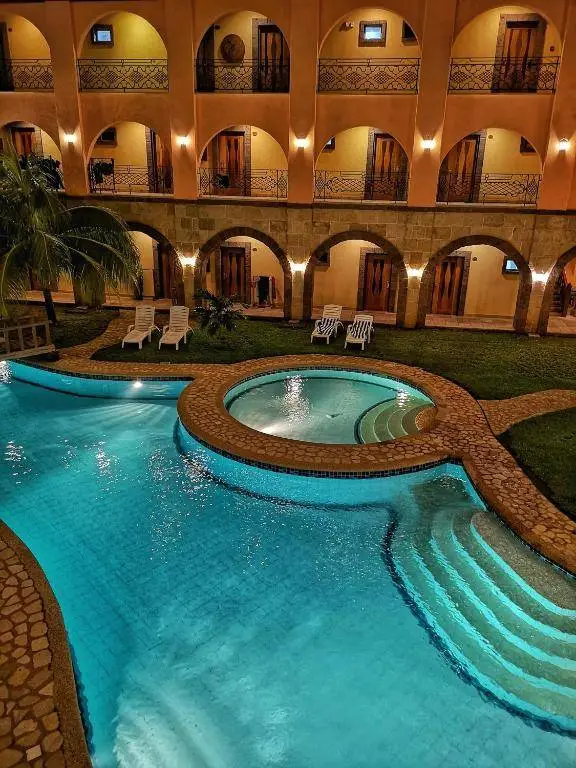
The pool and archways at a small hotel in Coron
1 / 17

The pool and archways at a small hotel in Coron

New or a little nervous?

Your first day, step by step

  1. Arrive at Busuanga (USU), private transfer
  2. Your guide explains the plan and the signals before anything starts in the water.
  3. You choose your pace. You can pause, rest or skip any activity, at any moment, with no pressure to continue.
  4. Nobody chases, touches or baits an animal. The animals decide whether they come close.

Questions beginners ask

What if I feel nervous in the water?
That is very normal, and you are welcome here. Activities are adapted to your level and comfort. Tell your guide or Rocío, and you can pause, rest or skip an activity at any moment.
What if I cannot clear my ears?
Equalising is taught in small steps by your instructor, and nobody is asked to push through. If your ears will not clear, you rest, come up or skip that dive or descent.
Will I hold the group back?
Groups are small, so the pace follows the group and nobody is rushed. Tell Rocío your level before you book, and she will tell you honestly if a trip fits.
Do I need to be fit or experienced?
Each trip page shows its level and what it asks of you. If you are not sure, take our short Is it for me? questions or message Rocío.

Highlights

  • PADI Open Water or Advanced Open Water, with all standard scuba equipment
  • A wreck dive at the Lusong Gunboat, one of Coron’s most accessible WWII sites
  • Guided Tour B: island lagoons, lakes and reef snorkelling
  • A slow day in the northern seagrass and reefs where dugongs feed. Seeing one is rare and never promised
  • Underwater video from selected sessions

The rhythm of your days

  1. Arrive at Busuanga (USU), private transfer
  2. PADI course days with a licensed local dive centre
  3. Wreck dive at the Lusong Gunboat
  4. Guided Tour B boat trip
  5. A day in dugong waters (sightings are rare)
  6. Departure with private transfer

Trip details

Departures
Dates on request
How it works
A referral trip. Rocío matches you with the local team she trusts, and you book and pay them directly. Ocean Match is from CHF 19.

Included

  • 6 nights accommodation
  • Private airport transfer (USU)
  • Daily breakfast
  • PADI course (OW L1 or Advanced L2)
  • All standard scuba equipment
  • Wreck dive at the Lusong Gunboat
  • Guided Tour B
  • A day in dugong waters (sightings are rare)
  • Underwater video from selected sessions
  • Local transport and boat transfers

Not included

  • Flights
  • Travel insurance (required)
  • Lunch and dinner
  • Optional conservation volunteering
How they behave, how big they are and what they eat

🟢 Harmless🟡 Calm, give space🟠 Defensive if pressured🔴 Potentially dangerous, respect

Dugong

Behaviour
Calm, give space Look for a broad tail and a slow breath at the surface over the seagrass. A dugong grazing in peace is a rare and special sight.
Size
2.5 to 3.5 m · about 230 to 420 kg
Diet
Seagrass, an estimated 21 to 36 kg a day.

Sources: Australian Government (DCCEEW) · Great Barrier Reef Foundation

Green turtle

Behaviour
Calm, give space Green turtles graze seagrass in calm shallows; give them space and a clear path up to breathe.
Size
Shell 0.9 to 1.2 m · about 113 to 181 kg
Diet
Mostly seagrass, seaweed and algae.

Sources: NOAA Fisheries

Wildlife, wrecks and reef

A day in dugong waters (never guaranteed)

Part of the trip

Dugongs graze on seagrass in the calm waters of the north. Your day in their waters is slow and respectful, always at a distance. Sightings are never guaranteed.

WWII wrecks, Lusong Gunboat

Part of the trip

Japanese ships lie on the seabed of Coron Bay, sunk in 1944. The Lusong Gunboat rises close to the surface, so it is beautiful even for snorkellers.

Barracuda Lake

Part of the trip

In Barracuda Lake, salt and fresh water meet, and the water grows warmer as you go deeper, to more than 38 °C.

Coral reef

Part of the trip

Coral reefs at Siete Pecados, Sangat and Lusong Coral Garden.

Wildlife is never guaranteed. Months can vary from year to year.

When to go and what you may see

Wildlife and weather by month. Nothing here is a promise.

Wildlife and weather by month for Coron scuba
FeatureJanFebMarAprMayJunJulAugSepOctNovDec
WeatherJanuary: good weather windowFebruary: good weather windowMarch: good weather windowApril: good weather windowMay: wetter monthsJune: wetter monthsJuly: wetter monthsAugust: wetter monthsSeptember: wetter monthsOctober: wetter monthsNovember: not in the best windowDecember: not in the best window
Good weather window: Jan to Apr
Wetter months: May to Oct

The driest months are January to April.

Good to know

  • Kayangan and Barracuda lakes are looked after by the Tagbanua community, and your visit supports them.
Is this place for you?

Before you choose Coron town and Busuanga, Palawan, Philippines

An honest look at food, noise, smells, heat and local customs, so you can decide calmly. If something matters to you, tell Rocío. She will check it for you.

EasyPossible with planningAsk Rocío

Vegetarian and vegan

Easy

Coron town has a few places with vegetarian and vegan dishes, and at least one fully plant-based place. Meals on island hopping boats may be simpler, so tell the boat team in advance.

Gluten free

Ask Rocío

We could not confirm gluten free options in Coron. If you need to avoid gluten, tell Rocío early so she can check with the course and boat team.

Noise and crowds

Possible with planning

Coron town can be loud, with bars and karaoke in the evenings. Kayangan Lake is calm in the early morning but often packed by about 10am, and group boats tend to visit the same spots at the same time. Early starts or afternoon visits are quieter.

Smells, smoke and air

Ask Rocío

We did not find any documented haze or air pollution problem for Coron. Please ask Rocío if you are sensitive to boat engines or smoke in bars.

Heat and humidity

Possible with planning

From January to April, days reach about 32 to 34°C (90 to 93°F) with humidity around 75 to 78%. May is the hottest month and gets wetter. June to November is the typhoon and heavy rain season.

Predictable days and quiet breaks

Ask Rocío

Coron is a course place: Rocío matches you with a freediving or scuba course, and each school sets its own timetable. Ask Rocío how the days are planned and where you can add rest days.

Getting around and mobility

Possible with planning

You fly about 1 hour from Manila, then drive about 30 to 45 minutes to town. In town you use tricycles or walk. Most sights are by boat, and Kayangan Lake needs a short climb up and down stairs. Life jackets are compulsory there.

Breathing and health

Ask Rocío

It is hot and humid. The US health agency lists Palawan, including Coron, as a malaria area, and dengue is present, so please see a doctor or travel clinic before you go. No decompression chamber is confirmed working in Coron; the nearest one listed as working is in Puerto Princesa. Divers with asthma need a dive medical check first.

Local customs

  • Most people are Catholic. In churches, cover your shoulders and knees. Casual clothes are fine in town, but keep swimwear for the boat and the beach.
  • Alcohol is legal. In tourist areas, only drink from sealed bottles or trusted places, because UK advice warns about methanol in some drinks.
  • Public kissing and cuddling can offend people and can even be treated as an offence. Keep affection private.
  • Carry some ID at all times. A printed copy of your passport is fine.
  • Drug laws are very strict, even for tiny amounts. Never eat or buy sea turtle meat or products.
Sources for this section

Protected waters: Coron, Palawan

Yes. Coron Island and its lakes are protected, and the whole of Palawan is a UNESCO biosphere reserve.

Coron Island: Tagbanua ancestral domain and Natural Biotic Area Since 1998

Coron Island, home to Barracuda Lake, is the ancestral domain of the Tagbanua people, who have looked after these waters for generations, and it is protected by several government proclamations.

UNESCO Tentative List Listed 2006

Coron Island Natural Biotic Area is on UNESCO’s Tentative List, the first step towards World Heritage status. It is not yet a World Heritage site.

Palawan Biosphere Reserve (UNESCO) Since 1990

The whole province of Palawan, more than 1.4 million hectares of land and sea across the main island and over 1,700 smaller ones, has carried UNESCO Biosphere Reserve status since 1990. Unlike a World Heritage listing, which recognises outstanding natural or cultural value on its own, a Biosphere Reserve is UNESCO’s idea that people and nature belong together: it protects a living, working landscape where local fishing and farming continue alongside conservation, not apart from it. Palawan earns the description honestly, with well over a hundred of the Philippines’ threatened species, dozens found nowhere else on Earth, and reefs, seagrass meadows and mangroves that ring its coastline.

Coron Bay’s wrecks have a real, sober history: on 24 September 1944, US Navy aircraft found a Japanese supply fleet sheltering at anchor there and sank much of it in a single raid, which is why so many ships still rest here, some shallow enough for a snorkeller to see, some deeper for a diver. None of it is an official marine protected area, so it survives simply because people keep choosing to treat it with care. Nearby, Maquinit hot spring is a small, real curiosity worth knowing: a naturally geothermally-heated saltwater pool, one of very few of its kind in the Philippines. It is not a protected reserve, just a strange, warm gift from the ground.

A protected area still has rules. Your guide explains them before every session.

See all five protected zones and endangered-status basics →

Things to do around Coron scuba

Solid circles are part of the trip. Dashed circles are ideas for your free time.

  • PADI Open Water or Advanced course, part of the trip
  • Wreck dive at the Lusong Gunboat, part of the trip
  • Guided Tour B, part of the trip
  • Reef snorkelling on Tour B, part of the trip
  • A day in dugong waters (sightings are rare), part of the trip
  • Mount Tapyas viewpoint, in the area
  • Maquinit salt-water hot spring, in the area
See all the details and free-time ideas

On the trip

PADI Open Water or Advanced course

With a licensed local dive centre. All standard equipment included.

Wreck dive at the Lusong Gunboat

One of the more accessible WWII sites.

Guided Tour B

Island lagoons, lakes and reef snorkelling.

Reef snorkelling on Tour B

A day in dugong waters (sightings are rare)

Never guaranteed. Distance is kept.

Around Coron scuba: ideas for your free time (not included)

Mount Tapyas viewpoint

More than 700 steps up to a sunset viewpoint. Free entry.

Maquinit salt-water hot spring

A warm salt-water pool of about 39 °C, roughly 25 to 30 minutes from town by tricycle.

Opening hours and fees can change. Rocío will help you plan your free time.

Ethics and safety

  • No chasing or touching marine life.
  • In dugong waters we keep a respectful distance, and sightings are never guaranteed.
  • Your guide explains the local rules before every session, and we follow them.

Practical details

  • Fly to Busuanga (USU).
  • The local dive partner may ask for a short health form, and a doctor’s signature if any answer is yes.
  • Do not fly for the recommended time after your last dive.

Preparation guide. We send you a full guide, gear, fitness, transfers and ocean conditions, once you book. Meanwhile, see Ro’s packing picks ↗.

Flying in from…

You fly into Busuanga (Coron) (USU). Routes and prices change often, so this opens a live search instead of a guess.

Type in any language: Geneva, Genève, Ginebra or Genf all work. Not on the list? Just type your city and press a button.

Visa and entry requirements

Entry rules depend on your passport, your itinerary and current regulations, so please always check for yourself rather than relying on this page. IATA Travel Centre ↗ is a free tool used by airlines worldwide to check passport, visa and health requirements for any nationality and destination. CIBT Visas ↗ is another good place to check. And it is always worth a quick check with your own embassy or consulate too, just in case.

Why we choose slower boats

Speed is one of the simplest things a boat captain controls, and it matters a lot to the animals we visit. Research from many oceans shows the same pattern: a slower boat is less likely to hit a whale, turtle or manatee, gives animals time to move away, and makes less noise under the water.

Slower ships kill fewer whales

A study of 47 recorded ship strikes on large whales found the chance of a deadly injury was 21 per cent at 8.6 knots but 79 per cent at 15 knots. Below 11.8 knots, a strike is more likely to be survived than not.

Vanderlaan & Taggart, 2007, Vessel collisions with whales: the probability of lethal injury based on vessel speed (Marine Mammal Science)

A 10 knot limit works for right whales

Since 2008, the United States has required vessels 65 feet (about 20 metres) or longer to travel at 10 knots or less in set areas and seasons along the East Coast, to protect North Atlantic right whales. A later study estimated these limits cut the risk of deadly ship strikes by 80 to 90 per cent.

Conn & Silber, 2013, Vessel speed restrictions reduce risk of collision-related mortality for North Atlantic right whales (Ecosphere); NOAA Fisheries, Reducing vessel strikes to North Atlantic right whales

Turtles cannot escape fast boats

In Moreton Bay, Queensland, Australia, researchers watched 1,890 green turtle encounters. 60 per cent of turtles moved away from a boat going 4 km/h, but only 22 per cent at 11 km/h and 4 per cent at 19 km/h.

Hazel, Lawler, Marsh & Robson, 2007, Vessel speed increases collision risk for the green turtle Chelonia mydas (Endangered Species Research)

Slow zones save manatees

In Sykes Creek and the Barge Canal on Merritt Island, Florida, eight manatees were killed by boats in the 42 months before year-round slow speed was enforced. In the 42 months after, only one was killed.

Laist & Shaw, 2006, Preliminary evidence that boat speed restrictions reduce deaths of Florida manatees (Marine Mammal Science)

Faster boats are louder

Recordings of 1,582 ships in Haro Strait, between Washington State and British Columbia, showed that most ships get about 1 decibel louder for every extra knot of speed. This noise reaches the high sounds that killer whales use to find food.

Veirs, Veirs & Wood, 2016, Ship noise extends to frequencies used for echolocation by endangered killer whales (PeerJ)

Going slow gives whales quiet time to feed

When ships in Haro Strait were asked to slow to 11 knots, underwater noise fell by 2.5 decibels, about 44 per cent less sound energy. Scientists estimated this cut the feeding time killer whales lose to noise by 22 per cent.

Joy et al., 2019, Potential benefits of vessel slowdowns on endangered southern resident killer whales (Frontiers in Marine Science)

🎒 Packing tips

Do you have everything you need for your next trip?

Check Rocío’s recommendations: reef-safe sunscreen, recycled swimwear, comfortable hair accessories for the mask, and the camera she actually dives with.

See Ro’s picks ↗

As an Amazon Associate I earn from qualifying purchases.

Ready to join us?

Local team, matched by RocíoEasy difficulty, 2 of 4

7 Day Scuba Diving Certification Trip in Coron Palawan

7 days / 6 nights, dates on request

Why Easy: A PADI course in warm water with a shallow, accessible wreck. Beginners welcome.

To book, message Rocío by email or WhatsApp. She replies personally with prices and next steps.

Ask Rocío to match youWhatsApp

Ask Rocío to match youWhatsApp

Questions about Coron scuba

Can I do this with no diving experience?
Yes. Choose the PADI Open Water course at booking.
What is the difference from the freediving trip?
Scuba uses a tank and a PADI course. Freediving is on a single breath. Both share the wreck, lagoon and dugong days.
How do I book?
Message Rocío on WhatsApp or by email with the dates you would like. She answers you herself, confirms your place and sends the next steps. There is no payment on this website.
Who is this trip for?
For complete beginners who want to learn to dive without rush, and for certified divers who want the Advanced course. Solo travellers are very welcome, and groups are small.
Is travel insurance required?
Yes. Travel insurance with cover for emergency evacuation and water sports (from your own policy or the dive centre’s insurance) is required, and your dive partner may also ask to see proof of it. Ocean Calling does not check your policy, so please have it in place before you travel.
Who looks after me in the water?
Local professionals lead your water sessions: A PADI instructor at a licensed local dive centre. Rocío coordinates the trip and is your point of contact.
Will I see a dugong?
Maybe, but probably not. Dugongs are shy and rare, and we never chase or wait them out. The day is about seagrass, turtles and reef life; a dugong is a gift, not a promise.

More answers in Planning & FAQ · About Rocío · Protected waters we visit · Ethical ocean travel journal

Old wrecks in Coron Bay, seagrass a little further north, and your first slow breaths underwater, with a small group and no rush. See how to join.

Coron scubaDates on request
Match meWhatsApp
The shop

Shop with Ocean Calling

Visit the Ocean Calling storefront on Amazon.

As an Amazon Associate I earn from qualifying purchases. You are not only choosing products that respect the ocean, you are also helping us keep going: paying our local partners fairly and keeping our retreats ethical, sustainable and honestly priced for you. 💗