
Green turtle
Chelonia mydas
Adult green turtles mostly graze seagrass and algae in calm shallows. Give them space and leave a clear path up to breathe.
Least Concern (IUCN, 2025) means it is not at high risk of extinction worldwide today. It moved down from Endangered in October 2025, but some regional populations are still threatened.

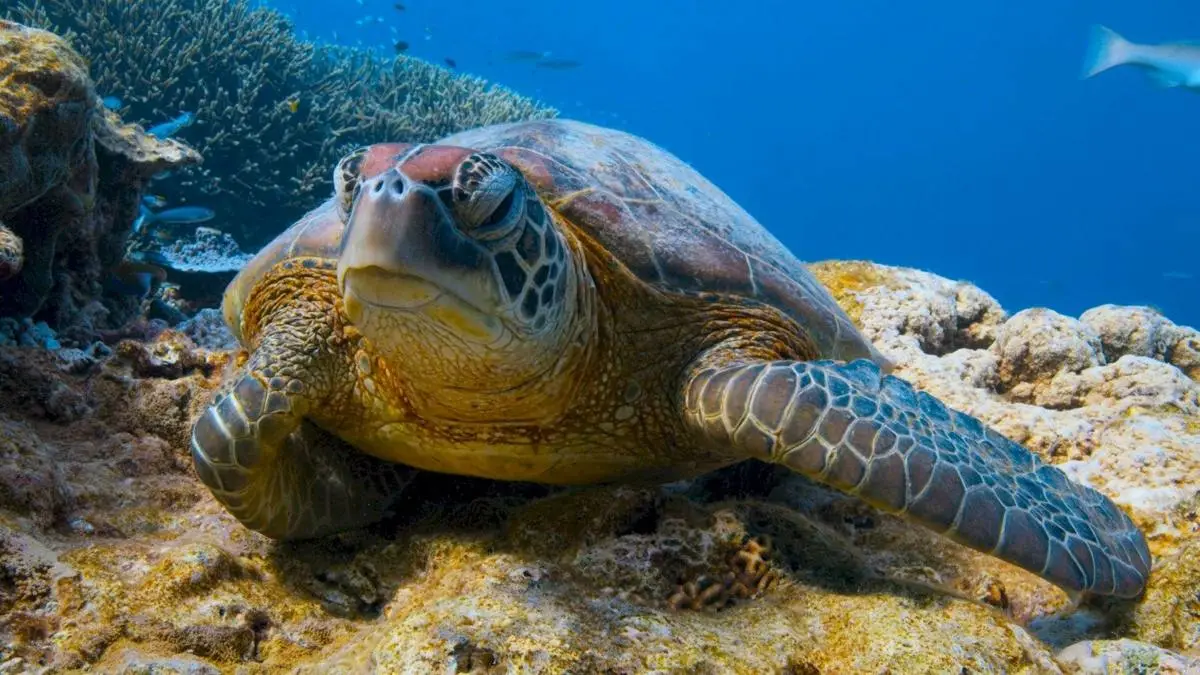
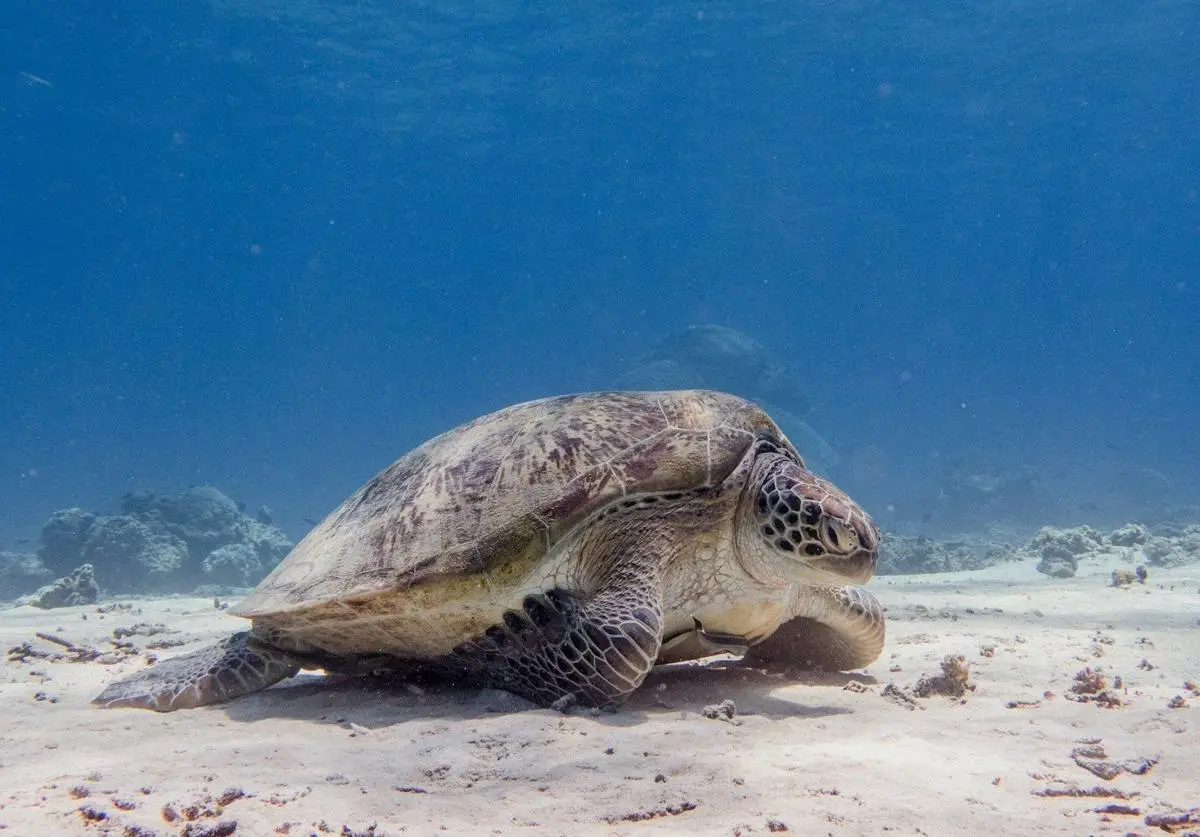
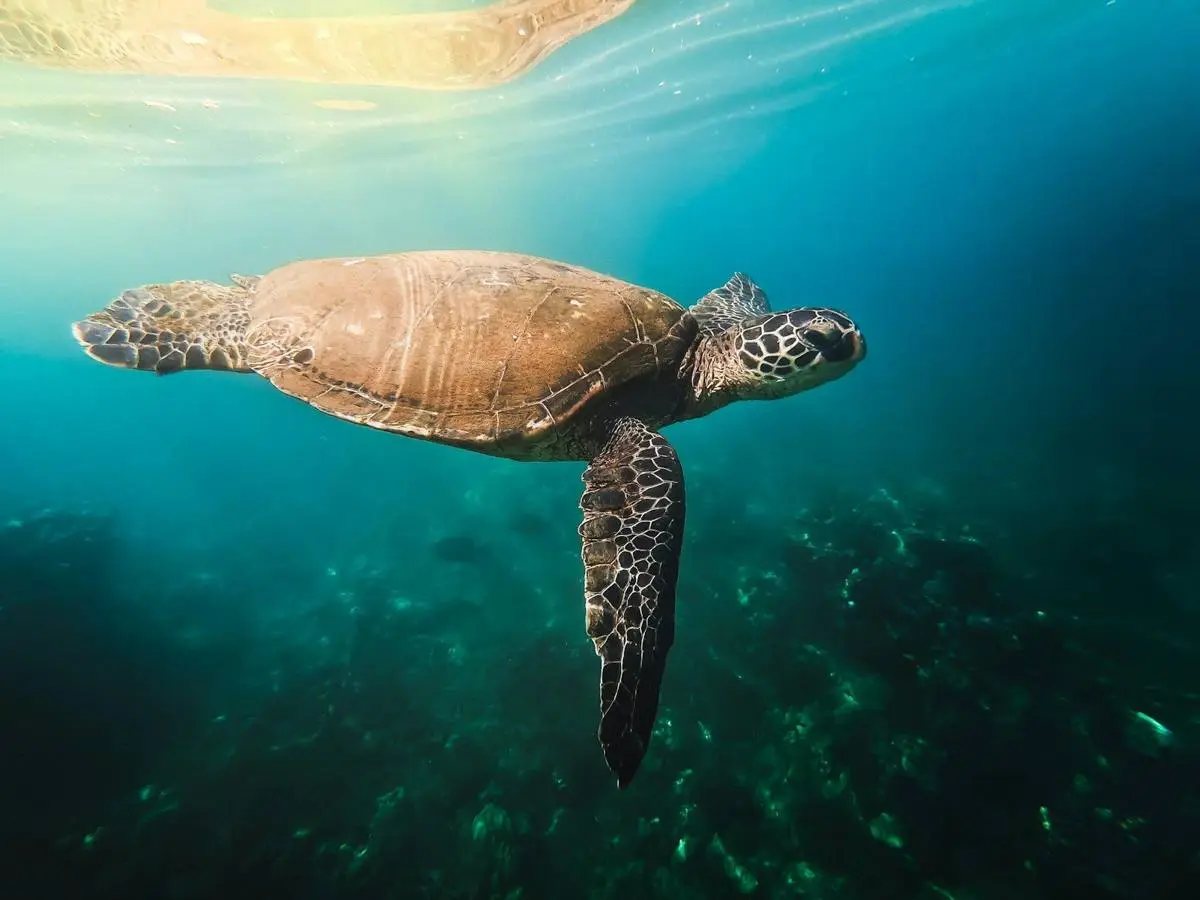


Photos show the species, not always the places on this page.
Length
Shell (carapace) usually about 0.9 to 1.2 m (3 to 4 ft) long
Weight
Usually about 113 to 181 kg (250 to 400 lb); up to about 225 kg (500 lb)
Next to a person
The shell is about as long as an adult's waist height (about 1 m)
What it eats
Young turtles eat both plants and small animals. Larger young and adults mostly eat seagrass and algae, and some populations eat more animal food.
Around people
Calm, give space
How it lives
Green turtles graze on seagrass and algae in coastal feeding areas. Every 2-5 years, females travel hundreds to thousands of miles to nest, laying about 110 eggs per nest at night. They nest alone and take 25-35 years to become adults. Hatchlings spend several years in the open ocean.
Where it goes
Every 2 to 5 years, females travel hundreds to thousands of kilometres from their feeding areas to nest. Five females tagged at Ascension Island swam 1,777 to 2,342 km back to Brazil in 33 to 47 days. In Hawaii, green turtles make a round trip of about 1,931 km between the main islands and their nesting beaches at French Frigate Shoals.
Populations
Big nesting beaches include Tortuguero in Costa Rica, with about 30,000 females a season, Colola in Mexico, with about 28,000, and Raine Island in Australia, with up to 60,000 in a peak season. Around the Gili Islands, 181 green turtles were identified from photos in 2019, and more than 400 since 2016. Around Amed and Tulamben in Bali, green turtles are common.
Meet it respectfully
Never touch, chase, feed or surround a turtle, keep your viewing brief, and never block its way up to the surface to breathe. We keep at least 3 m (10 ft) from turtles and follow local rules, which differ by place. On nesting beaches at night, use no white light or flash, and join only a ranger-led or licensed guided walk.
Fun fact
Tap the bulb to light it up.
In 2025 the green turtle moved from Endangered to Least Concern worldwide, but some populations are still at risk.
At Con Dao in Vietnam, the national park says it holds most of the country's yearly turtle nesting.
Young green turtles eat both plants and animals, and turn mostly to plants as they grow.
The green turtle is not named for its shell, which is brown, grey or olive. The name comes from the green colour of its fat.
Young green turtles wear sunburst-like patterns on their shells, so they are often mistaken for hawksbill turtles.
In a peak season, up to 60,000 female green turtles come to nest at Raine Island, on Australia's Great Barrier Reef.
Follow its journey
Choose a journey and watch it travel. Every line comes from satellite tracking or documented research, and the source is named.
StartEndJourney (the line joins documented areas; real paths vary)
Green turtle in the Ocean Atlas
Places we have researched where this animal is recorded. It is never guaranteed, and some places are for watching from the boat only.
Travel with usComing soonTrusted referralExploringOn pause, story onlyEthics pass
Country colour: pink where we travel, blue where we are exploring or refer, grey for story only.
 Antigua and Barbuda
 Argentina
 Australia
 The Bahamas
 Bahrain
 Bangladesh
 Belize
 Benin
Benin Bermuda
 Brazil
 British Virgin Islands
 Cabo Verde
 Cambodia
 Canada
 Cayman Islands
 Chile
Chile China
China Christmas Island
 Colombia
 Comoros
 Cook Islands
 Costa Rica
 Curaçao
 Cyprus
 Democratic Republic of the Congo
 Dominican Republic
 Ecuador
 Egypt
Egypt El Salvador
 Fiji
Fiji France
 French Polynesia
 Gabon
Gabon Gambia
 Greece
 Guatemala
 Haiti
Haiti Honduras
 Hong Kong
 India
India Indonesia
 Iran
Iran Israel
 Jamaica
 Japan
Japan Jordan
 Kenya
Kenya Kuwait
 Libya
Libya Madagascar
 Malaysia
 Maldives
 Martinique
 Mauritius
 Mayotte
 Mexico
 Micronesia (FSM)
 Mozambique
 Myanmar
 Namibia
 Netherlands
 New Caledonia
 New Zealand
 Nicaragua
 Nigeria
 Norfolk Island
 Oman
Oman Pakistan
 Palau
Palau Panama
 Papua New Guinea
 Peru
Peru Philippines
 Portugal
 Republic of the Congo
 Réunion
 Saint Helena
 Saint Lucia
 Samoa
Samoa Saudi Arabia
 Senegal
 Seychelles
 Solomon Islands
 Somalia
 South Africa
 South Korea
 Spain
Spain Sri Lanka
 Sudan
Sudan Taiwan
 Tanzania
 Thailand
 Timor-Leste
 Trinidad and Tobago
 Türkiye
 Turks and Caicos Islands
 United Arab Emirates
 United Kingdom
 United States
 Uruguay
 Vanuatu
 Vietnam
 Yemen
YemenRead more about the green turtle
Sources for this page
- NOAA Fisheries, 2026
- SEE Turtles, 2026
- NOAA Fisheries
- Luschi et al., 1998, Green turtles migrating from Ascension Island
- NOAA Fisheries, By the numbers: the annual migration of green sea turtles in Hawaii
Facts checked 29 September 2026. Photos: Unsplash licence, or Creative Commons as shown on each photo.
Work in ocean travel?
We are always happy to hear from exceptional local operators, accommodation, conservation organisations and destination experts. If your work fits responsible, small-group ocean travel, we would love to learn more.
Partner with Ocean CallingSwim with humpback whales in Moʻorea, September 2027
from CHF 4,500