
Small Group Retreat, Solo Traveler: What It Really Means
What a small group retreat really means when you are the only one who came alone: why six people feel different from sixteen, what is uncomfortable, and what to ask before you book.
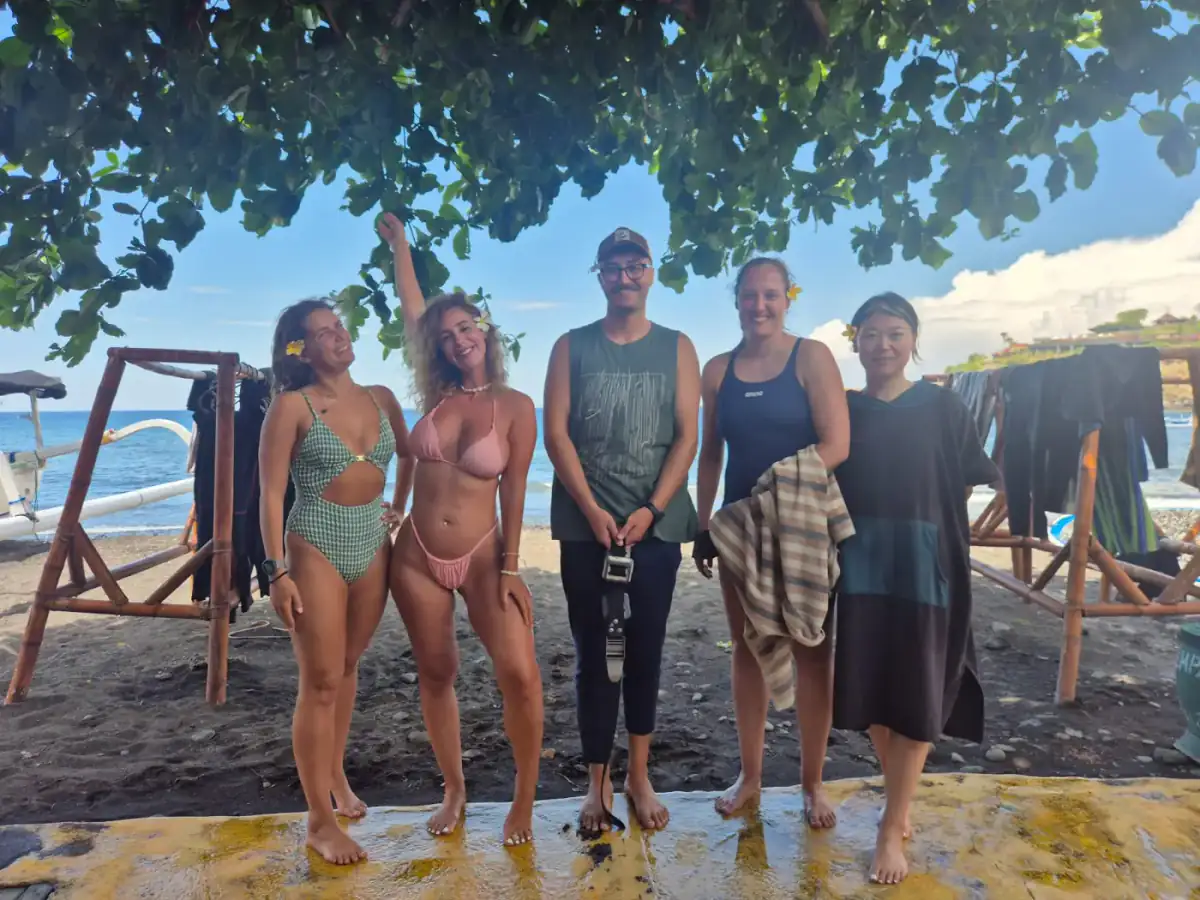
You book alone. You arrive, and everyone else seems to have come in pairs: two sisters, a couple, two old friends. Six people around one dinner table, and you are the only one without your own person. Will it feel lonely, or will it be fine? Here is the honest short answer about a small group retreat for a solo traveller. In a group of six there is nowhere to hide, and that is both the uncomfortable part and the reason it usually works. A small group cannot quietly forget the person who came alone. Whether it welcomes them well depends on how the trip is run.
What "small group" really means for a solo traveller
"Small group" is not a protected term. One company uses it for sixteen people, another for twelve, another for six. When you travel alone, that number matters more than almost anything else in the description, because it decides what kind of social space you walk into.
In a group of twenty, a solo traveller can drift to the edges. Nobody notices, and nobody feels responsible. That can be restful if you want to be anonymous, and lonely if you do not. In a group of six there is no edge. Everyone sees everyone. You are part of the conversation, or you are clearly not, and the whole table can feel the difference.
At Ocean Calling we keep our hosted retreats to a maximum of six guests. We chose that number for the ocean first: fewer people in the water means less noise, less crowding around wildlife, and a guide who can actually watch everyone. But it also changes the trip for the person who arrived alone, and that is what this article is about.
Why do six people feel so different from sixteen?
A small, well-known piece of research explains a lot here. In 1995, Robin Dunbar, Neil Duncan and Daniel Nettle watched people talking in natural settings and published the results in the journal Human Nature. They found that freely forming conversations tend to stop at about four people. When a group grows bigger, it usually splits into two or more separate conversations. The authors linked this limit to the simple mechanics of speaking and hearing.
Think about what that means at dinner. Six people can still share one conversation for a while, and when they split, they split into two or three small ones that are easy to join. Sixteen people almost always break into many separate circles, and the person who came alone has to find a way into one of them, again and again, at every meal.
So size is not only about comfort. It is about mechanics. A small table gives a solo traveller fewer doors to knock on, and the doors are closer together.
You are not the only one travelling alone
If you hesitate because you think solo travel is unusual, the numbers say otherwise. ABTA, the UK travel association, asks a representative sample of about 2,000 people every year who they went on holiday with. In its 2024 Holiday Habits research, 16% said they had travelled on their own in the previous twelve months, up from 11% the year before, and the rise was strongest among 35 to 44 year olds. ABTA's 2025-26 report put solo travel at 19%, the highest figure since it began tracking it in 2014.
These are UK figures, and they do not tell us how many people joined a group as a solo guest, so we would not stretch them further. But they do show that booking alone is a normal choice, not a strange one. On a small retreat, there is a fair chance you will not be the only person who came by themselves.
The uncomfortable part, honestly
We do not want to sell this as effortless. Being the only person without a pair in a small group has its own texture. Couples pair off naturally between dives. Friends share a room and a running joke from home. There will be small moments when you notice the imbalance, and pretending otherwise would not be fair to you.
The useful question is not whether those moments happen, but whether they turn into a feeling of not belonging. What makes the difference is rarely a big gesture. It is ordinary structure: shared briefings, shared meals, shared time in the water, and a guide who notices when someone is on the edge and gently brings them into the plan. When the day is organised around the ocean instead of around who arrived with whom, the pairs matter much less.
It also helps to know you are free to step back. On our retreats any guest can skip any activity, and a quiet afternoon alone with a book is a perfectly good choice. For many solo travellers, permission to be alone without being left out is exactly the balance they are looking for.
Money: the single supplement question
Solo travel has a practical side that is easy to forget. Hotels and many tour operators price rooms for two people. When one person uses a double room, the operator earns less, so they add a single supplement. Which?, the UK consumer organisation, found solo travellers being charged up to 87% more than people holidaying as a pair.
Some operators avoid this by offering to match solo guests with another solo traveller of the same sex in a twin room. Others run trips with dedicated single rooms. Neither is right or wrong. What matters is that you know before you book. Ask any operator, us included, exactly how rooms are priced for someone travelling alone, and whether sharing is optional or expected.
The ethical layer: why small groups are better for the ocean too
The same small size that helps a solo traveller feel seen also changes how a group behaves around wildlife. Codes of conduct like Green Fins, the UN Environment Programme initiative for dive and snorkel centres, ask people not to touch, chase or feed marine life. That is much easier to keep when a guide looks after six people instead of twenty, and when nobody needs to push forward to see.
A small group is also quieter in the water, crowds a turtle or a ray less, and can change plans when the conditions or the animals ask for it. We wrote more about this in the benefits of a small group retreat. For a solo traveller there is a quiet bonus: you are not just one seat filled on a big boat. You are one of six people sharing something that only works because the group is small.
How to choose a small group as a solo traveller
A few questions tell you a lot before you book. What is the real maximum number of guests, and is it fixed? How many guides are in the water with the group? Are rooms shared or private, and what does that cost? Can you skip an activity without any pressure? What is the usual mix of guests: mostly couples, mostly solo travellers, or both?
If diving is part of the trip, our guide on choosing a dive operator when you travel solo helps too. And for the practical side of packing alone, a simple set of packing cubes from a tropical travel kit keeps your things in order on a shared boat, while a roll-top dry bag means you are not asking a stranger to hold your phone on day one.
What a small group can and cannot promise
No group size guarantees friendship. Six people can still be six strangers, and a good group cannot be booked. What a small group can do is remove the option of politely ignoring the person who came alone. In a big group, that gap can stay invisible for a whole week. In a small one, everyone feels it. That is uncomfortable, and it is also exactly what makes real inclusion possible.
If you have ever wondered what a small group feels like from the inside, alone or not, the honest answer is that it depends on the people and on the care in the design. We try to take care of the second part. If this made you curious to try it yourself, you can explore our retreats.
Questions people ask
Is a small group retreat good for a solo traveller?
Often, yes. In a group of six nobody can be quietly forgotten, and shared briefings, meals and time in the water give a natural structure. It does not guarantee friendship, but it removes the option of ignoring the person who came alone.
How many people is a small group?
There is no fixed definition. Some companies use it for sixteen people or more. Ocean Calling's hosted retreats have a maximum of six guests, so always ask for the real maximum before you book.
Why do big groups feel lonelier for solo travellers?
A 1995 study by Dunbar, Duncan and Nettle found that natural conversations tend to stop at about four people before they split. Large groups break into many separate circles, so a solo traveller has to find a way in again and again.
How common is solo travel?
In ABTA's UK Holiday Habits research, 16% of people said they had holidayed alone in the year to August 2023, up from 11% the year before. Its 2025-26 report put the figure at 19%, the highest since it began tracking in 2014.
What is a single supplement?
It is the extra charge some hotels and operators add when one person uses a room priced for two. Which? found solo travellers paying up to 87% more than people travelling as a pair. Ask how rooms are priced before you book.
Wildlife encounters are never guaranteed and never forced. Ocean Calling works only with vetted, ethical local operators, and every animal is free to approach, or not, entirely on its own terms.
Sources & further reading
- Dunbar R.I.M., Duncan N.D.C. & Nettle D., 1995. Size and structure of freely forming conversational groups. Human Nature 6, 67-78 (Northumbria University research portal).
- ABTA, 2024. ABTA research reveals year-on-year rise in solo travellers.
- ABTA, 2025. Holiday Habits Report 2025-26.
- Which?. Singled out: Which? research finds solo travellers being charged up to 87 per cent more than those holidaying as a pair.
- Coral Triangle Center. Responsible diving and snorkeling the Green Fins way.
Further reading on Ocean Calling: More from the journal · Wildlife & the law · See the retreats · Ocean Atlas
Find the retreat that fits you
Small groups of up to six guests, unhurried days and local experts. Tell us how you feel in the water and we will point you to the right trip.