
Blue Mind: Why We Love the Ocean
Wallace J. Nichols popularised 'Blue Mind.' Here's what the term means, what research actually supports, and where the evidence is still catching up.
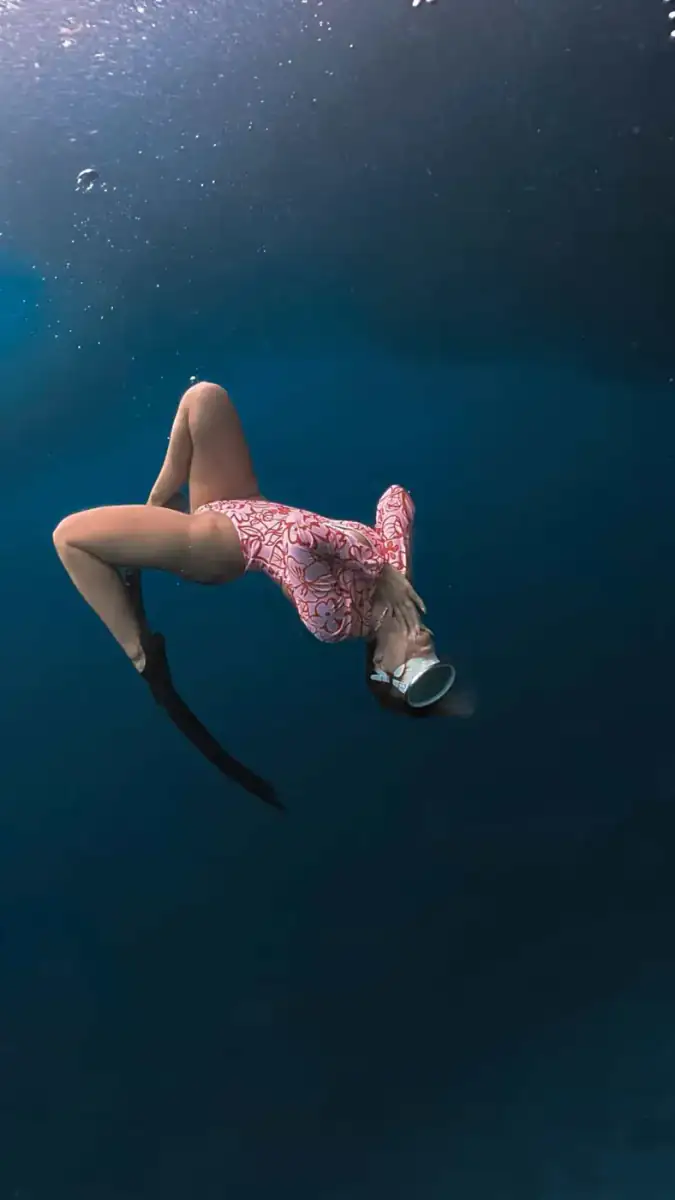
Some places ask nothing from us, and still change us.
The ocean is one of them.
You feel it before you can explain it. The first breath of salty air. The horizon opening like a long exhale. The mind, usually full of tabs and lists and half-finished thoughts, gets quieter. Not empty. Just quieter.
For many people, the sea does not feel like scenery. It feels like recognition. And there is a name for that feeling that has travelled further than almost any other idea about water and wellbeing: Blue Mind.
So why do we love the ocean? The short answer: research on "blue space" links time near water with better mood, your body really does change when your face meets cool water, and meeting wildlife can bring awe. The science of Blue Mind is solid in some parts and still catching up in others, and both halves are worth knowing.
Who came up with "Blue Mind", and what does it actually mean?
Blue Mind is the term marine biologist Wallace J. Nichols popularised in his 2014 book of the same name, to describe the calm, mildly meditative state many people feel near, in, on, or under water. Before that, Nichols worked on sea turtle conservation in Baja California, and he has said the Blue Mind idea "came out of the sea turtle stuff". From 2011 he also hosted Blue Mind Summits that brought together researchers from different fields. Blue Mind was his attempt to put words to something he kept noticing: people around water seemed calmer, more open, more themselves.
Let me be precise here: "Blue Mind" is not a medical diagnosis, and it is not an established term inside neuroscience or clinical psychology. It is a popular, evocative label, built partly on real research and partly on personal observation. Researchers working in this space more often use the plainer term blue space: outdoor places where water is a visible, central feature. Earlier reviews, such as a 2017 systematic review of 35 studies by Gascon and colleagues, found a positive association between blue space and mental health and wellbeing, while calling the evidence limited and varied. A 2026 systematic evidence map in the journal Environmental Research (Beute, Marselle and colleagues) gathered 139 studies on specific types of blue space and mental health. Coastal places were the most studied (94 studies) and mood was the most measured outcome, but only six studies compared different types of water directly, so the authors concluded the evidence cannot yet say which kinds of blue space help most.
So the honest version of the story is this: something real is going on, just less tidy and less singular than the phrase "Blue Mind" suggests. There is no single switch in the brain that water flips. There is a pattern, seen across enough studies, that people tend to feel better around it.
This is part of what makes ethical ocean travel worth taking seriously. The ocean is not only a place we visit. It seems to be a place that changes us. Once we accept that, the relationship shifts a little. We stop treating the sea as a backdrop for our plans and start meeting it with more attention.
Your body remembers more than you think
Then there is the other layer of the story: what happens the moment your face goes into the water.
For freedivers, divers, and even anyone who has floated quietly with their face submerged, the shift can feel immediate. The body settles into a different rhythm. The world narrows. Time changes shape.
Part of that is the mammalian diving reflex, a genuinely well-documented physiological response triggered when the face is immersed, especially in cool water. Medical references describe it as an oxygen-conserving response: when the face is immersed and the breath is held, the heart slows and blood flow to the limbs is reduced, keeping more oxygen for the heart and brain. It is an old reflex, shared in some form across diving mammals, and it is one of the few pieces of this whole story that does not need much hedging: your body actually does something different when your face meets the sea.
This is one reason diving can feel so different from other travel experiences. It is not only that you are seeing another world. It is that your body is behaving differently inside it. You cannot rush through the ocean the way you can rush through a city. You have to soften. You have to pay attention.
That is also why ethical diving is about more than technique. Calm matters. Patience matters. The best moments in the water tend to be the ones where ego shrinks a little and awareness grows, helped by simple gear that does not fight you. A mask from a low-volume mask and snorkel list that fits your face means fewer leaks and fewer interruptions, and a roll-top dry bag keeps a phone dry on the boat when salt water finds a zipper you trusted too much.
Why wildlife encounters stay with us
There are travel moments you post, and there are travel moments that rearrange something inside you.
Seeing marine wildlife up close can do that.
A whale surfacing in silence. A dolphin changing direction with impossible grace. A turtle gliding past as if time works differently down there. These moments can trigger awe, and awe is not a trivial emotion. A 2015 series of studies by Piff and colleagues, published in the Journal of Personality and Social Psychology, found that awe made people feel smaller in relation to the world around them, what the researchers called "the small self", and that this shift was linked to more generous, more helpful behaviour afterwards. Awe can make us feel smaller, and also more connected, less self-absorbed, and more aware of something beyond our own concerns.
That matters for responsible wildlife encounters. The real value of such moments is not that they make us feel special. It is that they remind us we are not the centre of everything.
There is also a strand of neuroscience worth mentioning carefully. A 2009 study by Butti, Hof and colleagues counted Von Economo neurons, a distinctive type of large, spindle-shaped brain cell, in bottlenose dolphins, Risso's dolphins and beluga whales, and examined two humpback whale brains for comparison. The distribution of these cells resembled what had been reported in humans, great apes and elephants, and the authors suggested they may have evolved separately in these groups, perhaps linked to social and emotional abilities. That link is still a hypothesis. It does not give us licence to turn whales and dolphins into human versions of ourselves, and it is not proof of anything like human-style consciousness. But it is a real anatomical finding, and it adds weight to the case for restraint and respect around these animals, instead of treating an encounter as a photo opportunity.
The best encounters are not the most intrusive ones
One of the odd myths in marine tourism is that a successful encounter is the closest one.
It is not.
The best encounter is the one that leaves the animal's dignity intact.
That is where ethical marine tourism becomes practical: distance, timing, group size, noise, the judgement of the guide, and the decision not to force a moment just because someone paid for one. In places where whale tourism has grown fast, Moʻorea among them, how close boats and swimmers may get to humpback whales has become an active question for regulators, operators and the communities who share the water. What is allowed varies and is still being discussed. What does not change is the principle: sightings are never guaranteed, and whales should never be chased. Wildlife encounters are unpredictable. Swimming with humpback whales should always follow local regulations and experienced professional guidance.
Working with vetted local operators and certified guides who know the current rules, and who will turn a boat around rather than push closer, is not bureaucracy getting in the way. It is the experience being mature enough to accept limits.
Ethical travel is not a purity test
This part matters.
Sustainable ocean travel is not about becoming a flawless person who never makes an imperfect choice. It is not a performance or a badge.
It is a practice of paying attention.
Travel has impact. Flights, fuel, accommodation, and human presence all shape the places we move through. Pretending otherwise does not make travel more ethical. It only makes the conversation less honest.
A better approach is quieter. Ask better questions. Choose smaller groups where possible. Learn who is actually guiding the experience. Notice whether wildlife is being treated as a living presence or as content. Accept that sometimes the most respectful day on the water is the one where nothing dramatic happens.
This is where responsible ocean travel becomes less about rules and more about character: curiosity instead of entitlement, presence instead of consumption, respect instead of control.
The ethical layer: why we protect what moves us
We like to imagine that conservation begins in the rational mind, with facts, charts and policy. Sometimes it does. But often it begins somewhere softer: with the body calming down by the shore, the thrill of slipping beneath the surface, the quiet shock of realising a wild animal has a full existence that has nothing to do with your presence.
Environmental psychologists have long argued that people who feel a real bond with a natural place, the ocean included, tend to be more willing to look after it. That is not a settled fact so much as a reasonable, widely-shared hypothesis, and it lines up with something Nichols argued too: that protection is easier to sustain when it grows out of affection rather than obligation.
The sea has a way of making people feel both smaller and more alive. It can humble us without diminishing us, and remind us that we belong to the natural world rather than standing above it. Maybe that is why so many of us keep returning to the water. Not to escape life, but to remember how to be in it.
Why the pull is real
Our attraction to the ocean is not random, even if "Blue Mind" is a friendlier phrase than the evidence behind it is precise. Blue space research links water to better mood, at least in part, even if it cannot yet say which kinds of water help most. The diving reflex genuinely changes the body the moment your face meets the sea. Awe genuinely reshapes how self-focused we feel. None of this proves the ocean fixes anything. But it helps explain why the pull is real, even where the science is still catching up.
If you want to go a little deeper into what the research does and does not support, our piece on why being near the ocean feels calming looks specifically at the blue space evidence.
So perhaps the better question is not only why we love the sea, but what we do with that love. If the ocean gives us calm, wonder, and perspective, the least we can offer back is care. Not perfect, not loud, just thoughtful. The kind that leaves room for marine life, respects local knowledge, and trusts that the best experiences are often the ones we do not try to control.
Questions people ask
What is Blue Mind, exactly?
Blue Mind is a term popularised by marine biologist Wallace J. Nichols in his 2014 book of the same name, describing the calm, reflective state many people feel near or in water. It is not a medical or clinical term. Researchers more often talk about blue space.
Is Blue Mind backed by science?
Partly. Reviews link blue space with better mood and wellbeing, and the diving reflex is well documented. But a 2026 evidence map of 139 studies found the research cannot yet compare different kinds of water, and claims of a single brain mechanism go further than the evidence.
Why does being in the ocean feel so calming?
Probably a mix of things: blue space is linked with better mood, the sea holds attention gently, and putting your face in water while holding your breath triggers the diving reflex, which slows the heart.
Do whales and dolphins have brain cells like ours?
A 2009 study found Von Economo neurons in several toothed whales and dolphins, with a distribution similar to humans, great apes and elephants. Their link to social and emotional abilities is a hypothesis, not proof of human-like minds.
How do I choose a responsible wildlife experience?
Look for small groups, clear wildlife rules, experienced local guides and operators who follow current local regulations. A good operator never promises close encounters and never chases wildlife.
Do I need to be an experienced diver to enjoy ocean travel?
Not at all. Many ocean experiences suit beginners. What matters most is choosing one that matches your comfort level and is guided with care and safety.
If this made you curious about meeting the ocean this way, you can explore our upcoming retreats.
Wildlife encounters are never guaranteed and never forced. Ocean Calling works only with vetted, ethical local operators, and every animal is free to approach, or not, entirely on its own terms.
Sources & further reading
- Beute, Marselle et al. Mental health benefits of specific blue space types and characteristics: systematic evidence map. Environmental Research 124054. University of Surrey Open Research, 2026.
- Gascon et al. Outdoor blue spaces, human health and well-being: a systematic review of quantitative studies. International Journal of Hygiene and Environmental Health 220(8). University of Exeter repository, 2017.
- Physiology, Diving Reflex. StatPearls / NCBI Bookshelf, accessed 2026.
- Piff et al. Awe, the small self, and prosocial behavior. Journal of Personality and Social Psychology. Emory University (author copy), 2015.
- Butti, Sherwood, Hakeem, Allman and Hof. Total number and volume of Von Economo neurons in the cerebral cortex of cetaceans. Journal of Comparative Neurology 515: 243-259. Caltech Authors, 2009.
- A Blue Mindset for Ocean Conservation (Wallace J. Nichols). National Wildlife Federation, 2015.
Further reading on Ocean Calling: More from the journal · Wildlife & the law · See the retreats · Ocean Atlas
Find the retreat that fits you
Small groups of up to six guests, unhurried days and local experts. Tell us how you feel in the water and we will point you to the right trip.