
Leaving Corporate Life for Travel: What Really Helps
A Sunday evening, a laptop already open for Monday, and a quiet question that keeps coming back. This is for anyone wondering whether to step away from a stable career to travel, and how to do it with open eyes.
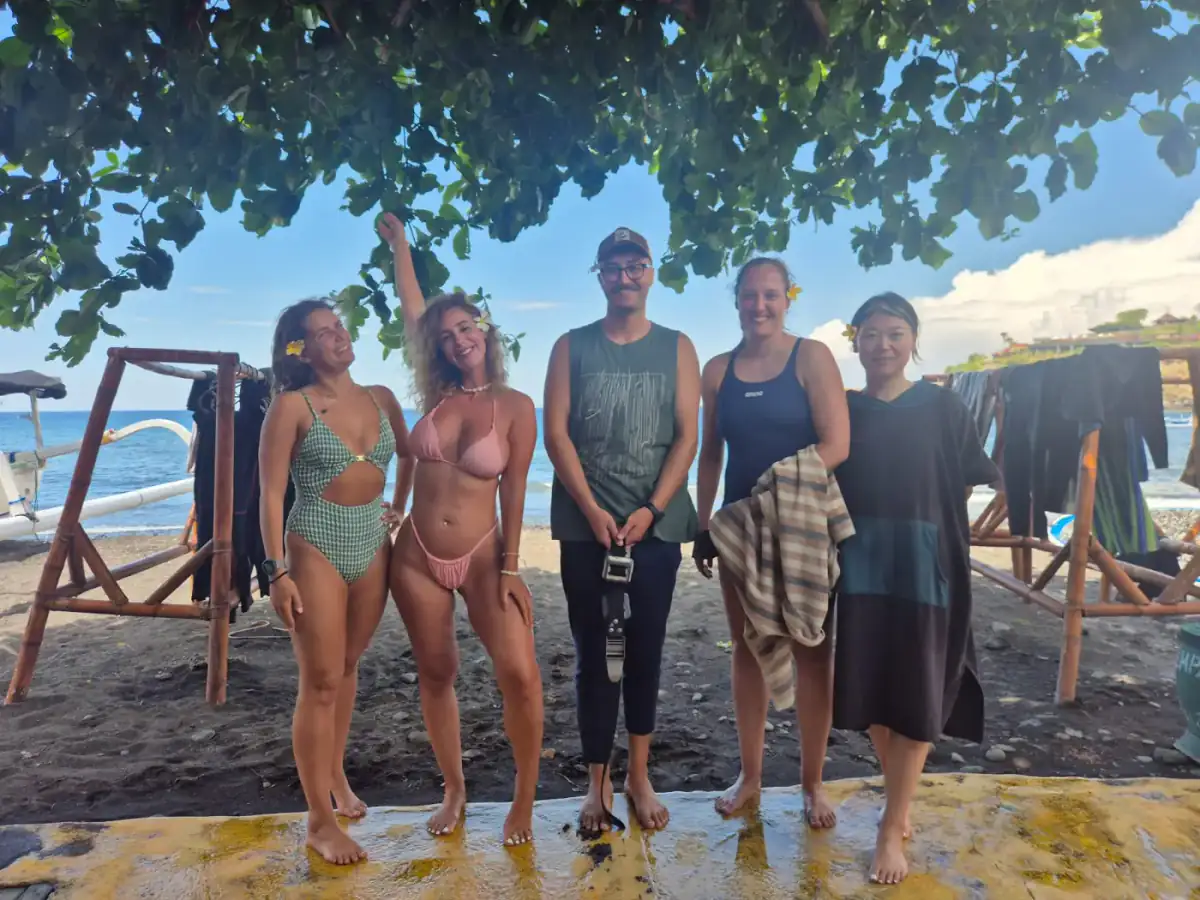
When stability stops feeling safe
Some people call it a mid-life crisis. Others call it burnout, or reinvention, or "a phase". But sometimes the wish to change something big is less about impulse and more about clarity finally catching up with you.
So, is leaving corporate life for travel a good idea? Honestly, it depends, and it does not have to be all or nothing. Research on sabbaticals suggests that real time away from routine work can lower stress and raise well-being, and for some people that is enough. For others, the change needs to be bigger. What matters most is that the decision is yours, made with your eyes open, and not only a reaction to exhaustion.
A steady career can give you financial security and a sense of who you are in a room. It can also, quietly, create distance between what you do all day and what really matters to you. That distance is easy to ignore until one question starts to show up more often than you would like: is this pace sustainable, or am I just used to it? From the outside, everything can look solid. Inside, something moves at a different speed. And at some point, keeping everything exactly as it is can start to cost more than the discomfort of changing something.
I do not think the answer is always to leave. For me, it was not a clean break. I have kept a career I respect, in project coordination, running alongside building Ocean Calling as its own thing. But I know the moment this article is really about: the point where you stop waiting for permission to live a little closer to what feels true.
Burnout is real, and it has a definition
It helps to name things properly. The World Health Organization's ICD-11 describes burn-out as a syndrome resulting from chronic workplace stress that has not been successfully managed. It has three dimensions: feelings of energy depletion or exhaustion; more mental distance from your job, or feelings of negativism or cynicism about it; and reduced professional efficacy. The WHO is clear that it is an occupational phenomenon, not a medical condition, and that the term should only be used for the work context.
Why does this matter in a travel article? Because if what you feel is burn-out, a trip can be a pause, but it does not change the conditions you come back to. Sometimes the honest step is to change the job, the hours or the boundaries. Sometimes it is to talk to a doctor or a therapist first. A beach is lovely. It is not a treatment plan.
What does research say about taking time away from work?
There is one study I find especially useful here. In 2010, the Journal of Applied Psychology published research comparing 129 university staff on sabbatical with 129 matched colleagues who stayed at work, measured before, during and after the leave. The people on sabbatical reported less loss of resources, more gain of resources and higher well-being. The comparison group did not change. The benefits were bigger for people who had more control over their time away, who detached more from work, who had a positive experience, and for those who spent their sabbatical outside their home country.
It is one study, in one profession, and it does not tell us how long the effect lasts. But it suggests that how you step away matters as much as the fact that you do. Real detachment helps more than checking email from a hammock.
The ocean as a mirror
Travel, especially solo, has a way of removing the usual labels we use to define ourselves: job title, daily routine, the version of you others expect to see. Without them, your attention moves to what is actually in front of you. Coastal places do this very well. They put scale, rhythm and continuity right in your line of sight.
Standing at the edge of the ocean gives you room to notice things without judging them straight away. The horizon is a quiet reminder that there is more out there than today's worries. The waves keep moving in a pattern that does not ask to be explained. It just repeats.
Without the noise of a busy day, your own thoughts get louder. Things you had been postponing start to come up. That kind of solitude does not have to feel lonely. Often it feels clarifying. The water does not hand you answers, but it can make room for the ones you were already circling. We wrote more about that feeling in why ocean experiences can feel deeply grounding.
What the water teaches about change
Nature is good at showing change without urgency. Tides shift all the time. Change comes in cycles, not in one long push forward. Watching that can change how you read your own transitions. A few things tend to stand out:
- Change is usually gradual, even when it feels sudden from the inside.
- Rest and effort work together, not against each other.
- You can adjust direction without losing momentum.
- Uncertainty does not have to stop you from moving.
The ocean does not run on constant intensity. Periods that feel like standing still are often the ones just before something shifts. Seen like this, change feels less like falling and more like part of a longer pattern.
Leaving corporate life for travel, or building something alongside it
Most workplaces present freedom as something you earn later: after retirement, after the big promotion, after "the right time". But many people reach a point where postponing a change feels harder than making it. That does not mean quitting is the only valid choice. Sometimes it means building something new on the side, small, without breaking what already works. Ocean Calling started that way for me. Not as a replacement for a career, but as something built alongside it, one retreat at a time.
Choosing a different direction does not give you instant clarity, but it creates the conditions for it. Stepping outside a familiar structure can feel confusing at first, because your identity feels less defined without the usual roles to lean on. That discomfort often opens space to explore: travel, a new skill, a creative project, or simply noticing how you react when the structure loosens.
If you are testing the idea with a longer trip, travel light so the logistics do not eat the experience. Packing cubes and a refillable bottle make it easier to travel for weeks with one bag, and a small roll-top dry bag keeps your phone and notebook safe on boat days.
Rethinking risk and stability
We usually connect risk with visible change: leaving a job, moving somewhere new, saying no to the expected path. Staying where you are looks safer in comparison. But staying in a situation that no longer fits can carry its own long-term cost, even if it is harder to see.
Stability is not one single thing. Money you can count on is one form of it. Feeling that your days match what you care about is another. Real, lasting stability usually needs both. So please do the boring maths before the brave decision: savings, insurance, visas, and what you would do if you wanted to go back.
The honest cost of travelling more
There is one more layer I do not want to skip. More travel usually means more flights, and flights have a real climate cost. Being able to step away from a salary is also a privilege that many people do not have. None of this means you should not go. It means going slower and longer instead of often, choosing small local operators, and treating the places you visit as homes, not backdrops. Our article on the emotional benefits of slow travel explains why fewer, longer trips can be kinder to you and to the places you visit.
Moving towards alignment
A new direction does not have to mean a dramatic reinvention. Often the biggest shift is simply admitting what you already know. Alignment usually comes slowly, in small adjustments that add up. New places show you preferences that a fixed schedule had been hiding. Curiosity comes back when the pressure eases. Time feels different when your attention is not split six ways.
Sometimes moving becomes necessary not because you are sure of the outcome, but because staying still no longer feels honest. Clarity tends to arrive in the middle of the change, not before it. If you would like to feel that space with the ocean around you, you can explore our small-group retreats: Moʻorea in September 2027 and La Ventana in May 2027.
Questions people ask
Do I need to quit my job to travel meaningfully?
No. A sabbatical, a longer holiday or building something on the side can all work. Research on sabbaticals found higher well-being during and after the leave, compared with colleagues who stayed at work.
Is burnout a medical diagnosis?
No. The WHO's ICD-11 describes burn-out as an occupational phenomenon caused by chronic, unmanaged workplace stress, with exhaustion, mental distance or cynicism about the job, and reduced professional efficacy. It is not classified as a medical condition, but it is a good reason to look for health support.
Will a trip fix burnout?
A trip can be a real pause, but it does not change the work conditions you come back to. If you feel burnt out, look at those conditions too, and talk to a professional if it feels heavy.
Does where I spend time away matter?
In one 2010 study of sabbaticals, people who spent the time outside their home country, detached more from work and had more control over their time reported bigger gains in well-being.
Did Rocío leave her career to start Ocean Calling?
Not completely. She kept a career in project coordination and built Ocean Calling alongside it.
Wildlife encounters are never guaranteed and never forced. Ocean Calling works only with vetted, ethical local operators, and every animal is free to approach, or not, entirely on its own terms.
Sources & further reading
- WHO classifies burn-out as an occupational phenomenon in ICD-11. AIHA Synergist, 2019.
- Davidson et al. Sabbatical Leave: Who Gains and How Much? Journal of Applied Psychology 95(5). University of South Florida Digital Commons, 2010.
Further reading on Ocean Calling: More from the journal · Wildlife & the law · See the retreats · Ocean Atlas
Find the retreat that fits you
Small groups of up to six guests, unhurried days and local experts. Tell us how you feel in the water and we will point you to the right trip.