
Food Ethics for Ocean Travellers: What Not to Order, and What to Enjoy
Picture a perfect ocean day. You picked the boat with care, the guide kept a kind distance from every animal, nobody chased anything. Then evening comes, you open the menu in a small harbour restaurant, and one dish could quietly undo the whole day. Food ethics for ocean travellers is simpler than it sounds: skip a handful of dishes, and enjoy everything else.
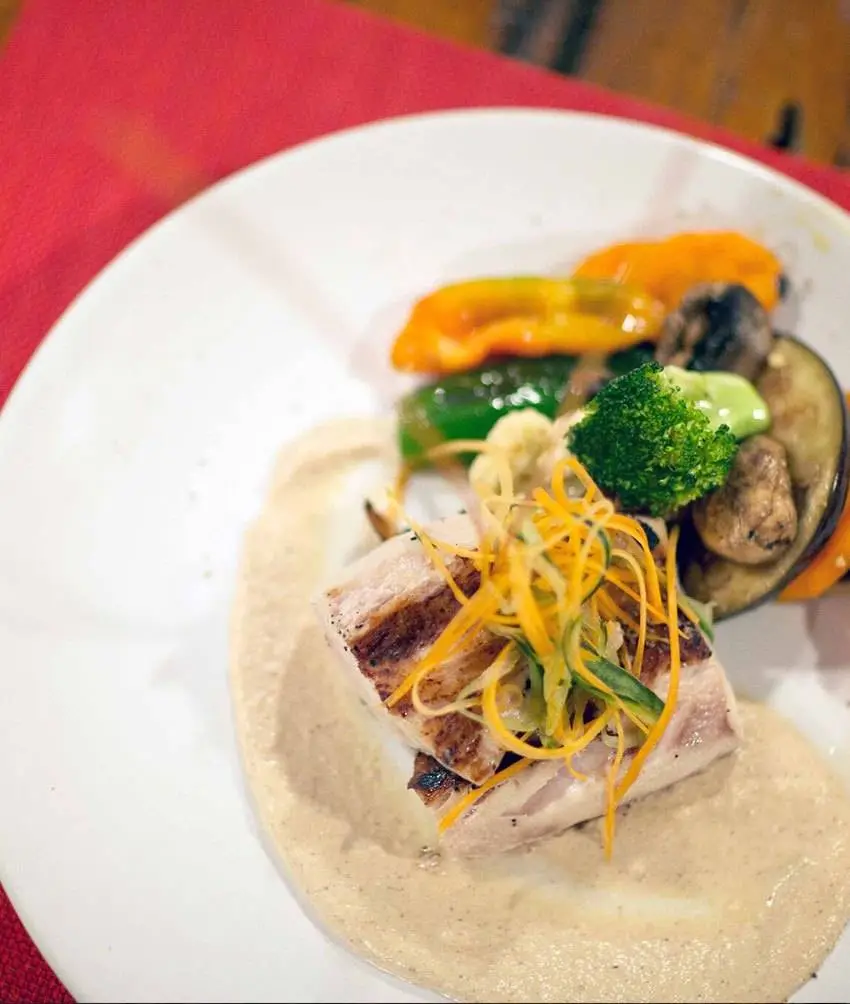
We put so much thought into the boat, the guide and the distance from an animal. The plate gets almost none, and yet it belongs to the same story.
So here is our gentle guide to eating on ocean trips. Not a rulebook, just what we choose ourselves and why. Where I could check a fact, the source is at the bottom of the page. Where I could not, I tell you.
A few dishes we quietly skip
Whale. Today only three countries hunt whales commercially: Norway, Japan and Iceland. Norway sets its own quota under an objection to the 1986 moratorium, and for 2026 that quota is 1,641 minke whales. In Iceland, the government issued five-year whaling licences in December 2024, one for fin whales and one for minke whales, with yearly catches tied to the advice of its Marine and Freshwater Research Institute. IFAW reported that fin whaling started again in June 2026. On a menu, the word to look for is hval in Norway and kujira in Japan. If you want the longer version, we wrote about whale meat in Norway and Japan.
Shark fin. A well-known study from 2006 estimated that fins from 26 to 73 million sharks enter the trade every year. People often quote the 73 million on its own, but it is the top of a range, and one of the authors gave a median of about 38 million. Even the low number is huge. A global assessment in Current Biology in 2021 found that around a third of shark and ray species are threatened with extinction. One bowl of soup is not worth that, for us.
Turtle eggs and turtle meat. In Costa Rica, taking sea turtle eggs is against the law, with one closely supervised exception at Ostional beach, where a community programme collects part of the olive ridley eggs. Even that exception is debated. In September 2026, two people were arrested there with 125 eggs and no authorisation. So if someone offers you turtle eggs in a low voice, the low voice usually tells you why.
The coconut crab question in Niue
Coconut crab, uga in Niue, is a real tradition. It matters to Niueans, including the families who live in New Zealand. It is also a species under pressure. Niue has had an indefinite ban on exporting uga, and a 2015 report said around 10,000 crabs left the island in travellers’ luggage in a single year, while hunters said big crabs were getting harder to find.
I could not confirm today’s rules for other traditional foods on the island, like pigeon or flying fox, so I will not hand you a rule I cannot back up. My suggestion is easy: on Niue, ask your host what is in season and what is kept for family occasions, and let them lead. There is more in our Niue food guide. Niue is also a place we do not promote ourselves.
What we love to eat instead
Now the happy part. Every coast we write about has food that asks nothing extra of the ocean, because it is simply what local families cook every day.
In Moʻorea, poisson cru, raw fish in lime and coconut milk. In Réunion, Creole cari and rougail. On Mafia Island, Swahili coconut fish. In Baja, fish tacos with a squeeze of lime. In Coron, grilled fish and rice. In the Maldives, mas huni with warm roshi for breakfast. One very early morning is in our story about breakfast before an early boat on a remote island.
You do not need a special restaurant for any of them. They are the dishes of the people who live there.
Why one plate is not small
It is easy to think one dinner changes nothing. For some animals, that is not quite true. Shark fin and whale meat both live on demand, and part of that demand comes from visitors. Norway shows it well. A 2024 survey commissioned by the organisation NOAH, reported by Whale and Dolphin Conservation, found that only about 1% of Norwegians eat whale often, and an earlier 2021 poll found 2%. Conservation groups say the meat is bought mostly by older Norwegians and by tourists. That last part comes from advocacy groups, not from survey data, so read it as a view, not a measured fact.
Turtles are protected because their numbers are fragile, and eggs are the next generation. The IUCN lists the olive ridley as Vulnerable. When eggs are taken from the wrong beach, that beach loses its future.
There is a softer side too. A local fish dish, caught that morning, supports the people who live beside the sea and keeps your money in the village instead of a faraway supply chain.
What should you order on an ocean trip?
Ask what came in that morning. If the waiter does not know where something comes from, order something else. No drama, no lecture at the table.
Eat where local families eat. On remote islands, carry your own snacks, so hunger never makes the choice for you. A roll-top dry bag keeps them dry on boat days, and a reusable water bottle and packing cubes from our travel kit list mean no plastic bottle and no wrapper flying overboard.
Learn two or three words of the local language. Hval, kujira and uga will take you further than a long menu translation.
This is not about judging anyone
Many of these dishes carry long histories. Food is culture, family and memory, and we are guests at the table.
So this is about something smaller and more personal: knowing what is on your plate, and choosing with open eyes as a visitor. The same care that keeps us at a kind distance from a turtle in the water can come with us to dinner.
If this made you curious to travel this way, you can explore our Ocean Calling retreats, the dinner table included.
Questions people ask
Is it wrong to try local food on an ocean trip?
Not at all. Local food is one of the joys of travel. We only skip the few dishes that come from threatened or protected animals, and enjoy the rest with a lot of pleasure.
How do I know if a dish is from a protected animal?
Learn a few words, like hval in Norway and kujira in Japan, and ask where the food comes from. If nobody knows, choosing something else is always an easy answer.
What if a dish is part of a local tradition?
We respect the tradition and the people who keep it alive. As visitors, we can still decide what we order ourselves, calmly, without judging anyone at the table.
Is shark fin soup illegal?
It depends on the country and on the shark species. Many places restrict or ban shark finning, and some ban trade in certain species. Rules change, so check the current rule before you travel, and when in doubt, skip it. We have a longer piece on shark fin trade bans.
Are turtle eggs ever legal to eat?
In Costa Rica there is one supervised exception, at Ostional, for a community programme. It is controversial, and it is not something to look for on a menu. Everywhere else, assume the eggs are protected.
What is the easiest thing I can do?
Ask what was caught that morning, and order the local fish dish. Good for the village, good for the ocean, and very often the best thing on the menu.
Wildlife encounters are never guaranteed and never forced. Ocean Calling works only with vetted, ethical local operators, and every animal is free to approach, or not, entirely on its own terms.
Sources & further reading
- Government of Iceland (Stjórnarráð Íslands), Minister of Food. Leyfi til veiða á langreyðum og hrefnu gefin út (licences issued for fin and minke whaling), 5 December 2024.
- How many whales will Norway hunt in 2026? Whale and Dolphin Conservation, 31 March 2026.
- First fin whales killed as Iceland’s whaling industry resumes. IFAW, 2026.
- Norwegian attitudes on whaling, 2021 poll. Animal Welfare Institute, 2021.
- Up to 73 million sharks killed per year for their fins. Mongabay, 2006 (on Clarke et al., Ecology Letters).
- Shark fin trade study. ScienceDaily, 2006.
- Dulvy, N.K. et al., 2021. Overfishing drives over one-third of all sharks and rays toward a global extinction crisis. Current Biology.
- Arrests for sea turtle eggs at Ostional. The Tico Times, 9 September 2026.
- Sea turtle egg poaching legalized in Costa Rica: the debate. Coastal Care, 2011.
- Coconut crab in Niue. FAO.
- Uga (coconut crab), Niue export ban. RNZ, 2015.
Further reading on Ocean Calling: Whale meat on the menu in Norway and Japan · Who still hunts whales · Shark fin soup and the global fin trade · Breakfast before an early boat on a remote island
Find the retreat that fits you
Small groups of up to six guests, unhurried days and local experts. Tell us how you feel in the water and we will point you to the right trip.