
What Bowhead Whales Can Teach Us About Cancer
Where does the word "mammal" come from? From the Latin mamma, breast. Whales breathe air, give birth to live young and feed them rich milk. We belong to the same big family, and in the Arctic one of our giant relatives may be keeping a very old biological secret.
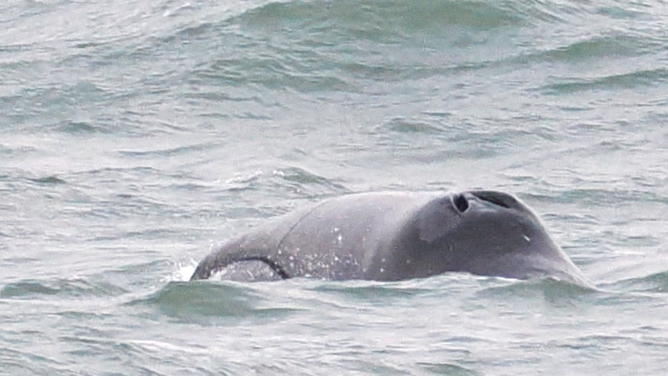
So, what can bowhead whales teach us about cancer? The short answer: these Arctic whales seem to be unusually good at repairing broken DNA, and a protein that responds to cold, called CIRBP, appears to be part of the reason. For now the evidence comes from cells in a dish and from fruit flies. It is not a medicine, and it is not a promise.
Still, I find this story hard to put down. A bowhead is among the largest animals on Earth, and its lifespan is often estimated at around two centuries. A whale is also thought to have roughly a thousand times more cells than a person. Every time a cell divides, there is a small chance of a copying mistake. More cells and more years should mean more mistakes, and more mistakes should mean more cancer. At least, that is what the simple maths says.
The puzzle called Peto’s paradox
The British epidemiologist Richard Peto noticed this in 1977, and the puzzle carries his name. If every cell had the same small risk of becoming cancerous, a whale should be far more likely to get cancer than a human. But across the animal kingdom, cancer does not seem to follow body size in a simple way. As far as we can tell, whales do not die of cancer more often than we do. Data from wild whales are thin, so I would say "as far as we can tell" and nothing more.
The paradox is not settled either. A more recent analysis of 263 species, reported by ZME Science, argued that the paradox may rest on a wrong starting point, and that bigger animals such as elephants, giraffes and pythons do have higher cancer rates than smaller ones. I could not check the methods of that study, so I treat it as one disputed result. Science is a conversation, not a final verdict.
How other big animals might solve it
Elephants are the best-known example. A 2016 study found that the elephant genome carries 20 copies of the tumour-suppressor gene TP53, while humans and most mammals have one. The extra copies work a little like backups: if one is damaged, the others can still do the job. This expansion happened around the time elephants evolved their large bodies.
Whales are less clear. A 2015 modelling study across mammals found no general rule that more tumour-suppressor genes go with bigger bodies or longer lives. Elephants were a striking exception, and the authors suggested that quite small changes could be enough to bring a whale’s risk down to human levels. Whales seem to have found other solutions, and scientists are still working out what they are.
A repair crew that likes the cold: what the 2025 study found
This is where the bowhead comes in. In October 2025, the journal Nature published a study called "Evidence for improved DNA repair in the long-lived bowhead whale", with Vera Gorbunova and Andrei Seluanov among the authors. The team grew bowhead cells and compared them with human cells. Bowhead cells needed more "hits" before they turned cancerous. Their repair of double-strand breaks, where both strands of the DNA are cut, was more efficient and more accurate, with fewer mutations than in other mammals.
Then the authors looked for a reason, and they found a protein called CIRBP, short for cold-inducible RNA-binding protein. There is a lot of it in bowhead cells and tissues. When the researchers added the bowhead version to human cells, two different routes of DNA repair worked better, and fewer small DNA fragments (micronuclei) were left behind. Carl Zimmer, writing in The New York Times, reported that this roughly doubled the rate of repair in human cells. In fruit flies, the bowhead protein extended lifespan and improved survival after irradiation.
Here is the part that gives me goosebumps: you have CIRBP too. Humans have our own version of this protein. Some summaries say bowheads carry about a hundred times more of it than other mammals. I could not check that exact figure against the paper, so I will not repeat it as a fact. What I can say is that the whale clearly has a lot of it.
What this does not show
A few honest limits. The benefits for lifespan and repair were seen in cells in the lab and in fruit flies, not in whales studied for decades, and not in people. The protein is linked to cold, but that does not mean cold showers or ice baths will help you live longer. One news report on the study made exactly this point. And one study, however good, still needs to be repeated by other teams before anyone should rely on it.
It also does not say that bowheads are immune. "Better at repairing damage" is a much more careful sentence than "cannot get cancer", and it is the one the evidence supports.
What bowhead whales can teach us about the ocean
I find it moving that an animal so far away, living in water close to freezing, may hold a clue for human health. Commercial whalers hunted bowheads in the past, and how each population is doing today depends on the region, so please read the current status pages from NOAA or the IUCN rather than trusting one sentence of mine. The idea is simple, though. When we protect a species, we also protect what it has quietly learned over millions of years, including things we do not yet know how to ask about.
That is one more reason to be careful with the animals we love to watch. Our piece on whale conservation organisations is a good place to see who does the long, quiet work, and you can meet the species itself on the bowhead whale page of our Ocean Atlas.
Cold water, long waiting, and where Ocean Calling stands
We do not run Arctic trips, and we do not offer bowhead encounters. I mention the cold because any boat day in chilly water asks a lot of the body. A thin long-sleeve layer under a jacket, like the ones on this rash guard list, helps when you need to stand still and wait. A roll-top dry bag keeps spare layers and the phone dry when the spray comes over the side.
Wildlife encounters are unpredictable. Whale watching should always follow local regulations and experienced professional guidance.
Our approach is the same in every ocean: small groups of up to six, vetted local operators, unhurried days, no chasing, touching or baiting, and the freedom to skip any activity. If this made you curious about experiencing the ocean in that slower way, you can explore our upcoming retreats, or let our Ocean Match point you to a gentle place to start.
Questions people ask
What is Peto’s paradox?
It is the observation, made by Richard Peto in 1977, that large, long-lived animals such as whales do not seem to get cancer more often than small ones, even though they have many more cells and live longer. Scientists are still working out how each species manages this, and some researchers question whether the paradox holds up at all.
How long do bowhead whales live?
Bowheads are among the longest-lived mammals. Some are estimated to live for around two centuries. Nobody can follow a whale from birth for that long, so this is an estimate, not a measured record.
Does this mean we can cure cancer with whale proteins?
No. The study shows that a DNA-repair protein is abundant in bowhead whales, that it can boost repair in human cells in the lab, and that it extends life in fruit flies. Turning that into medicine, if it is possible at all, would take many more years of research.
Do whales never get cancer?
No one is saying that. The research points to better DNA repair, not immunity. How often wild whales develop cancer is hard to measure, so the honest answer is that we do not know exactly.
Do humans have CIRBP too?
Yes. Humans have our own version of the protein, and it also responds to cold. The bowhead study found that adding the whale’s version to human cells improved their DNA repair in the lab.
Wildlife encounters are never guaranteed and never forced. Ocean Calling works only with vetted, ethical local operators, and every animal is free to approach, or not, entirely on its own terms.
Sources & further reading
- Firsanov, D., Zacher, M., Tian, X. et al., 2025. Evidence for improved DNA repair in the long-lived bowhead whale. Nature 648, 717-725.
- PubMed record, 2025. Evidence for improved DNA repair in the long-lived bowhead whale.
- Zimmer, C., The New York Times, 29 October 2025. Life lessons from very old bowhead whales (author archive).
- Earth.com, 2025. Bowhead whales can live for centuries, and we finally know how.
- PubMed Central, 2015. Solutions to Peto’s paradox revealed by mathematical modelling and cross-species cancer gene analysis.
- Institute of Cancer Research, London. How the elephant got less cancer (and other stories).
- ZME Science. Bigger animals do get more cancer (a disputed analysis of 263 species).
Further reading on Ocean Calling: Bowhead whale in the Ocean Atlas · How sperm whales dive without crushing their lungs · Whale conservation organisations
Swim with humpback whales in Moʻorea: an ethical whale retreat
Whale encounter retreat · Moʻorea, French Polynesia
Time in the blue, on the whales’ terms. September 2027. If you love whales, this is our whale retreat: small group, slow pace, on the animals’ terms.
Explore in the Ocean Atlas
Animals in this article