
Heaviside’s Dolphins Are Namibia’s Nearshore Whale-Watching Surprise
You come to Namibia for the whales. Then a small, quick dolphin pops up close to shore and quietly steals the morning.
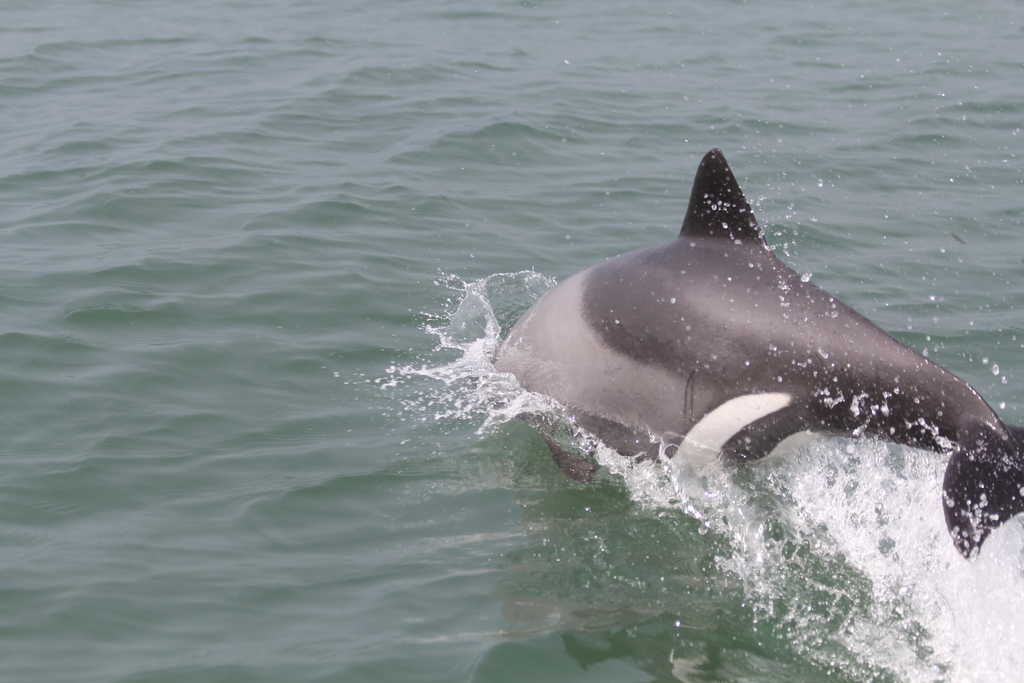
Heaviside’s dolphin is one of the most distinctive cetaceans on the Namibian coast, and it lives close to shore. It is strongly tied to the cool Benguela ecosystem and is found along the coast of Namibia and into South Africa. Local research focuses on areas including Walvis Bay and Lüderitz.
A dolphin built for the cold coast
Heaviside’s dolphins are compact and fast, and they are often seen in small groups. Because they stay near the shore, they can be easier to spot from land or from a boat than the deep-diving whales further out.
They are not a mini version of a whale-watching attraction. They have their own daily routines. And because they live so close to shore, people, boats and coastal activity can matter to them.
Where can you see Heaviside’s dolphins in Namibia?
Walvis Bay and Lüderitz are both important places for observing cetaceans along Namibia’s coast. Cool water and rich marine conditions support a wider community of wildlife, including dolphins, seals and seasonal large whales.
Researchers use sightings, photo-identification and other methods to learn how animals use the coast. A good report can add useful information even when the encounter lasts only a moment.
How to tell a good encounter from a chase
Choose a guide who approaches slowly and follows local wildlife-viewing standards. Standards can change, so ask locally. Do not ask the boat to cut across a group or to circle the dolphins again and again. If they move away, let them go.
From shore, keep a respectful distance. Use binoculars rather than trying to get closer for a photograph. Wildlife encounters are unpredictable. Dolphin watching should always follow local regulations and experienced professional guidance.
A small animal with a big role in the Namibia story
Many visitors arrive hoping for a giant blue whale. These dolphins remind us that a meaningful ocean moment does not need to be enormous.
A good wildlife day in Namibia may be a small dolphin appearing beside the boat while the bigger whales stay out of sight. A quick glimpse of a coastal species shaped by a cold current and a desert shore. No one can promise it, and that is part of the charm.
Questions people ask
Where do Heaviside’s dolphins live?
They are strongly associated with the cool Benguela ecosystem and are found along the coast of Namibia and into South Africa.
Where is research on them focused in Namibia?
Local research focuses on areas including Walvis Bay and Lüderitz, both important places for observing cetaceans along the coast.
How should I behave around them?
Choose a guide who approaches slowly and follows local standards. Do not ask the boat to cut across a group or circle the dolphins. From shore, keep your distance and use binoculars.
Wildlife encounters are never guaranteed and never forced. Ocean Calling works only with vetted, ethical local operators, and every animal is free to approach, or not, entirely on its own terms.
Sources & further reading
- Namibian Dolphin Project
- Sea Search Research and Conservation, current outputs on southern African marine mammals
- IUCN Cetacean Specialist Group
Further reading on Ocean Calling: Namibia in the Ocean Atlas · Heaviside’s dolphin · Blue and fin whales off Namibia · Whale migration in Namibia
Swim with humpback whales in Moʻorea: an ethical whale retreat
Whale encounter retreat · Moʻorea, French Polynesia
Time in the blue, on the whales’ terms. September 2027. If you love whales, this is our whale retreat: small group, slow pace, on the animals’ terms.