
Ethical Freediving Retreats: Small Groups, Honest Safety
What makes a freediving retreat ethical: a small group, a qualified local instructor, a buddy for every dive, and a promise not to chase anything. Plus where we go, and how.
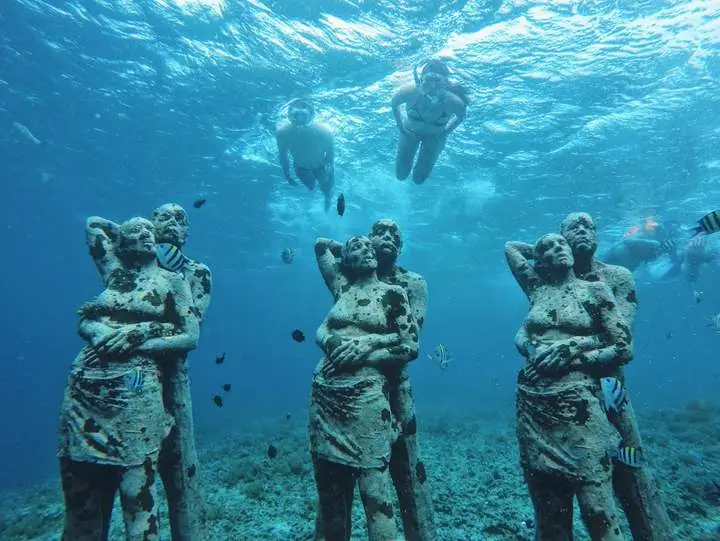
The moment before a first breath-hold. You float face down, the water is quiet, and someone you trust is a few metres away, watching you, not the fish. That small detail, a person paying attention to you, is the heart of what we mean by an ethical freediving retreat. In short: a small group, a qualified local instructor, a buddy for every dive, and wildlife that is never chased, touched or fed.
The word “ethical” gets used loosely, so I would rather be specific. This page explains what we do, what the safety guidance says, and what you should ask any retreat before you book, including ours.
What we actually run
Ocean Calling is small on purpose. Our hosted retreats take six guests at most, and freediving sessions are capped at four guests, because at that size everyone still gets real time in the water with the instructor, and the ocean does not feel crowded by us being in it. Right now we host two retreats: Moʻorea in French Polynesia in September 2027, from CHF 4,500 per person in a double room you share with your own partner or friend, and La Ventana in Mexico in May 2027, at CHF 2,450.
For Bali (Amed), the Gili Islands (Gili Trawangan), Coron and Moalboal in the Philippines, we work differently. Through Ocean Match, from CHF 19, we connect you with a local freediving or diving team we have vetted, and you book that team directly. These are not hosted retreats, and we will never call them that. Each place was chosen because the water, the local team and the way the site is managed make it somewhere I am comfortable sending people.
You can read about each place on its own page: Moʻorea, Bali freediving, the Gili Islands, Coron freediving and Moalboal. Our hosted itineraries are unhurried, and any guest may skip any activity.
Is freediving safe on a retreat?
Freediving feels peaceful, and that is exactly why the safety rules matter. The Divers Alert Network (DAN) ties serious freediving incidents to dives that skipped the buddy system or the one-up-one-down rule, and its basic advice is never to dive alone. It also recommends a written emergency plan, specific to the dive site, for every freedive. Our freediving safety basics and the article on the buddy system go deeper.
The main risk is blackout. DAN describes shallow-water blackout as the most feared consequence of pushing limits, and it can happen in any water. A diver close to blackout often shows no clear warning and may simply go still, often in the last few metres of the ascent. That is why a buddy who is watching, and trained in blackout rescue, can be the only realistic safety net. It is also why we do not encourage hyperventilating before a dive. It lowers carbon dioxide, which delays the urge to breathe, but it does not give you more oxygen, and tests show it does not extend breath-hold time. Anyone who faints underwater should be checked by a doctor.
Let me be clear: no retreat can make freediving risk-free. What a good one can do is keep groups small, keep depths honest for your level, and make sure a trained person is looking at you.
What “ethical” means with wildlife
On our trips, we do not chase, touch, feed or otherwise try to manipulate wildlife into giving us a moment. Not turtles, not reef sharks, not the whales that pass Moʻorea in season. If an animal wants to come close, that is its choice, not something we arranged. Sightings are never guaranteed, of anything, ever. I will not pretend otherwise just to make a trip sound better.
This is not only our own taste. Dive-industry guidance, for example from PADI, describes chasing as a stressor that can change natural behaviour, and recommends staying still if an animal looks afraid. AIDA, the international freediving education organisation, has also issued a public statement that some freediving activities with marine wildlife, particularly with whales, are being run in ways that do not match ethical and legal standards. It advises checking with the operator that an activity is legal. I agree completely. Where the rules or the evidence are unclear, we do not sell a swim. If you want to know why touching harms animals, we wrote about it in why touching marine animals harms them.
Freediving, diving, or both
Most people come for freediving, and if you are new to it, that is completely normal. Plenty of guests try their very first breath-hold with us. If you would rather work toward a recognised certification, the local instructors can guide you through it, in freediving or scuba, at a pace that suits you instead of a fixed schedule. If you are weighing the agencies, our guide to PADI, SSI and AIDA explains the differences.
For reference, AIDA’s entry course, AIDA 1, has no depth requirement. It is an introduction to relaxation, finning, duck dives and equalisation, with at least one water session, and you need to swim 100 metres non-stop. Depth targets start at AIDA 2. Standards can change, so check the current AIDA requirements before you enrol anywhere.
For that first breath-hold, a low-volume mask is more comfortable than a bulky one, because there is less air to equalise. Long, light freediving fins are another common choice, though an instructor can tell you what suits you. And a rash guard keeps the sun off your shoulders between dives.
The honest environmental cost
Flying to an island to float on the sea is not a small thing. Travel has an environmental cost, and I would rather say it than hide it. We try to choose fewer, longer trips, keep groups small, work with local operators who keep money in their communities, and avoid anything that adds pressure to fragile sites. For a deeper look at your own footprint, see how to reduce your ocean impact when you travel.
To book or ask a question, simply message Rocío at hello@oceancallingretreats.com. If this made you curious, you can explore our upcoming retreats. And if you would like to read first, our guide to the first day of a freediving retreat is a good place to start.
Questions people ask
Do I need experience to join a freediving retreat?
No. Many guests try their first breath-hold with us. The AIDA 1 beginner course, for example, has no depth requirement and starts with relaxation, finning, duck dives and equalisation.
Is freediving safe?
It can be done safely with training, but it is never risk-free. The Divers Alert Network advises never freediving alone, using a buddy, and having a written emergency plan for each dive site. Shallow-water blackout can happen to anyone who pushes limits.
What does “ethical” mean on your trips?
We do not chase, touch, feed or manipulate wildlife, we work with vetted local operators, hosted retreats are capped at six guests, and no encounter is ever guaranteed. If an animal comes close, it is the animal’s choice.
Should I hyperventilate before a freedive?
No. Hyperventilating lowers carbon dioxide and delays the urge to breathe, but it does not give you more oxygen, and tests show it does not extend breath-hold time. It raises the risk of blackout.
Can I get certified on a retreat?
The local instructors can guide you toward a recognised certification in freediving or scuba, at a pace that suits you. Ask for the agency and level before you book.
Where do you run retreats?
We host two retreats: Moʻorea in French Polynesia (September 2027) and La Ventana in Mexico (May 2027). For Bali (Amed), the Gili Islands, Coron and Moalboal, Ocean Match connects you with a vetted local team that you book directly. Each place has its own page.
Wildlife encounters are never guaranteed and never forced. Ocean Calling works only with vetted, ethical local operators, and every animal is free to approach, or not, entirely on its own terms.
Sources & further reading
- Divers Alert Network (DAN). Freediving Safety 101. dan.org
- Divers Alert Network (DAN). Shallow-Water Blackout. dan.org
- DAN World. Freediving Risk Assessments. world.dan.org
- AIDA International. Public Statement on Freediving Activities with Marine Wildlife. aidainternational.org
- AIDA International. Freediving courses (education). aidainternational.org
- PADI. Responsible marine life interactions: dos and don’ts. blog.padi.com
- Wikipedia. Freediving blackout (overview of hyperventilation and blackout mechanism; secondary source). en.wikipedia.org
Further reading on Ocean Calling: Freediving safety basics · Freediving buddy system rules · Questions to ask a dive operator · See the retreats
Freediving certification in Bali: Amed, USAT Liberty wreck and Ubud
Freediving certification · Amed & Ubud, Bali, Indonesia
Ocean breath first, sacred water after. If this made you want to learn to freedive, this is our beginner-friendly course.