
Beginner Snorkel Gear Kit: What You Really Need
A beginner snorkel gear kit needs a mask that fits, a simple snorkel and comfortable fins. Here is what else helps, what to skip, and what to test before you fly.
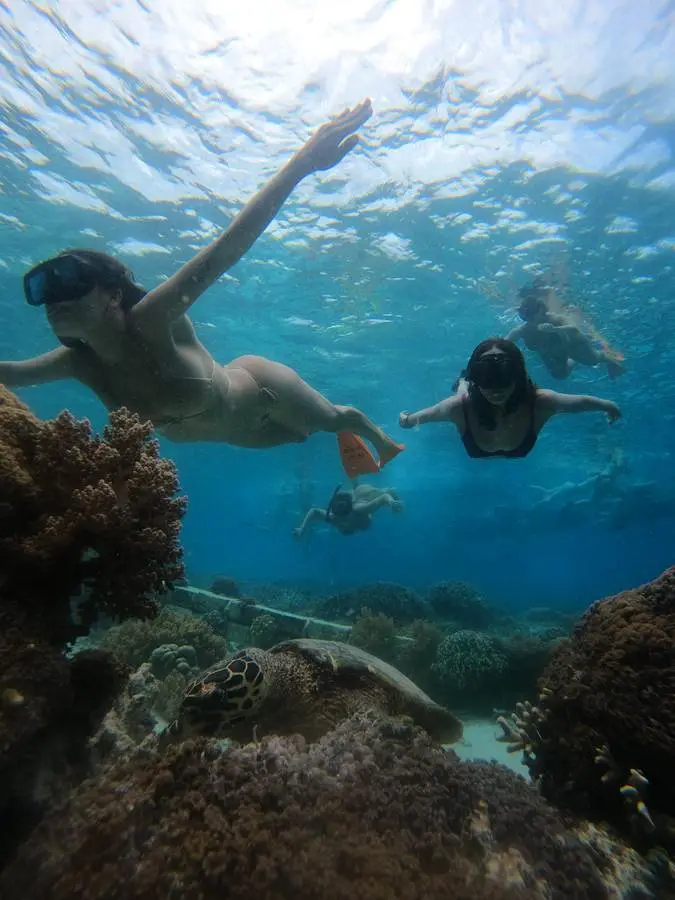
Picture a first-time snorkeller in a shop, facing a wall of masks, fins, vests and clever accessories, slowly losing the will to choose. It happens to almost everyone. So what do you really need? A mask that truly fits your face, a simple snorkel, fins you can kick comfortably, and a few small things that protect your skin and your belongings. Almost everything else can wait.
I will go through what matters, what is truly optional, and where I would be careful. A few links below go to lists on our Amazon storefront, and I explain that at the end.
Why fit matters more than price
A mask that leaks lets water in every few minutes, and that alone can spoil a first snorkel. PADI's advice for choosing a mask starts with a simple test: hold the mask against your face with the strap out of the way, breathe in gently through your nose, and see if it stays there without you having to keep sucking. If it does, the skirt is probably sealing. PADI also suggests checking that the skirt sits evenly along its whole edge, and trying several masks before you decide.
One honest warning: that test is a first check, not a guarantee. Some dive shops point out that breathing in can make a poor fit feel sealed, so try the mask with the strap on as well, and with the snorkel mouthpiece in your mouth. Hair across the forehead or a moustache under the seal can also break it. Take your time in the shop; we have a longer guide on choosing a mask that fits your face.
If you want somewhere to start looking, there is a low-volume mask and snorkel list on our storefront. Low-volume masks hold less air inside, which many people find comfortable, but fit still beats every feature on the box.
A snorkel and fins that keep it simple
For the snorkel, simple is a good rule. A flexible tube with a soft mouthpiece you can hold without clenching your jaw is enough for your first trips. Extra valves can be useful, but every extra part is one more thing that can stick or leak, so I would add them only when you know why you want them.
For fins, choose what your legs can manage for an hour, not what looks serious. Long, stiff freediving fins are made for a different kind of movement, and they can tire untrained legs quickly. Short, flexible snorkelling fins are usually kinder for a first week in open water. If you know you want to move towards freediving, we have a separate page on how to choose freediving fins.
Are full-face snorkel masks safe for beginners?
You will see full-face masks everywhere, often sold as the easy option for beginners. I would pause here. The Divers Alert Network (DAN) and Duke University have been running a study since 2020, testing people exercising face-down in the water, to find out whether these masks change snorkelling enough to raise the risk. The page I found shows no results yet.
Separately, a 2025 paper in the journal Children says that fatal and non-fatal incidents have been reported, especially at tourist destinations such as Hawaii, and describes the concern as carbon dioxide building up if the valves fail or wear out. Hawaii's state ocean safety office calls the matter under study and says there is not enough evidence yet to show a direct increase in risk. So the honest position is: the evidence is not settled, a classic mask and snorkel is the well-understood option, and a beginner has nothing to prove by choosing it.
Skin, sun and reef: the quiet essentials
Sunburn is the most common thing that goes wrong on a first snorkel day, because your back is out of the water for a long time and the water cools you enough that you do not feel the burn. A rash guard or light long-sleeved top does most of the work. It also means you need less sunscreen, which is better for the reef and for your wallet. We keep a rash guard list for this reason; a thin top that dries fast is all you need.
For the skin that is left, think about what you put on it. NOAA's Coral Reef Conservation Program says many common sunscreen chemicals have been found to affect coral reefs and other aquatic ecosystems, and names oxybenzone and octinoxate as perhaps the best known. NOAA also says it is still evaluating the research, so this is a case for caution, not a final verdict. Hawaii has banned the sale of sunscreens with those two chemicals since 1 January 2021.
So read labels slowly. A product can say “reef-friendly” on the front and still list ingredients that the Park Service warns about on the back. A mineral sunscreen list is one place to begin, and our page on reef-safe sunscreen goes through the ingredients. Put it on well before you get in, and wear the shirt.
What is usually worth skipping, and one thing I would keep
A full wetsuit for one warm-water week is rarely needed; swimwear and a rash guard are common in tropical water, though cold-water places are different, so check your destination's water temperature first. An underwater camera bought for one trip is easy to forget in a drawer. A phone in a waterproof pouch may be enough the first time.
Snorkel vests are the one item I would not call a waste. Hawaii's ocean safety office recommends a flotation device made for snorkelling, such as a floating vest or belt, and says all snorkellers should be comfortable swimming in the ocean. If deep water makes you nervous, a vest is a sensible choice, not a failure. Duck-diving is harder with one on, which is a reason to choose it only when you want the reassurance.
The ethical layer: your gear and the reef
The best equipment for protecting a reef is your own body control. Keep your fins away from the coral, do not stand on it, and do not chase, touch or feed anything. Our guide on snorkelling without damaging coral shows practical ways to do that. Buy less and buy once: a mask that fits will last for years, and a drawer of spare gadgets does not help the ocean.
Travel itself has an environmental cost too, flying above all. I would rather say that plainly than pretend a good sunscreen cancels it out.
Fit it before you fly
The most common mistake is buying gear the week of the trip and using it for the first time in open water. Try the mask and fins in a pool, or even in the bath. Check the seal, check the strap, walk around in the fins. Problems are easy to fix at home and annoying to discover at sea. Our first-time snorkelling guide shows what a gentle first day can look like.
If this made you curious about meeting the ocean this way, you can explore our retreats. Our hosted groups are never more than six people, the pace is unhurried, and nobody has to join an activity they do not want. A few links on this page go to our Amazon storefront, and as an Amazon Associate we earn from qualifying purchases, at no extra cost to you.
Questions people ask
What do I really need in a beginner snorkel gear kit?
A mask that fits your face, a simple snorkel and comfortable fins, plus sun protection such as a rash guard and mineral sunscreen. Everything else is optional.
How do I test a snorkel mask in the shop?
PADI suggests holding the mask to your face without the strap, breathing in gently through your nose and checking that it stays in place. Treat it as a first check, then try the mask with the strap on and the snorkel in your mouth.
Are full-face snorkel masks safe for beginners?
The evidence is not settled. DAN and Duke University have a study under way, and Hawaii's ocean safety office says there is not yet enough evidence to show a direct increase in risk. A classic mask and snorkel is the better-understood choice.
Do I need to buy fins before the trip?
Not always. Many operators lend or rent them. If you buy, choose short, flexible fins you can kick for an hour, and try them in a pool first.
Is “reef-safe” sunscreen really safe for coral?
Not always. NOAA names oxybenzone and octinoxate as filters of concern and is still evaluating the research, and the National Park Service warns that “reef-friendly” products can still contain harmful ingredients. Read the ingredients and wear a rash guard to reduce how much you need.
Should a beginner wear a snorkel vest?
If you are not fully comfortable swimming in the ocean, yes, it can be a good idea. Hawaii's ocean safety office recommends a flotation device made for snorkelling, such as a floating vest or belt.
Wildlife encounters are never guaranteed and never forced. Ocean Calling works only with vetted, ethical local operators, and every animal is free to approach, or not, entirely on its own terms.
Sources & further reading
- Hawaii Ocean Safety Office, State of Hawaii. Snorkeling safety.
- NOAA Coral Reef Conservation Program (CoRIS). Effects of ultraviolet filters in sunscreen on corals.
- US National Park Service. Sunscreen and ocean protection.
- Office of the Governor, State of Hawaii. Act 104 (2018), ban on sale of sunscreens containing oxybenzone and octinoxate from 1 January 2021.
- PADI. How to choose a mask.
- Divers Alert Network and Duke University Center for Hyperbaric Medicine. Full-face snorkel mask safety study.
- Children (MDPI), 2025. Paper on full-face snorkel masks and reported incidents.
Further reading on Ocean Calling: First-time snorkelling guide · Reef-safe sunscreen guide · Snorkelling without damaging coral
Find the retreat that fits you
Small groups of up to six guests, unhurried days and local experts. Tell us how you feel in the water and we will point you to the right trip.