
Black-faced spoonbill
Platalea minor
A white wader sweeps its flat bill through the shallows of the mudflat. Black-faced spoonbills move with the tide, and no sighting is ever a promise.
Vulnerable (IUCN and BirdLife, 2025) means it is at high risk of extinction in the wild, even though counts have grown from 288 birds in 1988 to 6,162 in 2022.
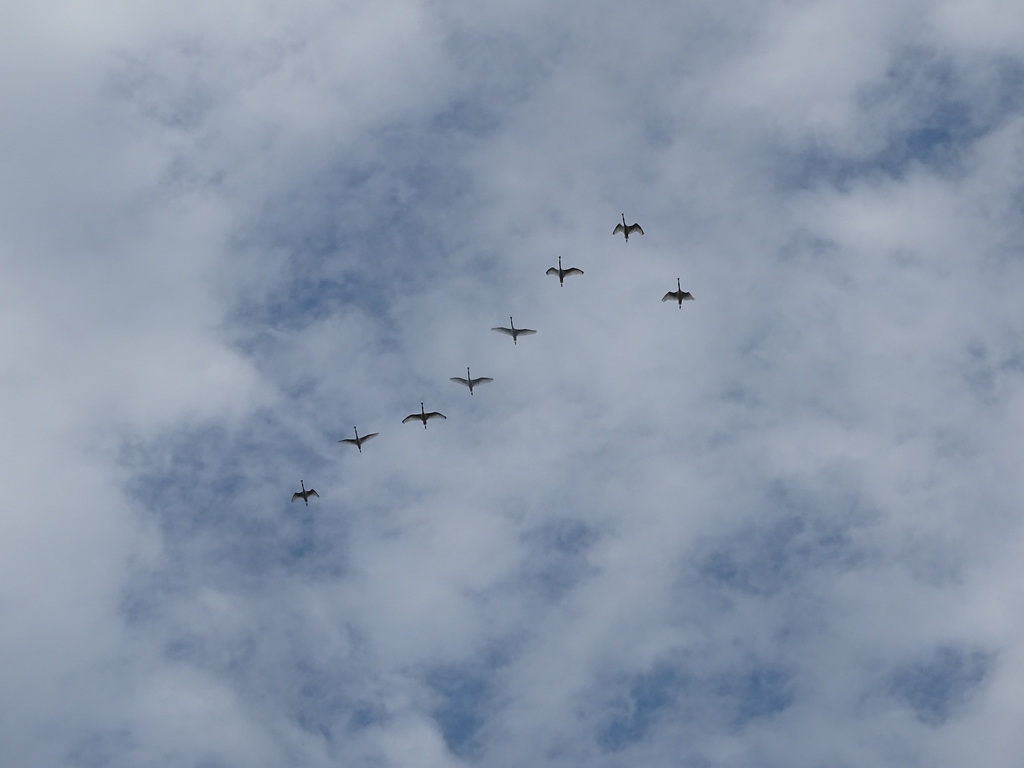
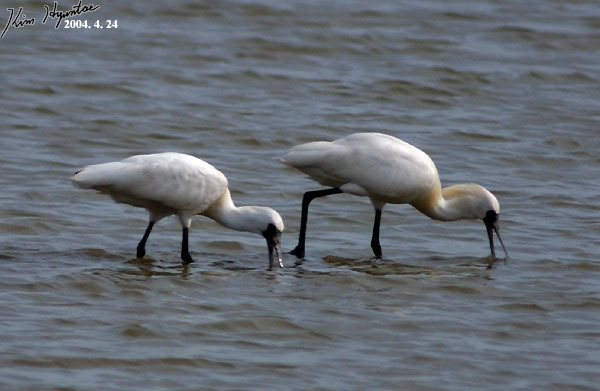
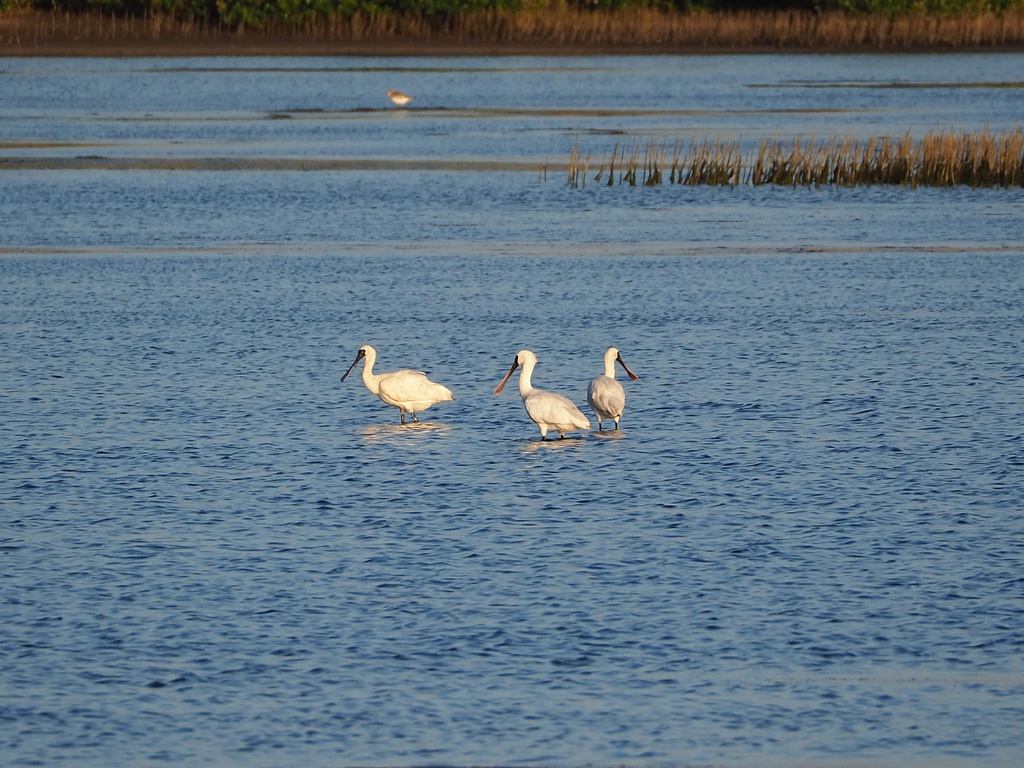
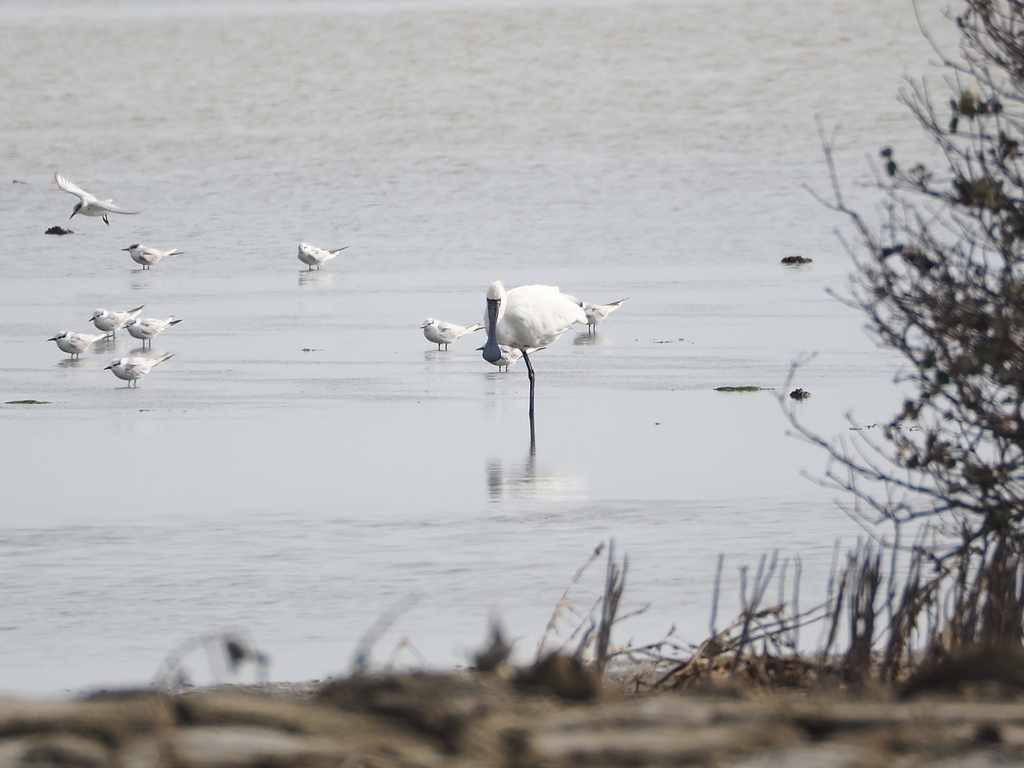
Photos show the species, not always the places on this page.
Length
Not given in the sources I read
Weight
Not given in the sources I read
Next to a person
A large wading bird; I did not find a size to compare
What it eats
It feeds by touch, wading and sweeping its bill from side to side to find prey. It feeds around dawn and dusk on intertidal mudflats. It cannot catch large fish, and in winter in Taiwan many rely on largescale mullets.
Around people
Quiet, watch from afar
How it lives
Most breed on a few small rocky islands off the west coast of North and South Korea, between March and August. Only about half of the mature birds breed in a given season. I did not find a lifespan figure.
Where it goes
Birds migrate between Korean breeding islands and wintering sites. Four main winter sites are Macau, Hong Kong, Taiwan and Vietnam, with others in Japan and China.
We only draw a journey on the map when scientists have tracked it or clearly documented it. For this animal we have not found one yet.
Populations
Numbers rose from 288 birds in 1988 to 1990, to 2,693 in 2012 (about 1,600 mature), and 6,162 in 2022. The species was listed as Endangered in 2000 and is now Vulnerable, with a 2025 BirdLife reference. Threats include loss of mudflats to farming and aquaculture, disturbance, and offshore wind farms on migration routes. A botulism outbreak killed 73 birds in 2002 to 2003.
Meet it respectfully
Watch from a distance with binoculars and stay still. Keep well back from feeding and roosting birds, and never walk onto mudflats toward them, use drones, or make noise to flush them. Disturbance is one of the main threats. I did not read local rules for Macau, so follow site rules and your guide.
Fun fact
Tap the bulb to light it up.
By 1988 to 1990 only 288 were counted, and by 2022 about 6,162.
It depends on intertidal mudflats, so tides shape its day.
Shellfish collectors, photographers and powerboats are main causes of disturbance.
Black-faced spoonbill in the Ocean Atlas
Places we have researched where this animal is recorded. It is never guaranteed, and some places are for watching from the boat only.
Travel with usComing soonTrusted referralExploringOn pause, story onlyEthics pass
Country colour: pink where we travel, blue where we are exploring or refer, grey for story only.
 China
China Hong Kong
 Japan
Japan Macau
Macau Malaysia
 Philippines
 Russia
 South Korea
 Taiwan
 Thailand
 Vietnam
Sources for this page
Facts checked 5 October 2026. Photos: Unsplash licence, or Creative Commons as shown on each photo.
Work in ocean travel?
We are always happy to hear from exceptional local operators, accommodation, conservation organisations and destination experts. If your work fits responsible, small-group ocean travel, we would love to learn more.
Partner with Ocean CallingNot sure where to go? Get your Ocean Match
from CHF 19