
Bottlenose wedgefish
Rhynchobatus australiae
A shy ray that rests on sand near reefs. It has become rare in many places, so no sighting is ever a promise.
Critically Endangered (IUCN, 2019) means it faces an extremely high risk of extinction in the wild, mainly because of fishing for its fins and meat.
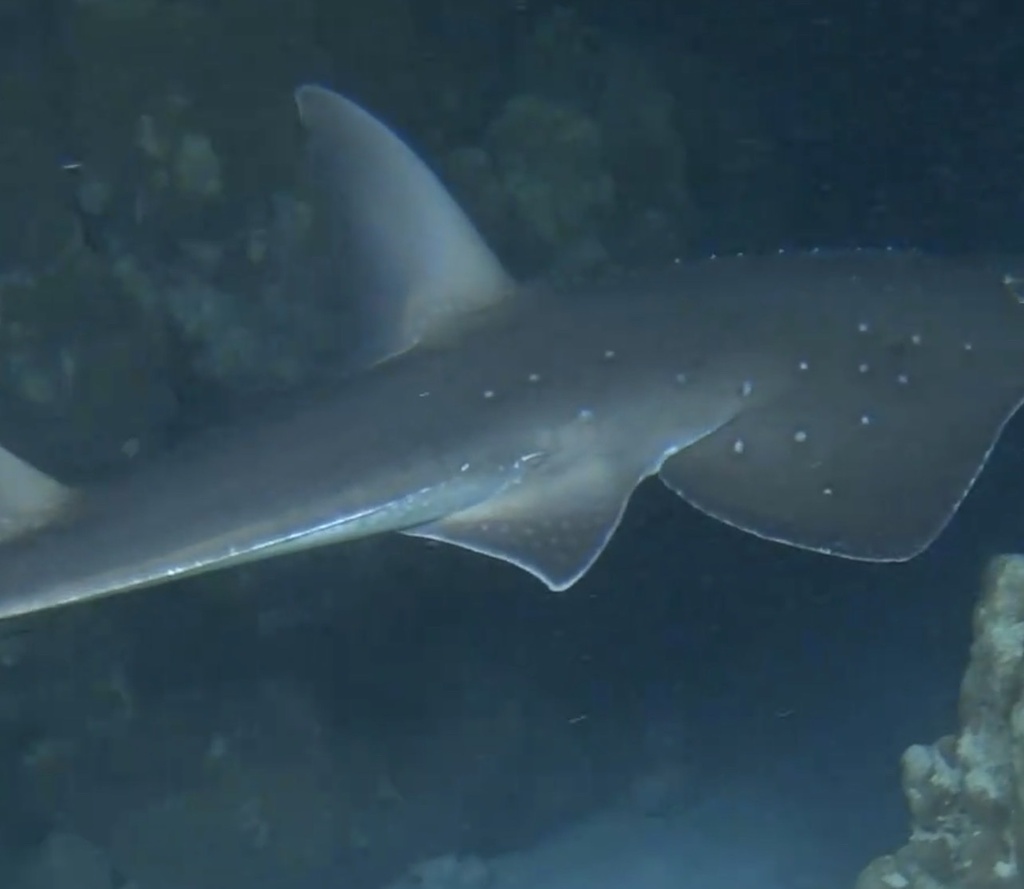
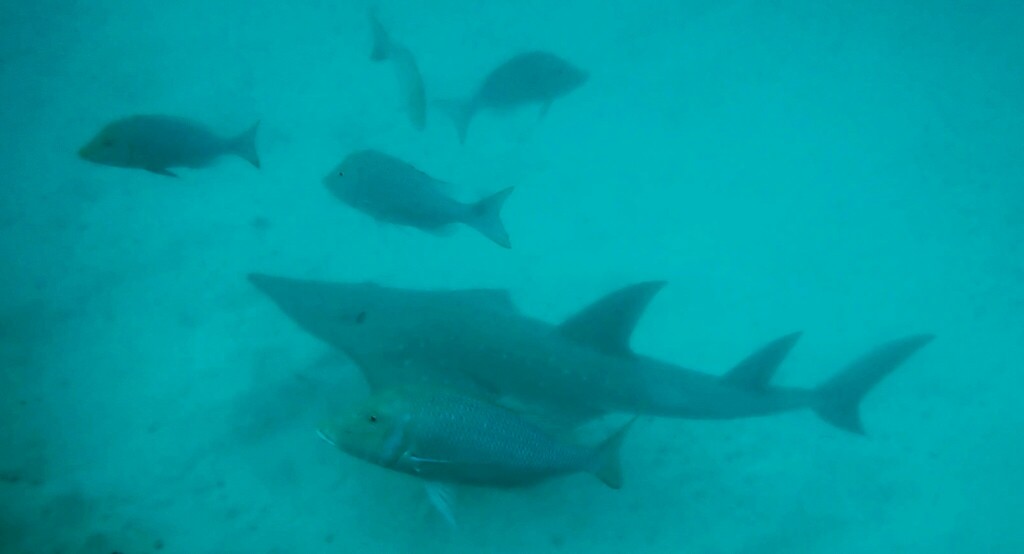
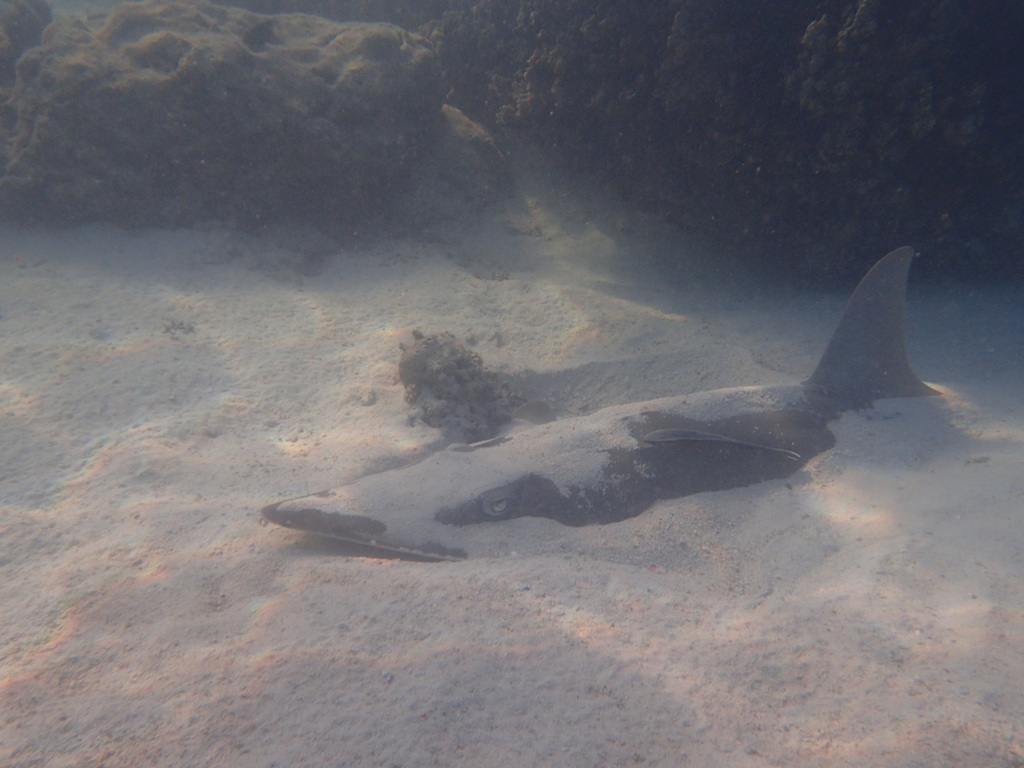
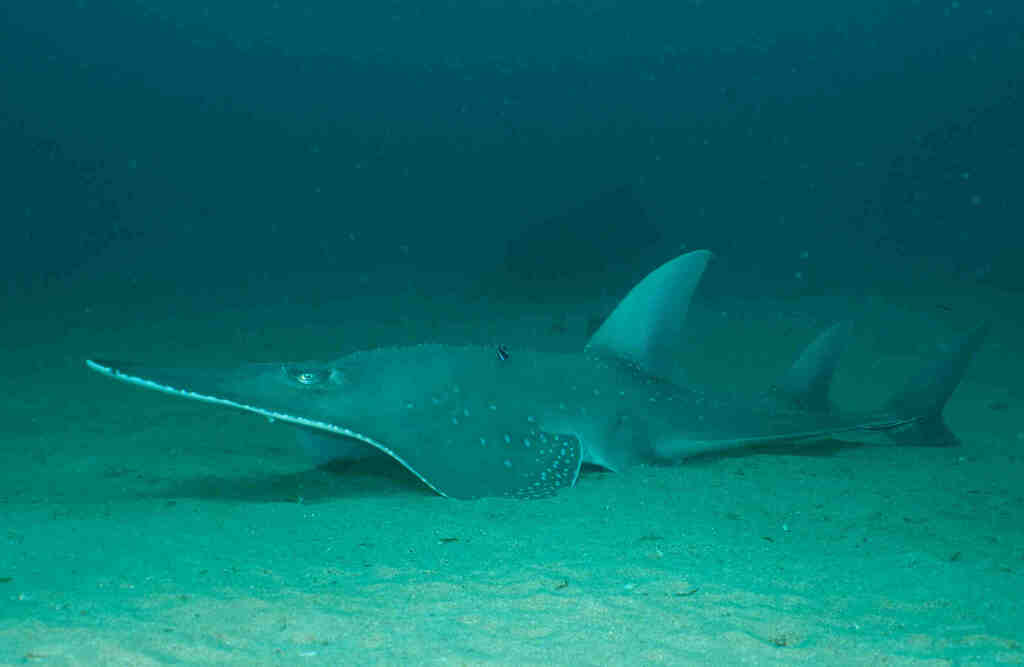
Photos show the species, not always the places on this page.
Length
Up to about 3 m (10 ft); the longest reported are females
Weight
Not given in the sources I read. Pups are about 46 to 50 cm (18 to 20 in) long at birth
Next to a person
Large adults can be one and a half to two times as long as an adult person is tall
What it eats
Crabs, lobsters and other crustaceans, molluscs, and fish that live on the bottom.
Around people
Shy, give space
How it lives
It lives in shallow, inshore waters, from the surface down to at least 60 m, usually on sand and often close to reefs. It often rests on the bottom, pumping water over its gills. It gives birth to live young that feed on yolk and then on nourishment from the mother. Litters are 7 to 19 pups, and its lifespan is estimated at about 15 years. Young ones are greyish or brownish with white spots and a black spot above each pectoral fin. Large adults become darker and the spots fade.
Where it goes
Not well studied. It lives in shallow coastal waters and no long migration is described in the sources I read. Its range runs from the East African coast and the Red Sea through the Indian Ocean to Taiwan, the Philippines and Australia.
We only draw a journey on the map when scientists have tracked it or clearly documented it. For this animal we have not found one yet.
Populations
Global: Critically Endangered (IUCN, 2019). Estimates put declines at more than 80 percent, and the Convention on Migratory Species notes declines of 50 to 80 percent over three decades for the white-spotted wedgefish in the Arabian Sea and nearby waters. It is on CITES Appendix II and CMS Appendix II (2017). Fins from wedgefishes are highly valued, and it is caught in nets, trawls and on longlines. Current numbers by country are not given in the sources I read.
Meet it respectfully
Wedgefish are shy and usually rest on sand. Stay at a calm distance, avoid kicking up sand near it, and let it leave when it chooses. Never chase, touch, ride, feed or bait one, and do not block its way to deeper water. I did not read any local rules for these places, so follow your guide and local rules.
Fun fact
Tap the bulb to light it up.
It is also called the whitespotted wedgefish or whitespotted guitarfish, and belongs to a species complex with the giant guitarfish and the broadnose wedgefish.
Its fins are prized in the shark fin trade, which is a major reason numbers have fallen.
Young wedgefish have white spots and a black spot above each pectoral fin, while big adults are much darker.
Bottlenose wedgefish in the Ocean Atlas
Places we have researched where this animal is recorded. It is never guaranteed, and some places are for watching from the boat only.
Travel with usComing soonTrusted referralExploringOn pause, story onlyEthics pass
Country colour: pink where we travel, blue where we are exploring or refer, grey for story only.
 Australia
 Indonesia
 Kenya
Kenya Malaysia
 Maldives
 New Caledonia
 Seychelles
 Singapore
 Tanzania
Sources for this page
- Wikipedia, Rhynchobatus australiae
- FishBase, Rhynchobatus australiae
- Save Our Seas Foundation, Bottlenose wedgefish
- CMS, White-spotted wedgefish
- GBIF, IUCN Red List category, 2026
Facts checked 5 October 2026. Photos: Unsplash licence, or Creative Commons as shown on each photo.
Work in ocean travel?
We are always happy to hear from exceptional local operators, accommodation, conservation organisations and destination experts. If your work fits responsible, small-group ocean travel, we would love to learn more.
Partner with Ocean Calling7-day freediving course in Coron, Palawan
CHF 1,480