
Great seahorse
Hippocampus kelloggi
One of the largest seahorses, and one of the hardest to find. No sighting is ever a promise.
Vulnerable (IUCN, 2017) means it is at high risk of extinction in the wild, after a decline of at least 30% in about ten years.
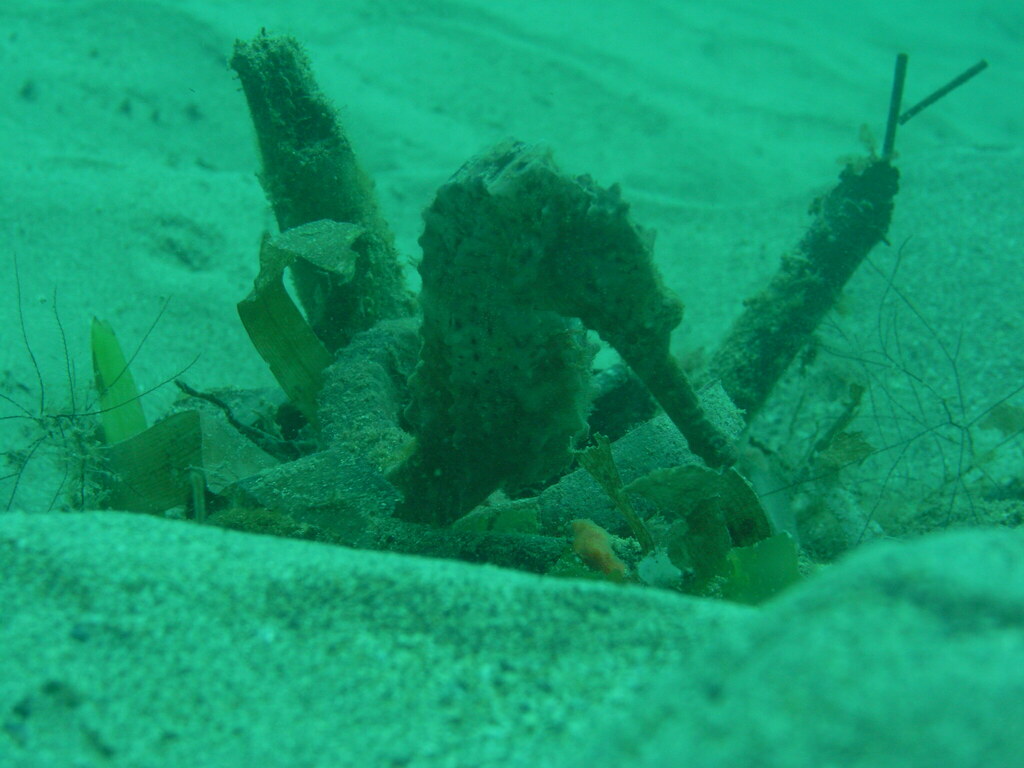
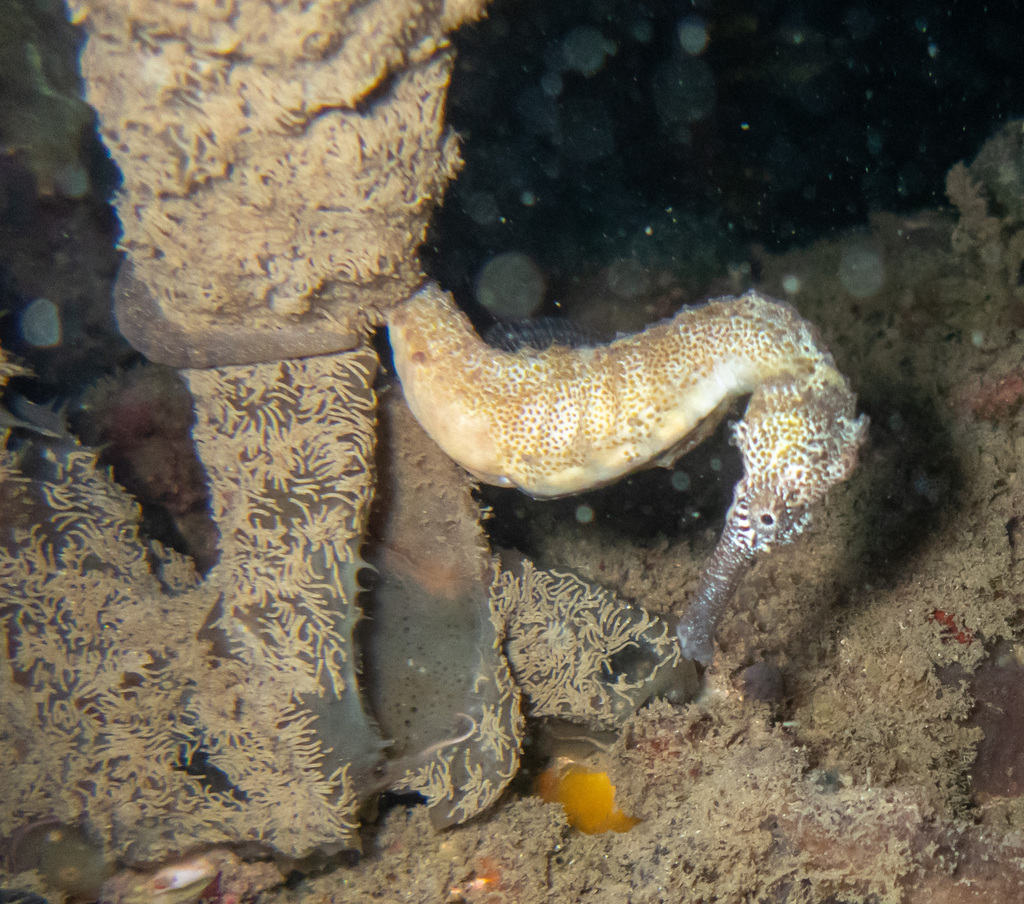
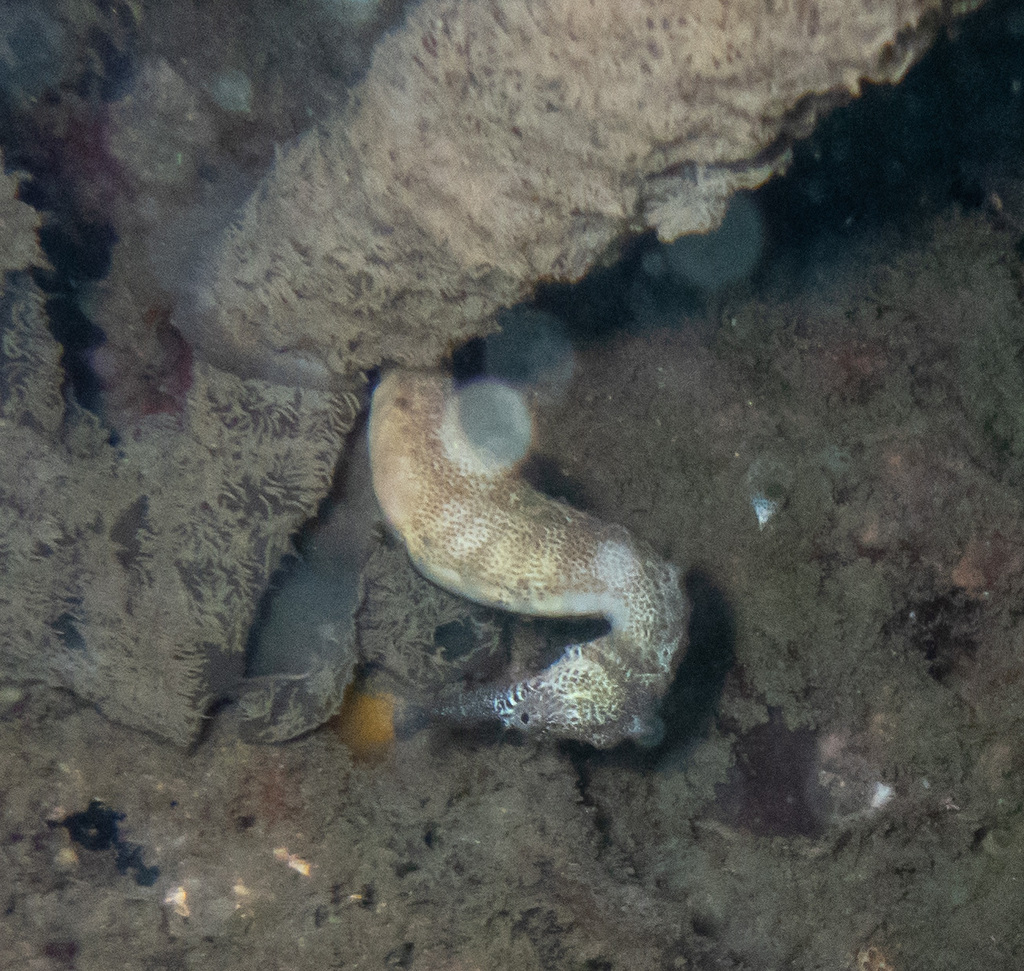
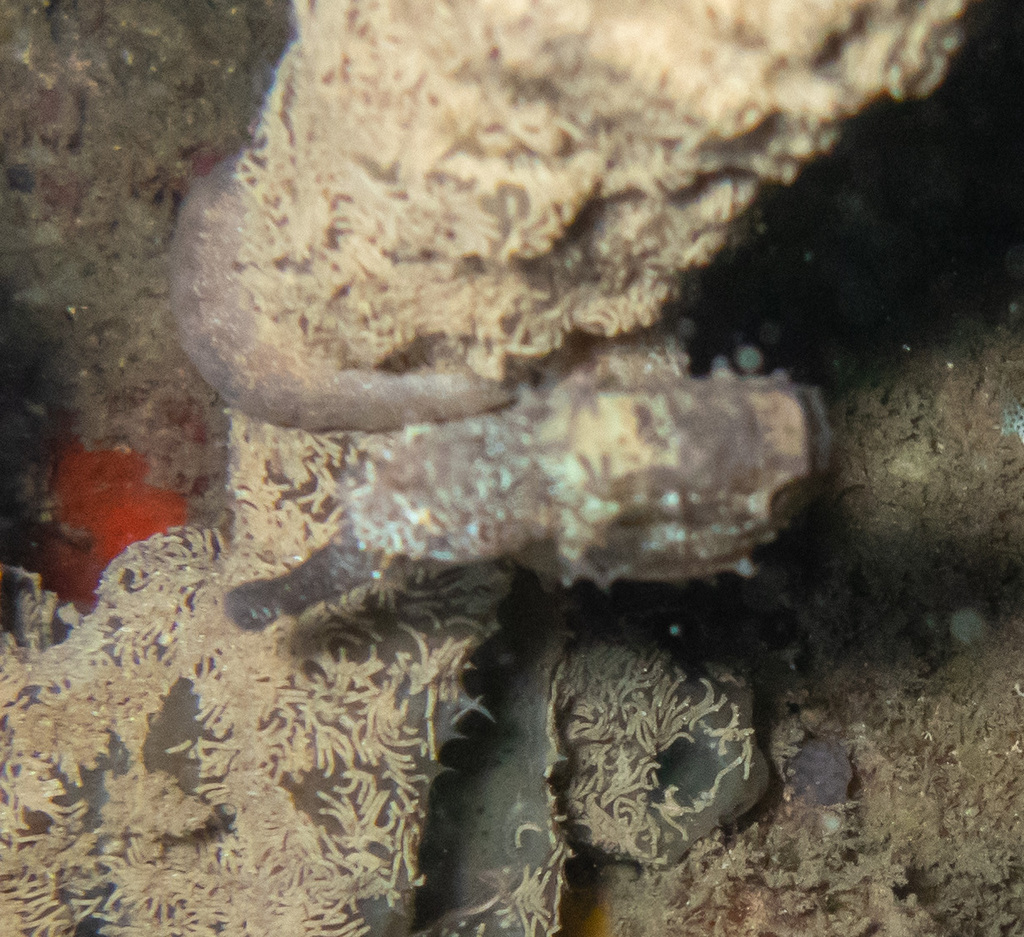
Photos show the species, not always the places on this page.
Length
Up to about 28 cm (11 in) total length (FishBase); mature at about 15 cm (6 in)
Weight
No weight is given in the sources checked
Next to a person
About as long as a school ruler, though much of that length is the curled tail
What it eats
Diet is not described in the sources checked. Seahorses in general eat small crustaceans such as mysid shrimp, according to OPCFHK.
Around people
Calm, hands off
How it lives
Fishes of Australia describes it on reefs and soft bottoms, often with gorgonian corals and sea whips, and FishBase calls it a deep-water species associated with corals. It is recorded from 1 m to about 150 m, and the deepest record is 152 m. The male carries the eggs in a pouch under the tail and then releases the young. A wild lifespan of about 2 to 4 years is reported. The head looks like a crown, the body is pale and smooth, and the tail is about 57% of the body length.
Where it goes
Seahorses move very little. Genetic work on animals from the Red Sea, the Andaman Sea and the South China Sea found three populations that are clearly different with very little mixing, which suggests little movement between regions. How far an individual moves along the coast is not described in the sources checked.
We only draw a journey on the map when scientists have tracked it or clearly documented it. For this animal we have not found one yet.
Populations
Vulnerable on the IUCN Red List (2017). The listing followed an estimated decline of at least 30% between 2006 and 2016. It is also in CITES Appendix II. It is found across the Indo-West Pacific, from the Red Sea, the Persian Gulf and East Africa to Southeast Asia, China, Japan and eastern Australia (central New South Wales to Botany Bay). Threats named are use in traditional Chinese medicine, the aquarium trade and bycatch in fisheries. In Hong Kong, the Ocean Park Conservation Foundation says it has been sighted before, but none were seen in its 2011 to 2012 survey of 31 sites, which found six seahorses of one other species.
Meet it respectfully
Look, do not touch. Great seahorses cling to sponges and corals and can be injured when pulled free. Move slowly, keep your fins and gauges clear of the reef, never move one for a photo, and give it room to stay where it is. Do not chase it and never bait it. Because it is rare in Hong Kong, a photo with location and depth is useful to local researchers, who invite divers to send reports.
Fun fact
Tap the bulb to light it up.
About 57% of its body length is tail, and it grips seaweed, sponges and sea whips with it.
FishBase calls it a deep-water species, and it has been recorded as deep as 152 m.
A 2025 genetic study of 56 animals found distinct populations in the Red Sea, the Andaman Sea and the South China Sea, with the South China Sea group showing the most genetic variety.
Great seahorse in the Ocean Atlas
Places we have researched where this animal is recorded. It is never guaranteed, and some places are for watching from the boat only.
Travel with usComing soonTrusted referralExploringOn pause, story onlyEthics pass
Country colour: pink where we travel, blue where we are exploring or refer, grey for story only.
 Australia
 China
China Hong Kong
 Indonesia
 Japan
Japan New Caledonia
 Philippines
Sources for this page
- FishBase, 2026
- Wikipedia, Great seahorse, 2026
- Fishes of Australia, 2026
- IUCN Red List, via GBIF, 2017
- IUCN Seahorse, Pipefish & Seadragon Specialist Group, 2026
- Genetic diversity of the great seahorse, Int. J. Mol. Sci., 2025
- OPCFHK, Seahorse in Hong Kong, 2026
- OPCFHK, Seahorse survey results, 2013
Facts checked 5 October 2026. Photos: Unsplash licence, or Creative Commons as shown on each photo.
Work in ocean travel?
We are always happy to hear from exceptional local operators, accommodation, conservation organisations and destination experts. If your work fits responsible, small-group ocean travel, we would love to learn more.
Partner with Ocean CallingNew: mobula rays in La Ventana, May 2027
CHF 2,720