
Little cormorant
Microcarbo niger
A small dark bird drying its wings beside a pond or estuary: little cormorants keep to their own routines, and no sighting is ever a promise.
Least Concern (IUCN, 2024) means it is not at high risk of extinction at the moment. The total population is estimated at 275,000 to 350,000 birds.
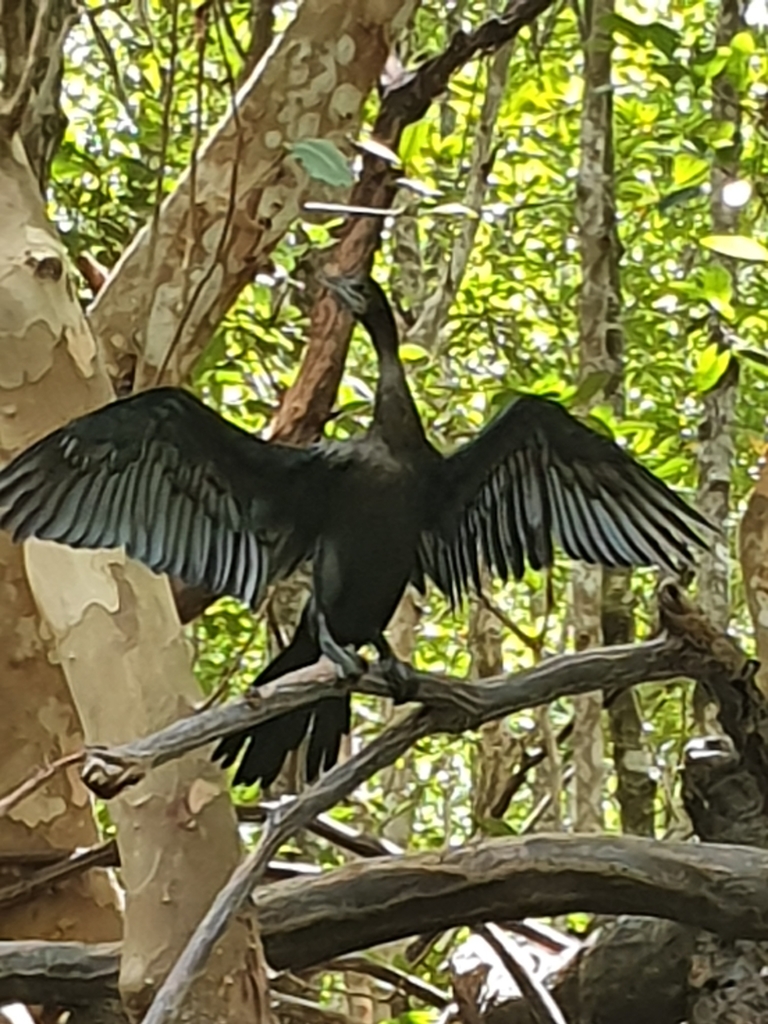
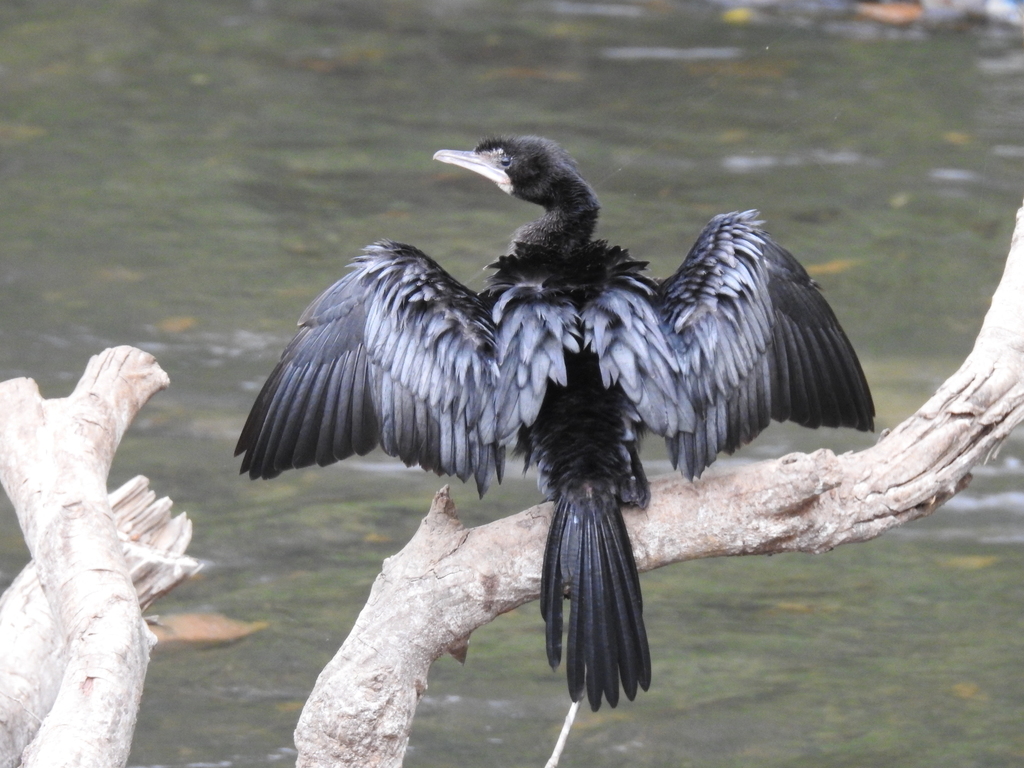
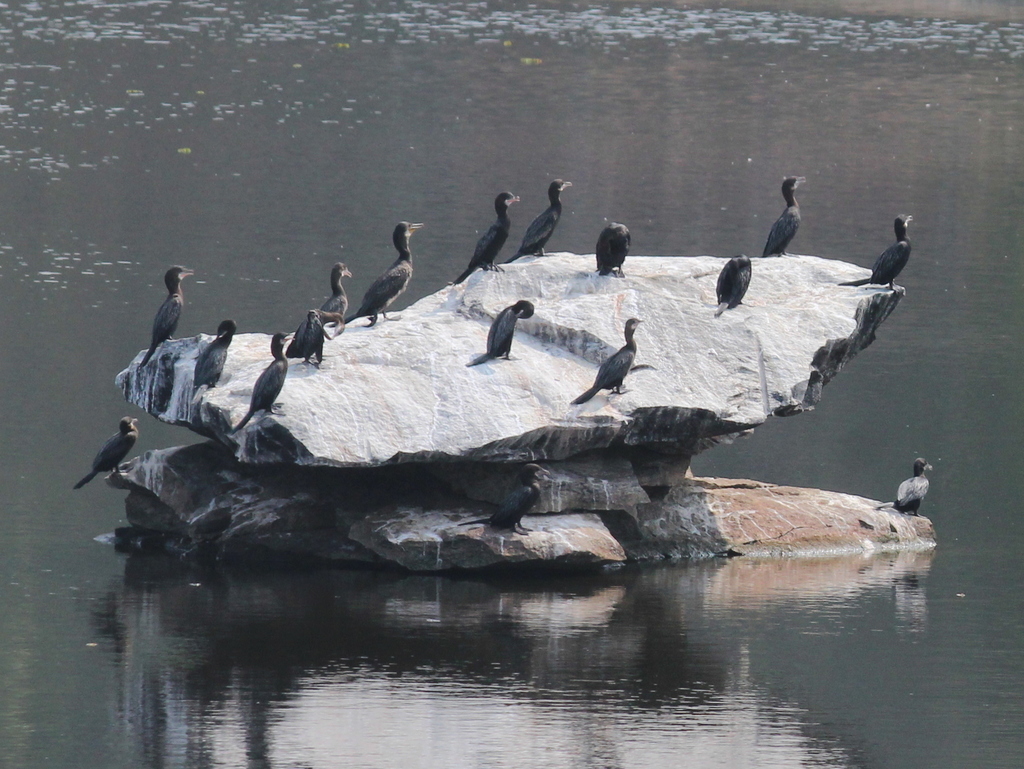
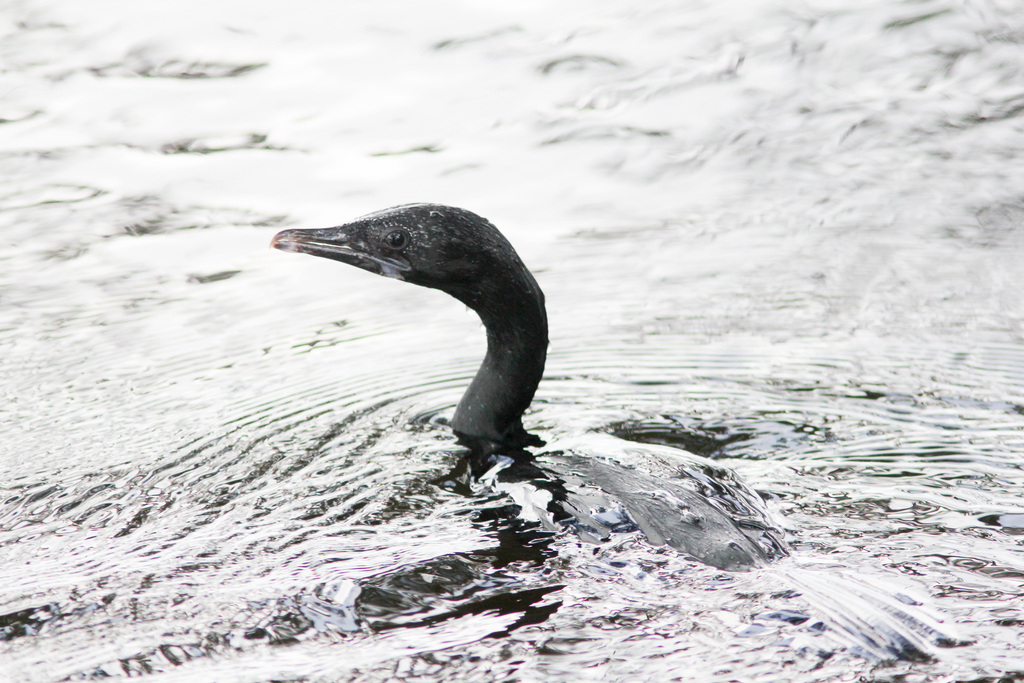
Photos show the species, not always the places on this page.
Length
About 50 cm (20 in) long. One database gives 51 to 56 cm (20 to 22 in), with a wingspan of about 90 cm (35 in).
Weight
About 360 to 525 g (13 to 18.5 oz). FishBase and SeaLifeBase list a maximum published weight of 530 g (1.2 lb).
Next to a person
About as long as an adult arm, and as heavy as a large tin of beans.
What it eats
Mainly small fish. In a study in northern India the birds fished in water less than 1 m deep and took fish about 2 to 8 cm long. They dive from the surface and push themselves along underwater with their webbed feet. A study in Kerala found they feed opportunistically, with feeding linked to the tides.
Around people
Calm, give space
How it lives
Little cormorants fish alone or in loose groups, and roost together. They breed in colonies in trees, often beside herons and egrets, on a platform nest of sticks. The clutch is usually 2 to 6 eggs, and eggs hatch after about 15 to 21 days. In a Bangladesh colony the young left the nest 17 to 29 days after hatching. Breeding season depends on region: May to October in Bangladesh, July to September in Pakistan and northern India, November to February in southern India and December to May in Sri Lanka. In breeding plumage the bird is glossy black. Outside the breeding season it is browner, with a pale throat patch.
Where it goes
The little cormorant lives across the Indian subcontinent and east through mainland Southeast Asia to Java. It feeds and roosts on wetlands, mostly fresh water, from village ponds to large lakes, and sometimes uses tidal estuaries. The sources I opened describe no long-distance migration. Stray birds have been recorded in Ladakh, and it is not found in the Himalayas.
We only draw a journey on the map when scientists have tracked it or clearly documented it. For this animal we have not found one yet.
Populations
The estimated total population is 275,000 to 350,000 birds (BirdLife International, 2024, as listed on Wikipedia). I did not find a clear population trend in the sources I opened. A study around Delhi, India, says cormorants and their habitats are under threat there. It found that small village waterbodies are threatened by pollution and urbanisation, and that human disturbance cut short feeding bouts, mostly outside protected areas.
Meet it respectfully
Watch from the water edge or from a boat at a distance, ideally with binoculars. Keep away from nesting trees and roosts, because human disturbance has been recorded cutting short the birds feeding bouts. Never chase, feed or bait cormorants, and keep drones away from colonies. Follow your guide and local wetland rules. A sighting is never promised.
Fun fact
Tap the bulb to light it up.
After diving, it stands with its wings held open. A study in Sri Lanka found the time spent this way depended on time spent underwater and on how dry the air was, which supports the idea that it is drying its wings.
Fish caught by a little cormorant can be stolen at the surface by other birds, such as gulls, egrets and painted storks.
The Indian cormorant looks similar but is bigger, with a longer bill that ends in a hooked tip.
Little cormorant in the Ocean Atlas
Places we have researched where this animal is recorded. It is never guaranteed, and some places are for watching from the boat only.
Travel with usComing soonTrusted referralExploringOn pause, story onlyEthics pass
Country colour: pink where we travel, blue where we are exploring or refer, grey for story only.
 Bangladesh
 Cambodia
 China
China India
India Indonesia
 Malaysia
 Myanmar
 Pakistan
 Sri Lanka
 Thailand
 Vietnam
Sources for this page
- Wikipedia, Little cormorant, 2026
- Wikipedia, List of Suliformes by population (BirdLife International, 2024), 2026
- Oiseaux.net, 2026
- SeaLifeBase, 2026
- Naher et al., 2009, Journal of Threatened Taxa
- Zeenath and Zacharias, 2010, Journal of Threatened Taxa
- Mahendiran and Urfi, 2010, Hydrobiologia
- GBIF, IUCN Red List category, 2026
Facts checked 5 October 2026. Photos: Unsplash licence, or Creative Commons as shown on each photo.
Work in ocean travel?
We are always happy to hear from exceptional local operators, accommodation, conservation organisations and destination experts. If your work fits responsible, small-group ocean travel, we would love to learn more.
Partner with Ocean CallingNew: tiger sharks in Fuvahmulah, January or March 2027
from CHF 2,900