
Little pied cormorant
Microcarbo melanoleucos
A small, quick-diving cormorant of coasts and waterways. Every sighting is a pleasure, never a promise.
Least Concern (IUCN) means the species is not close to being threatened with extinction at the global level.
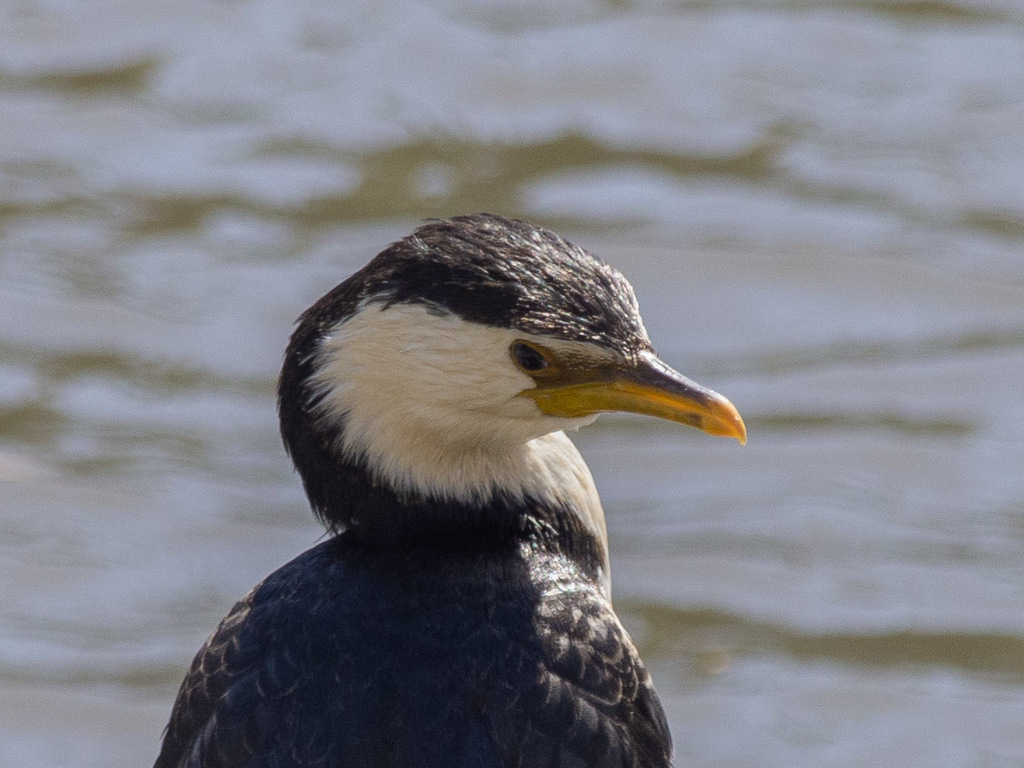
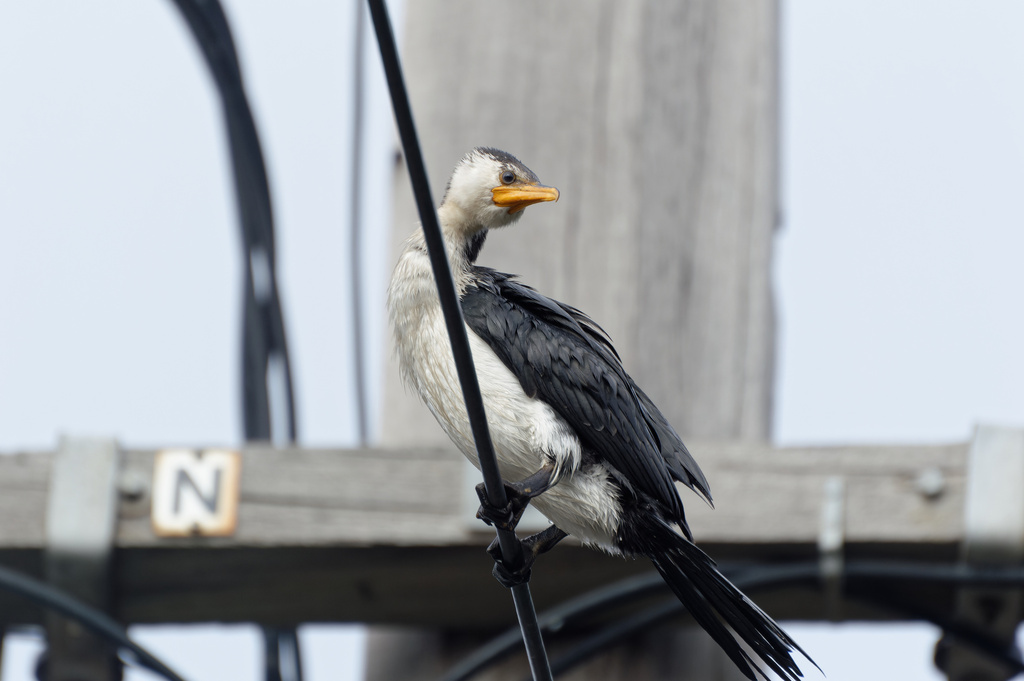
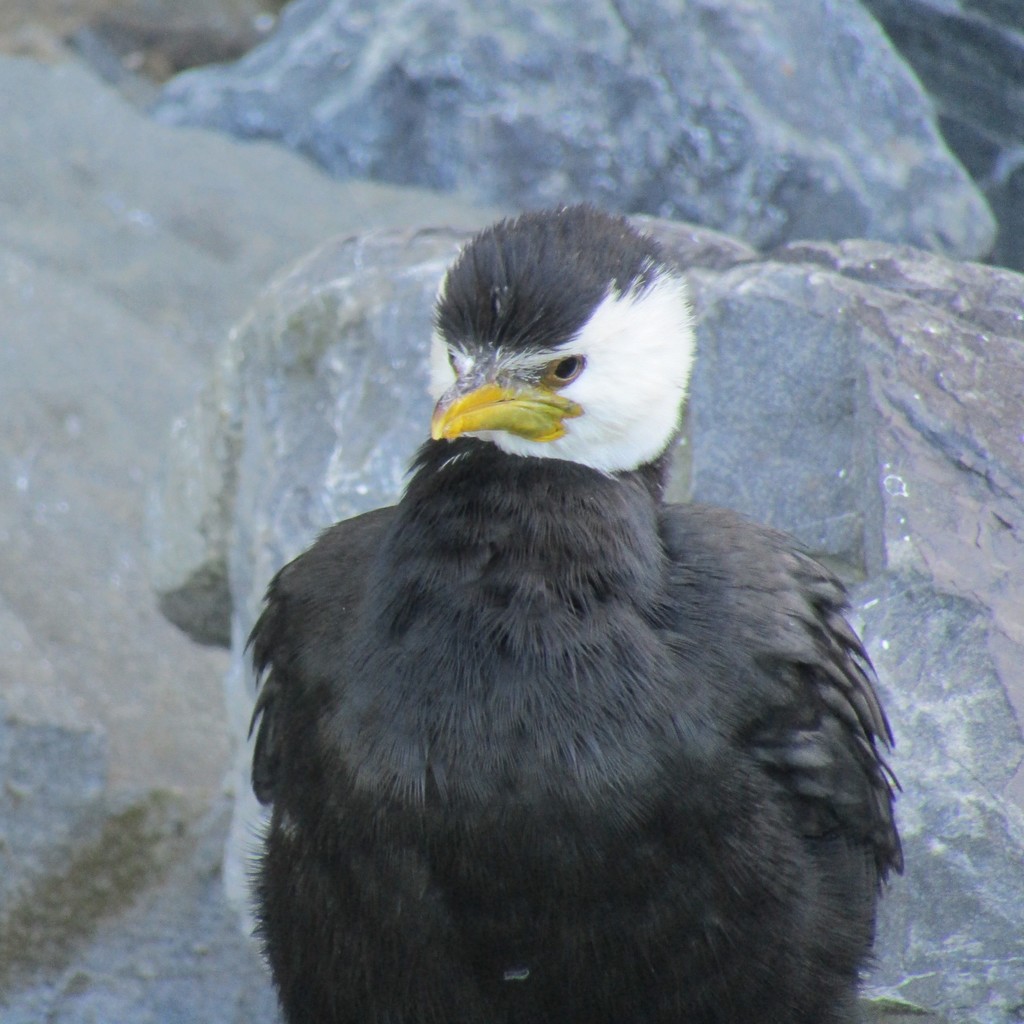
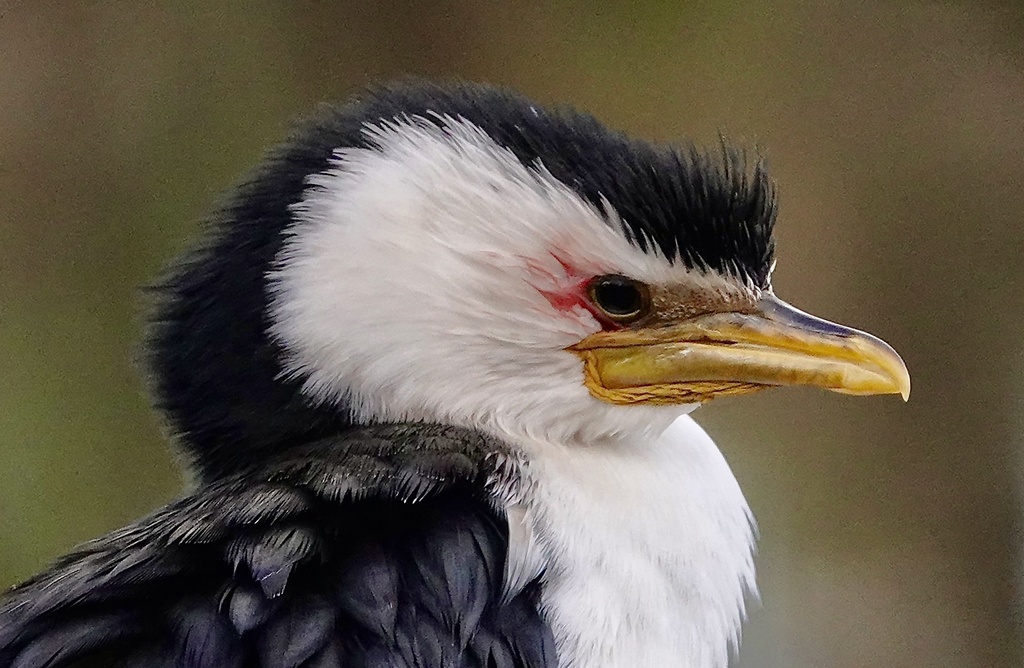
Photos show the species, not always the places on this page.
Length
About 56 to 58 cm (22 to 23 in); the Australian Museum gives 50 to 66 cm (20 to 26 in)
Weight
About 400 to 880 g (14 oz to 1 lb 15 oz), per NZ Birds Online
Next to a person
About as long as an adult person's arm
What it eats
Small fish, eels and crustaceans, plus frogs, tadpoles and insects. Wikipedia notes an unusually high share of crustaceans for a cormorant, and the Australian Museum says freshwater crayfish are a favourite inland. It dives in fairly shallow water, usually for about 15 to 20 seconds.
Around people
Easy to watch from afar
How it lives
It lives in both salt and fresh water and is often seen on the coast, in estuaries, lakes and rivers. It breeds alone or in colonies, building a flat platform of sticks lined with green leaves, usually in a tree. Both parents share incubation and rearing. Clutches are three to five eggs depending on the source. In southern areas it breeds in spring or early summer, and in the tropics after the monsoon.
Where it goes
The sources I opened do not describe long migrations. It uses swamps, lakes, lagoons, estuaries and coastlines, and in New Zealand it lives on both the coast and inland lakes, ponds, rivers and streams.
We only draw a journey on the map when scientists have tracked it or clearly documented it. For this animal we have not found one yet.
Populations
Listed as Least Concern by IUCN. In Australia it is secure in all states and one of the most common waterbirds, per the Australian Museum. In New Zealand it was classed At Risk, Relict in 2021 per NZ Birds Online, which notes some regional increases and lost colonies in places such as Auckland.
Meet it respectfully
Watch from a distance, especially near nesting trees and colonies. Never chase, feed or flush the birds, keep dogs under control, and move slowly along the shore. I did not read any local viewing rules for this species.
Fun fact
Tap the bulb to light it up.
Its plumage varies a lot, from almost all black to white underneath.
It has an unusually high share of crustaceans in its diet for a cormorant.
It lives in both marine and freshwater habitats, from coasts to inland lakes.
Little pied cormorant in the Ocean Atlas
Places we have researched where this animal is recorded. It is never guaranteed, and some places are for watching from the boat only.
Travel with usComing soonTrusted referralExploringOn pause, story onlyEthics pass
Country colour: pink where we travel, blue where we are exploring or refer, grey for story only.
 Australia
 Indonesia
 New Caledonia
 New Zealand
 Norfolk Island
 Palau
 Papua New Guinea
 Solomon Islands
 Timor-Leste
 Vanuatu
Sources for this page
- Wikipedia, 2026
- NZ Birds Online, 2026
- Australian Museum, 2026
- Birds in Backyards, BirdLife Australia, 2026
- GBIF, IUCN category, 2026
Facts checked 5 October 2026. Photos: Unsplash licence, or Creative Commons as shown on each photo.
Work in ocean travel?
We are always happy to hear from exceptional local operators, accommodation, conservation organisations and destination experts. If your work fits responsible, small-group ocean travel, we would love to learn more.
Partner with Ocean CallingNot sure where to go? Get your Ocean Match
from CHF 19