
Nazca booby
Sula granti
A white bird on a bare ledge and a plunge into blue water: Nazca boobies go about their day whether or not anyone is watching, and no sighting is ever a promise.
Least Concern (IUCN, 2021) means it is not at high risk of extinction at the moment. The population is estimated at about 20,000 to 49,999 birds, with some decline thought to be happening.
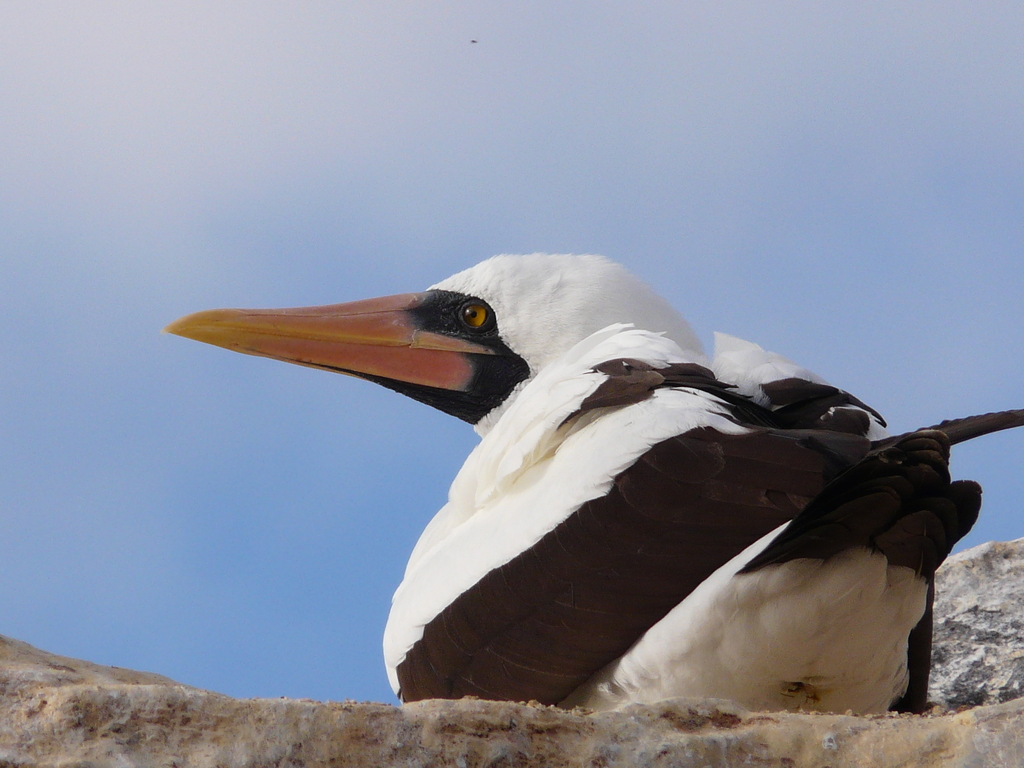
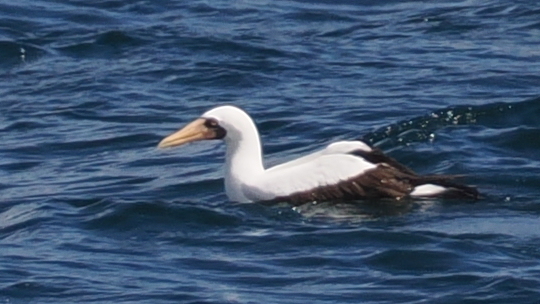
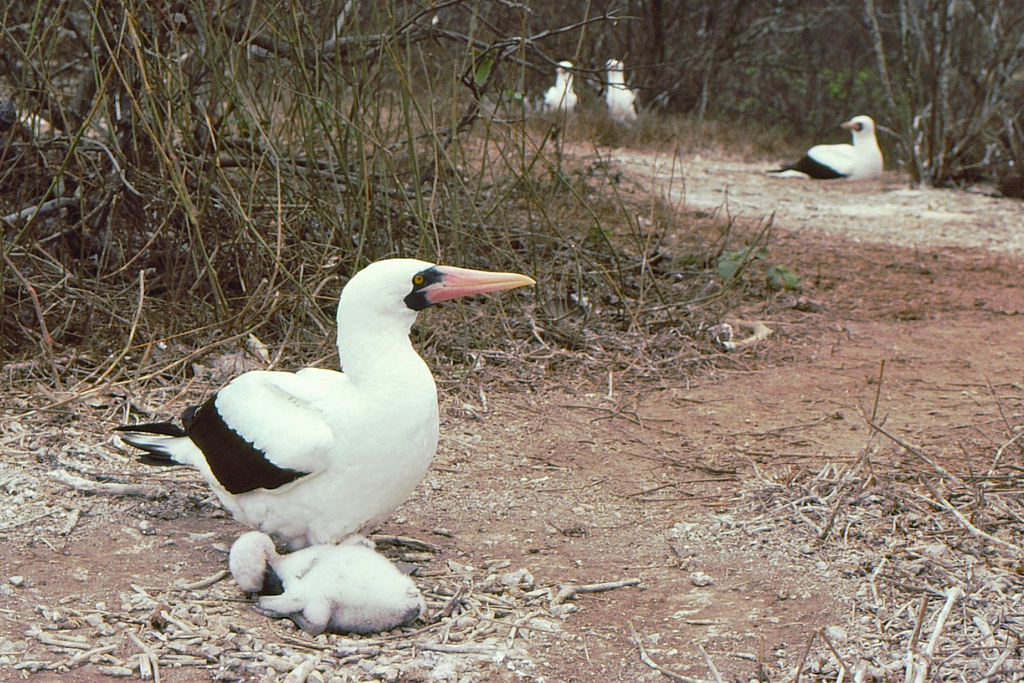
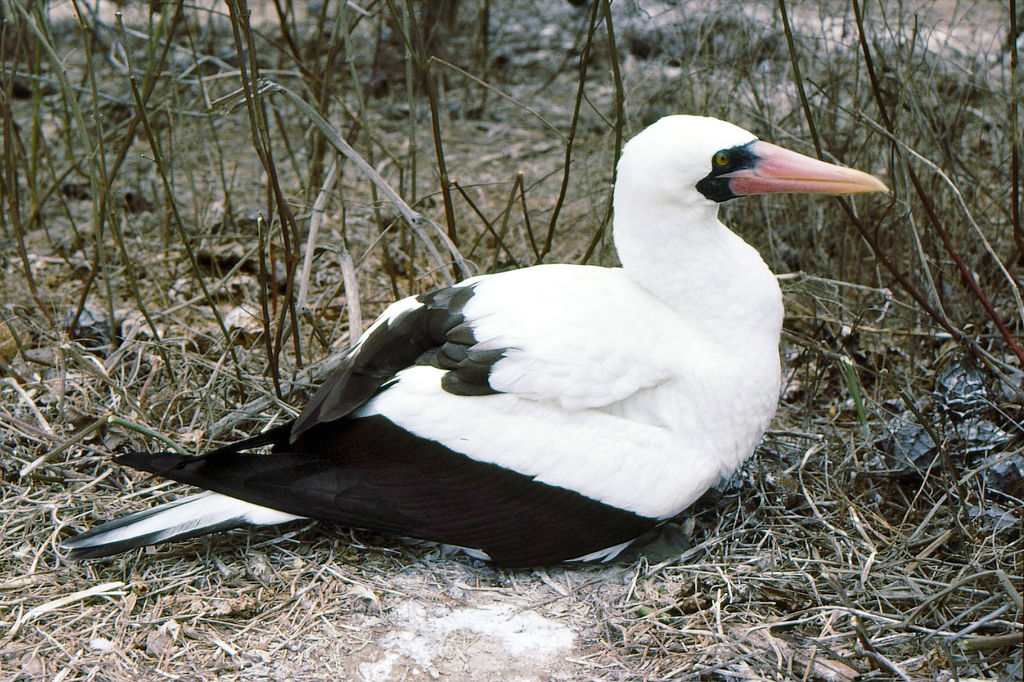
Photos show the species, not always the places on this page.
Length
Usually about 76 to 89 cm (30 to 35 in) long, with a wingspan of about 1.55 m (5.1 ft); up to about 92 cm (36 in) and 1.8 m (5.9 ft) reported. Another source gives slightly larger figures, 85 to 95 cm (33 to 37 in).
Weight
Usually about 1.3 to 2.3 kg (2.9 to 5.1 lb); the maximum reported is about 2.3 kg. Females are slightly larger than males.
Next to a person
Wings that spread about as wide as many adults are tall, and a weight similar to a large bag of potatoes.
What it eats
Small fish, caught by plunge-diving from the air, sometimes from heights of up to 30 m. The main food is the South American pilchard (a sardine). It also takes flying fish, anchovies and squid, especially in El Niño years when sardines are scarce. Females tend to take larger prey and dive deeper than males.
Around people
Calm, give space
How it lives
Nazca boobies nest in colonies on islands, on bare ground near cliffs. A pair lays one or two eggs. When both hatch, usually only one chick survives, because the older chick pushes out the younger one. Biologists call this obligate siblicide. Both parents care for the young. On Genovesa nesting takes place between August and November, and on Española eggs are laid between November and February. One source gives an average lifespan of about 23 years.
Where it goes
Nazca boobies breed on islands from Baja California to the Galápagos, Isla de la Plata in Ecuador and Malpelo in Colombia. They are mostly seen along the coast and at sea between islands, and are rarely found far offshore. One database lists the bird as partly migratory, but I found no tracking data in the sources I opened. A few stray birds have been recorded as far west as Indonesia and north-western Australia.
We only draw a journey on the map when scientists have tracked it or clearly documented it. For this animal we have not found one yet.
Populations
The global population is estimated at 20,000 to 49,999 birds, and the sources call this a minimum estimate (BirdLife International, 2021, as listed on Wikipedia). Numbers are thought to fall to some extent, but not enough to count as a threatened species. Threats named in the sources include introduced predators, human development, long fishing lines, overfishing of its prey and marine pollution. It was long treated as a form of the masked booby and is now recognised as its own species.
Meet it respectfully
Watch from a distance and keep to marked paths if there are any. Never chase, touch, feed or bait a booby, and keep well away from nests, eggs and chicks, because parents warm eggs and guard chicks on open ground. Keep drones away from colonies. Rules differ from island to island, so follow your guide and the park rules. A sighting is never promised.
Fun fact
Tap the bulb to light it up.
For many years it was counted as a kind of masked booby. DNA studies published in 2002 supported treating it as a separate species.
Boobies have no brood patch. They warm their eggs with their webbed feet, which are rich in blood vessels during nesting.
When two chicks hatch, the older one usually pushes the younger one out of the nest. This is called obligate siblicide.
Nazca booby in the Ocean Atlas
Places we have researched where this animal is recorded. It is never guaranteed, and some places are for watching from the boat only.
Travel with usComing soonTrusted referralExploringOn pause, story onlyEthics pass
Country colour: pink where we travel, blue where we are exploring or refer, grey for story only.
 Chile
 Colombia
 Costa Rica
 Ecuador
 El Salvador
 France
 Guatemala
 Mexico
 Nicaragua
 Panama
 Peru
 United States
Sources for this page
- Galapagos Conservation Trust, 2026
- Wikipedia, Nazca booby, 2026
- Wikipedia, List of Suliformes by population (BirdLife International, 2021), 2026
- Galapagos Conservancy, 2026
- Oiseaux.net, 2026
- GBIF, IUCN Red List category, 2026
Facts checked 5 October 2026. Photos: Unsplash licence, or Creative Commons as shown on each photo.
Work in ocean travel?
We are always happy to hear from exceptional local operators, accommodation, conservation organisations and destination experts. If your work fits responsible, small-group ocean travel, we would love to learn more.
Partner with Ocean CallingGili Trawangan in 5 days
from CHF 790