
Noble pen shell (fan mussel)
Pinna nobilis
A tall, thin shell stands upright in the seagrass, barely moving. Noble pen shells are now rare, and no sighting is ever a promise.
Critically Endangered (IUCN, 2019) means it faces an extremely high risk of extinction in the wild, after a disease wiped out most animals across the Mediterranean.
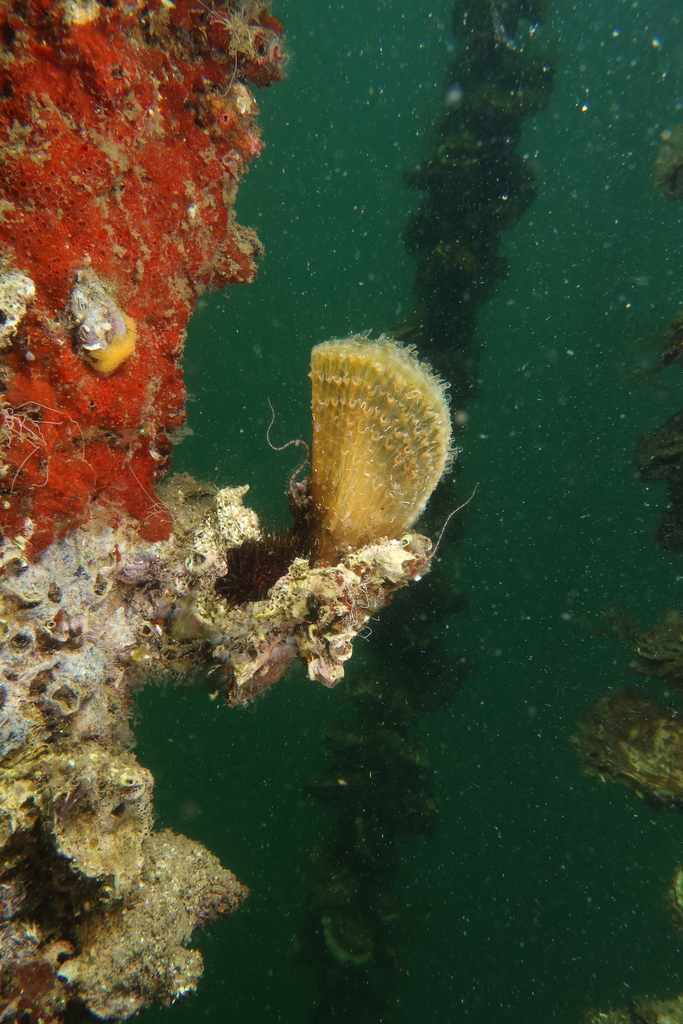
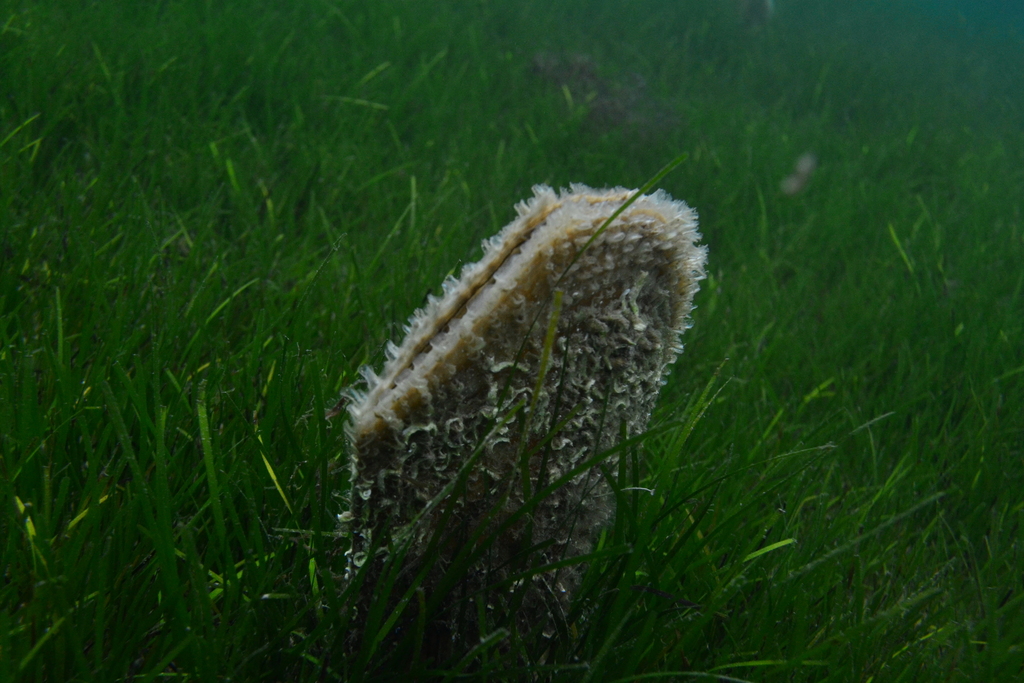
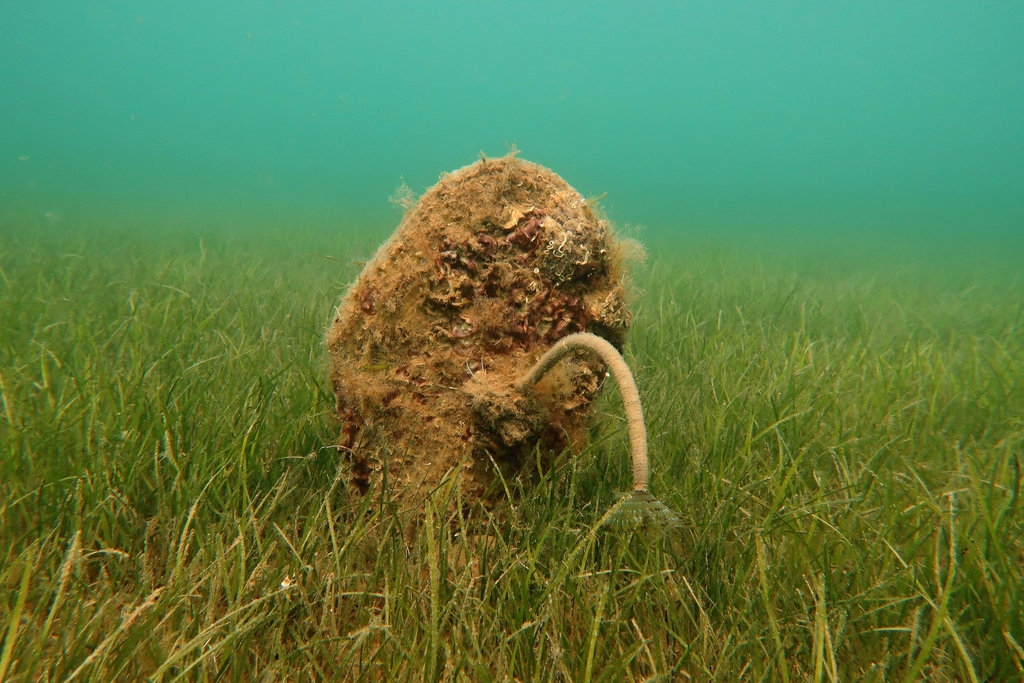
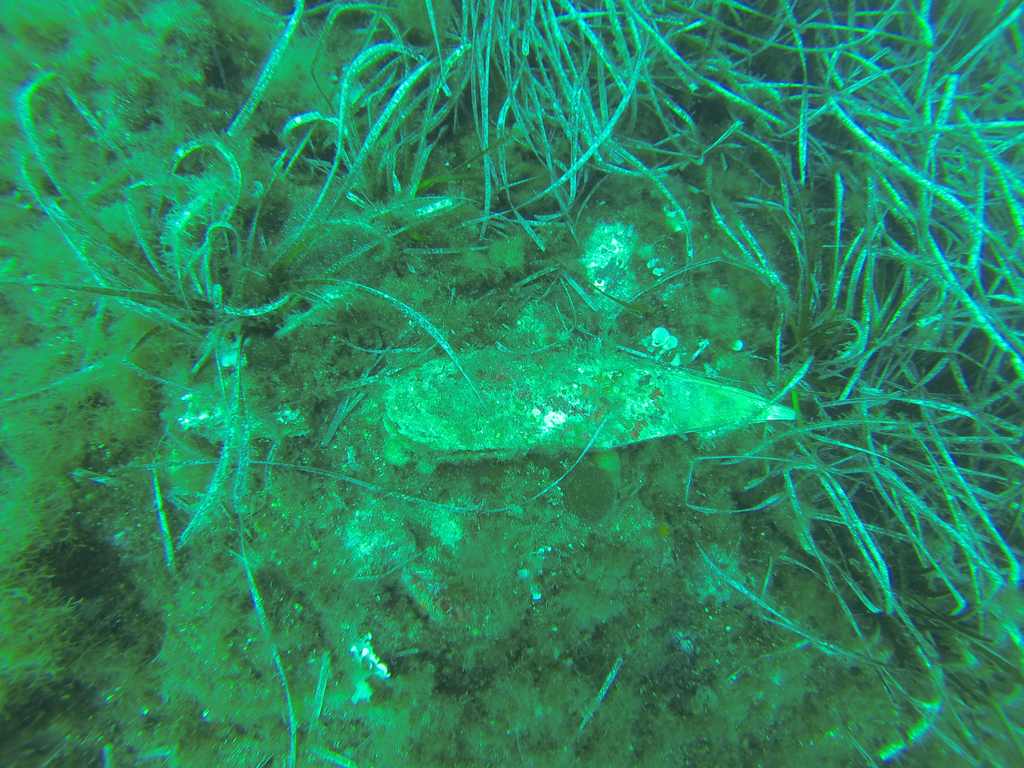
Photos show the species, not always the places on this page.
Length
Usually about 30 to 50 cm (12 to 20 in) long; up to about 120 cm (4 ft)
Weight
Not given in the sources I read
Next to a person
A typical shell is about as long as a forearm and hand; the largest can be about the height of a young child
What it eats
It filters food particles from the water. The shrimp that lives inside has a similar filter-feeding diet.
Around people
Look, never touch
How it lives
The shell stands partly buried in soft sand or mud, often in seagrass meadows, at about 0.5 to 60 m depth. It holds on with many silk-like threads called a byssus. It is a hermaphrodite, able to release both eggs and sperm. A shrimp (Pontonia pinnophylax) and a pea crab live inside the shell. I did not find a lifespan figure.
Where it goes
It does not travel as an adult. It stays anchored in one spot by its byssus threads.
We only draw a journey on the map when scientists have tracked it or clearly documented it. For this animal we have not found one yet.
Populations
It lives only in the Mediterranean. A parasite, Haplosporidium pinnae, was found in 2016 after a die-off in Spain, where about 99 percent of the population died. By 2019 the disease had been detected in Greece, Croatia, Turkey, Tunisia, France and Morocco, and the population had dropped by over 80 percent across the sea over the preceding decade. The IUCN listed the species as Critically Endangered in December 2019. I did not find current counts by country.
Meet it respectfully
Look, do not touch. Never pick up, tap, collect or move a shell, and keep fins, hands and anchors away from seagrass and the animals in it. The species is strictly protected under the European Habitats Directive, and taking it is illegal in Croatia. Live animals are now rare, so a sighting may not happen. Follow local rules and your guide.
Fun fact
Tap the bulb to light it up.
Two crustaceans can share the shell: a small shrimp and a pea crab.
The shell is anchored in soft sediment by silk-like threads.
It has been strictly protected under the European Habitats Directive, and taking it has been prohibited in Croatia since 1977.
Noble pen shell (fan mussel) in the Ocean Atlas
Places we have researched where this animal is recorded. It is never guaranteed, and some places are for watching from the boat only.
Travel with usComing soonTrusted referralExploringOn pause, story onlyEthics pass
Country colour: pink where we travel, blue where we are exploring or refer, grey for story only.
 Croatia
 France
 Greece
 Italy
Italy Slovenia
 Spain
Spain Tunisia
 Türkiye
Sources for this page
Facts checked 5 October 2026. Photos: Unsplash licence, or Creative Commons as shown on each photo.
Work in ocean travel?
We are always happy to hear from exceptional local operators, accommodation, conservation organisations and destination experts. If your work fits responsible, small-group ocean travel, we would love to learn more.
Partner with Ocean Calling5-day freediving course in Bali
CHF 1,180