
Oriental darter
Anhinga melanogaster
A long-necked wetland bird that swims with only its head and neck showing, and no sighting is ever a promise.
Least Concern (IUCN, 2024) means it is not considered at risk of extinction now. It was Near Threatened before the 2024 reassessment.
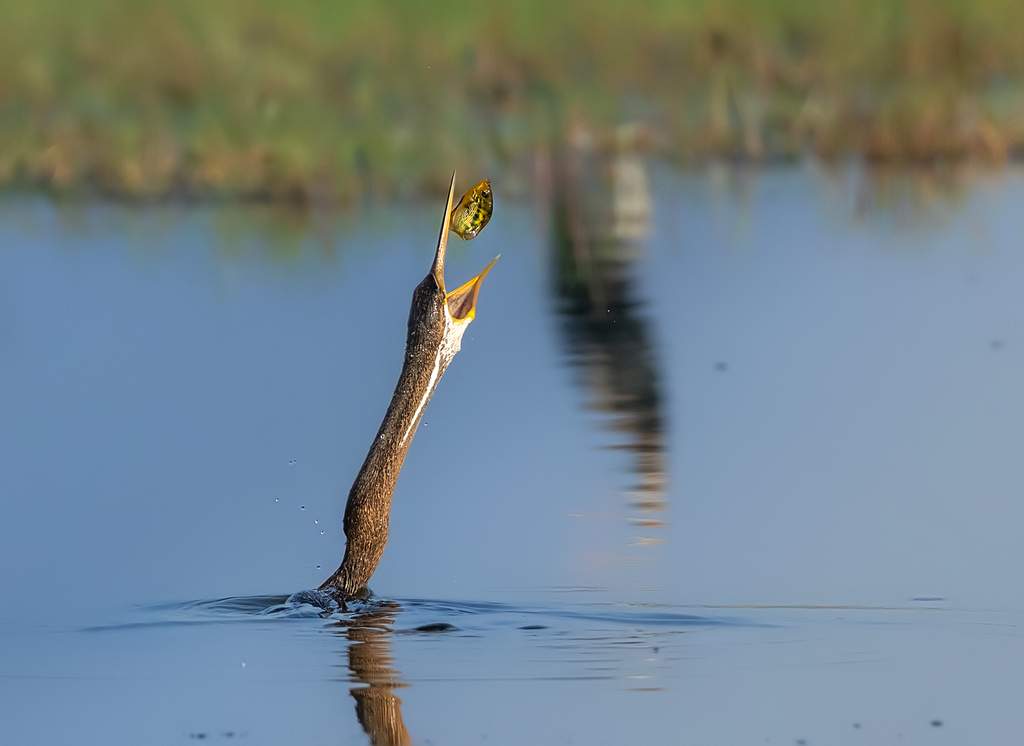
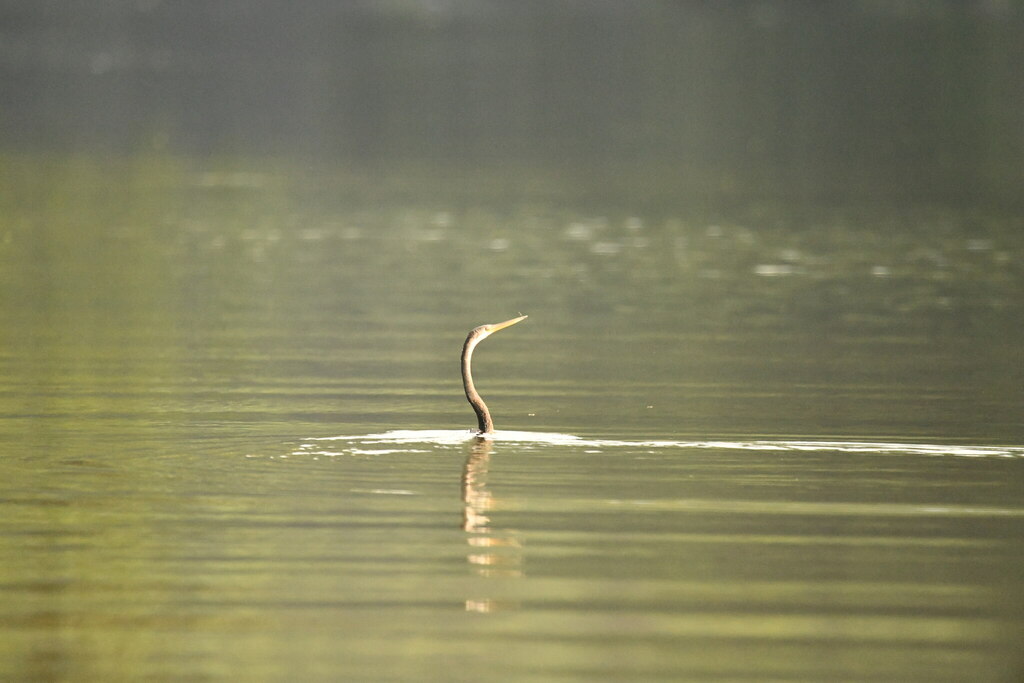
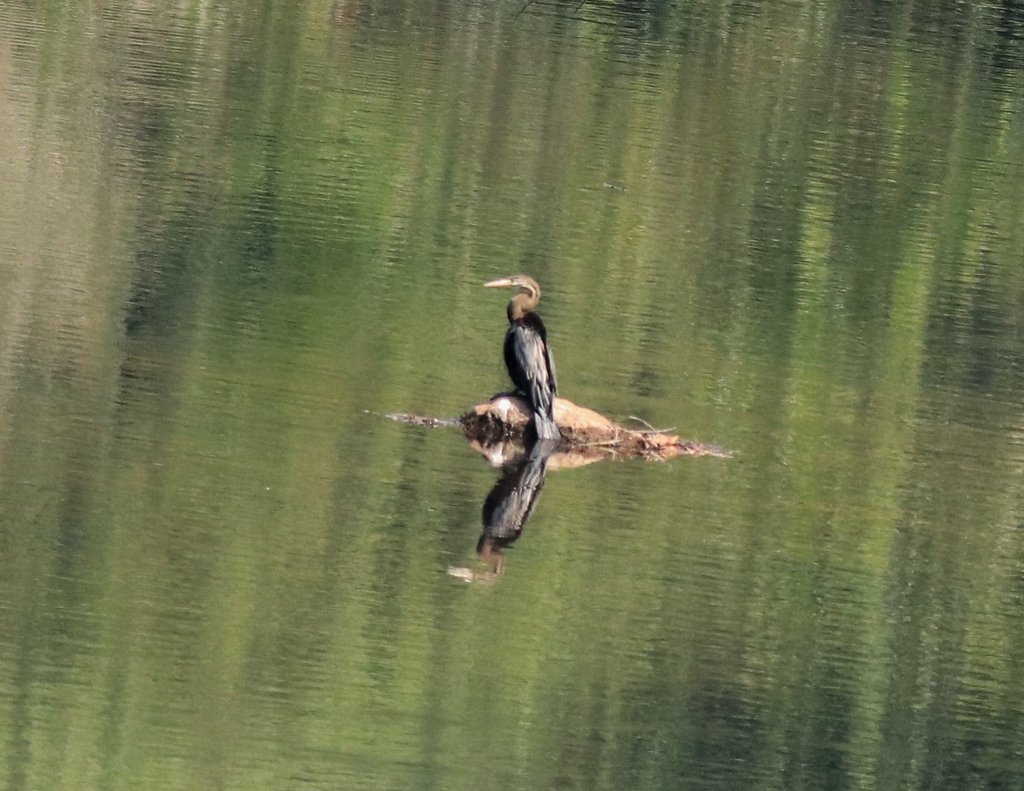
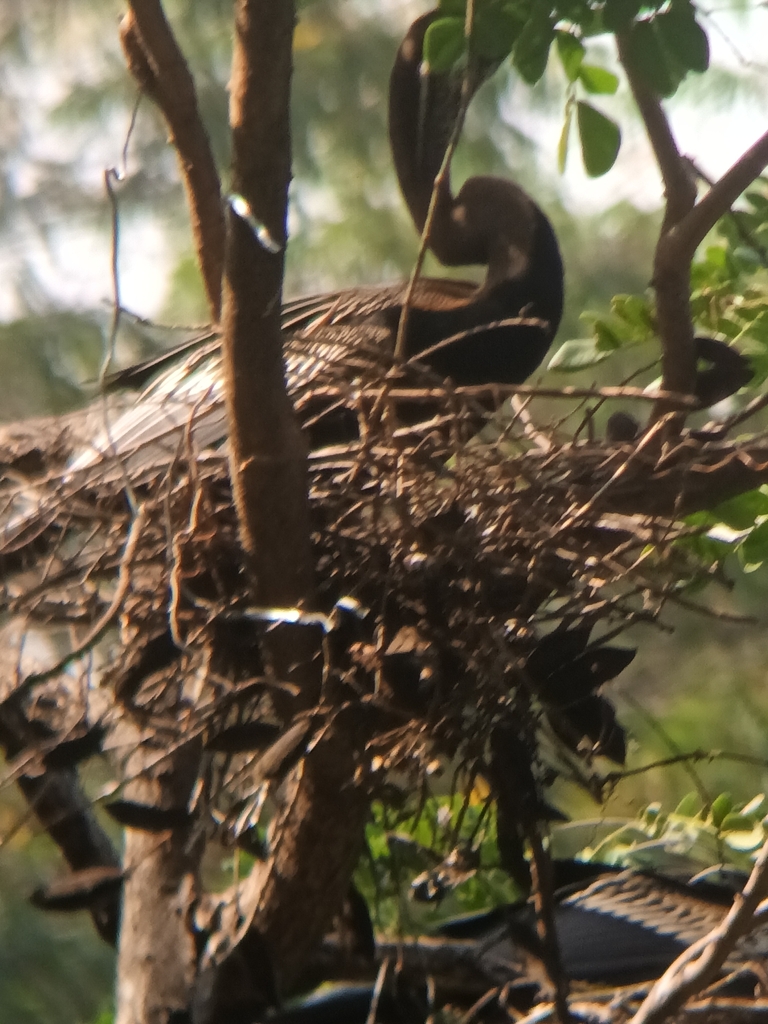
Photos show the species, not always the places on this page.
Length
About 85 to 92 cm (33 to 36 in) long. The sources I read give no reliable wingspan
Weight
About 1.16 to 1.5 kg (2.6 to 3.3 lb), measured in Indian birds
Next to a person
About as long as a small child is tall, and about as heavy as a bag of sugar and a half
What it eats
Mostly fish. It swims with its whole body under the water, spears a fish with a quick dart of its neck, flips it up and swallows it head first. It also eats insects, frogs, newts, shrimp, molluscs and small reptiles.
Around people
Calm, give space
How it lives
Lives on freshwater lakes, streams, rivers, marshes and estuaries, and roosts in trees or bamboo near the water. Breeds in colonies, often mixed with other water birds, on stick nests in trees. A clutch is usually 3 to 6 eggs. Incubation takes about 25 to 30 days, chicks fledge at around 50 days, and birds mature at about 2 years old.
Where it goes
A strong flyer that can soar for long distances. The sources I read give no migration routes. Breeding time varies by region, from June to August in northern India to winter in the south-east of India.
We only draw a journey on the map when scientists have tracked it or clearly documented it. For this animal we have not found one yet.
Populations
Least Concern worldwide (IUCN). It was Near Threatened until a reassessment in 2024. The reviewers noted local declines but found no reason to think global declines passed 20% over three generations, and nest counts in Kerala, India were stable. Reported threats include loss of wetlands, entanglement in fishing nets, egg collection and falling fish supplies in some areas. It lives in South Asia and South-east Asia. The African darter, Anhinga rufa, is a different species.
Meet it respectfully
Watch from the shore or a boat at a distance, and keep away from nesting trees and colonies. Never chase, feed or bait it, and keep boats and nets clear of birds fishing near them. No sighting is ever promised. I did not read any local viewing rules for this species.
Fun fact
Tap the bulb to light it up.
It spears fish with a quick dart of its neck, which has a kink at the 8th and 9th vertebrae.
It often swims with its whole body under the water and only its neck and head showing.
The African darter is a separate species from the Oriental darter.
Oriental darter in the Ocean Atlas
Places we have researched where this animal is recorded. It is never guaranteed, and some places are for watching from the boat only.
Travel with usComing soonTrusted referralExploringOn pause, story onlyEthics pass
Country colour: pink where we travel, blue where we are exploring or refer, grey for story only.
 Australia
 Bangladesh
 Brunei
 Cambodia
 Democratic Republic of the Congo
 India
India Indonesia
 Malaysia
 Myanmar
 Philippines
 Singapore
 Sri Lanka
 Thailand
 Vietnam
Sources for this page
- Wikipedia, 2026
- Wikipedia, African darter, 2026
- Animal Diversity Web, 2026
- BirdLife Globally Threatened Bird Forums, 2024 proposal
- BirdLife Globally Threatened Bird Forums, 2024 Red List update
- GBIF and IUCN Red List category, 2026
Facts checked 5 October 2026. Photos: Unsplash licence, or Creative Commons as shown on each photo.
Work in ocean travel?
We are always happy to hear from exceptional local operators, accommodation, conservation organisations and destination experts. If your work fits responsible, small-group ocean travel, we would love to learn more.
Partner with Ocean Calling