
Pelagic stingray
Pteroplatytrygon violacea
A violet ray of the open sea that drifts and flaps rather than rests on the bottom. No sighting is a promise, and it comes on its own terms.
Least Concern (IUCN, assessed 2018) means the species is not close to being threatened with extinction at the global level.
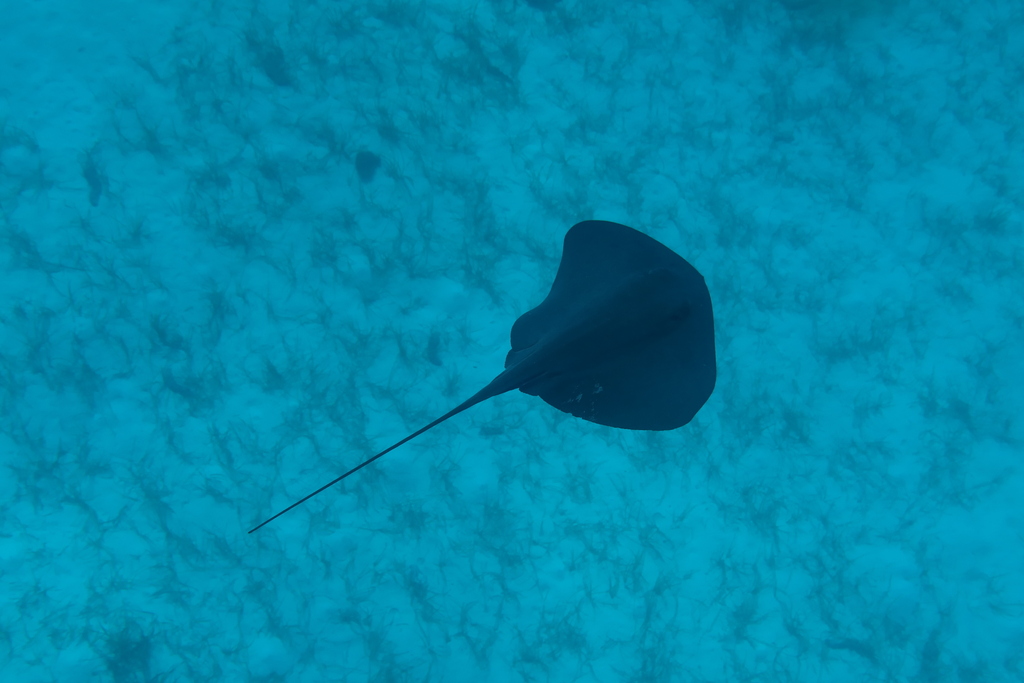
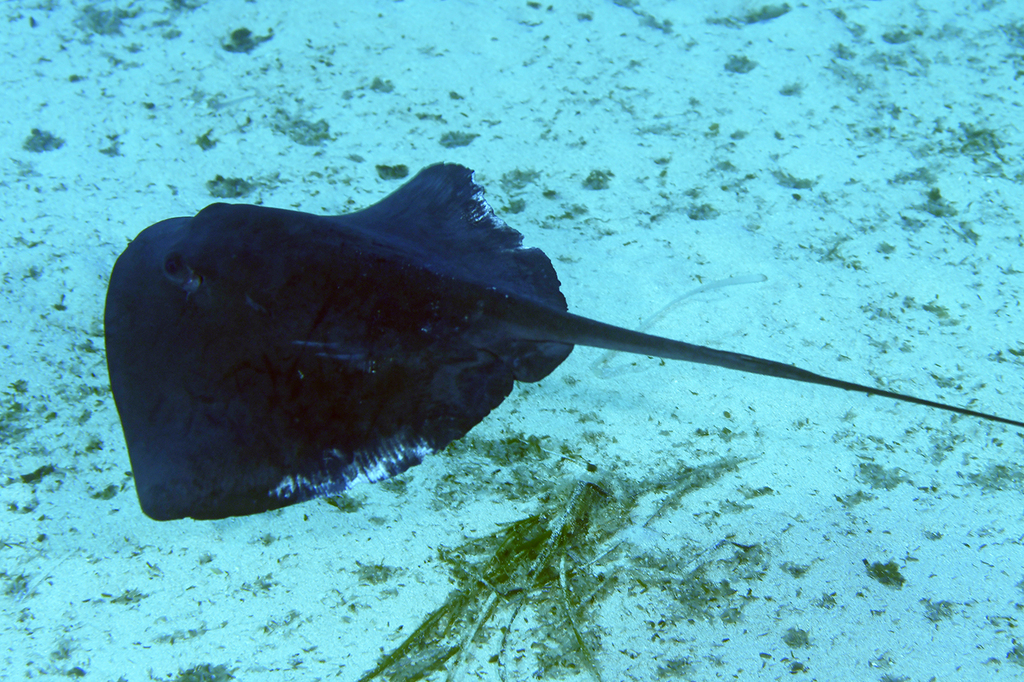
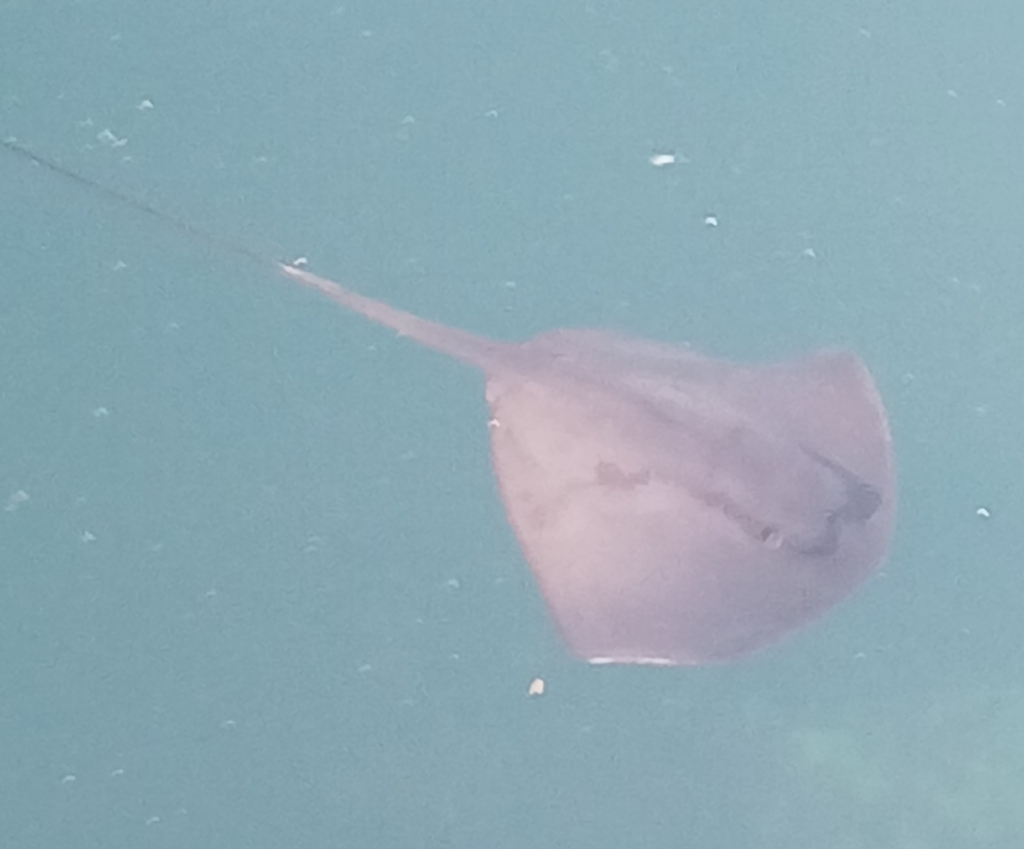
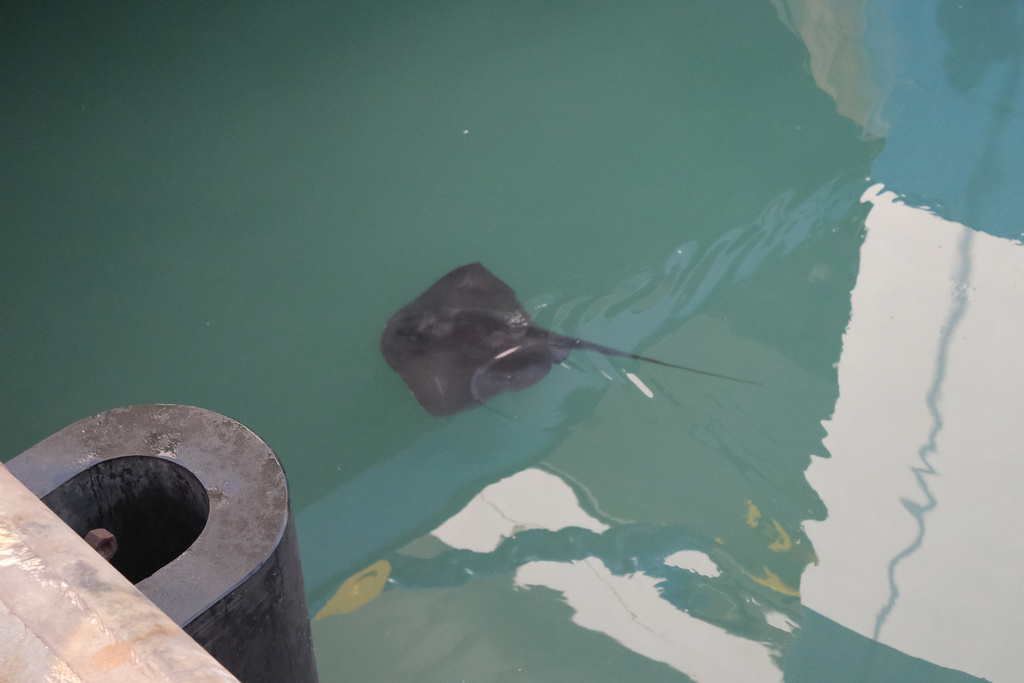
Photos show the species, not always the places on this page.
Length
Disc width up to about 80 cm (31 in) in the wild per the Florida Museum; the largest reported are 94 to 96 cm (37 to 38 in). Measured across the body, not including the long tail.
Weight
The largest female on record weighed about 49 kg (108 lb) and the largest male about 12 kg (26 lb), per Wikipedia
Next to a person
A large one has a disc about as wide as a doorway
What it eats
Jellyfish, squid, octopus, shrimp-like crustaceans such as krill and amphipods, and small fish such as herring and mackerel. Wikipedia says young rays eat about 6 to 7 percent of their body weight each day, falling to just over 1 percent in adults.
Around people
Calm, give space
How it lives
Unlike most stingrays, it lives in open water rather than on the seabed. It is usually found from the surface to about 100 m over deep water, with records to 381 m. It swims by flapping its pectoral fins. Young develop inside the mother. Litters are reported as 2 to 13 pups depending on the source, after a gestation of about 2 to 4 months, and newborns are 15 to 25 cm across. Females become mature at about 45 cm disc width, around 2 to 3 years of age.
Where it goes
Found in tropical and subtropical oceans worldwide, roughly between 52 degrees north and 50 degrees south, and it prefers water warmer than about 19 C. Births are seasonal: November to March in the equatorial Pacific and August to September in the Mediterranean. The sources I opened do not give set migration routes.
We only draw a journey on the map when scientists have tracked it or clearly documented it. For this animal we have not found one yet.
Populations
Listed as Least Concern by IUCN (assessed November 2018, per FishBase), because it is widespread, breeds quickly and appears to have increased since the 1950s, according to Wikipedia. FishBase also rates its resilience as very low, with a minimum population doubling time of more than 14 years. It is a common bycatch in pelagic longline and gillnet fisheries and is usually discarded, according to Wikipedia.
Meet it respectfully
If one passes, stay calm, keep your distance and let it go its own way. Never chase, touch, feed or crowd it, and keep away from the tail, which carries a venomous spine. I did not read any local viewing rules for this species.
Fun fact
Tap the bulb to light it up.
Unlike most stingrays, it lives in open water instead of resting on the seabed.
Its colour is uniform violet, purple or dark blue-green.
Its tail spine is venomous, but the risk to people is minimal because it lives in open water.
Pelagic stingray in the Ocean Atlas
Places we have researched where this animal is recorded. It is never guaranteed, and some places are for watching from the boat only.
Travel with usComing soonTrusted referralExploringOn pause, story onlyEthics pass
Country colour: pink where we travel, blue where we are exploring or refer, grey for story only.
 Brazil
 Chile
Chile Faroe Islands
 France
 Greenland
 Indonesia
 Italy
Italy Japan
Japan Norway
 Spain
Spain United Kingdom
Sources for this page
Facts checked 5 October 2026. Photos: Unsplash licence, or Creative Commons as shown on each photo.
Work in ocean travel?
We are always happy to hear from exceptional local operators, accommodation, conservation organisations and destination experts. If your work fits responsible, small-group ocean travel, we would love to learn more.
Partner with Ocean CallingShop with Ocean Calling
Visit the Ocean Calling storefront on Amazon.
As an Amazon Associate I earn from qualifying purchases. You are not only choosing products that respect the ocean, you are also helping us keep going: paying our local partners fairly and keeping our retreats ethical, sustainable and honestly priced for you. 💗