
Peruvian booby
Sula variegata
A white-headed seabird that dives into cold, rich water close to shore. It is often easy to see along this coast, but no sighting is ever a promise.
Least Concern (BirdLife International for IUCN, 2018) means it is not at high risk of extinction now, although numbers rise and fall sharply with El Niño and the anchoveta.
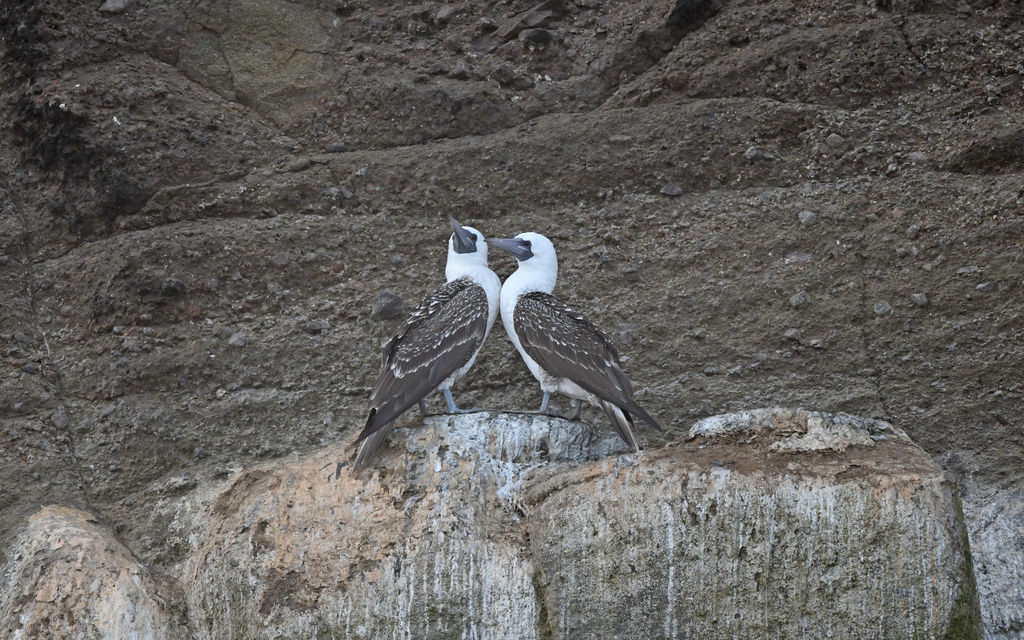
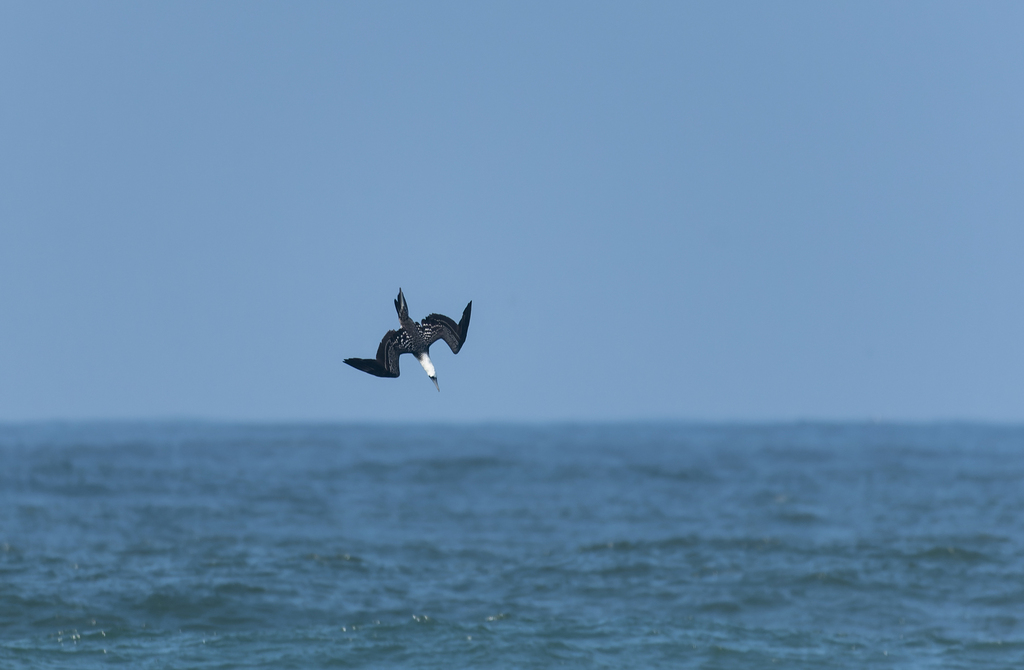
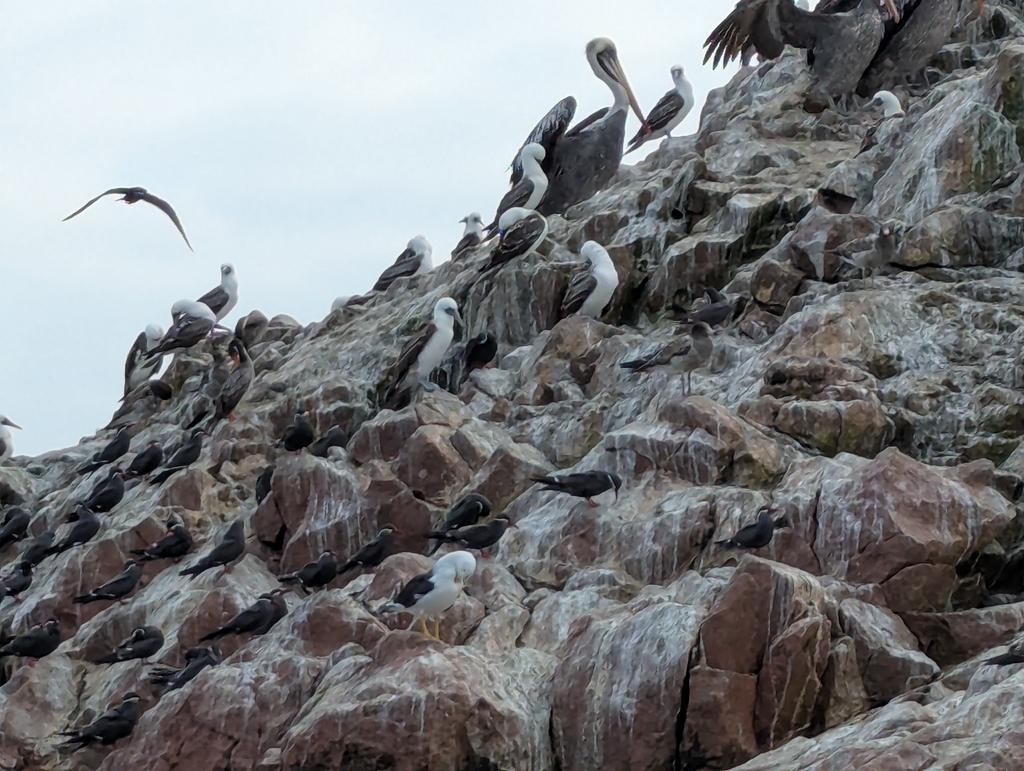
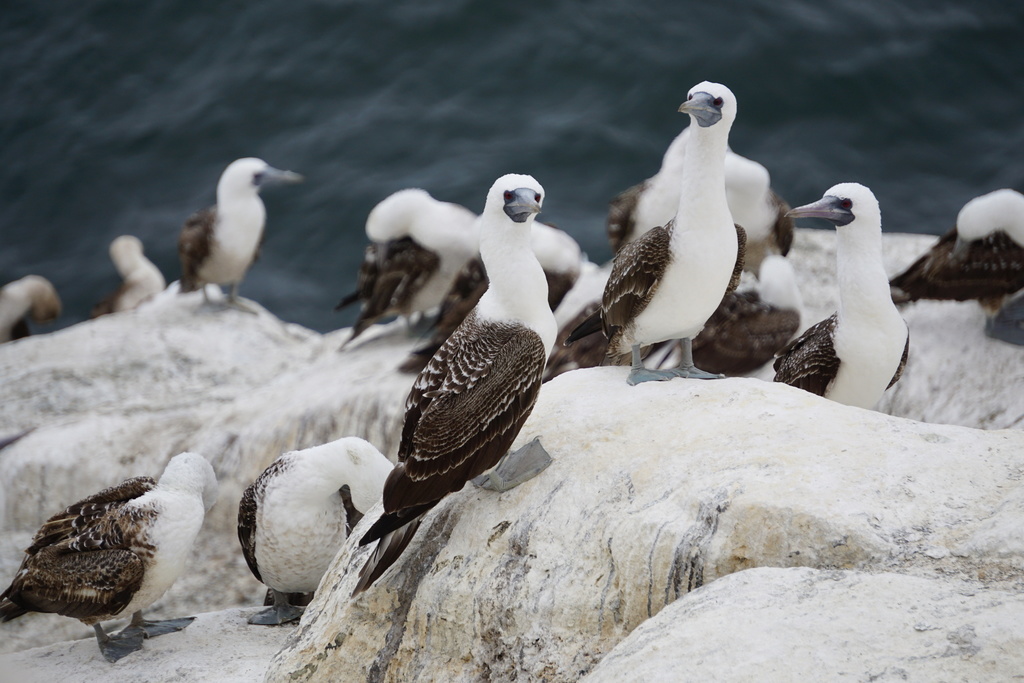
Photos show the species, not always the places on this page.
Length
About 71 to 76 cm (28 to 30 in) long, with a wingspan of about 150 cm (59 in)
Weight
About 1.25 to 1.55 kg (2.8 to 3.4 lb); in one study at Guañape Norte, females averaged 1,542 g (3.4 lb) and males 1,274 g (2.8 lb)
Next to a person
About as long as a one-year-old child is tall, with a wingspan about the height of a short adult
What it eats
Mostly Peruvian anchoveta, along with sardines, mackerel and sometimes squid. Boobies plunge-dive, with shallow dives of about 2 to 4 m that last a few seconds. Females tended to take larger fish than males in the Guañape study.
Around people
Calm, give space
How it lives
Peruvian boobies nest in colonies on coastal islands and cliffs. Breeding in Peru is seasonal but not synchronised, with a peak from about September to March, and some pairs can breed up to twice a year when food allows. Clutches are usually two or three eggs. Incubation takes about four to five weeks, and chicks fledge after roughly three months. They spend most of the day flying. Females are about 17 to 19 percent heavier than males. A database source gives an average lifespan of 8.4 years and a longest known of 23.3 years.
Where it goes
Peruvian boobies stay in the cold Humboldt Current off Peru and central Chile and do not make long migrations. Many feed close to the colony, often under 5 km, and sometimes up to about 40 km. In a study at Isla Guañape Norte, trips averaged about 73 to 113 km depending on ocean conditions.
We only draw a journey on the map when scientists have tracked it or clearly documented it. For this animal we have not found one yet.
Populations
IUCN lists the species as Least Concern (BirdLife International, 2018). It is the most abundant seabird on the Peruvian coast, and numbers swing with the anchoveta and El Niño. The population reached about 3 million in the mid-20th century and then fell to under 200,000 after an El Niño in the 1980s, according to one source. One colony, Isla Guañape Norte, hosts about 192,000 individuals. After the January 2022 oil spill off Lima, Peruvian boobies were among the species found dead, part of 1,852 dead wild animals of 28 species recorded by SERFOR.
Meet it respectfully
Watch colonies from a boat and keep your distance, because boobies flush easily from nests. Never land on nesting islands, and never chase, feed or bait seabirds. One source reports that walls keep visitors out of sensitive nesting areas on the Guañape Islands. Follow your guide and the reserve rules.
Fun fact
Tap the bulb to light it up.
Females are larger and heavier than males, which is unusual among birds.
A Peruvian booby can spend about 92 percent of its waking time in flight.
The species lives only in the Humboldt Current off the west coast of South America.
Peruvian booby in the Ocean Atlas
Places we have researched where this animal is recorded. It is never guaranteed, and some places are for watching from the boat only.
Travel with usComing soonTrusted referralExploringOn pause, story onlyEthics pass
Country colour: pink where we travel, blue where we are exploring or refer, grey for story only.
 Chile
Chile Colombia
 Costa Rica
 Ecuador
 Panama
 Peru
PeruSources for this page
- Wikipedia, Peruvian booby, 2026
- Animal Diversity Web, University of Michigan, 2026
- Oiseaux.net, Peruvian booby, 2026
- PMC, sexual dimorphism and foraging in Peruvian boobies, 2025
- GBIF, IUCN Red List category lookup, 2026
- Save Our Seas Magazine, Guano: the bird's bounty, 2026
- Mongabay, animals killed in the Peru oil slick, 2022
- Mongabay, 2022 Repsol oil spill update, 2025
Facts checked 5 October 2026. Photos: Unsplash licence, or Creative Commons as shown on each photo.
Work in ocean travel?
We are always happy to hear from exceptional local operators, accommodation, conservation organisations and destination experts. If your work fits responsible, small-group ocean travel, we would love to learn more.
Partner with Ocean CallingGili Trawangan in 5 days
from CHF 790