
Porbeagle
Lamna nasus
A blue-grey fin in cold water, a shark that crosses whole oceans on its own schedule, and no sighting is ever a promise.
Vulnerable (IUCN, assessed 2018) means it is at high risk of extinction in the wild. In the north-east Atlantic and the Mediterranean it is rated Critically Endangered.
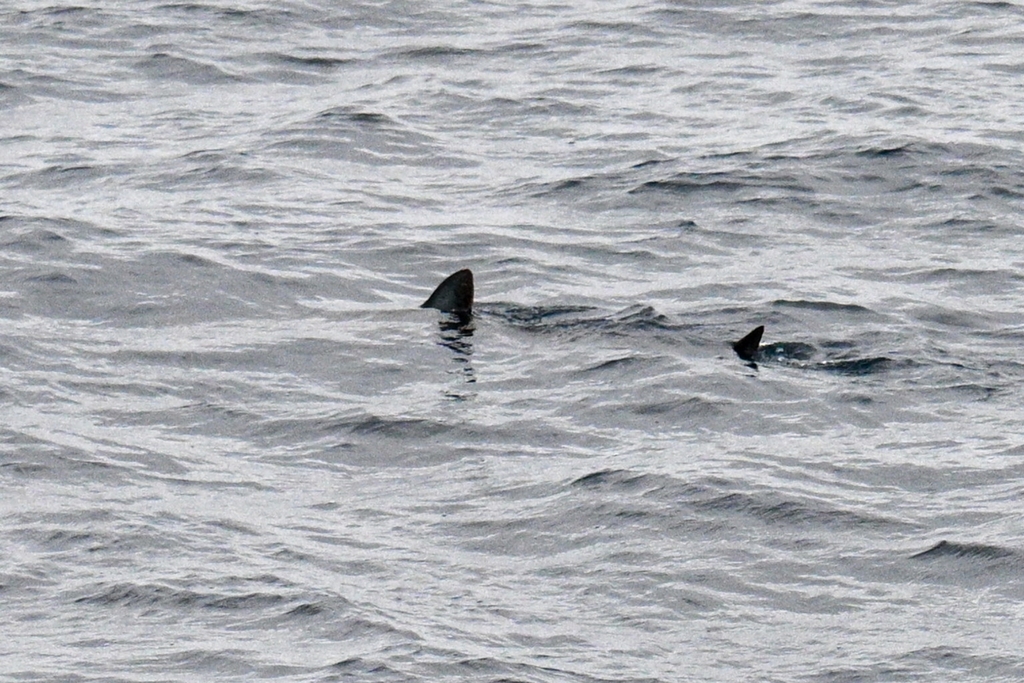
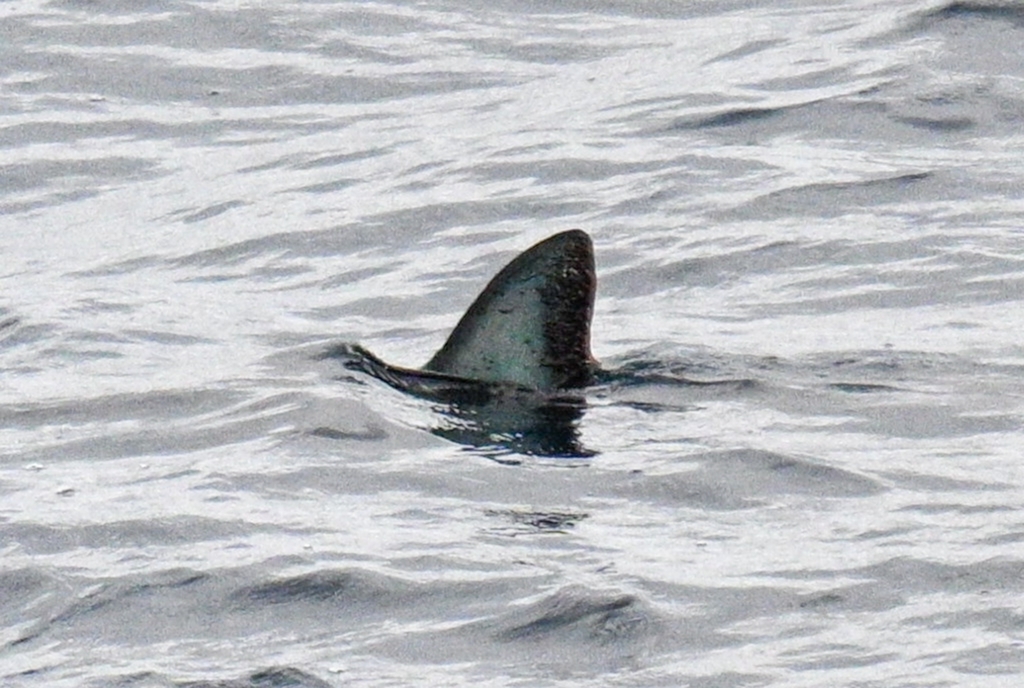
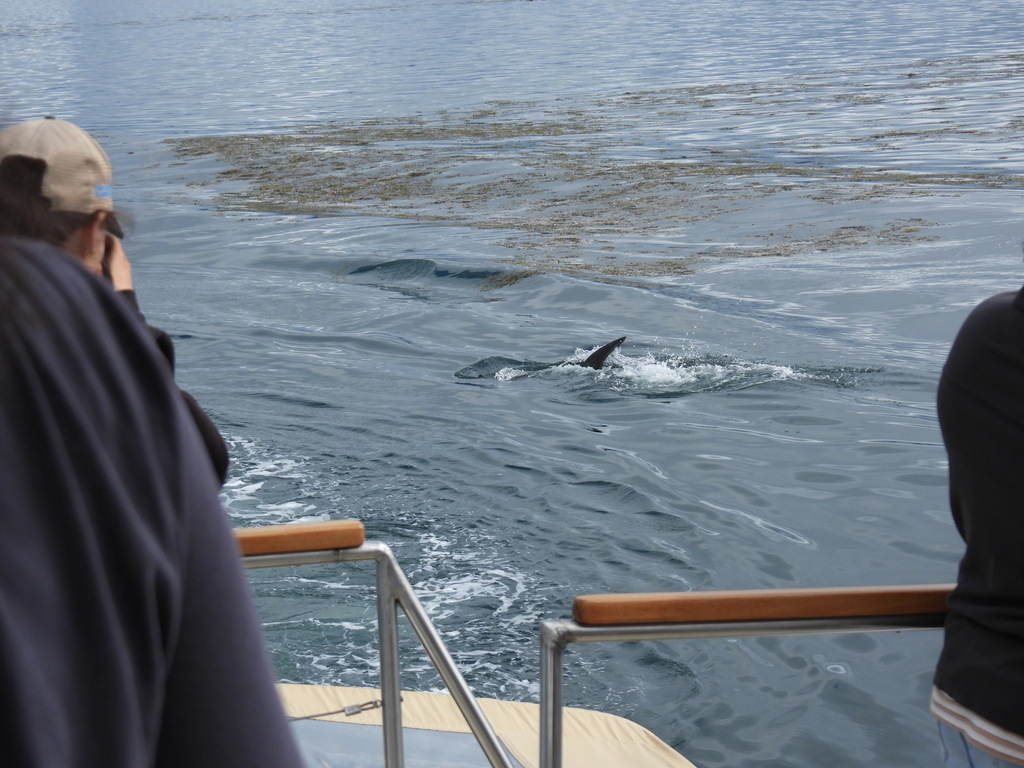
Photos show the species, not always the places on this page.
Length
Typically about 2.5 m (8.2 ft). FishBase gives a maximum of 3.5 m (11.5 ft) total length and a common length of about 2.4 m (8 ft). Wikipedia notes that a figure of 3.7 m (12 ft) is uncertain and may come from confusion with other mackerel sharks. North Atlantic females grow larger than males.
Weight
Most weigh no more than about 135 kg (298 lb). The heaviest published weight is 230 kg (510 lb), for a shark caught off Caithness, Scotland, in 1993.
Next to a person
Longer than a tall adult lying down, and usually as heavy as about two adults.
What it eats
Mainly small and medium-sized fish such as mackerel, herring, pilchards, whiting, cod and hake, plus squid, octopus and cuttlefish. It is an opportunistic hunter. In spring and summer it gathers at tidal fronts in places such as the Celtic Sea to feed on fish drawn there by plankton.
Around people
Calm, give space
How it lives
A stout, fast shark of cool and cold seas. It is most common over food-rich banks on the outer continental shelf, and also occurs near shore and in the open ocean. It is usually found between the surface and 300 m, and has been recorded down to 1,360 m. It can live in water from about -1 to 23 degrees C, most often 5 to 10 degrees C in the north-west Atlantic. It is warmer than the sea around it. Females have litters of about four pups, usually after 8 to 9 months, and probably breed every year. Females mature at about 12 to 18 years and males at about 6 to 11. In the North Atlantic the age reached is at least 26 years, and in the Southern Hemisphere probably 65 years. Porbeagles have been seen wrapping themselves in kelp, which may be play.
Where it goes
Porbeagles make seasonal moves, generally along the continental shelves, coming inshore or to the surface in summer and wintering offshore in deeper water. Tagged sharks have travelled up to about 1,500 km between Newfoundland and Massachusetts, and over 2,000 km from the UK to Norway, Denmark and Spain. One shark tagged off Ireland was later found off Canada, about 4,000 km away. Southern Hemisphere sharks are separate from northern ones, and their movements are little known.
We only draw a journey on the map when scientists have tracked it or clearly documented it. For this animal we have not found one yet.
Populations
IUCN rates the porbeagle Vulnerable worldwide (assessed 2018). Regionally the picture is worse: it is assessed as Endangered in the north-west Atlantic and Critically Endangered in the north-east Atlantic and the Mediterranean (CMS). Fisheries for the meat and fins caused stocks to collapse in the eastern North Atlantic in the 1950s and the western North Atlantic in the 1960s. It is listed on CITES Appendix II and on CMS Appendix II, since 2008. Southern Hemisphere populations are poorly known.
Meet it respectfully
If you are lucky enough to see a porbeagle, keep a calm distance and let it decide how close to come. Never chase, bait, chum, touch or feed it. Keep boats slow and steady, and stay out of its path. It is a wide-ranging, slow-breeding shark under heavy pressure from fishing, so every sighting is a privilege and never a promise.
Fun fact
Tap the bulb to light it up.
The rear tip of its first dorsal fin is abruptly white or light grey, a mark that is unique to the species.
Like its close relative the salmon shark, it can keep its core body temperature up to about 10 degrees C warmer than the water around it.
One porbeagle tagged in Irish waters was later found off Newfoundland, Canada.
Porbeagle in the Ocean Atlas
Places we have researched where this animal is recorded. It is never guaranteed, and some places are for watching from the boat only.
Travel with usComing soonTrusted referralExploringOn pause, story onlyEthics pass
Country colour: pink where we travel, blue where we are exploring or refer, grey for story only.
 Brazil
 Canada
 Chile
Chile Denmark
 France
 Ireland
 Netherlands
 New Zealand
 Norway
 United Kingdom
 United States
Sources for this page
- FishBase, Lamna nasus, 2026
- Wikipedia, Porbeagle, 2026
- CMS, Porbeagle, 2026
- Cornwall Wildlife Trust, 2026
- GBIF, IUCN Red List category, 2026
Facts checked 5 October 2026. Photos: Unsplash licence, or Creative Commons as shown on each photo.
Work in ocean travel?
We are always happy to hear from exceptional local operators, accommodation, conservation organisations and destination experts. If your work fits responsible, small-group ocean travel, we would love to learn more.
Partner with Ocean CallingNew: tiger sharks in Fuvahmulah, January or March 2027
from CHF 2,900