
Ringed seal
Pusa hispida
A small, quiet seal near the ice edge, easy to miss. Ringed seals surface where and when they choose, and no sighting is a promise.
Least Concern (IUCN, 2016) means it is not at high risk of extinction worldwide today, although loss of sea ice is a recognised long-term concern.
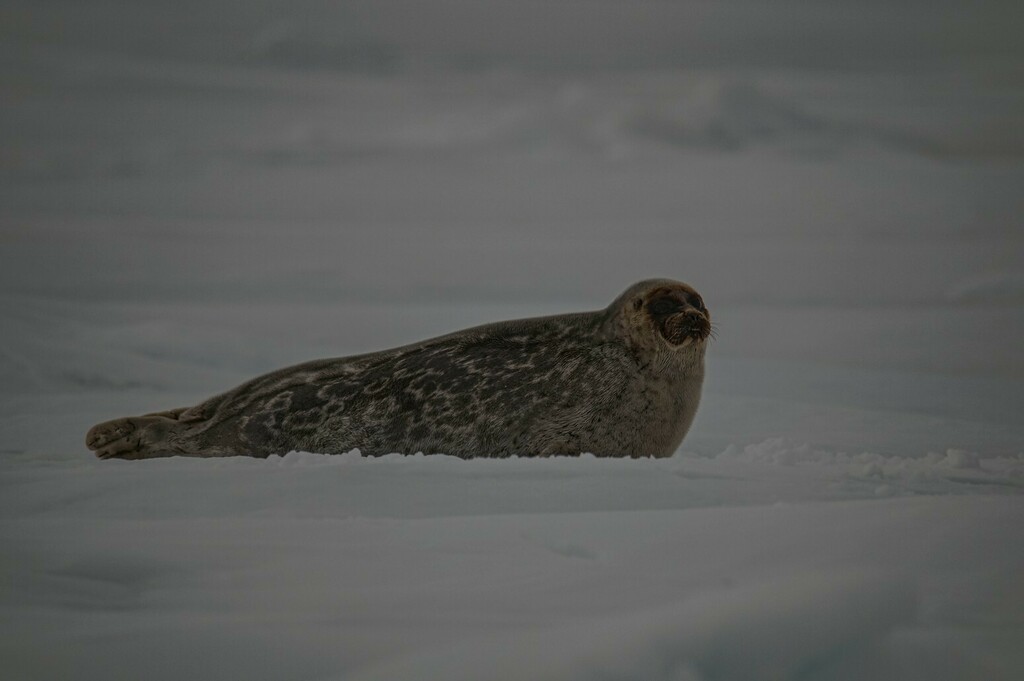
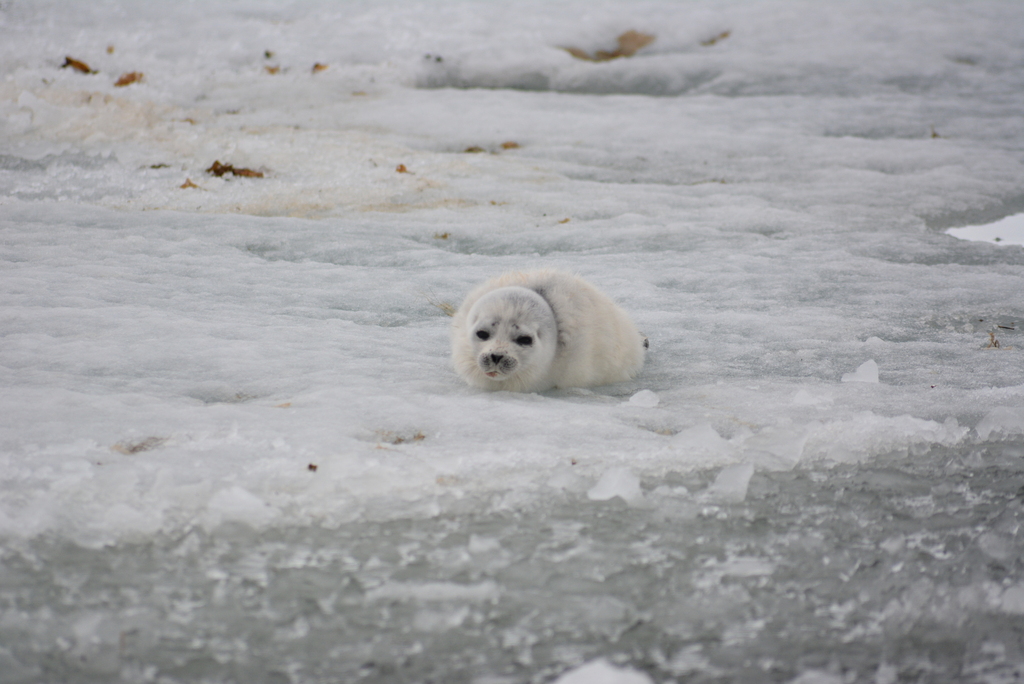
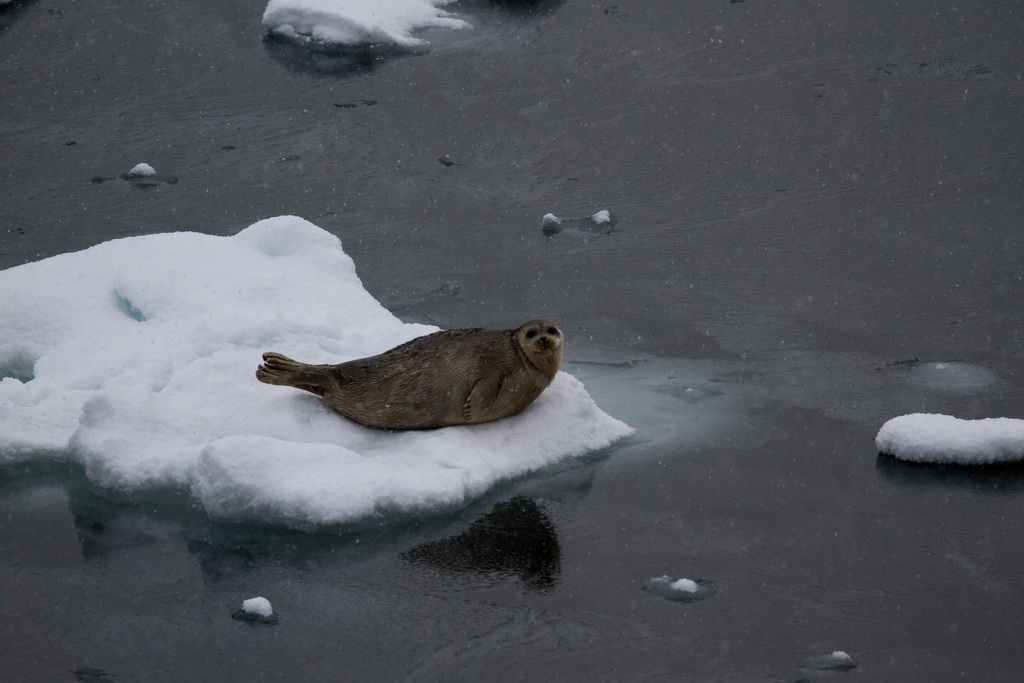
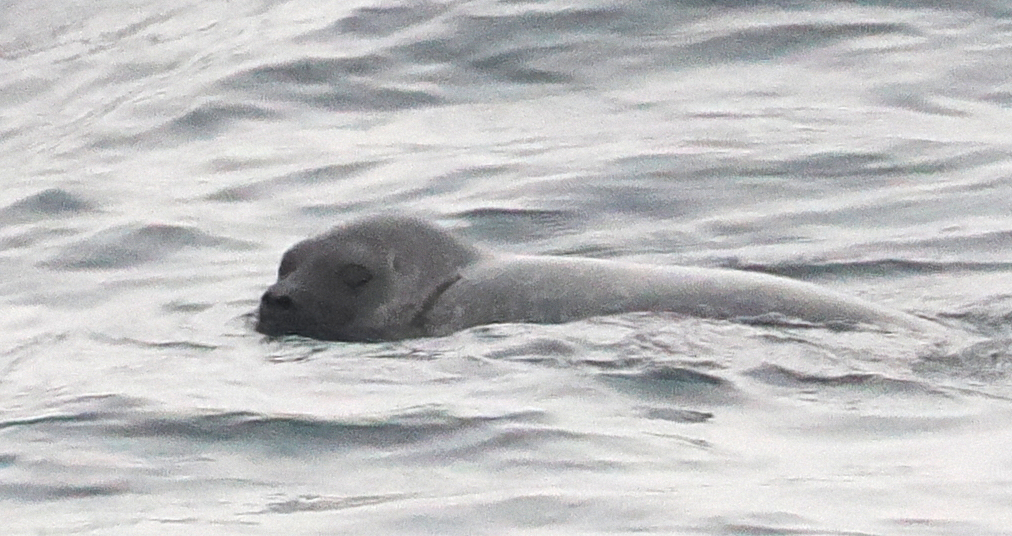
Photos show the species, not always the places on this page.
Length
Usually about 1.1 to 1.5 m (3.6 to 4.9 ft); up to about 1.75 m (5.7 ft) across all subspecies. NAMMCO gives 113 to 151 cm for Arctic ringed seals
Weight
Often about 50 to 70 kg (110 to 150 lb); about 32 to 124 kg (70 to 273 lb) across subspecies. Pups weigh about 4.5 kg (10 lb) at birth
Next to a person
A little shorter than an adult is tall, and about as heavy as one adult.
What it eats
Mainly small fish and crustaceans. Cod-family fish, especially Arctic and polar cod, dominate from late autumn to spring, and crustaceans such as amphipods matter more in open water. Preferred prey are schooling animals about 5 to 10 cm long. They dive deeper than about 46 m (150 ft) to feed.
Around people
Calm, give space
How it lives
Ringed seals live mostly alone. Strong claws on the front flippers let them keep breathing holes open in ice more than 1.8 m (6 ft) thick. In late winter and early spring a female gives birth to one pup in a snow-covered lair on the ice, and the pup nurses for about 5 to 7 weeks, the longest nursing period among true seals. Females mature at roughly 3 to 6 years and males at about 8 to 10. Most live about 25 to 30 years, with records up to 43. Polar bears are the main predator, and Arctic foxes, gulls, Greenland sharks and killer whales also take seals.
Where it goes
Ringed seals stay close to sea ice for most of the year, and some groups move north with the ice edge in late spring and summer. They are not known for fixed long migrations. I did not read Greenland tracking studies, so I cannot say how far individual seals travel there.
We only draw a journey on the map when scientists have tracked it or clearly documented it. For this animal we have not found one yet.
Populations
NAMMCO puts the total at about 3.5 million, of which about 3 million are Arctic ringed seals, and says the number is very uncertain. NOAA reports more than 300,000 in US waters. Greenland reports hunting catches of 40,267 in 2023 and 36,601 in 2024, down from more than 80,000 a year around 1999 to 2003, a fall NAMMCO links mainly to changes in hunting rather than depletion. The IUCN lists the species as Least Concern (assessment I could confirm: 2016). The Baltic, Saimaa and Ladoga subspecies are separate, and under US law the Arctic subspecies is listed as Threatened because of expected loss of sea ice and snow.
Meet it respectfully
Watch from a distance and keep noise low. Ringed seals rest by breathing holes and give birth in snow lairs you cannot see, so stay with your guide on the ice and never walk toward a seal. Never chase, touch, feed or bait a seal, and give pups space. In US waters NOAA asks people to watch seals from at least 50 yards (about 46 m) and for no more than 30 minutes. I did not read the rules for Greenland, so follow your guide and local rules.
Fun fact
Tap the bulb to light it up.
It is the smallest and most common seal of the Arctic.
Its claws can keep a breathing hole open through ice more than 1.8 m (6 ft) thick.
Pups are born in lairs under the snow, which hide them from view on the ice.
Ringed seal in the Ocean Atlas
Places we have researched where this animal is recorded. It is never guaranteed, and some places are for watching from the boat only.
Travel with usComing soonTrusted referralExploringOn pause, story onlyEthics pass
Country colour: pink where we travel, blue where we are exploring or refer, grey for story only.
 Canada
 Denmark
 Estonia
 Finland
 France
 Greenland
 Japan
Japan Netherlands
 Norway
 Poland
 Russia
 Sweden
 United States
Sources for this page
- NOAA Fisheries, Ringed seal, 2026
- NAMMCO, Ringed seal, 2026
- Animal Diversity Web, University of Michigan, Ringed seal
- Wikipedia, Ringed seal, 2026
- GBIF Backbone with IUCN Red List category, 2026
Facts checked 5 October 2026. Photos: Unsplash licence, or Creative Commons as shown on each photo.
Work in ocean travel?
We are always happy to hear from exceptional local operators, accommodation, conservation organisations and destination experts. If your work fits responsible, small-group ocean travel, we would love to learn more.
Partner with Ocean CallingShop with Ocean Calling
Visit the Ocean Calling storefront on Amazon.
As an Amazon Associate I earn from qualifying purchases. You are not only choosing products that respect the ocean, you are also helping us keep going: paying our local partners fairly and keeping our retreats ethical, sustainable and honestly priced for you. 💗