
Sicklefin devil ray (Chilean devil ray)
Mobula tarapacana
Sicklefin devil rays can gather over Atlantic seamounts in summer, then vanish into deep water nearly two kilometres below.
Endangered (IUCN, 2019) means it is at very high risk of extinction in the wild.
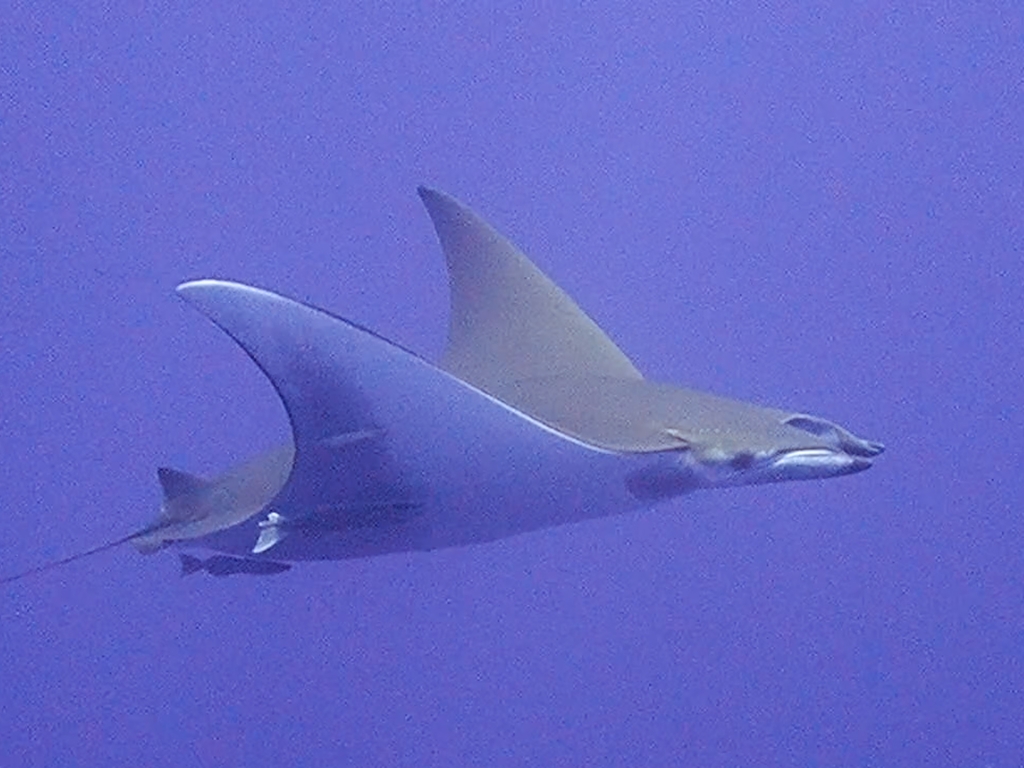
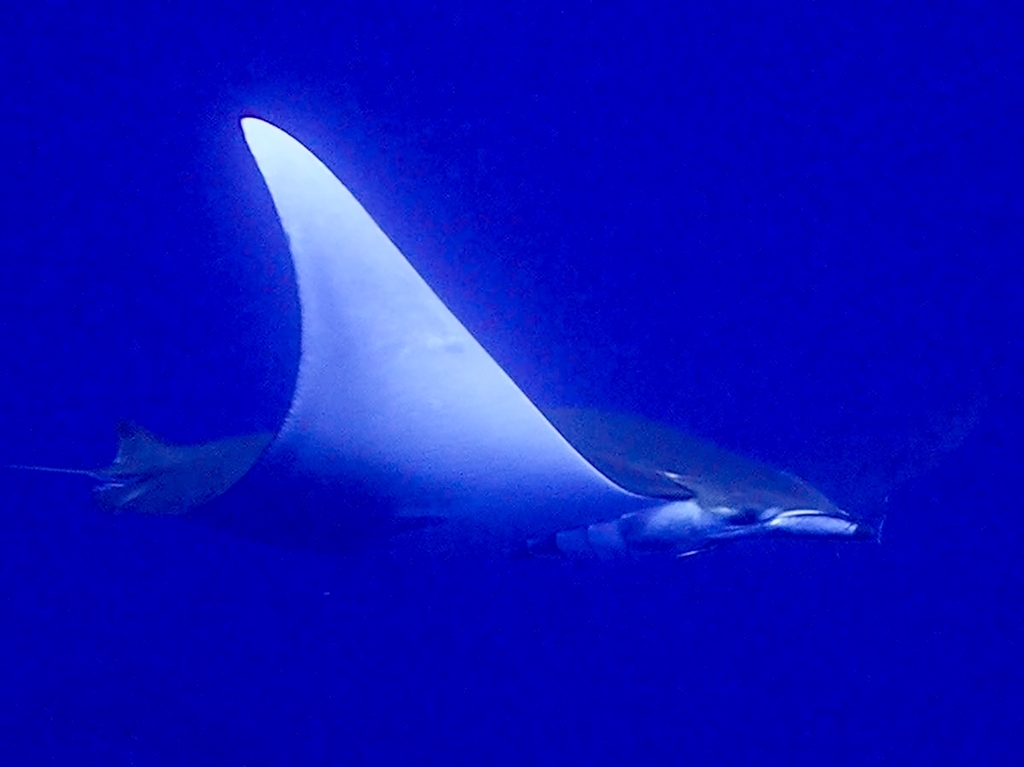
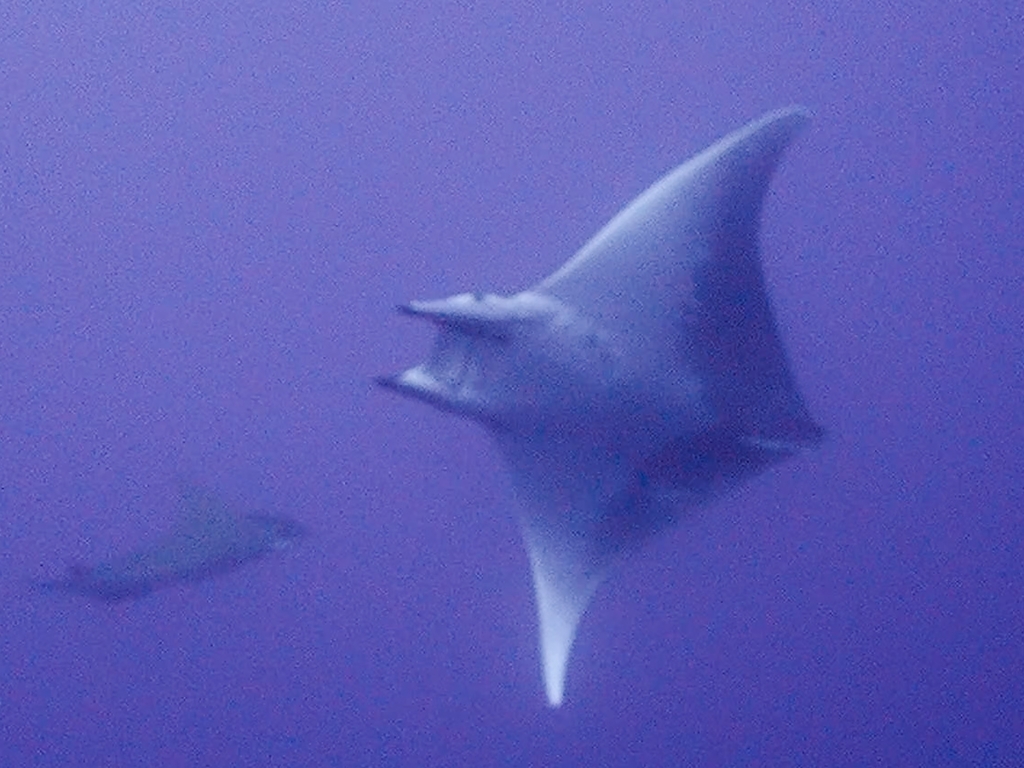
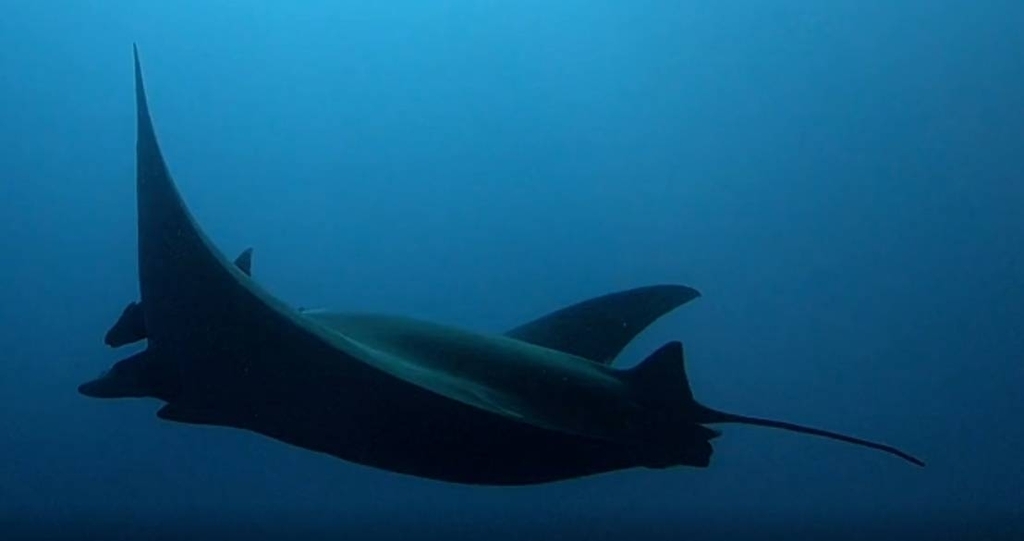
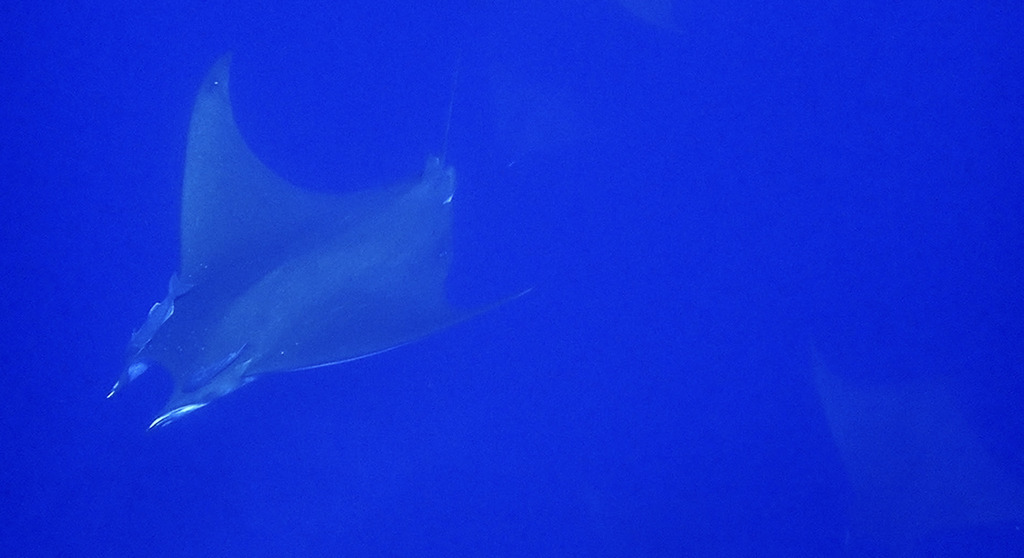
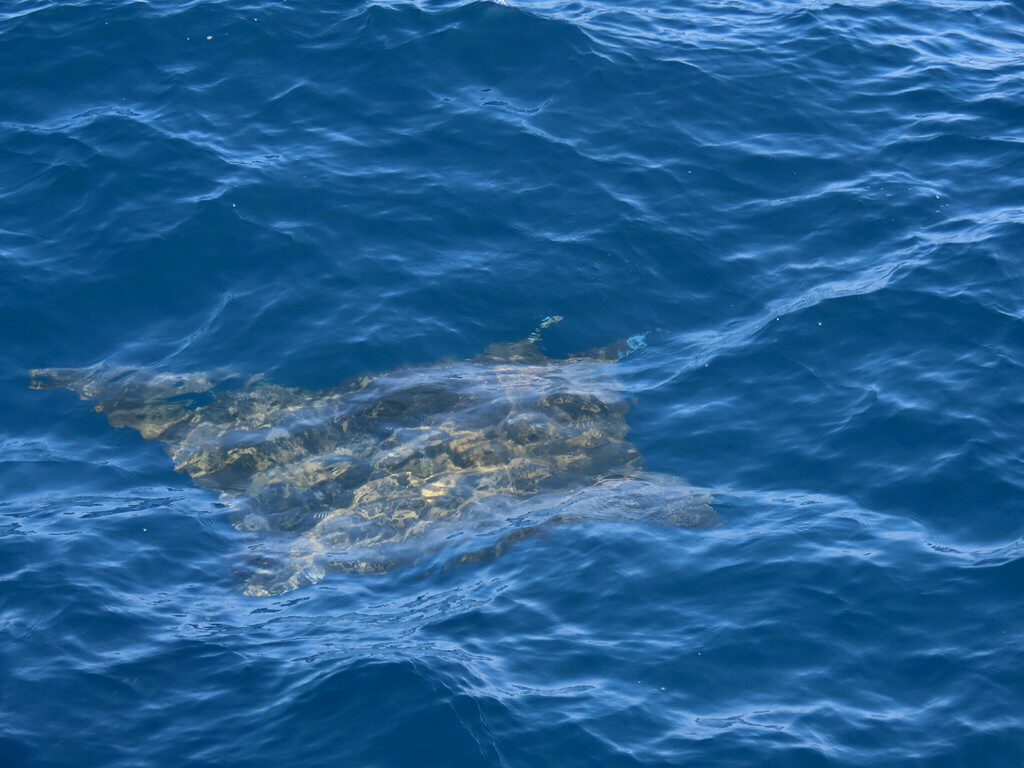
Photos show the species, not always the places on this page.
Length
Usually about 2.5 m (8.2 ft) across (disc width); largest measured about 3.3 m (10.8 ft) across
Weight
Largest recorded about 350 kg (770 lb); typical adult weight not reliably measured
Next to a person
A large adult can be about 3.3 m across, far wider than a person is tall
What it eats
Tiny crustaceans such as krill and other plankton, plus small fishes.
Around people
Calm, give space
How it lives
This devil ray lives mostly in the open ocean but also comes near coasts and seamounts. It may swim alone or in groups. It filters tiny planktonic crustaceans and small fishes from the water. Females have only one pup at a time, so populations recover very slowly.
Where it goes
In the Azores, large groups gather in summer around offshore seamounts such as Princess Alice. Adults tagged there travelled thousands of kilometres across the North Atlantic and dived to nearly 1.9 km.
Populations
In the Azores, groups of 3 to more than 50 gather in summer at offshore seamounts such as Princess Alice, where they feed, court and socialise. The species also lives in the eastern Pacific, from lower Baja California to Chile, but it is seen less often there. Research in the Azores shows long journeys and very deep diving.
Meet it respectfully
Devil rays do not hunt people and have no tail sting, but they are large, fast and easily disturbed. Never touch, chase, block or feed them, never swim through a group, and never drop down onto them. Boats should move slowly and quietly. At Princess Alice, a fully protected marine reserve, diving and snorkelling need an authorised operator. In Mexico, catching or keeping this ray is not allowed.
Fun fact
Tap the bulb to light it up.
A ray you see near the surface at Princess Alice may later dive to almost 1.9 km deep.
Rays tagged in the Azores travelled thousands of kilometres across the Atlantic.
Females have only one pup at a time.
Follow its journey
Choose a journey and watch it travel. Every line comes from satellite tracking or documented research, and the source is named.
StartEndJourney (the line joins documented areas; real paths vary)
Sicklefin devil ray (Chilean devil ray) in the Ocean Atlas
Places we have researched where this animal is recorded. It is never guaranteed, and some places are for watching from the boat only.
Travel with usComing soonTrusted referralExploringOn pause, story onlyEthics pass
Country colour: pink where we travel, blue where we are exploring or refer, grey for story only.
 Brazil
 China
 India
 Indonesia
 Mexico
 Philippines
 Portugal
 Saint Helena
 United States
Sources for this page
- IUCN Red List, 2025
- FishBase, 2026
- Thorrold et al., 2014
- Manta Trust, Sicklefin devil ray species guide
- Save Our Seas Foundation, 2025, Mobulids of the Azores
Facts checked 26 September 2026. Photos: Unsplash licence, or Creative Commons as shown on each photo.
Work in ocean travel?
We are always happy to hear from exceptional local operators, accommodation, conservation organisations and destination experts. If your work fits responsible, small-group ocean travel, we would love to learn more.
Partner with Ocean Calling7-day freediving course in Coron, Palawan
CHF 1,480