
Southern elephant seal
Mirounga leonina
A vast, slow-breathing seal resting on a Patagonian or island beach. We watch from a respectful distance, and no sighting is ever a promise.
Vulnerable (IUCN, 2026) means it is at high risk of extinction in the wild. The category was raised from Least Concern after bird flu killed many seals and pups.
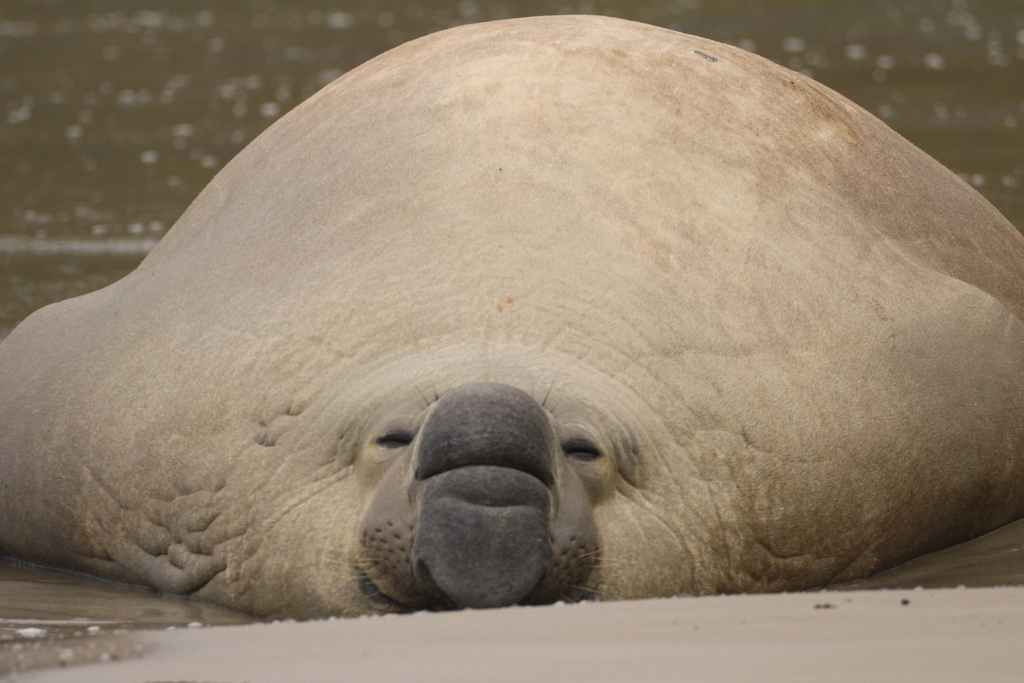
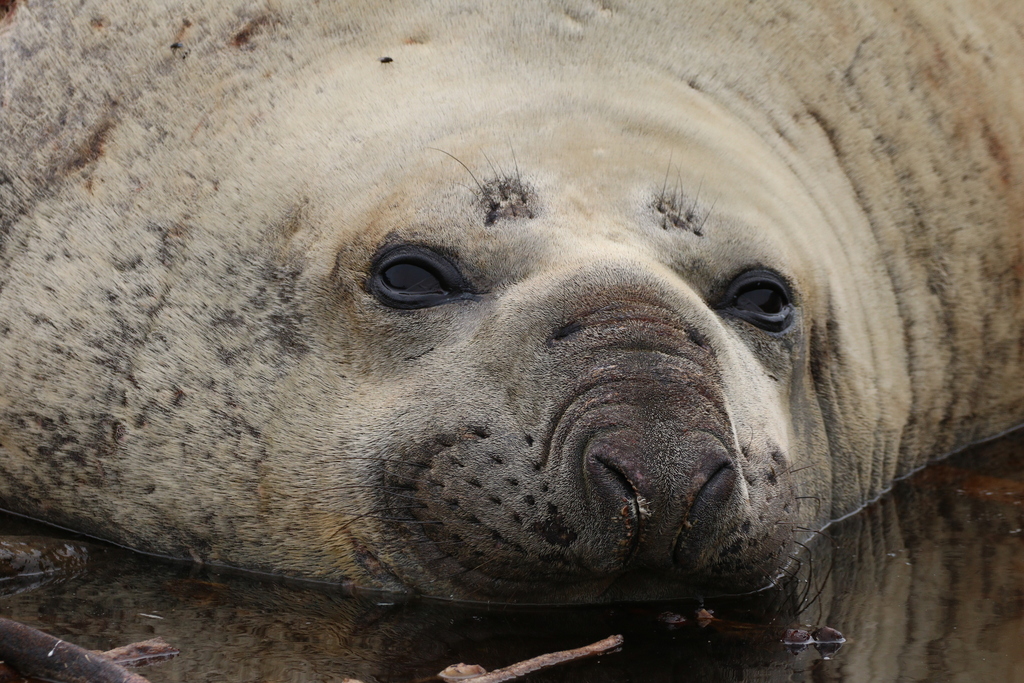
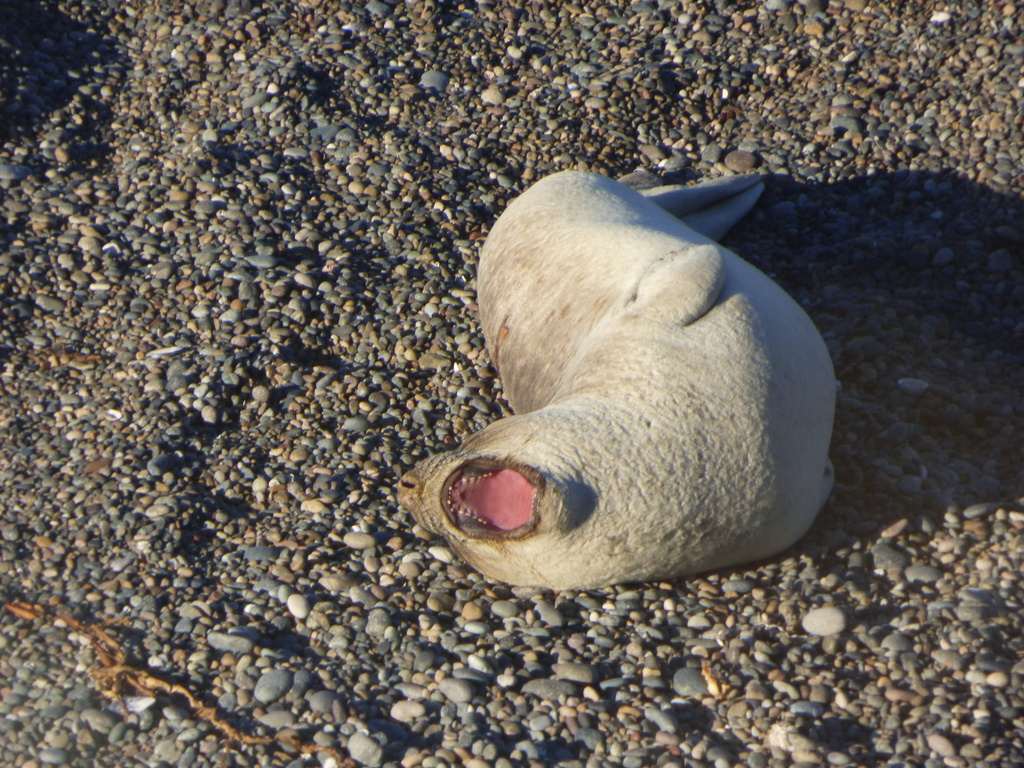
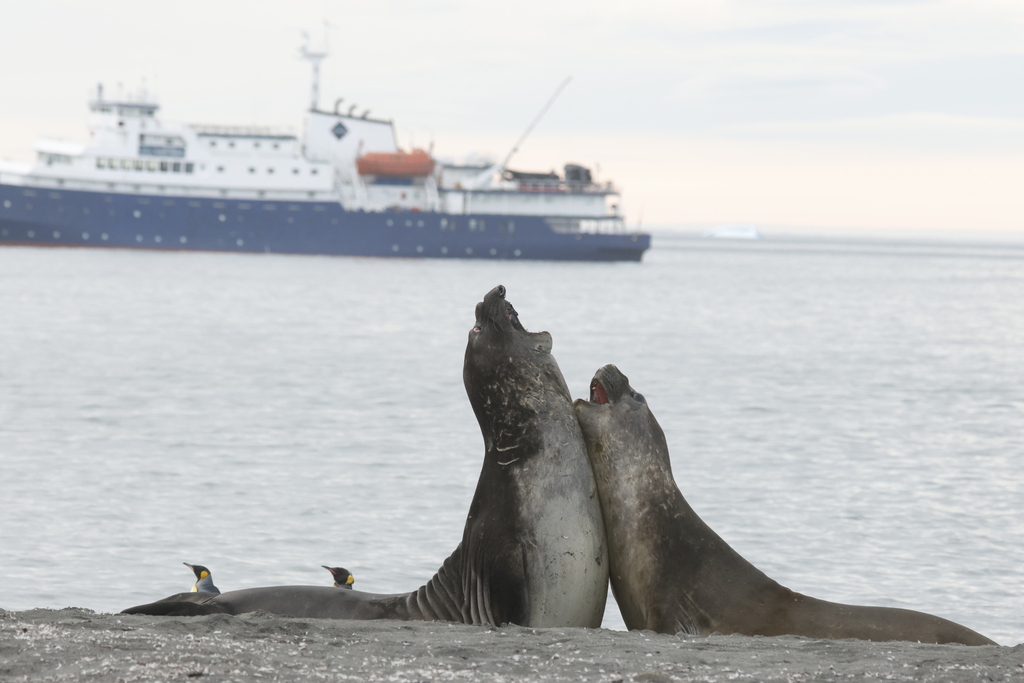
Photos show the species, not always the places on this page.
Length
Males roughly 4 to 5.8 m (13 to 19 ft); females roughly 2.6 to 3 m (8.5 to 9.8 ft). Sources give slightly different ranges
Weight
Females roughly 350 to 900 kg (770 to 1,980 lb); males roughly 2,200 to 3,700 kg (4,900 to 8,200 lb). Figures vary between sources
Next to a person
A large male is about three times as long as an adult is tall, and weighs about as much as a small car
What it eats
Squid and fish, with some octopus and other molluscs. They hunt in deep water, often at about 300 to 800 m (980 to 2,600 ft), and dives of 30 minutes are common. Dives deeper than 2,000 m (7,000 ft) have been recorded.
Around people
Wild, give space
How it lives
Females first breed at about 4 to 6 years and males at about 10. Breeding takes place from September to November. A female gives birth to a single pup and nurses it for about three weeks. Adults live about 21 years on average in the wild. Males are far larger than females.
Where it goes
Southern elephant seals spend most of the year at sea and feed far from where they breed, travelling hundreds of miles. They come ashore on subantarctic islands and a few mainland beaches to breed. Peninsula Valdes in Argentina is the only continental breeding site.
We only draw a journey on the map when scientists have tracked it or clearly documented it. For this animal we have not found one yet.
Populations
Global: about 650,000 seals is the figure usually quoted, but it is an older estimate and no recent global count was found. South Georgia holds over half of the world's seals (1995 census). A 2024 to 2025 census there counted about 107,630 breeding females and about 376,705 seals in all. Bird flu (H5N1) reached the region in 2023. At South Georgia, breeding females at the three largest beaches fell by 47% between 2022 and 2024. At Peninsula Valdes about 95 to 97% of pups died in 2023, more than 17,000 in all. That colony is about 5% of the world population. Falkland Islands: breeding colonies exist, but no recent count was read. In April 2026 the IUCN moved the species from Least Concern to Vulnerable.
Meet it respectfully
Watch quietly from a distance and let the seal decide whether to stay. Never approach, touch, feed or surround a seal, and never stand between a seal and the sea. A resting seal can look slow, but it is a very large wild animal. Keep well away from pups. Bird flu has killed many seals, so if you see a sick or dead animal, do not touch it and tell the guide or the rangers. Follow local rules and your guide.
Fun fact
Tap the bulb to light it up.
Southern elephant seals are the largest seals on Earth.
They are among the deepest-diving seals, with dives of over 2,000 m recorded and typical dive sessions of about 30 minutes.
More than half of the world's southern elephant seals gathered on South Georgia in the 1995 census.
Southern elephant seal in the Ocean Atlas
Places we have researched where this animal is recorded. It is never guaranteed, and some places are for watching from the boat only.
Travel with usComing soonTrusted referralExploringOn pause, story onlyEthics pass
Country colour: pink where we travel, blue where we are exploring or refer, grey for story only.
 Antarctica
 Argentina
 Australia
 Brazil
 Chile
Chile Falkland Islands
 Mexico
 New Zealand
 Saint Helena
 South Africa
 Uruguay
Sources for this page
- IUCN, 2026 (press release)
- Frontiers in Marine Science, 2026
- Avian influenza and elephant seals at South Georgia, 2025 (PMC)
- Peninsula Valdes H5N1 outbreak, 2024 (PMC)
- ASOC, Southern elephant seals
- World Land Trust, Southern elephant seal
- Wikipedia, Southern elephant seal
Facts checked 5 October 2026. Photos: Unsplash licence, or Creative Commons as shown on each photo.
Work in ocean travel?
We are always happy to hear from exceptional local operators, accommodation, conservation organisations and destination experts. If your work fits responsible, small-group ocean travel, we would love to learn more.
Partner with Ocean Calling7-day freediving course in Coron, Palawan
CHF 1,480