
Subantarctic fur seal
Arctocephalus tropicalis
A small, pale-faced seal on a wave-washed rock. Subantarctic fur seals live on remote islands, and no sighting is ever a promise.
Least Concern (IUCN, 2015) means the species is not judged to be at high risk of extinction; it has recovered since hunting ended and its colonies are growing or stable.
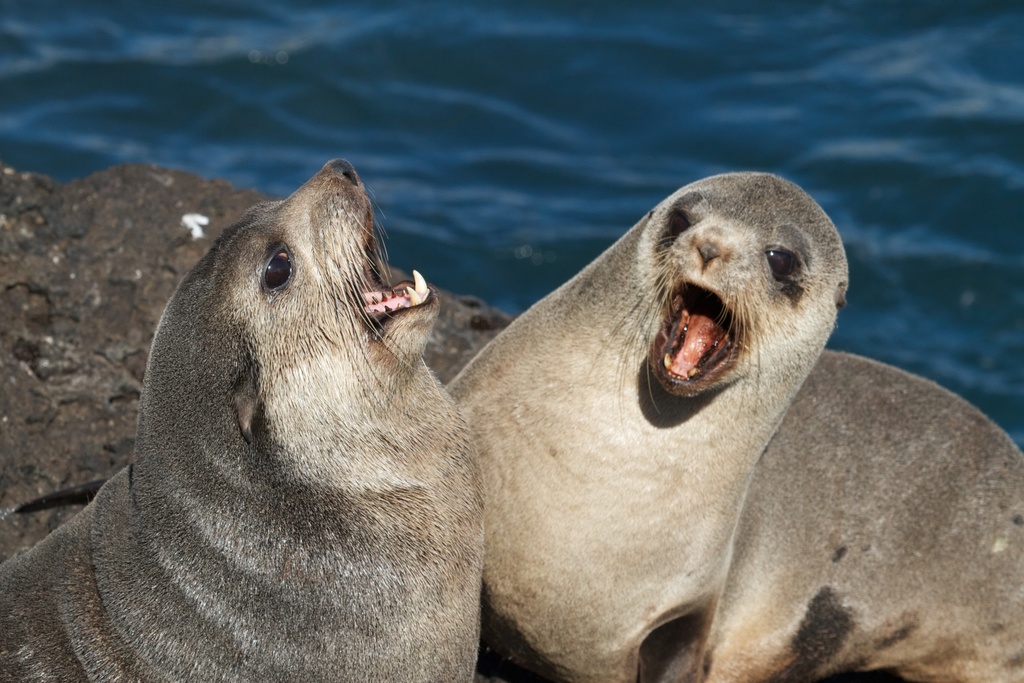
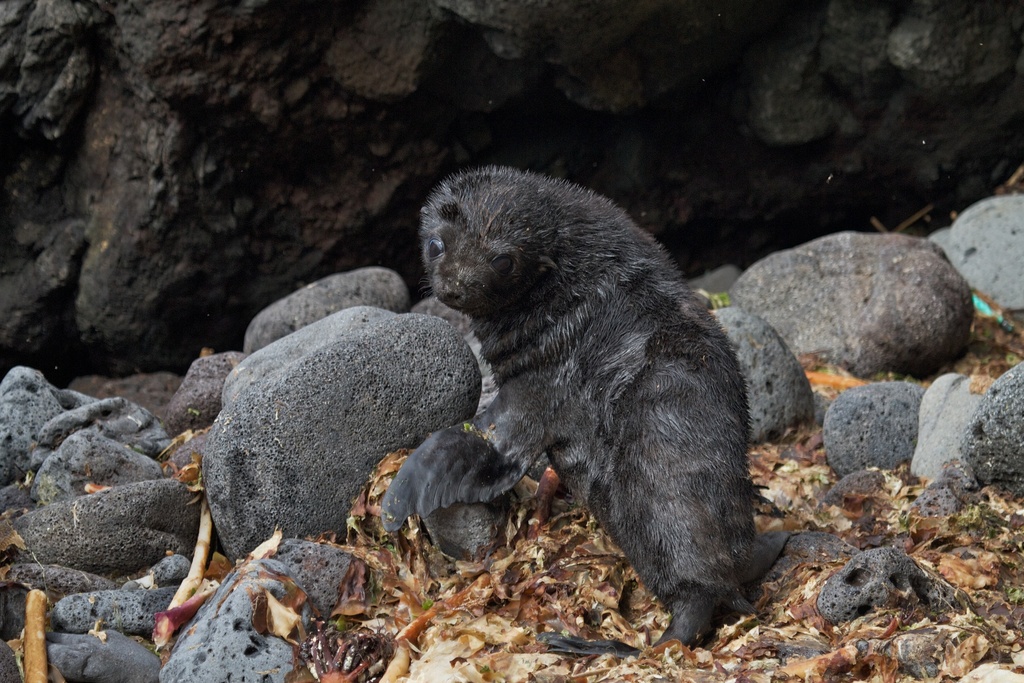
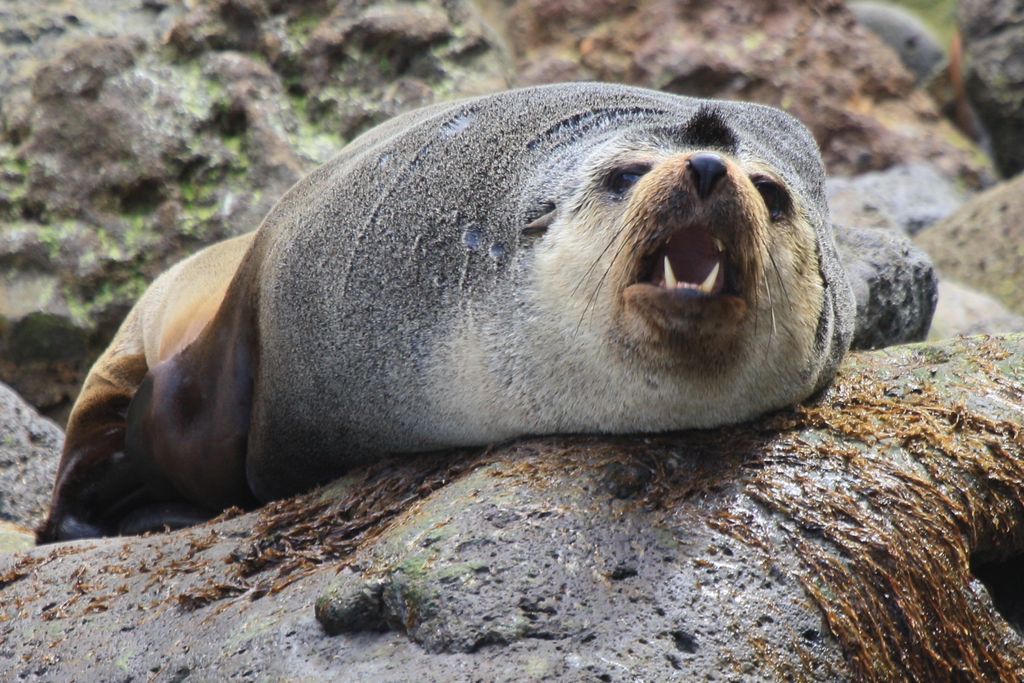
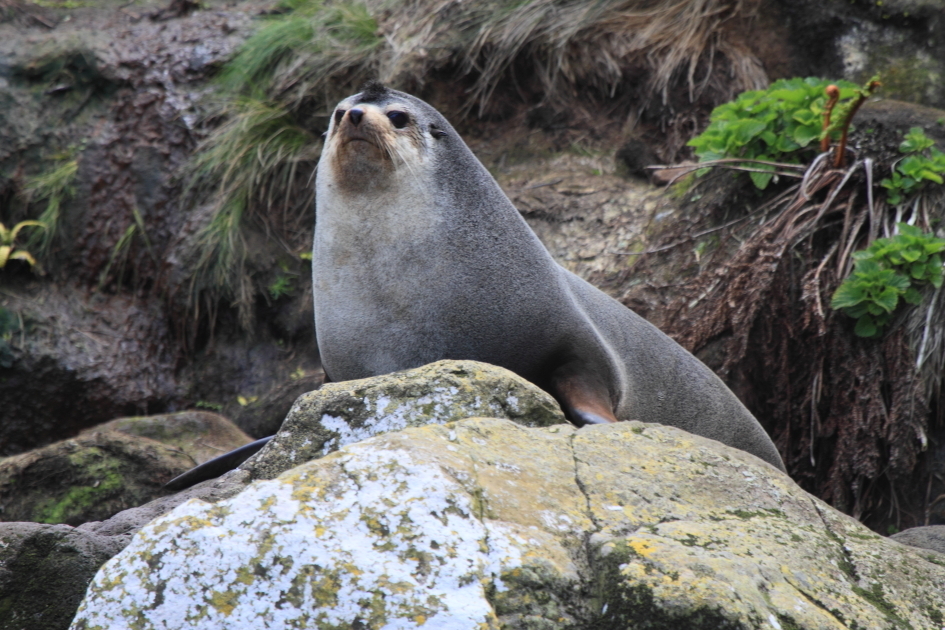
Photos show the species, not always the places on this page.
Length
Males up to about 1.8 to 2 m (5.9 to 6.6 ft); females about 1.2 to 1.5 m (3.9 to 4.9 ft)
Weight
Males about 70 to 165 kg (154 to 364 lb); females about 25 to 67 kg (55 to 148 lb). Other sources give about 150 to 160 kg for males and about 50 kg for females.
Next to a person
A male is about as long as a tall adult and as heavy as one or two adults. A female is about the weight of one small adult.
What it eats
Mostly lanternfish (myctophids) and other fish, plus squid, crustaceans and occasionally seabirds such as rockhopper penguins. They hunt at night in shallow water.
Around people
Calm, give space
How it lives
Breeding runs from about October or November to January. Males defend harems, reported as about 6 to 20 females, and often have to wait until about 10 or 11 years old to hold one. Females first breed at about 5 years. A female has one pup after about 51 weeks of pregnancy and nurses it for about 11 months. Lifespans are about 15 to 25 years, depending on the source.
Where it goes
Subantarctic fur seals breed on remote islands north of Antarctica and feed at sea in the surrounding waters. One source says they can swim up to 1,500 km while looking for food. The sources I read do not describe a set migration route.
We only draw a journey on the map when scientists have tracked it or clearly documented it. For this animal we have not found one yet.
Populations
The IUCN lists the species as Least Concern (Hofmeyr, 2015). The last worldwide estimate, from 1987, was over 310,000 animals, and colonies are growing or at least holding steady. Three main breeding sites hold about 95% of the population: Amsterdam Island, Gough Island and the Prince Edward Islands. On the Prince Edward Islands, one source gives roughly 50,000 pups a year on Marion Island and 30,000 on Prince Edward Island. Other colonies include the Crozet Islands, Macquarie Island and the Tristan da Cunha group. Hunting for pelts before about 1810 cut numbers sharply.
Meet it respectfully
Fur seals on land can be defensive, especially adult males in the breeding season. Keep your distance, stay out of the way of their path to the water, and never chase, touch, feed or crowd them. Give mothers and pups extra space. I did not read local rules for any of the countries on this page, so follow your guide and local regulations.
Fun fact
Tap the bulb to light it up.
Pups are born black and later darken on the back, with a browner belly.
Hunting for pelts reduced the population so much that today's seals come from a small number of survivors, which means low genetic diversity.
At some colonies, subantarctic fur seals breed with Antarctic fur seals.
Subantarctic fur seal in the Ocean Atlas
Places we have researched where this animal is recorded. It is never guaranteed, and some places are for watching from the boat only.
Travel with usComing soonTrusted referralExploringOn pause, story onlyEthics pass
Country colour: pink where we travel, blue where we are exploring or refer, grey for story only.
 Australia
 Brazil
 New Zealand
 Saint Helena
 South Africa
Sources for this page
- Wikipedia, Subantarctic fur seal
- Animal Diversity Web, University of Michigan
- SANBI, Animal of the week
- IUCN Red List record (Hofmeyr), Zenodo
- GBIF, IUCN Red List category lookup, 2026
Facts checked 5 October 2026. Photos: Unsplash licence, or Creative Commons as shown on each photo.
Work in ocean travel?
We are always happy to hear from exceptional local operators, accommodation, conservation organisations and destination experts. If your work fits responsible, small-group ocean travel, we would love to learn more.
Partner with Ocean CallingNew: mobula rays in La Ventana, May 2027
CHF 2,720