
Gulf of California Sperm Whale Sightings: What the 2026 Research Says
The Gulf of California is famous for whales, dolphins and whale sharks. A 2026 study asks a new question: are sperm whales showing up less often in parts of the gulf?
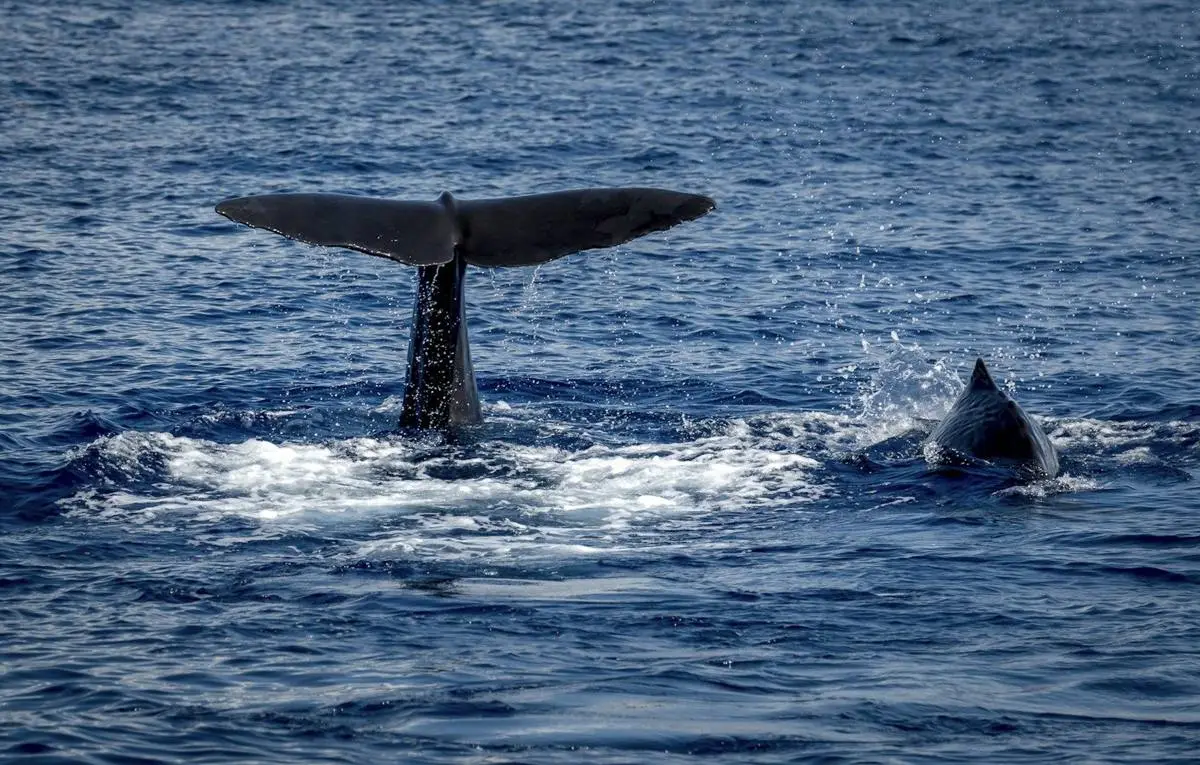
Sperm whales are the deep divers of the gulf: a dark back, a slanted blow, then a tail lifting before they vanish for a long time. Are they becoming rarer here? A 2026 study suggests sightings have dropped around the centre of the Gulf of California, and that this may mean a population decline. The paper was published in Aquatic Conservation in June 2026, and the authors raise concern about the species’ conservation status across the gulf.
The key word is “may.” Fewer sightings are a signal worth looking into. They do not automatically prove that the whole population has fallen.
Why can fewer sightings mean more than one thing?
Scientists count what they can detect. Sperm whales dive deep and can stay below the surface for long periods, so they are hard to see.
Sightings can change with survey effort, season, ocean conditions, whale movement, and how well their sounds can be picked up. A real population decline is one possible explanation. A shift in where the whales spend their time is another. Researchers need repeated surveys, done the same way, to tell these apart.
Why La Paz readers should care
La Paz sits beside the Gulf of California. It is a gateway for marine wildlife tourism and research. The bay’s whale shark refuge and the wider gulf’s mix of whales and dolphins are part of one shared ocean system.
This paper is not a whale shark study. Please do not read it as evidence that La Paz’s whale sharks are declining. It is about sperm whales, and it asks us to pay closer attention to a different species.
What the research adds
The study gives a timely reason to keep monitoring sperm whales in the gulf. Long-term records, both by eye and by sound, can help show whether the animals are moving, becoming harder to detect, or declining in number.
This is a normal and important part of science. A worrying pattern appears. Researchers suggest explanations. New work tests which one fits.
What a responsible wildlife story sounds like
A dramatic headline might say sperm whales are disappearing. The evidence supports something more precise. Recent research documented fewer sightings in part of the gulf and raised the possibility of a population decline.
That wording is less sensational and more useful. It explains why the story matters without pretending the question is settled. The first step is to keep watching carefully enough to know what is changing, and what we still need to learn.
Questions people ask
Does the study prove sperm whales are declining in the Gulf of California?
No. The authors say the fall in sightings may represent a population decline, but fewer sightings do not automatically prove it.
Why can sightings go down without fewer whales?
Sightings can change with survey effort, season, ocean conditions, whale movement and how well the whales can be detected by sound. Sperm whales also dive deep and stay below the surface for long periods.
Does this study say anything about whale sharks in La Paz?
No. It is about sperm whales. It should not be used as evidence that La Paz’s whale sharks are declining.
Wildlife encounters are never guaranteed and never forced. Ocean Calling works only with vetted, ethical local operators, and every animal is free to approach, or not, entirely on its own terms.
Sources & further reading
- Aquatic Conservation: Marine and Freshwater Ecosystems (18 June 2026), article on Gulf of California sperm whale abundance and acoustic observations.
- Mexico’s CONANP (National Commission of Natural Protected Areas).
- La Paz Whale Shark Refuge (a different species and activity).
Further reading on Ocean Calling: Sperm whale in the Ocean Atlas · Mexico in the Ocean Atlas · What happens when a sperm whale disappears
Swim with humpback whales in Moʻorea: an ethical whale retreat
Whale encounter retreat · Moʻorea, French Polynesia
Time in the blue, on the whales’ terms. September 2027. If you love whales, this is our whale retreat: small group, slow pace, on the animals’ terms.