
What a Highly Sensitive Person Notices on a Boat Day
The diesel, the radio static, the glare. Why the first half hour of a boat day can be the hardest part for a highly sensitive person, and the small things that help.
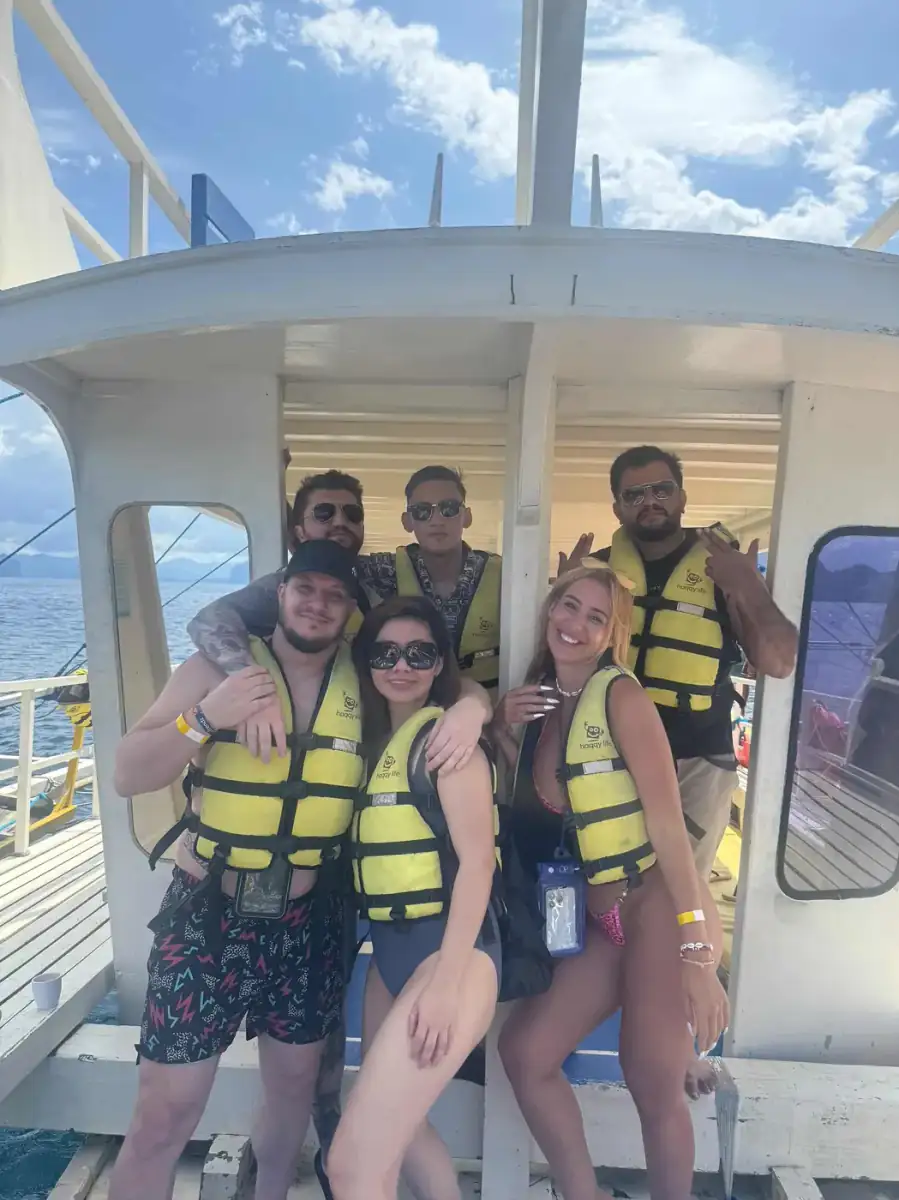
Picture a harbour at seven in the morning. Diesel sitting low over the water, crates sliding on a wet deck, two radios talking at once, someone laughing loudly, a sun already too bright. For most people this is just the start of a boat day. For a highly sensitive person, it can be the hardest part of the whole day, harder than anything that happens in the sea. What do they notice? Mostly, everything at once. The good news is that a few small, practical choices make a big difference.
This is not a story about one trip. It is a plain guide to why boat days can feel so loud for some nervous systems, what the research says about sensitivity, and what tends to help.
What “highly sensitive” actually means
The idea comes from psychologists Elaine Aron and Arthur Aron. In 1997 they published a paper in the Journal of Personality and Social Psychology describing “sensory-processing sensitivity”. It is a trait where people process sensory and emotional information more deeply and can be more easily affected by things like noise, strong light, crowding and change. Later papers usually credit this early work with estimating that around one in five people have high sensitivity, though estimates differ between studies.
A 2018 study in Translational Psychiatry tested 906 adults and found three groups rather than two: about 31% high sensitivity (the authors called them “orchids”), about 40% medium (“tulips”) and about 29% low (“dandelions”). The two numbers come from different methods, so they are not directly comparable. What both say is simple. High sensitivity is common, not rare.
It is a personality trait, not a diagnosis, and it is not a weakness. It is closer to a nervous system with the volume turned up, including on things other people in the room do not seem to notice.
What does a highly sensitive person notice on a boat day?
Ocean travel tends to put all the sensory input first, before any calm arrives. You do not get the wide, quiet horizon first. You get engine noise and fuel smell, gear checks, other people’s excitement, unfamiliar hands helping with a life vest, the glare of sun on water and a deck that moves in a rhythm your body has not learned yet.
Each of these is small. Together, in a short time and with no control over any of them, they can add up fast. For someone who takes all of it in a little more fully, the minutes between the dock and open water can be the most tiring part of the day. Once the engine slows, the group settles and the water is in front of you, many sensitive travellers find the sea itself is the calm part.
That gap, between a busy, noisy start and a quiet ocean, is the thing almost nobody prepares you for. Naming it in advance already helps.
Motion: the input you can't switch off
Movement is its own channel of information, and on a boat it never stops. Motion sickness is not the same as being highly sensitive, but the two can overlap on a boat day. The practical advice from the UK’s NHS is useful for everyone. Sit in the middle of the boat where there is less motion, look at something stable like the horizon, get fresh air, and breathe slowly. The NHS also suggests avoiding reading or screens and not watching moving things like rolling waves.
If you know you are prone to motion sickness, a pharmacist can suggest remedies such as tablets or patches. The NHS notes that acupressure bands do not work for everyone. Talk to a pharmacist or doctor before your trip, especially if you take other medicines, and remember some remedies can make you drowsy.
Small things that tend to help
None of this needs special treatment. It is mostly about choices that cost nothing:
- Ask for a seat away from the engine. Near the middle of the boat also helps with motion.
- Bring earplugs that soften engine noise but still let you hear a person talking to you.
- Wear sunglasses and a hat, and think about a long-sleeved rash guard. Less sun on the skin means less sunscreen to reapply on a busy deck.
- Pack your things the night before, so the morning has fewer decisions. A roll-top dry bag keeps phone, towel and a dry layer together in one place you can find without looking.
- Ask the guide about the plan: how long the ride is, whether there will be a quiet moment at the site, when you will get in.
That last one matters more than it seems. Knowing that the loud part is temporary lets you share out your attention, instead of spending all of it in the first five minutes because you do not know what comes next.
Why group size changes everything
This one is less a packing tip than a question of design. In a small group, one person needing a slower start does not hold up anyone else’s morning. On a big boat, the noise of people adds to the noise of the engine, and there are fewer quiet corners. On a small one, a guide can notice who needs a minute, and a guest can say “I’ll skip this one” without it becoming a drama. That is one reason Ocean Calling keeps groups to a maximum of six guests, and why anyone can sit out any activity.
Our article on designing retreats for sensory-aware and neurodivergent guests goes into more of the details. If you travel alone, our look at small-group travel for solo travellers answers many of the practical questions.
Quiet boats are kinder to animals too
There is a conservation layer here that we like very much. What helps a sensitive person on a boat, slower approaches, less engine noise, fewer boats, often helps marine animals as well. In a 2020 study off Australia, researchers played recorded boat noise near resting humpback whale mothers and calves. At high noise levels, compared with low ones, mothers rested about 30% less, breathed about twice as often and swam about 37% faster. The authors concluded that whale-watching rules should include noise standards.
So a quiet, slow boat is not only a comfort for guests. It is part of meeting the ocean on its own terms. It is also fair to say that any boat day still has an environmental cost, in fuel and noise, which is one more reason to keep trips small and unhurried.
The sea on the other side
Ocean travel does not need to be quieter for everyone. But it helps when someone says out loud that the loud part is temporary, and that the water on the other side of it is still there, exactly as unhurried as before. For some sensitive people, time in the water even feels regulating, which we explore in why water can feel so regulating. If this made you curious about a slower boat day yourself, you can explore our small-group retreats.
Questions people ask
Is being a highly sensitive person a diagnosis?
No. Sensory-processing sensitivity is a personality trait described by Elaine and Arthur Aron in 1997, not a medical or psychiatric diagnosis.
How common is high sensitivity?
Early work is usually credited with an estimate of about one in five people. A 2018 study of 906 adults found about 31% in a high-sensitivity group, 40% medium and 29% low. The figures use different methods.
Where should I sit on a boat if I get overwhelmed or seasick?
Away from the engine for noise, and near the middle of the boat for motion, as the NHS suggests. Looking at the horizon and getting fresh air also help.
Do acupressure bands work for seasickness?
The NHS says they do not work for everyone. A pharmacist can suggest tablets or patches. Ask before you travel, especially if you take other medicines.
Can I skip an activity on an Ocean Calling retreat?
Yes. Groups are a maximum of six guests, and any guest can skip any activity, including a boat trip, without explaining why.
Wildlife encounters are never guaranteed and never forced. Ocean Calling works only with vetted, ethical local operators, and every animal is free to approach, or not, entirely on its own terms.
Sources & further reading
- Aron & Aron. Sensory-processing sensitivity and its relation to introversion and emotionality. Journal of Personality and Social Psychology 73(2): 345-368. American Psychological Association, 1997.
- Lionetti et al. Dandelions, tulips and orchids: evidence for the existence of low-sensitive, medium-sensitive and high-sensitive individuals. Translational Psychiatry. Springer Nature, 2018.
- Motion sickness. NHS, accessed 2026.
- Sprogis, Videsen & Madsen. Vessel noise levels drive behavioural responses of humpback whales with implications for whale-watching. eLife, 2020.
Further reading on Ocean Calling: More from the journal · Wildlife & the law · See the retreats · Ocean Atlas
Find the retreat that fits you
Small groups of up to six guests, unhurried days and local experts. Tell us how you feel in the water and we will point you to the right trip.