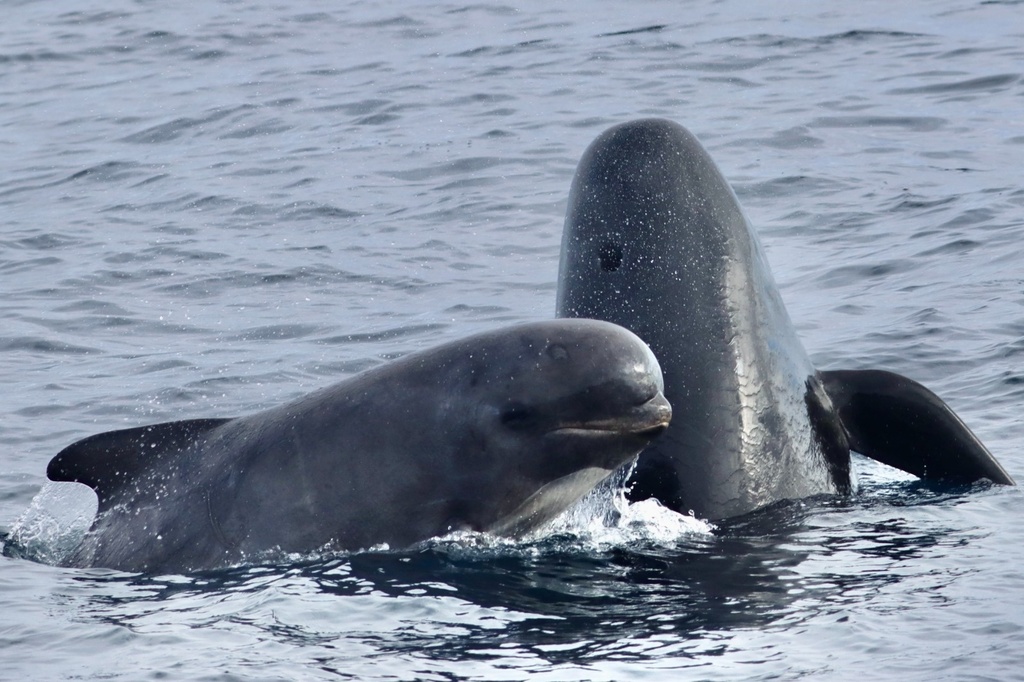
Why Pilot Whale Strandings Keep Making Headlines
A beach at dawn. Dark shapes along the waterline, and people in wetsuits carrying buckets. Every year or two, a pilot whale stranding brings this picture back to the news. Why does it keep happening? Science knows many possible causes, but often the exact cause is never found. What is clear is how to help: report it fast, keep your distance, and let trained responders lead.

Why do pilot whale strandings keep making headlines?
Pilot whales are among the species that strand in groups, sometimes in very large numbers. One whale on a beach is sad news. Dozens or hundreds at once is an event that cameras, volunteers and governments all respond to, and that is why these stories travel so far.
There is also something uncomfortable in them. With all our modern science, we often still cannot say why a whole group of whales swam onto a beach. That gap between what we can do and what we know is part of why the stories keep coming back. This is pilot whale stranding conservation without drama, and without false certainty.
Two strandings that show the pattern
In September 2020, about 470 long-finned pilot whales stranded at Macquarie Harbour on the west coast of Tasmania. Rescuers first found a group of around 270 on sandbars, then roughly 200 more a few kilometres away. After days of work in cold water and difficult tides, 108 survivors were released outside the harbour, according to the BBC. Around 350 died. It was called Australia's worst stranding on record.
In January 2026, a pod of pilot whales stranded at Onetahua, Farewell Spit, at the top of New Zealand's South Island. The New Zealand charity Project Jonah reported that 53 whales stranded across two sites. Some were refloated and swam freely in the bay, but the whales stranded again, including on a sandbar at Pūponga after an evening refloat. After five days, New Zealand's Department of Conservation said the remaining whales were in poor condition and that euthanasia was the most humane option. RNZ reported that 42 whales were returned to the sea and 11 were euthanised. Pathologists from Massey University carried out necropsies to look for a cause of death.
Farewell Spit has a long history of strandings, with news reports from earlier years too. That repetition is one reason people keep asking the same question.
What science really knows about the causes
NOAA Fisheries, which coordinates marine mammal stranding response in the United States, lists many possible causes of strandings in general. They include infectious diseases caused by parasites, bacteria, fungi and viruses, injuries from boats and ships, and malnutrition. Each of these can leave an animal weak, disoriented or unable to keep up, and a weak animal in shallow water is in danger.
Then comes the honest part. NOAA also says that the cause of a stranding event often stays undetermined, especially when bodies are found already badly decomposed and examinations are limited. Large whales on remote beaches decompose fast. By the time a pathologist arrives, much of the evidence may be lost.
You will read many theories in the media, about the shape of coastlines, group behaviour, noise and more. Some may turn out to matter. But I could not confirm them well enough from reliable sources to present them here as facts, so I prefer to leave them as open questions. In science, "we do not know yet" is not a failure. It is where the work begins.
How healthy are pilot whale populations?
You might expect animals that appear in the news so often to be well counted. They are not. For the short-finned pilot whale, sources disagree on its IUCN status. Some regional pages of the Convention on Migratory Species list it as Least Concern, while others, such as SeaWorld's fact page, still cite an older IUCN assessment that called it Data Deficient, meaning there was not enough information to judge its risk.
The likely explanation is simply that assessments were updated over time, but I could not check the current IUCN page directly, so please look it up there before quoting it. The bigger point stays the same: even when a species is Least Concern globally, local groups can still be under pressure, and mass strandings tell us little about global trends on their own.
The ethical layer: what helps, and what does not
This is the most useful part of this article, because good intentions can do harm here. NOAA Fisheries is very clear: do not push a stranded whale or dolphin back into the water before responders arrive. It can cause harm nobody intended, delay treatment and destroy health data that could explain what happened. In the United States, handling or pushing stranded marine mammals back into the water counts as harassment of a protected species and is illegal for the public.
What you can do: call the local stranding network as fast as possible, with an exact location. Keep people and dogs back. If you stay nearby while you wait, keep a safe distance from the head and the tail, which can injure you badly. Some NOAA material quoted in the press suggests that, for a live animal, keeping its skin wet and cool can help, but follow the instructions the responders give you on the phone. In the US, the Southeast hotline is 1-877-WHALE HELP (1-877-942-5343), and numbers differ by region. In New Zealand, the Department of Conservation led the 2026 response at Farewell Spit, working with Project Jonah.
Trained responders exist because whale rescue is hard, specialised work. Whales are heavy, stressed and at risk of stranding again. Farewell Spit in 2026 showed how even a well-organised rescue can end with a painful decision. The best gift a passer-by can give is a quick call and a calm, safe distance.
What this means if you travel to see whales
Strandings remind us that whales live complex lives we only partly understand. If you watch pilot whales at sea, for example off Tenerife, where the photo above was taken, the same humility applies. Let the boat keep its distance, let the animals choose, and pick operators who follow local rules. Our guide to responsible pilot whale watching off Tenerife shows how that looks in practice, and our pilot whale facts and ethical encounters page covers the animals themselves. Wildlife encounters are unpredictable. Whale watching should always follow local regulations and experienced professional guidance.
On a whale watching boat, small practical things help you stay present instead of worrying about your phone or your water. A roll-top dry bag keeps your things dry in the spray, and a refillable bottle from a tropical travel kit saves plastic on long days at sea.
Underwater noise is one of the human pressures on whales that people ask about most. We look at it in how underwater sound affects whales, with its own sources.
What to remember
Pilot whale strandings keep making headlines because they are dramatic, they repeat in some places, and they are often not fully explained. NOAA lists disease, injuries from vessels and malnutrition among the known causes, and also admits that many events stay undetermined. What is not a mystery is how to help: report, keep your distance, never push the animal back yourself, and let trained teams decide.
If the ocean's harder stories have left you wanting calmer time in it, on its terms, you can explore our upcoming retreats.
Questions people ask
Why do pilot whales strand in groups?
There is no single proven answer. NOAA lists known causes of strandings such as disease, vessel injuries and malnutrition, but says the cause of many stranding events stays undetermined.
Should I push a stranded whale back into the sea?
No. NOAA says pushing a stranded animal back into the water before responders arrive can cause harm, delay treatment and destroy health data. In the US it is also illegal for the public.
What should I do if I find a stranded whale?
Call the local stranding network with an exact location, keep people and pets back, and stay away from the head and tail. Follow the responders' instructions.
What happened at Farewell Spit in 2026?
Project Jonah reported 53 pilot whales stranded across two sites. Some were refloated but stranded again. After five days, the Department of Conservation judged euthanasia most humane for the remaining whales. RNZ reported 42 returned to sea and 11 euthanised.
What was the largest stranding in Australia?
Macquarie Harbour, Tasmania, in September 2020, with about 470 long-finned pilot whales. 108 were released and around 350 died; it was described as Australia's worst on record.
Are pilot whales endangered?
Sources disagree for the short-finned pilot whale: some list it as Least Concern, others still cite an older Data Deficient assessment. Check the current IUCN Red List page.
Wildlife encounters are never guaranteed and never forced. Ocean Calling works only with vetted, ethical local operators, and every animal is free to approach, or not, entirely on its own terms.
Sources & further reading
- NOAA Fisheries. Do not move stranded whales, dolphins or porpoises.
- NOAA Fisheries. 2024 report on marine mammal strandings in the United States.
- NOAA Fisheries Pacific Islands, 2022. Marine mammal strandings FAQ.
- New Zealand Department of Conservation, 2026. Farewell Spit whale stranding (media release).
- Project Jonah, 2026. Onetahua/Farewell Spit 5 day stranding.
- RNZ, 2026. Farewell Spit pilot whale stranding coverage.
- BBC News, 2020. Tasmania pilot whales: rescuers release 108 surviving animals.
- SBS News, 2020. Another 200 pilot whales found stranded on Tasmania's remote west coast.
- Convention on Migratory Species, Pacific cetaceans. Globicephala macrorhynchus species page.
- SeaWorld. Short-finned pilot whale fact page (cites an older IUCN assessment).
Further reading on Ocean Calling: More from the journal · Swimming with pilot whales · New Zealand · Australia · Wildlife & the law · See the retreats · Ocean Atlas
Swim with humpback whales in Moʻorea: an ethical whale retreat
Whale encounter retreat · Moʻorea, French Polynesia
Time in the blue, on the whales’ terms. If you love whales, this is our whale trip: small group, slow pace, on the animals’ terms.
Explore in the Ocean Atlas
Animals in this article