
Mobula Ray Conservation in Mexico: Protected, Yet Sold
On a spring beach near La Ventana, small devil rays leap out of the sea and fall back with a slap. Not far away, in a fish shop in La Paz, a tray of dried fish carries a simple label. Researchers found that the same protected ray can end up in both places.
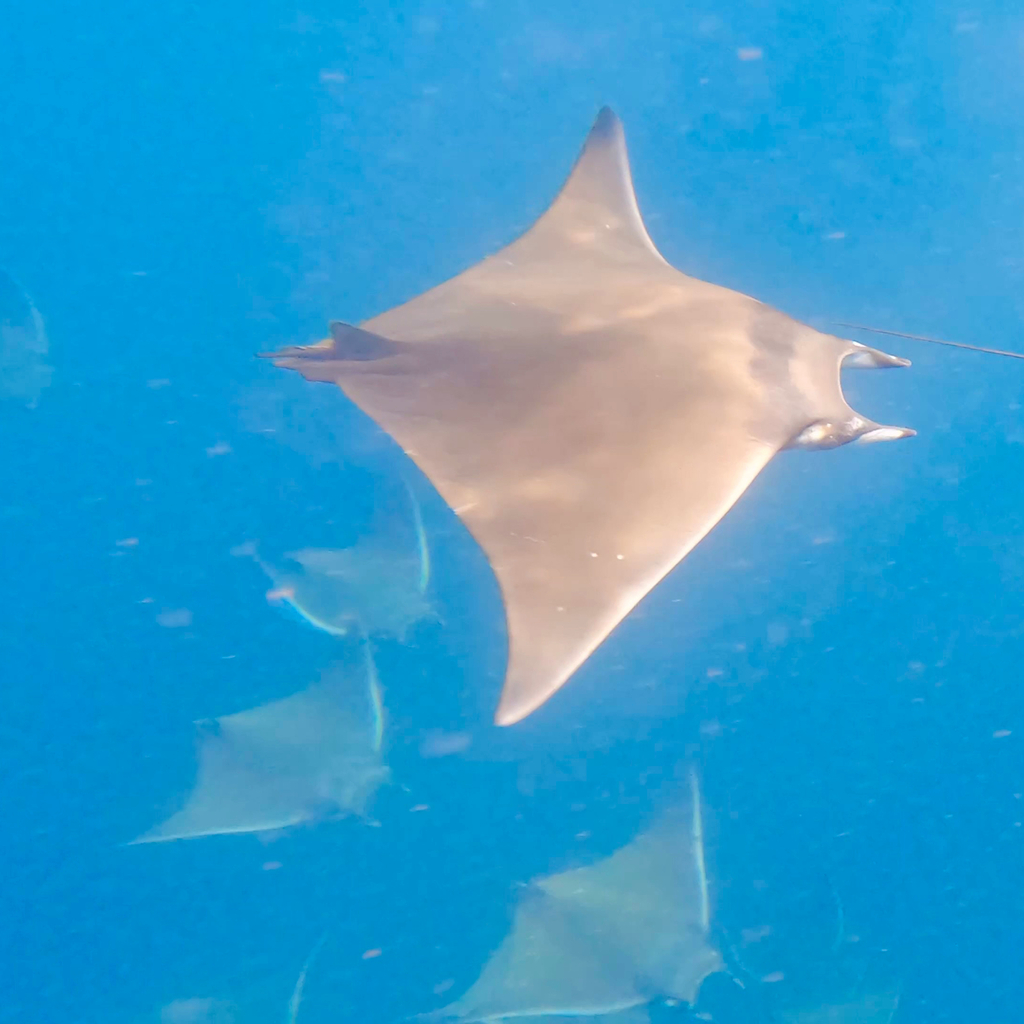
Are mobula rays protected in Mexico? Yes. Every mobula species is federally protected from targeted fishing. Yet a 2025 DNA study of fish counters in La Paz still found protected devil rays for sale, hidden under general names. Nobody in this story is a villain. It is a story about names, and what gets lost when a fish loses its name.
A quiet study in a busy market town
La Paz is the capital of Baja California Sur and an important market for small-scale fisheries in northwest Mexico. A team from the University of California Santa Cruz, Mobula Conservation, the Manta Trust and Mexican partners wanted to know a simple thing: which rays actually end up for sale there?
They visited 36 markets inside a 7 km circle around the city centre. Twelve were supermarkets and 24 were small fish shops known as pescaderías. In each one, they bought one 100 g fillet for every commercial name on offer. The owners were not told why.
Sampling covered both the open fishing season and the yearly closure, and included fresh, frozen and dried products. Then every fillet was identified by DNA barcoding, a way of reading a small piece of genetic code to tell species apart.
Fourteen species, and not one name
The DNA showed 131 samples from 14 species in eight families. None of them was sold with a species name.
Everything was sold under four general words: mantarraya (ray), pescado seco salado (dried salted fish), machaca (dried and salted meat) and cubana seca, a dry-salted product that refers to mobula rays.
The most common species were the diamond stingray, the longtail stingray and the California butterfly ray. And 103 of the 131 samples, or 78.6%, came from species listed as threatened on the IUCN Red List.
Four fillets that should not have been there
Among the samples were three bentfin devil rays and one Munk’s devil ray, sold as pescado seco salado or cubana seca.
Mobula rays made up only 3% of the samples. But every species in the group is federally protected from targeted fishing in Mexico under NOM-029-PESC-2006 and NOM-059-SEMARNAT-2010. The authors describe this as possible evidence of non-compliance, and suggest that general labels make the rules harder to enforce.
This is where the story comes back to the beach. The Munk’s devil ray is the same species that gathers and leaps off La Ventana in spring. Of the devil ray reproductive events recorded along this coast, 81.9% were in May, and the first known nursery of this species lies in a shallow bay near La Paz.
Is threatened the same as protected?
No, and the study makes this careful point. A species can be classed as threatened because its population is falling, and still be legally caught and sold if no specific law protects it. Most of the stingrays in the samples fall into that group.
Mobula rays are different. They may not be caught or sold at any time of year.
There is a second rule. From May to July, Mexico closes fishing for all sharks and rays in the Pacific and the Gulf of California. Selling fillets caught earlier, or frozen, is allowed during this closure. Even so, the team could still buy fresh ray fillets during the ban, which suggests that enforcement may not be enough.
Labelling adds a final gap. Prepackaged seafood in Mexico must carry common and scientific names. But when fish is weighed and wrapped in the shop, that standard does not apply.
No blame, just better names
The researchers do not blame individual fishers or sellers. Fish are often filleted or dried on remote landing beaches so they do not spoil, and there is little reason to sort rays of similar value by species.
Their ideas are practical: species identification at the point of sale, central landing sites where catch is recorded before filleting, an official list linking common names to species, and economic rewards for fishers who sort and report their catch.
International rules have also become stronger. At their twentieth meeting, CITES parties moved manta and devil rays to Appendix I, a full ban on international commercial trade. But a trade ban only works when local markets can tell one ray from another.
What this means for you as a traveller
The lesson is gentle. If you want to try local seafood in Baja California Sur, ask what species you are buying. A fillet sold only as mantarraya, machaca or cubana could be one of many rays, and the study found they are very hard to tell apart by eye. Choosing fish sold with a clear species name is a small act that supports better labelling.
In the water, the Manta Trust code of conduct is a good guide for mobula rays too. Enter quietly and no closer than 10 m, never approach closer than 3 m, never chase and never touch. Munk’s devil rays are Vulnerable on the IUCN Red List, grow to only about 130 cm across, and often move in dense schools that are exposed to gill nets. Wildlife encounters are unpredictable. Snorkelling with mobula rays should always follow local regulations and experienced professional guidance.
On a long day on the water, I wear a long-sleeve rash guard for the sun, so I can stay in quietly without worrying about my skin. A calm encounter shows that a living ray has value, far more than a dried fillet.
If you are still wondering which ocean experience fits you, our Ocean Match is a gentle place to start.
And if this made you curious about the rays of La Ventana, you can explore our hosted La Ventana retreat in May 2027. To ask about a place, simply message Rocío. The rays may come, or they may not, and either way they are free.
Questions people ask
Is it illegal to eat ray in Mexico?
Not in general. Many stingrays can be legally caught and sold outside the May to July closure. Manta and devil rays of the genus Mobula are the exception: they are federally protected and may not be caught or sold at any time.
What does cubana mean on a menu or label?
In the Mexican Pacific, cubana refers specifically to mobula rays. It does not say which of the five mobula species in the area it is, nor how threatened that species is.
Did the sellers know they were selling protected rays?
The study does not say, and it does not accuse anyone. Its main point is that general names hide the species, which makes it hard for sellers, buyers and inspectors alike to know what is on the counter.
Wildlife encounters are never guaranteed and never forced. Ocean Calling works only with vetted, ethical local operators, and every animal is free to approach, or not, entirely on its own terms.
Sources & further reading
- Ossiander, I.C. et al., 2025. Composition and conservation status of rays sold in Baja California Sur, Mexico. Conservation Science and Practice 7: e70164.
- Palacios, M.D. et al., 2021. Description of first nursery area for a pygmy devil ray species (Mobula munkiana) in the Gulf of California, Mexico. Scientific Reports 11.
- Palacios, M.D. et al., 2023. Reproductive behavior, seasonality, and distribution of three devil ray species in the Southern Gulf of California, Mexico. Marine Biology.
- Manta Trust. Munk’s pygmy devil ray (Mobula munkiana) species guide.
- Wildlife Conservation Society, 2025. WCS celebrates historic and sweeping trade protections for sharks and rays adopted at CITES CoP20.
- Manta Trust. Manta ray tourism code of conduct.
Further reading on Ocean Calling: Mexico in the Ocean Atlas · How tourism can protect sharks
La Ventana: a mobula ray retreat in the Sea of Cortez
Ray retreat · La Ventana, Baja California Sur, Mexico
Six quiet days by the Sea of Cortez, in the month the devil rays gather. This story is about Mexico, where we run our ray retreat in the Sea of Cortez.
Explore in the Ocean Atlas
Places in this article
Animals in this article