
Munk's devil ray
Mobula munkiana
Small eastern Pacific devil rays that may gather in schools and leap from the sea. We stay quiet and give them space.
Vulnerable (IUCN, 2018) means it is at high risk of extinction in the wild.
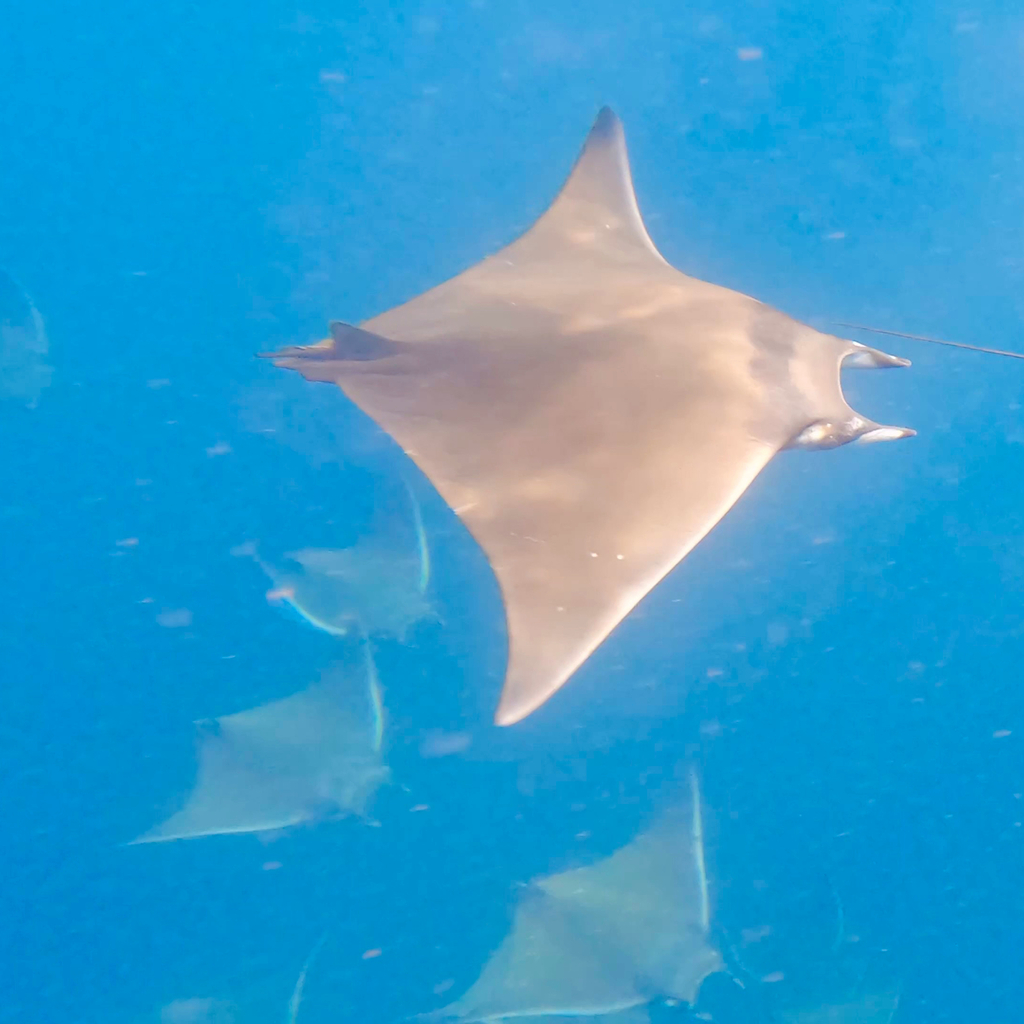
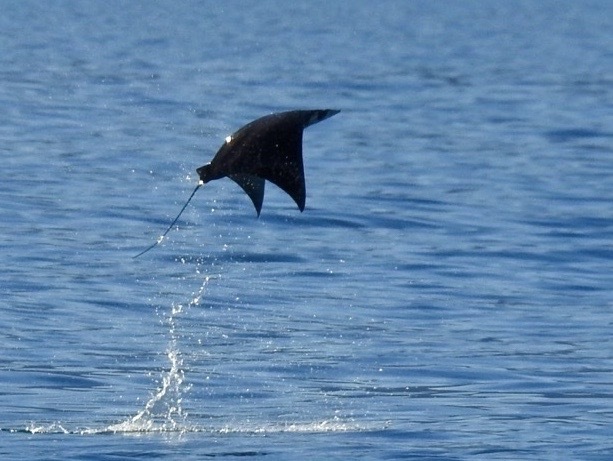
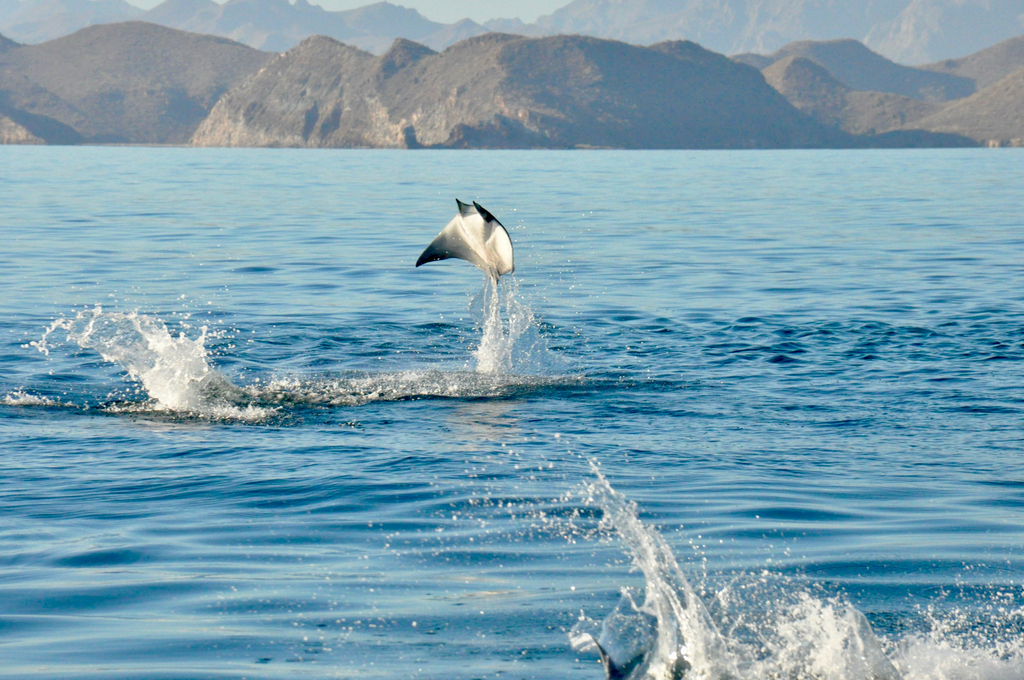
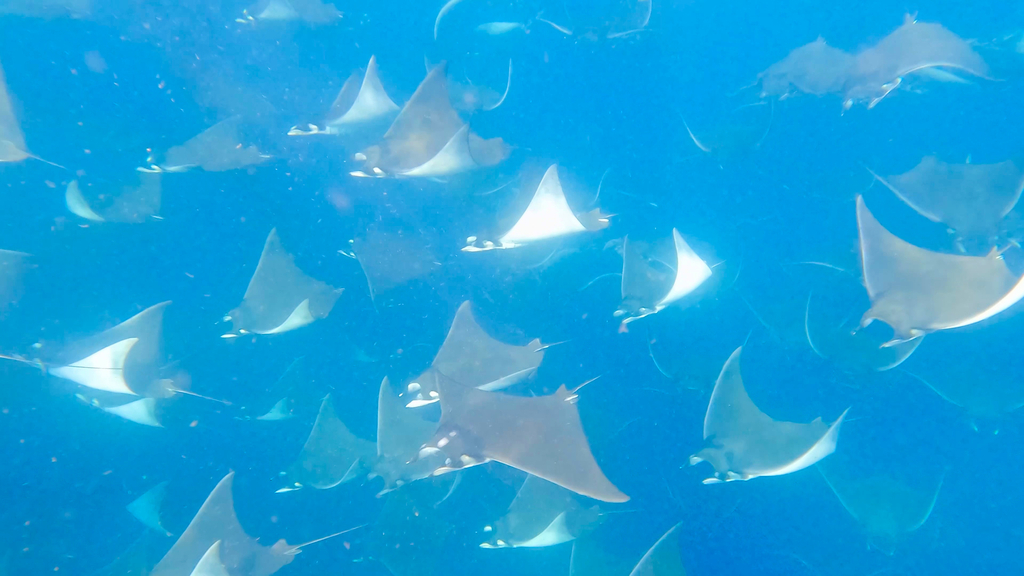
Photos show the species, not always the places on this page.
Length
Adults usually about 0.87 to 1.0 m (2.9 to 3.3 ft) across the disc; largest reliably recorded about 1.1 m (3.7 ft)
Weight
Not reliably measured; one species guide estimates up to about 25 kg (55 lb)
Next to a person
About half to three-quarters as wide as a person is tall; much smaller than a manta
What it eats
Tiny drifting animals (zooplankton), mainly mysid shrimp and krill, and sometimes small schooling fish.
Around people
Calm, give space
How it lives
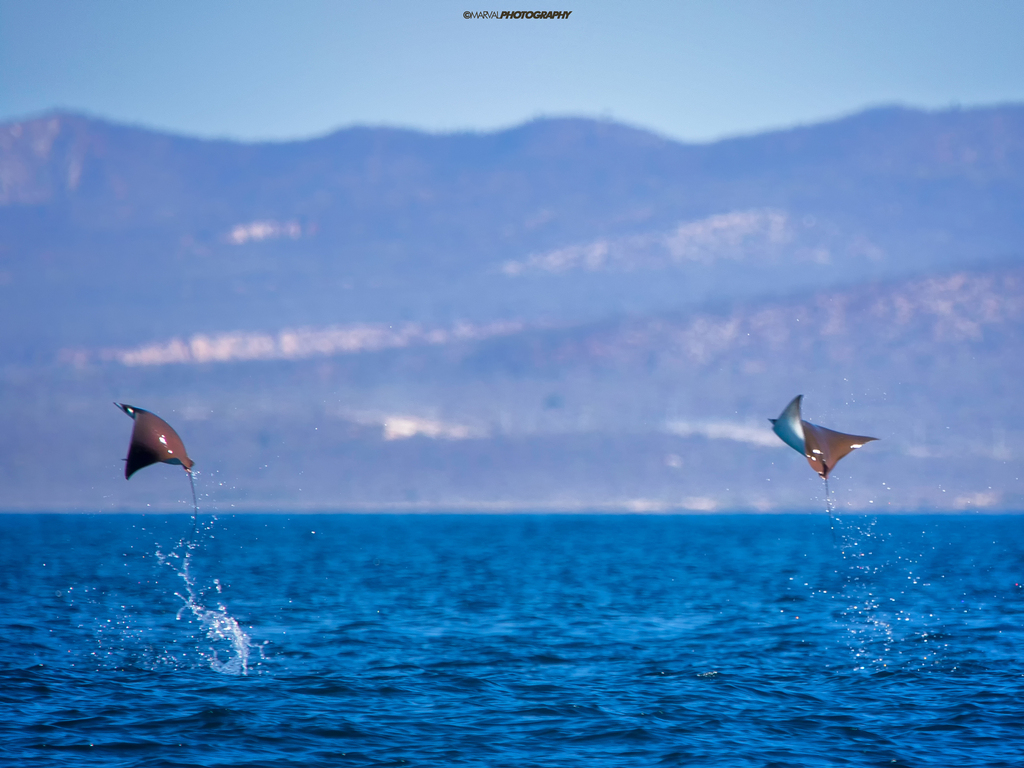
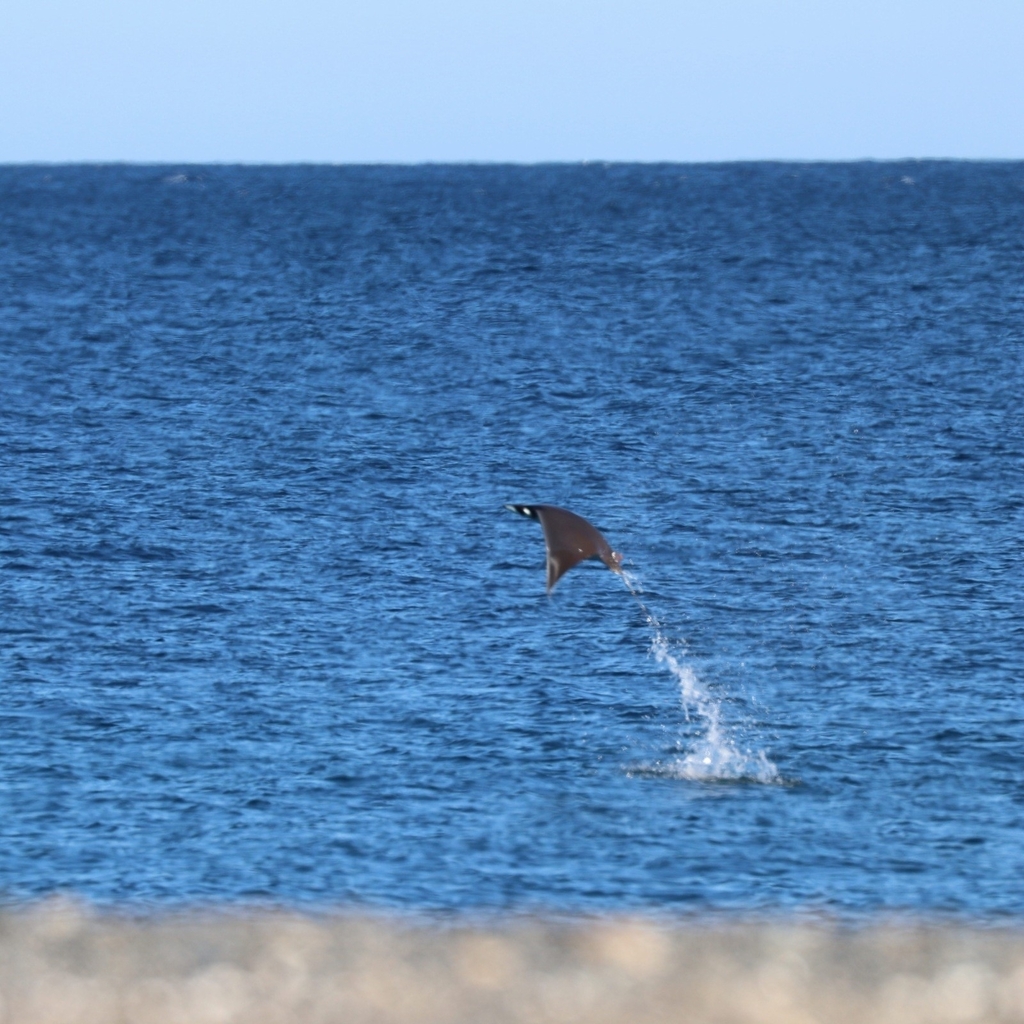
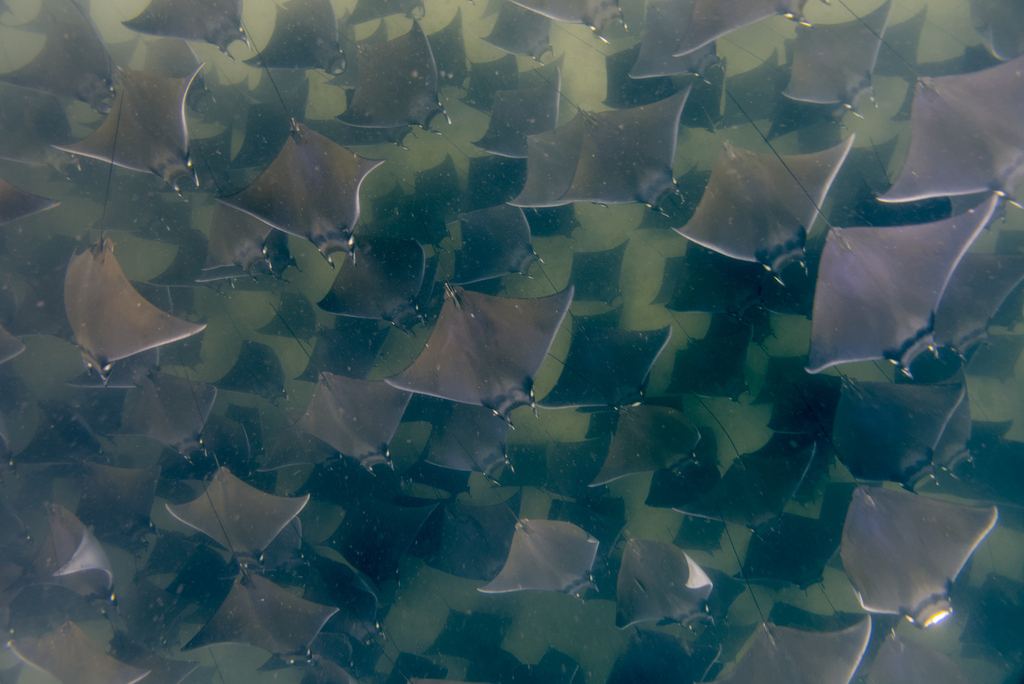
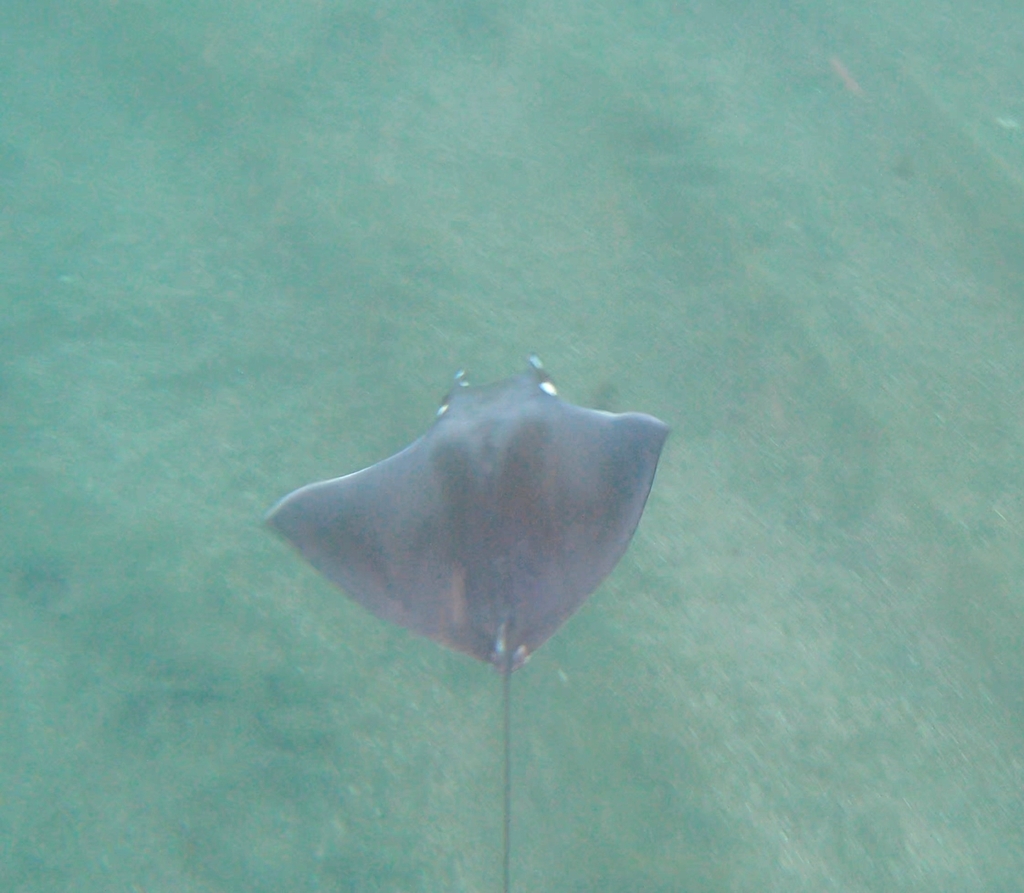
Munk's devil ray is a small filter-feeding ray of the eastern Pacific. It can form large schools, sometimes of thousands, often sorted by size, and it is famous for leaping out of the water. Females usually have one pup, and newborns measure about 35 to 56 cm across.
Where it goes
No long migration is described yet. In the southwest Gulf of California, courtship was seen from March to August, with a peak in May (81.9% of events), mostly off La Ventana and Ensenada de Muertos. At the first known nursery, on Espíritu Santo, young rays stayed in one shallow bay for up to 145 days in a row.
We only draw a journey on the map when scientists have tracked it or clearly documented it. For this animal we have not found one yet.
Populations
Found only in the eastern tropical Pacific, from the Gulf of California in Mexico to Peru, including offshore islands like Galápagos, Cocos and Malpelo. The best studied groups live in the southern Gulf of California, where schools can number in the thousands. Bahía de La Paz is an Important Shark and Ray Area for this ray, used for pupping, courtship and as a nursery; pups are born from about April to June.
Meet it respectfully
Watch schools and leaps from a quiet boat that keeps its distance. In the water, never chase, touch, block or swim into the school, never grab the head fins, and let the rays choose. We avoid crowding nursery and courtship areas, especially from April to June. Espíritu Santo park rules say do not chase mobulas. In Mexico, catching or keeping this ray is not allowed.
Fun fact
Tap the bulb to light it up.
In Baja, 122 rays were seen circling clockwise for about 5 hours in a courtship 'vortex', not a feeding ball.
In the Sea of Cortez they are nicknamed 'popcorn rays' because they leap out of the water in waves.
It looks like a mini manta, but its mouth sits under the head, so it is a devil ray, not a manta.
The first known nursery for this ray was found at Ensenada Grande, on Espíritu Santo island.
In one May courtship 'vortex' off Baja, 122 Munk's devil rays circled clockwise for about 5 hours, with small courting groups joining and leaving.
Source: Palacios et al., 2023, Marine Biology, devil ray courtship in the southern Gulf of California
At a nursery bay on Espíritu Santo, 84% of the rays tagged were newborns and juveniles, and one stayed up to 145 days in a row.
Source: Palacios et al., 2021, Scientific Reports, first nursery of Munk's devil ray
Munk's devil ray in the Ocean Atlas
Places we have researched where this animal is recorded. It is never guaranteed, and some places are for watching from the boat only.
Travel with usComing soonTrusted referralExploringOn pause, story onlyEthics pass
Country colour: pink where we travel, blue where we are exploring or refer, grey for story only.
 Costa Rica
 Ecuador
 Mexico
 Panama
Read more about the munk's devil ray
Sources for this page
- Manta Trust, 2026
- Marshall et al., IUCN Red List, 2022
- Notarbartolo-di-Sciara, 1987
- Palacios et al., 2021
- Palacios et al., 2023, Marine Biology, devil ray courtship in the southern Gulf of California
- IUCN SSC Shark Specialist Group, ISRA factsheet Bahía de La Paz
- Mexico, NOM-029-PESC-2006, responsible fishing of sharks and rays (rule 4.2.2)
- Espíritu Santo National Park visitor guidelines, 2022 (Costa Salvaje)
Facts checked 26 September 2026. Photos: Unsplash licence, or Creative Commons as shown on each photo.
Work in ocean travel?
We are always happy to hear from exceptional local operators, accommodation, conservation organisations and destination experts. If your work fits responsible, small-group ocean travel, we would love to learn more.
Partner with Ocean CallingGili Trawangan in 5 days
from CHF 790