
Beginner Diving in Indonesia: Gentle Places to Learn
Why Indonesia is such a kind place to learn to dive: calm water, patient dive schools, and beginner-friendly sites in Bali, the Gilis and even parts of Komodo.
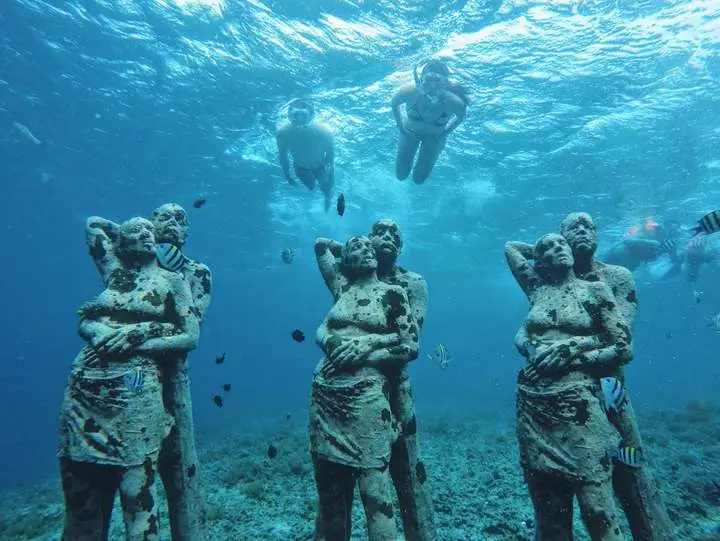
Picture yourself on a beach of dark volcanic stones in east Bali, a regulator in your hand, quietly wondering if you are the kind of person who can breathe underwater. Is Indonesia a good place to find out? For many beginners, yes. Warm water, many patient dive schools and sheltered first sites in Bali, the Gili Islands and even parts of Komodo let a new diver focus on what matters: slow breathing, calm buoyancy and feeling at home under the surface.
It is not the only good place to learn, and it is not the right place for every first dive. But many of its beginner sites are truly forgiving, and that changes how the first days feel.
Why beginner diving in Indonesia feels kind
Your first open-water dives are not really about the reef. They are about your own body: learning to breathe slowly through a regulator, to equalise your ears, to stop kicking when you do not need to. Everything that removes stress from outside leaves more space for this inside work. A short walk into the sea instead of a long boat ride, water warm enough that you are not shivering after forty minutes, and an instructor who is not in a hurry all help.
Indonesia has many places with exactly that mix, because diving has been part of local tourism for a long time and the schools are used to people who have never breathed underwater. That does not make every school good, or every site easy. It only means a careful beginner has real choices.
Amed: walking into the sea
Bali's Amed coast is a good example of gentle first diving. SSI, one of the big training agencies, describes Amed as having calm, clear water and easy shore access, with the coral garden at Jemeluk sloping from about 5 to 30 metres. You walk in from the beach, swim a short way, and your instructor can choose exactly how deep the day needs to be.
A little further up the coast, at Tulamben, the wreck of the USAT Liberty lies close to the beach. SSI places it about 30 metres from shore, at depths from roughly 3 to 29 metres. A beginner can see part of a wreck from shallow water without any boat at all, which is a rare gift. The beach entry is pebbly, so take your time and ask for a hand with your fins.
The Gili Islands: small islands, many schools
The Gili Islands work differently but end up in a similar place. PADI describes the Gilis as well suited to beginners, with around 15 to 18 established dive sites, many of them fine for new divers, and internationally certified dive schools. Water temperatures around 28°C are commonly quoted, so a thin wetsuit is usually enough.
Because so many schools sit on such small islands, classes are often small and the rhythm is easy: theory in the morning, practice in shallow water, then the first open-water dives, with a lively but relaxed island in between. A course naturally puts you together with a few strangers for a few days, and that is often how friendships start.
Can beginners dive in Komodo?
Komodo is the one where I add a caveat. It is a spectacular national park and a UNESCO World Heritage Site, and it is also known for strong currents at many of its famous sites. Operators who dive there every day name places such as Castle Rock, Crystal Rock and Batu Bolong as sites usually kept for more experienced divers.
The good news is that sheltered, shallower sites exist inside the park too. Local operators name Sebayur, Mini Wall and Siaba Besar as calmer options for newly certified divers. These are commercial sources, so treat them as a starting point, not a promise. What matters most in Komodo is which sites your instructor chooses on the day, based on tide and weather, and whether they are happy to say no.
There is also a new practical rule. In 2026, Indonesia's Ministry of Forestry announced a limit of 1,000 visitors a day for Komodo National Park, covering Komodo, Rinca and Padar islands and 23 dive sites. We explain what it means in our guide to the Komodo National Park quota for divers. Please check the current rule before you travel, because quotas and fees change.
What to expect from the course itself
Most beginner scuba certifications, whatever recognised agency your dive centre uses, have three parts: theory, practice in a pool or pool-like shallow water, and a set of open-water dives. For the PADI Open Water Diver course, PADI's own blog says the four open-water dives usually happen over at least two days, and dive centres commonly quote three to four days in total. Some people shorten their time on location by doing the theory online first; others prefer to go slowly over a week. Both are normal.
If you are not ready for a whole course, a try-dive is a softer first step. PADI's Discover Scuba Diving is a one-day experience for people aged 10 and over, led by an instructor, with a maximum depth of 12 metres for the optional open-water dive. It is not a certification, but what you learn can count later towards a full course. Our piece on learning to dive for the first time goes deeper into how to prepare.
After that, preparation is mostly practical. A mask that seals well on your own face makes a surprising difference, which is why some beginners bring their own low-volume mask and snorkel instead of taking whatever fits second-best at the shop. Sun protection matters on the boat and the beach between dives, and a mineral sunscreen or a long-sleeved top keeps it simple. A roll-top dry bag keeps a phone and a towel dry on a boat day. A good night's sleep and some patience with yourself do the rest. Curiosity helps you more here than trying to perform.
The ethical layer: a reef is not a classroom floor
New divers touch the reef more than they think, and so do experienced ones. A 2026 study from Bangor University found that divers underestimated how often they touched the reef by almost five times, compared with what observers recorded. The researchers suggest better buoyancy training, clearer briefings, feedback after the dive and stronger guide leadership to reduce it.
So a good beginner course is also a conservation choice. Ask where the confined-water skills happen: on sand, in a pool, or kneeling on coral? Ask how big the group is in the water. Some dive centres in the region take part in Green Fins, a programme run by the UN Environment Programme and the Reef-World Foundation, whose members are assessed against a code of environmental standards. Membership is not a guarantee, but it is a good question to ask. You can read more about how we choose local teams on our local experts page.
It is also fair to say that flying to Indonesia has a real environmental cost. Learning slowly, diving fewer sites well instead of many sites quickly, and staying long enough to make the journey worth it are small ways to respect that.
Starting somewhere kind
Not every first dive has to happen somewhere easy, but I think it helps. A good first experience, in calm water with people who are not in a hurry, often shapes how someone feels about the ocean long after the certification card arrives. Indonesia, for all its variety, still has enough gentle starting points that a nervous beginner and a confident one can both find their footing.
If this made you curious about learning in Bali, you can look at our Bali Amed scuba trip through Ocean Match. It is a referral: we help you find a patient local dive school, and you book with them directly. Ocean Match explains how it works.
Questions people ask
Is Indonesia good for beginner divers?
Yes, in many places. Training agencies describe Amed in Bali as having calm, clear water and easy shore access, and PADI describes the Gili Islands as well suited to beginners, with many beginner-friendly sites among their 15 to 18 established dive sites. Komodo needs more care because of strong currents at many sites.
How long does a beginner scuba course take?
Dive centres commonly quote three to four days for the PADI Open Water Diver course. PADI says the four open-water dives usually take place over at least two days. Doing the theory online beforehand can shorten your time on location.
Can I try diving without doing a full course?
Yes. PADI's Discover Scuba Diving is a one-day, instructor-led experience for people aged 10 and over. The optional open-water dive goes to a maximum of 12 metres. It is not a certification.
Can beginners dive in Komodo National Park?
Yes, at the right sites. Local operators name sheltered sites such as Sebayur, Mini Wall and Siaba Besar for new divers, while strong-current sites such as Castle Rock and Crystal Rock are usually kept for experienced divers. Your instructor should choose by tide and weather on the day.
Does the Komodo visitor quota apply to divers?
Yes. In 2026 Indonesia's Ministry of Forestry announced a limit of 1,000 visitors a day for the park, covering Komodo, Rinca and Padar islands and 23 dive sites. Check the current rule with your operator before you travel.
How warm is the water in the Gili Islands?
Around 28°C is the figure most often quoted, including by PADI. It changes a little with the season, so ask your dive school which wetsuit they recommend.
Wildlife encounters are never guaranteed and never forced. Ocean Calling works only with vetted, ethical local operators, and every animal is free to approach, or not, entirely on its own terms.
Sources & further reading
- Ministry of Forestry of the Republic of Indonesia, 2026. Press release: Kemenhut batasi kuota wisatawan di TN Komodo (visitor quota for Komodo National Park).
- Balai Taman Nasional Komodo. Protokol kunjungan wisata alam (nature tourism visit protocol).
- UNESCO World Heritage Centre. Komodo National Park.
- Bangor University, 2026. Scuba divers underestimate how much damage they do to coral reefs.
- Coral Triangle Center. Sustainable tourism: Green Fins.
- PADI blog. PADI Open Water dives: what to expect.
- PADI blog. Discover Scuba Diving FAQs.
- PADI. Diving in the Gili Islands.
- SSI. Freediving in Bali: things you need to know (Amed and Tulamben site descriptions).
- PADI. Diving in Amed.
- Komodo Resort. Siaba Besar dive site (operator source).
- Dragon Dive Komodo. Diving FAQ, beginner sites (operator source).
Further reading on Ocean Calling: More from the journal · Wildlife & the law · See the retreats · Ocean Atlas
Freediving certification in Bali: Amed, USAT Liberty wreck and Ubud
Freediving certification · Amed & Ubud, Bali, Indonesia
Ocean breath first, sacred water after. This story is about Indonesia, where we run our Bali trips.
Explore in the Ocean Atlas
Places in this article