
Thresher Shark Cleaning Stations at Kimud and Monad
A very large shark waits patiently while a very small fish does the cleaning. At Kimud and Monad, that is a real scene.
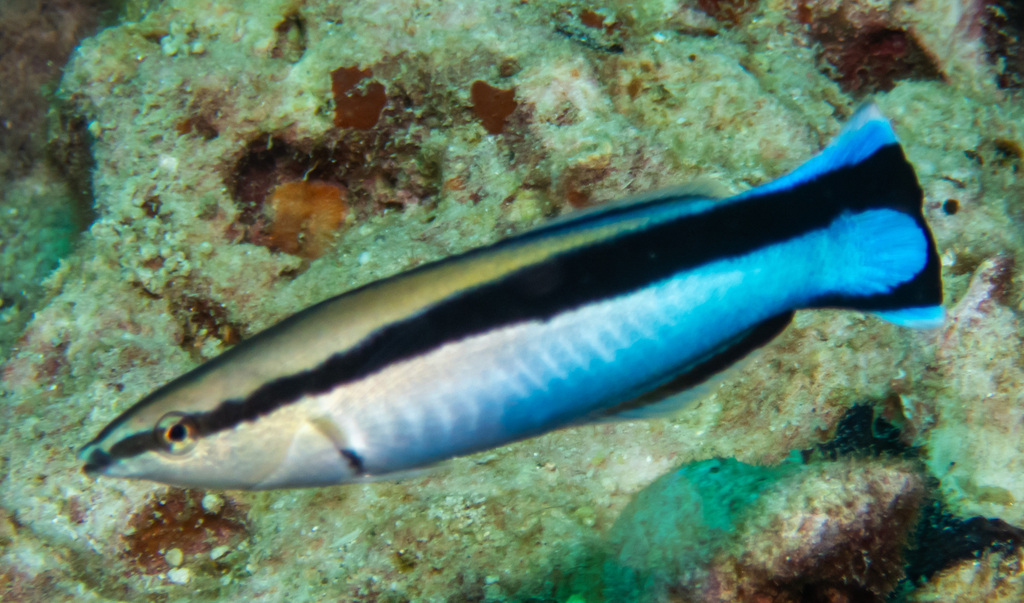
Imagine the blue going soft at dawn, and then a long, strange tail. A pelagic thresher shark arrives at a cleaning station, slows down, and lets much smaller fish inspect its skin. Why do thresher sharks visit cleaning stations? Simple: the cleaner wrasses get a meal, and the shark gets parasites and dead skin removed. It is one of the ocean's best examples of a very big animal waiting patiently for a very small one.
Researchers have documented this behaviour at Monad Shoal. It has also been recorded at neighbouring Kimud Shoal, southeast of Malapascua in the central Philippines.
What happens at a cleaning station?
Cleaner fishes feed on parasites and other material on larger "client" fishes. At Monad Shoal, researchers recorded pelagic threshers interacting with cleaner wrasses, including the bluestreak cleaner wrasse and the moon wrasse.
The sharks sometimes swim in a slow circle while they are being cleaned. This may help the little fish reach every part of them.
Scientists have documented several cleaning stations along the plateau of the shoal, and individual sharks may prefer particular spots. So one diver's corner can be quiet while another part of the ridge is busy.
Why the long tail is part of the story
The thresher's long upper tail lobe is famous for hunting. Threshers can use it to strike prey. At a cleaning station, that same unmistakable shape arrives in a completely different role: a client waiting for a service.
It is a lovely reminder that animals behave differently depending on the situation. A shark cruising past a reef is not the same scene as a shark choosing to pause among cleaner fish.
How can divers avoid interrupting the appointment?
Stay still. Follow your guide's distance instructions. If a shark leaves, let it go, do not chase it. Too many divers too close can turn quiet watching into an obstacle. Never touch the animal or try to bring it closer.
The Important Shark and Ray Areas factsheet describes Monad and Kimud shoals as protected sites, and recognises the wider area as an Important Shark and Ray Area. I could not find the official local orders behind that protection, so I do not quote any rules or fees here. That label shows how important the habitat is. It is not permission to ignore local site rules, and those rules can change, so please check the current rule with the local municipal authority before you dive.
Wildlife encounters are unpredictable. Diving with thresher sharks should always follow local regulations and experienced professional guidance. No dive can promise that a shark will come. For more of the country's ocean life, browse our Philippines ocean guide, or read how manta rays use cleaning stations too.
Best to let the sharks and the wrasses get on with their morning.
Questions people ask
What is a cleaning station?
It is a spot on the reef where cleaner fishes feed on parasites and other material on larger "client" fishes.
Which cleaner fish clean pelagic threshers?
At Monad Shoal, researchers recorded pelagic threshers interacting with cleaner wrasses, including the bluestreak cleaner wrasse and the moon wrasse.
Has this been seen at Kimud as well?
Yes. Researchers documented the behaviour at Monad Shoal and also recorded it at neighbouring Kimud Shoal.
How should divers behave around a cleaning station?
Stay still, follow the guide's distance instructions and do not chase a shark that leaves. Never touch the animal or try to bring it closer.
Wildlife encounters are never guaranteed and never forced. Ocean Calling works only with vetted, ethical local operators, and every animal is free to approach, or not, entirely on its own terms.
Sources & further reading
- Oliver et al., “Oceanic sharks clean at coastal seamount,” PLOS ONE (2011).
- Important Shark and Ray Areas. Monad and Kimud Shoals.
Further reading on Ocean Calling: Manta ray cleaning station behaviour · Pelagic thresher in the Ocean Atlas · Bluestreak cleaner wrasse · Philippines in the Ocean Atlas
Find the retreat that fits you
Small groups of up to six guests, unhurried days and local experts. Tell us how you feel in the water and we will point you to the right trip.