
Bluestreak cleaner wrasse
Labroides dimidiatus
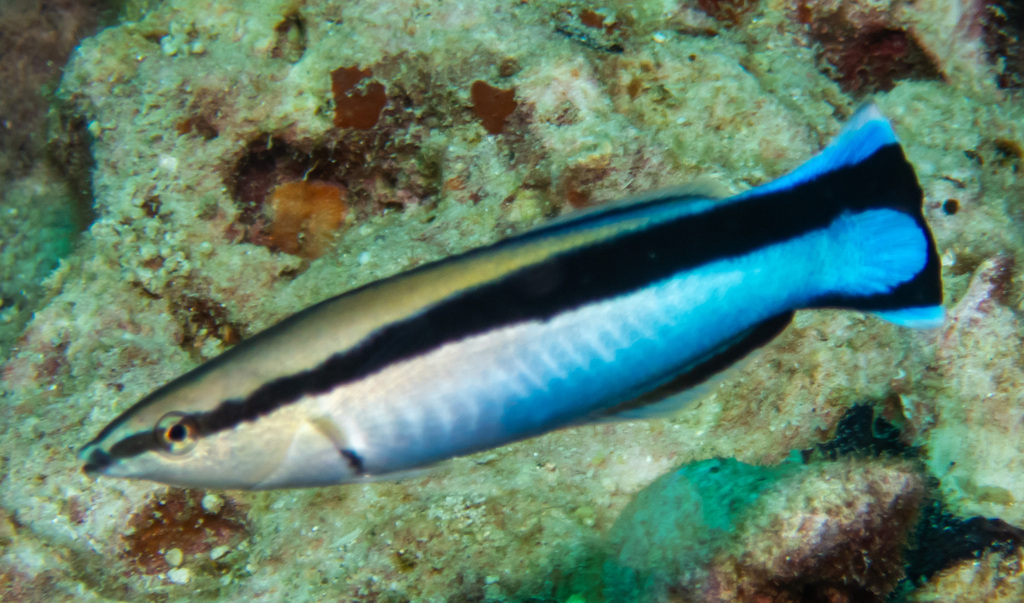
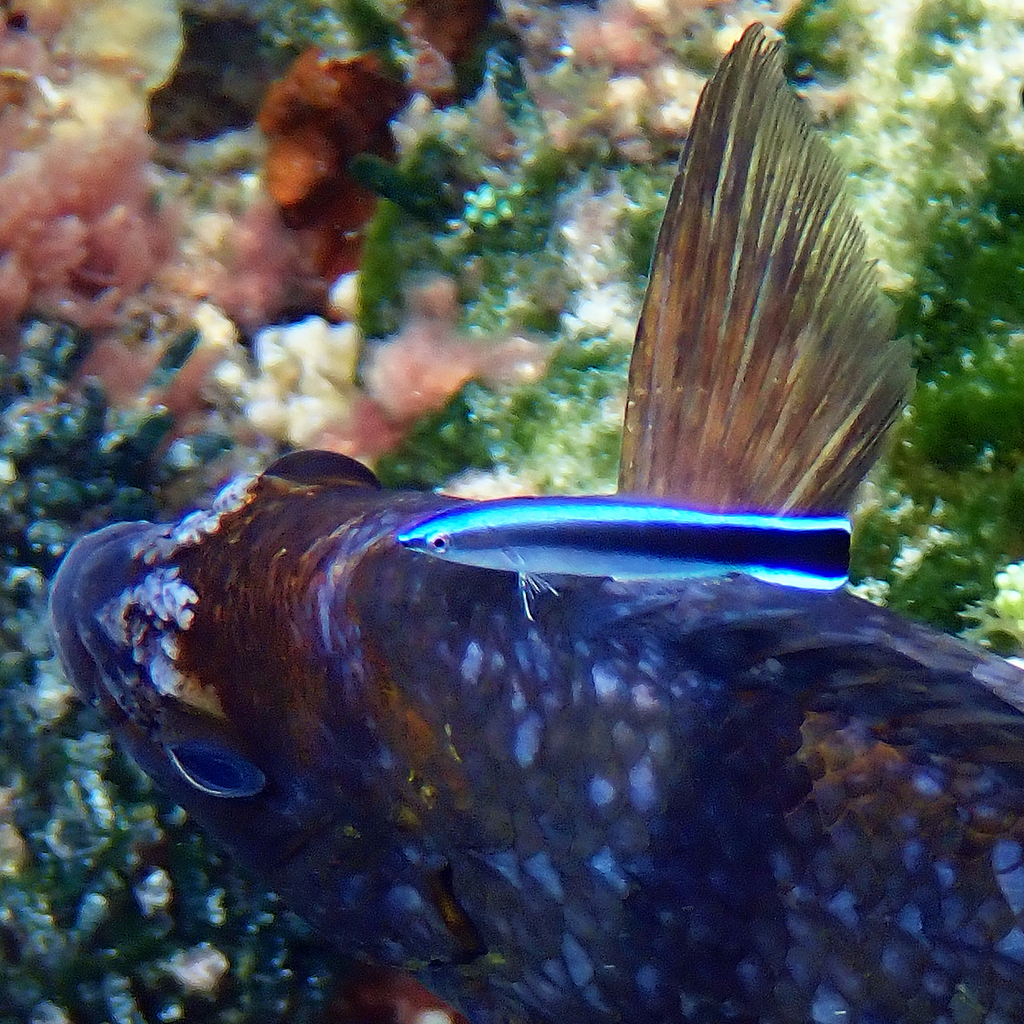
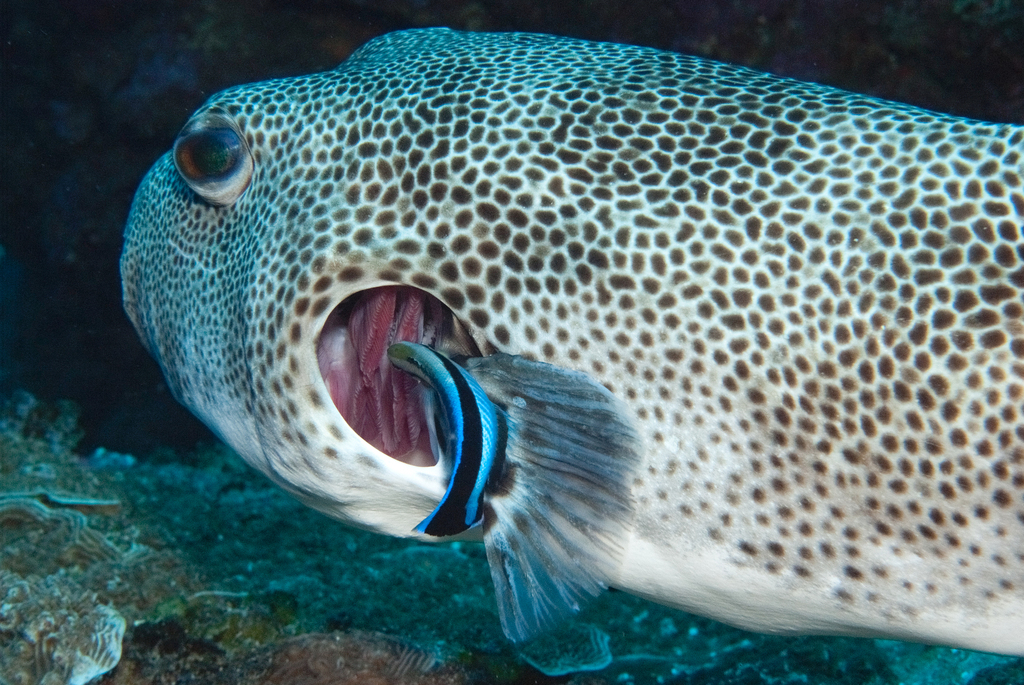
Tiny cleaner wrasse hold reef cleaning stations where larger fish pause to have parasites removed. Hang still at the edge, and never crowd or chase the station.
Least Concern (IUCN, 2010) means it is not at high risk of extinction worldwide today.
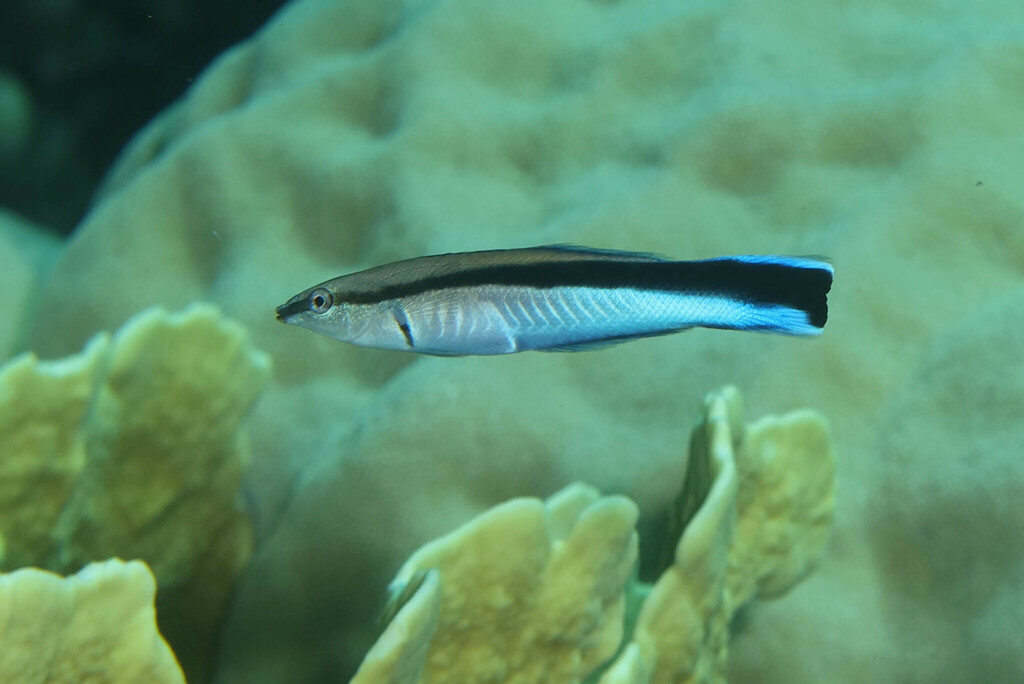
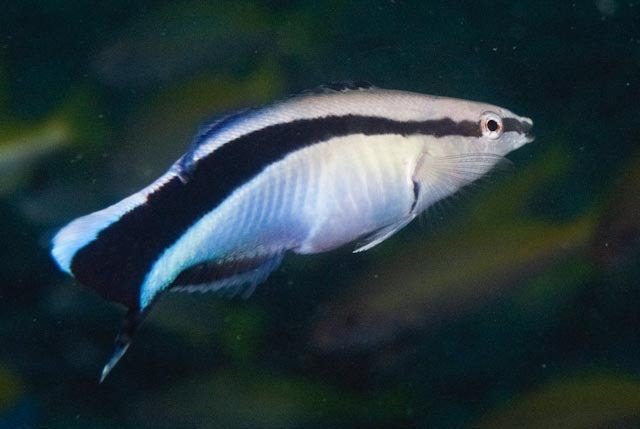
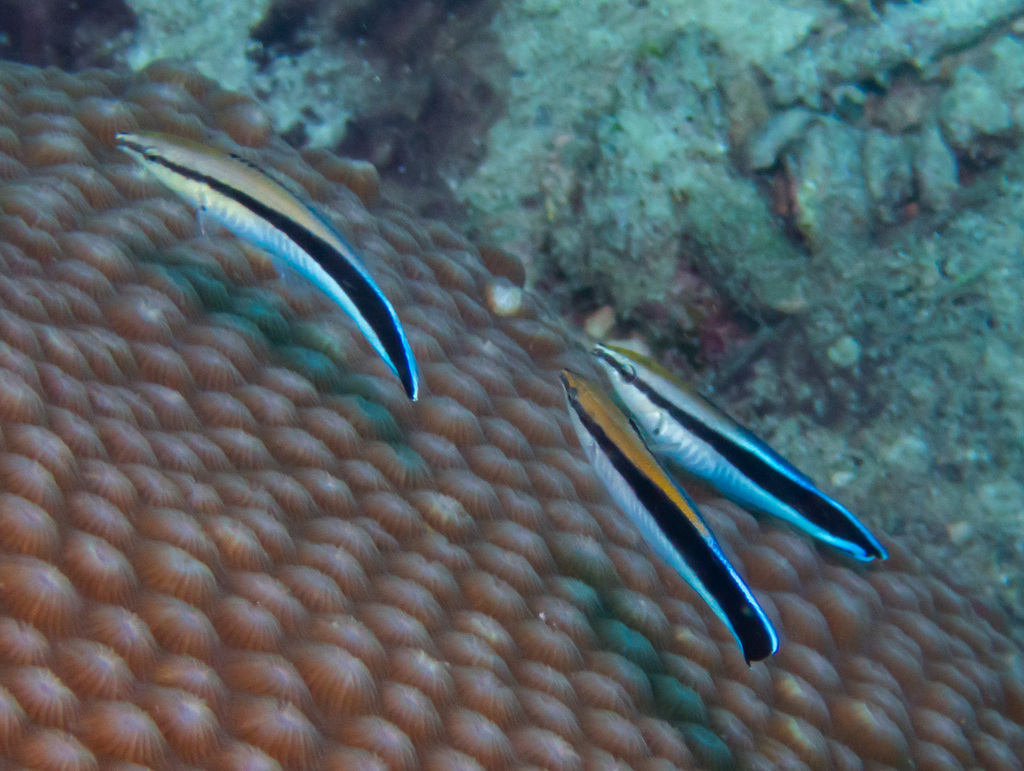
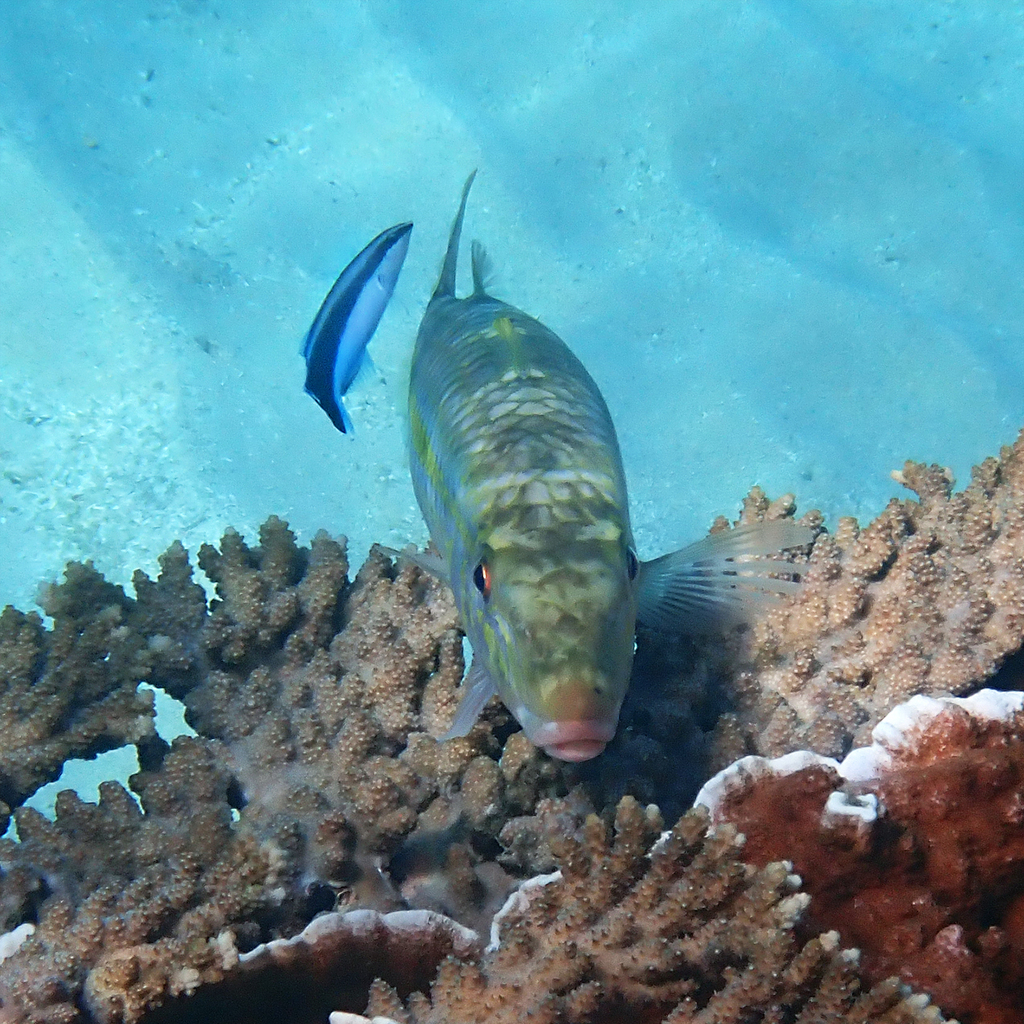
Photos show the species, not always the places on this page.
Length
Usually about 7 to 10 cm (2.8 to 3.9 in); largest recorded about 14 cm (5.5 in)
Weight
Not reliably measured; adults in one study weighed about 3 to 5 g (0.1 to 0.2 oz)
Next to a person
About the length of an adult's finger to palm; even the largest is shorter than an adult hand
What it eats
Tiny parasites picked from other fish, mostly young crustaceans called gnathiid isopods, plus some of their mucus. Where parasites are scarce, they take more mucus bites.
Around people
Harmless
How it lives
Bluestreak cleaner wrasse run cleaning stations, where larger fish come to have parasites removed. A station may be held by an adult pair, a group of young fish, or several females with a dominant male. If the male disappears, the top female becomes male. They signal to visitors with a dance-like tail movement, and can change sex in either direction in about 14 to 18 days.
Where it goes
Bluestreak cleaner wrasse do not migrate. They stay on their home reef and keep the same cleaning station, and the visiting fish come to them.
We only draw a journey on the map when scientists have tracked it or clearly documented it. For this animal we have not found one yet.
Populations
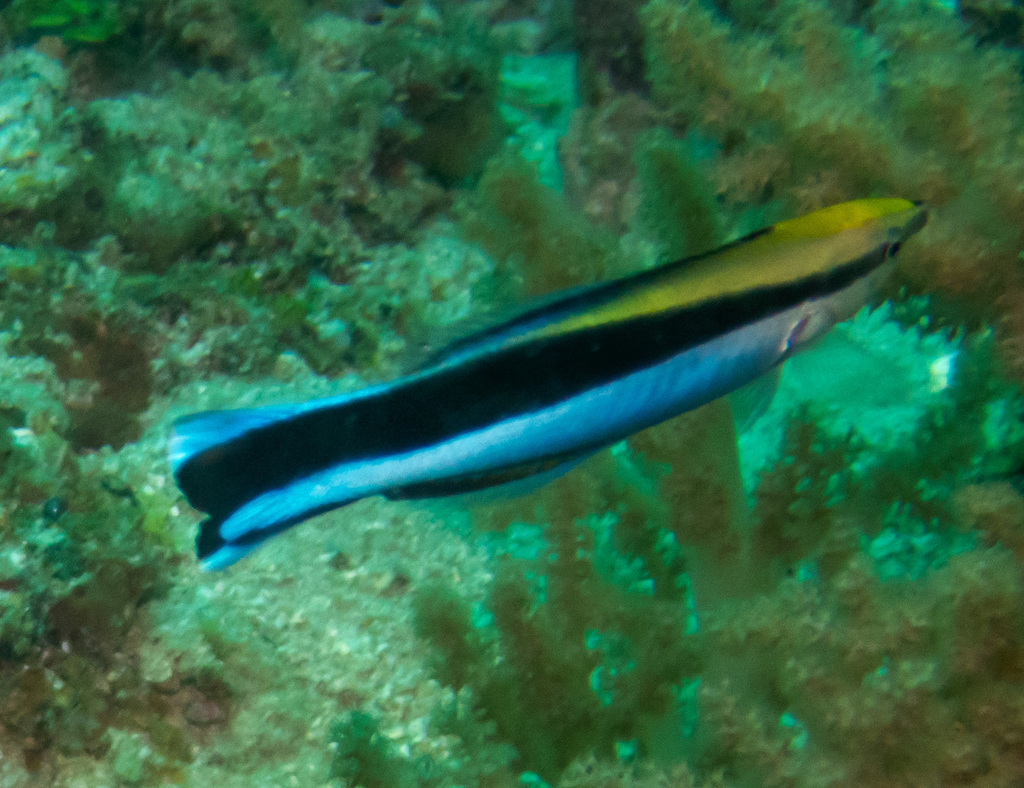
Indian Ocean and Red Sea fish tend to have narrower stripes and rounder tail markings, while western Pacific fish often have wider stripes; the two groups overlap near Papua New Guinea. Where parasites are scarce, cleaners inspect for longer and nip their visitors more. Near Japan, cold winters cause seasonal population crashes.
Meet it respectfully
Hover outside the cleaning station and keep your fins off the coral. Do not swim through active cleaning, and never touch, chase or crowd the cleaners or their visitors. Avoid long bright lights or flash. If the cleaners or their visitors leave because of you, you are too close.
Fun fact
Tap the bulb to light it up.
One cleaner at Lizard Island, Australia, was found to inspect about 2,300 fish and eat more than 1,200 parasites in a day.
The false cleanerfish looks almost the same, but its mouth sits under the snout and it may bite fins.
Young cleaners are black with a bright blue line along the back.
They live only up to about 4 years.
In laboratory tests, cleaner wrasse marked with a coloured spot tried to scrape it off, but only when they could see it in a mirror.
Source: Kohda et al., 2019, PLoS Biology, mark test in cleaner wrasse
The bluestreak cleaner wrasse has a double. Another small reef fish, the false cleanerfish, mimics its looks.
Source: Bray, 2017, Fishes of Australia (Museums Victoria), Common cleanerfish
Bluestreak cleaner wrasse in the Ocean Atlas
Places we have researched where this animal is recorded. It is never guaranteed, and some places are for watching from the boat only.
Travel with usComing soonTrusted referralExploringOn pause, story onlyEthics pass
Country colour: pink where we travel, blue where we are exploring or refer, grey for story only.
 American Samoa
 Australia
 Chagos (British Indian Ocean Territory)
 China
China Christmas Island
 Cocos (Keeling) Islands
 Comoros
 Cook Islands
 Egypt
Egypt Fiji
Fiji French Polynesia
 Guam
Guam Hong Kong
 India
India Indonesia
 Israel
 Japan
Japan Kenya
Kenya Kiribati
 Madagascar
 Malaysia
 Maldives
 Marshall Islands
 Mauritius
 Mayotte
 Micronesia (FSM)
 Mozambique
 Myanmar
 New Caledonia
 Norfolk Island
 Northern Mariana Islands
 Oman
Oman Palau
Palau Papua New Guinea
 Philippines
 Réunion
 Samoa
Samoa Saudi Arabia
 Seychelles
 Solomon Islands
 South Africa
 Sri Lanka
 Taiwan
 Tanzania
 Thailand
 Timor-Leste
 Tonga
Tonga United States
 Vanuatu
 Vietnam
 Wallis and Futuna
Sources for this page
- FishBase, 2008
- Australian Museum, Common cleanerfish
- Reef Life Survey, Labroides dimidiatus
- Shea and Liu, 2010, IUCN Red List
Facts checked 26 September 2026. Photos: Unsplash licence, or Creative Commons as shown on each photo.
Work in ocean travel?
We are always happy to hear from exceptional local operators, accommodation, conservation organisations and destination experts. If your work fits responsible, small-group ocean travel, we would love to learn more.
Partner with Ocean CallingGili Trawangan in 5 days
from CHF 790