
Gili and Lombok freediving and diving: what to expect underwater
Is it easy? Will I see something? Those are the two questions people ask me about freediving and diving in Gili and Lombok. The honest answers depend on which part of this water you are in, from gentle Gili reefs to the hard edge of Belongas Bay.
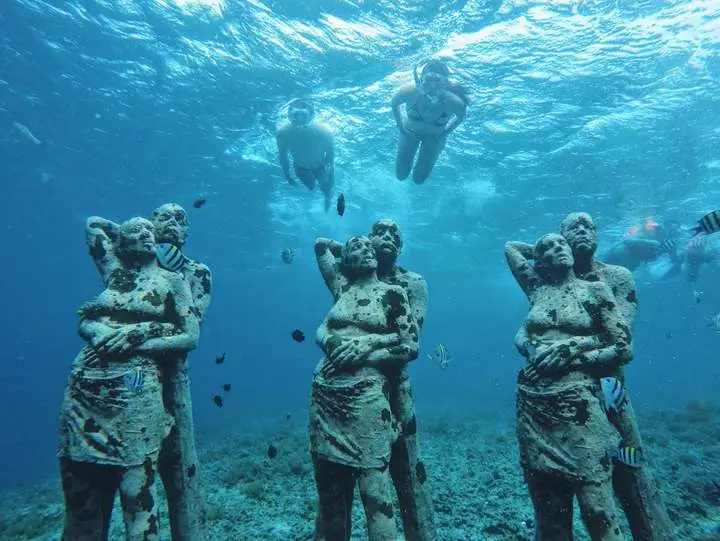
The Gili Islands are one of the places where we match guests with vetted local teams, so I hear these two questions a lot. Here is the short answer. The Gilis are mostly warm and forgiving, with real, daily current. Lombok's southwest is gentler still. And Belongas Bay in the south is a demanding site for experienced divers only. Knowing which of these you are heading into is the difference between a trip that feels easy and one that feels like more than you bargained for.
The Gili Islands, Trawangan, Meno and Air, sit just off Lombok's northwest coast. Lombok, the bigger island next door, has quieter reefs and lots of macro life in its southwest, and then, further along the south coast, a stretch where the ocean shows a much harder edge. Understanding that range is more useful than any "best of" list, because it tells you what to expect once you are in the water, not what a highlight reel suggests.
This is not a place that needs exaggerating. The real version is already good enough: a reef shark resting on sand, a turtle grazing without noticing you, a current that now and then reminds you who is in charge.
The water has a rhythm here
Around the Gilis, current is not an occasional surprise. It is part of a normal day. Local dive operators describe many of the sites as drift dives, and some well-known spots, such as Shark Point and Halik, as running stronger around the full and new moon, when tides are bigger. Others can swing from almost still to properly pushing with the tide. I have not found an independent study of currents at individual Gili sites, so take these as operator descriptions. None of this makes the diving unsafe on its own. It does mean that site choice, timing and a guide who knows that day's conditions matter more here than in many places.
Freediving follows the same pattern, with less margin for error. Operators on Gili Trawangan usually describe warm water and good visibility, and also currents that can pick up quickly when the tide turns. That is why freediving here works best with an instructor who knows the local timing, not just the general season, and why a buoy, a line and a buddy are not optional.
A few sites have personalities of their own. Shark Point, on the northwest side of Trawangan, is described by operators as a good place to look for reef sharks and turtles. Halik, on the north side, has small overhangs where juvenile reef sharks are often reported. Other sites lean towards macro life: sand gullies, pinnacles and seagrass patches where an octopus, a frogfish or a pufferfish is more likely than a big animal in open water. Knowing which mood you are choosing on a given day is most of what a good local guide is for.
Why the Gilis are such an easy place to fall for
Part of why people love the Gilis is how little effort a good dive or freediving session takes. Shallow reef slopes are often a short swim or a short boat ride away, so your energy goes into the water, not into getting there. The water stays warm through the year, though conditions change with season and wind, so ask locally about the weeks you plan to visit.
That easy access is why the Gilis work so well for a first proper freediving course or a relaxed week of scuba. You do not need adrenaline to enjoy them. They reward people who simply want unhurried time in the water, which is most of what a good trip is about.
What marine life can you see around Gili and Lombok?
Turtles are the animal most people come for, and with good reason. A 2025 study from the University of Mataram surveyed dive sites around all three Gili islands in September and October 2024. It recorded both green and hawksbill turtles, mostly at 9 to 16 metres, with more females than males and different species at different sites. They are seen often, but never on schedule. For the fuller picture on watching them well, read our piece on seeing sea turtles responsibly in the Gilis.
Beyond turtles, divers often report reef sharks resting on sand or in small overhangs by day, eagle rays passing through the channels, cuttlefish, octopus, nudibranchs and pufferfish. Manta rays are reported now and then, but they are a bonus, never something to plan a trip around.
Gili Matra: the protection behind the abundance
All three islands sit inside the Gili Matra Marine Tourism Park (Taman Wisata Perairan). According to Mongabay Indonesia, it was designated a marine conservation area by Indonesia's Minister of Marine Affairs and Fisheries in 2009. The area includes coral reefs, seagrass and, on Meno and Trawangan, some mangroves.
The same reporting, from 2016, described more than 3,000 tourists a day visiting the islands, with pressure from building, waste and mass tourism. An Indonesian study also flagged mangroves being turned into tourism buildings, especially on Gili Trawangan. So the abundance here is not a given. It depends on zoning, on the work of local groups, and on visitors who do not add to the pressure. We look at the local projects in our guide to Gili conservation projects.
For a visitor, the ethics are simple and concrete. Choose operators who do not promise sightings, who change plans around the current instead of forcing a dive, and who choose watching over chasing every time. No touching, no cornering an animal for a better photo, no herding a turtle towards a group. Standing on coral in the shallows does real damage too, so float, and keep fins high and slow.
Lombok asks a different question
Lombok tends to live in the Gilis' shadow, and that undersells it. The island has coral gardens, drop-offs and plenty of macro life, and because fewer people dive here than on Trawangan, the pace on the boat and underwater often feels calmer. In the southwest, around Sekotong and its small islands, conditions are generally gentler again: softer slopes, sand, an easier rhythm. It suits travellers who want healthy reefs without every dive being about managing current.
The boats for these crossings are usually small and open, so spray is part of the day. A roll-top dry bag keeps a phone, a towel and a warm layer dry between sites, and a long-sleeved rash guard helps with the sun on long surface intervals, so you need less sunscreen in the water.
Belongas Bay is a different kind of ocean
Then there is Belongas Bay, on Lombok's south coast, and it deserves an honest description, not the same easy language. Its best-known site, an offshore pinnacle called The Magnet, is commonly described as rising from around 80 metres to near the surface. Operators and dive guides describe strong currents that can whip around the pinnacle, often a negative entry, and days when the site simply cannot be dived.
What draws people is real: seasonal schooling hammerhead sharks, along with grey and whitetip reef sharks and big schools of trevally and barracuda. Sources do not agree on the season. Operators give windows from late June to late October, general guides from June to November.
Every source I found says the same thing about who it is for: advanced or very experienced divers only. Belongas is not a bigger, better Gili reef dive. It is a different environment, and treating it as a casual add-on would be unfair to anyone not ready for it.
Who this stretch of water suits
The Gilis suit first-time freedivers, beginner and intermediate divers, couples or solo travellers who want a relaxed island base, and anyone who wants comfortable water time without thinking hard about conditions. Lombok's quieter southwest suits people who want the same calm with more space and fewer boats. Belongas belongs to advanced divers, and no version of this trip requires you to "graduate" to it one day.
None of this is about picking the "best" spot. It is about matching the water to where you are as a diver or freediver. If you are unsure where you fit, the local experts we work with are usually the fastest way to an honest, current-conditions answer. If this made you curious about these islands, you can look at our Gili Trawangan referral trip, where we match you with a vetted local team and you book with them directly.
Questions people ask
Is Gili or Lombok better for beginners?
For most people starting out, the Gilis are the easier entry point, with warm water and many sites suited to a wide range of levels. Lombok's southwest is also generally gentle, but parts of the south coast, including Belongas Bay, are for experienced divers only.
How strong are the currents around the Gili Islands?
It depends on the site and the tide. Operators describe many Gili dives as drifts, with some sites running stronger around the full and new moon. A local guide who knows that day's conditions matters more than any general rule.
Which turtles live around the Gilis?
A 2024 survey around all three islands recorded both green and hawksbill turtles, mostly at 9 to 16 metres, with more females than males. Sightings are common but never guaranteed.
Is Belongas Bay suitable for beginners?
No. The Magnet is a pinnacle rising from around 80 metres with strong currents and often negative entries. Operators describe it as an advanced dive for very experienced divers only.
When are hammerheads seen at Belongas?
Sources differ. Some operators report schooling hammerheads from late June to late October, while general guides give June to November. Sightings are never guaranteed, and some days the site cannot be dived at all.
Are the Gili reefs protected?
Yes. The three islands are part of the Gili Matra Marine Tourism Park, designated a marine conservation area by Indonesia's fisheries ministry in 2009, according to Mongabay Indonesia. Tourism pressure is still a real concern.
Wildlife encounters are never guaranteed and never forced. Ocean Calling works only with vetted, ethical local operators, and every animal is free to approach, or not, entirely on its own terms.
Sources & further reading
- Mongabay Indonesia, 2016. Liputan Gili Matra: Ancaman pariwisata massal terhadap lingkungan Gili Matra (Bagian 1).
- Mongabay Indonesia, 2016. Liputan Gili Matra: Ancaman pariwisata massal terhadap lingkungan Gili Matra (Bagian 2).
- University of Mataram, 2025. Sea turtle survey in the Gili Matra Marine Tourism Park (Gili Trawangan, Meno and Air), Jurnal Sains Teknologi & Lingkungan.
- Study of the Gili Matra Marine Tourism Park coastal ecosystems and mangrove conversion (Universitas Khairun journal).
- Dive Planner Pro. The Magnet, Belongas Bay, Lombok.
- Two Fish Divers. Exploring tech diving in south Lombok.
- Bluewater Dive Travel. Scuba diving in Lombok.
Further reading on Ocean Calling: Gili Islands diving compared · Gili turtles, responsibly · More from the journal · See the retreats · Ocean Atlas
Scuba diving certification on Gili Trawangan: turtles, calm days and no cars
Scuba certification · Gili Trawangan, Lombok, Indonesia
Turquoise water, no cars, no stress. This story is about the Gili Islands, where we run a trip.
Explore in the Ocean Atlas
Places in this article