
Moalboal Reef Rules Every Visitor Should Know
One short video of a tourist pushing a turtle was watched millions of times. Moalboal did not write new rules. It reminded everyone of the ones it already had, with a fine attached.
What does a town do when a clip like that goes viral? In Moalboal, the answer was to point at the law. So what are the Moalboal reef conservation rules? A municipal ordinance from September 2021 regulates snorkelling and island hopping, sets up an environmental user's fee, and prohibits touching any marine life. In 2024 the mayor warned that violators would be fined 2,500 pesos.
Moalboal beyond the sardines
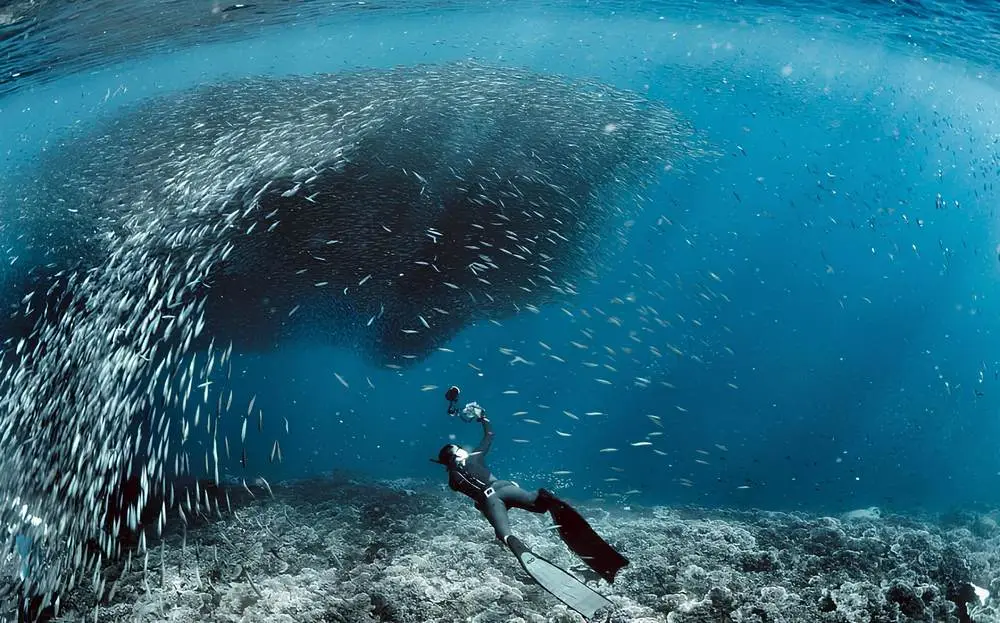
Moalboal, on Cebu's west coast in the Philippines, is famous for something most visitors have seen in a video before they book a flight: a huge school of sardines close enough to shore that you can snorkel above it without a tank. Turtles feed in the shallows nearby, and Pescador Island, a short boat ride away, is one of the best-known reef sites in the area.
The rules about how visitors behave around all this are far less visible than the sardines. But they exist, they are written down, and local officials have made clear they mean to enforce them. Here is what we could verify about them, and what we could not.
What happened in March 2024
On 9 March 2024, a TikTok video showed a tourist touching and pushing a sea turtle at Panagsama Beach. SunStar Cebu reported that by the evening of 15 March it had about 3.4 million views (another SunStar report gives about three million). The municipal government said it was trying to identify the woman, and Mayor Inocentes Cabaron publicly reminded visitors of the town's rules on contact with marine life.
The video was not where the rules came from. It was a clear, dated example of how quickly a reef's protection can be tested, and how directly local officials answered. The mayor also said that tourists are supposed to receive a proper briefing on conduct before any water activity. That puts real responsibility on guides and operators, not only on visitors.
The ordinance behind the rules
According to SunStar Cebu, the legal basis is a municipal ordinance passed on 27 September 2021, under former mayor Paz Rozgoni. Its title describes it as institutionalising and regulating snorkelling and island hopping within Pescador Island, marine protected areas and other coastal areas in the municipal waters, and establishing an environmental user's fee system. Section 20 of the ordinance prohibits touching any marine life, and the mayor said violators would be fined 2,500 pesos.
Some travel guides call it Municipal Ordinance 165 and say it lists thirteen prohibited acts, including snorkelling without a fee receipt, fishing or taking marine resources, wearing non-aquatic footwear while snorkelling and anchoring on coral. We could not read the ordinance text itself, so we cannot confirm the number, the full list or the current fee amounts. Check the current rule with the Moalboal municipal tourism office or your accredited operator before you travel.
What is the environmental user's fee for?
The fee is not a side detail. The ordinance's own title links snorkelling and island hopping to an environmental user's fee system. In other words, the small payment before you get in the water is tied to the care of the reefs most visitors came to see. Reported amounts differ between sources and may have changed, so we do not quote a figure here. Pay it, keep the receipt, and if a price seems strange, ask the tourism office rather than a stranger on the beach.
Why trained guides matter here
Moalboal has a long history of training the people who take visitors into the water. In 2013, the coral reef programme Green Fins reported that a local ordinance required dive guides to attend a seminar before they could be licensed to guide in Moalboal's municipal waters, and described the first seminar, held in December 2013. That report is old, and we could not confirm how guide licensing works today. The idea behind it is still sound: a trained guide is the person who tells a first-time snorkeller "do not touch, do not stand on the reef" before they get in.
Some recent travel reports describe a new push by the tourism office to promote accredited snorkelling guides trained by the Department of Tourism. We could not verify the details from an official source, so treat them as unconfirmed and ask locally.
What this looks like underwater
The sardine school moves as one reactive mass, changing shape in an instant when a predator, a diver's fin kick or a change of light comes near. Feeling part of it does not need touching it, chasing it or swimming into the middle to split it for a photo. Those are exactly the things the spirit of the rules is meant to prevent. We write more about this in Moalboal's sardines and why slowing down helps.
The same logic applies to the turtles feeding in the shallows. Watching one from a few metres away is a completely different experience, for you and for the turtle, from what happened in the March 2024 video. Footwear matters too. The reported ban on non-aquatic footwear exists because standing on a reef, even briefly and by accident, is one of the most common ways visitors damage coral. A good flat body position does more for the reef than almost anything else a beginner can control, and a well-fitting mask and snorkel that does not leak means fewer reasons to stand up in the shallows.
What the town is really saying
Reading the local reporting, the message from Moalboal is not "stay away". It is closer to "follow the rules everyone agreed to in 2021, pay the fee, and go with a guide who briefs you properly". The sardines and the reef are the town's main tourism treasure, and the rules exist to protect the thing people travel to see.
That is a different framing from "ethical tourism" as an abstract virtue. It is a town protecting its own living by protecting the reef that living depends on. That may be a stronger reason for rules to last than good intentions alone.
Practical guidance for your own visit
Before booking a snorkelling trip, ask whether your guide is accredited and whether the operator gives a briefing. Expect to pay the environmental user's fee, and keep the receipt. Wear proper water shoes or none, never street shoes, near the reef. Treat "do not touch the marine life" as a literal instruction, because it is written into an ordinance with a fine attached. A long-sleeve rash guard helps with long sessions over the sardines without putting on sunscreen every hour. Wildlife encounters are unpredictable. Snorkelling with sardines and turtles should always follow local regulations and experienced professional guidance.
Moalboal's rules are one example of a wider pattern. The details differ by place, but a protected area is only as good as the patrol, the guide and the visitor who follows the rule. Our comparison of how three Gili Islands protect their reefs looks at the same pattern from another angle. If this made you curious about Moalboal, you can explore our Moalboal trip through Ocean Match, where we match you with a vetted local team and you book with them directly.
Questions people ask
Is it illegal to touch turtles in Moalboal?
Yes. Section 20 of the 2021 municipal ordinance on snorkelling and island hopping prohibits touching any marine life, and the mayor said in 2024 that violators would be fined 2,500 pesos.
When was the Moalboal ordinance passed?
According to SunStar Cebu, on 27 September 2021, under former mayor Paz Rozgoni. It regulates snorkelling and island hopping around Pescador Island, marine protected areas and other coastal areas.
Do I have to pay a fee to snorkel?
The ordinance sets up an environmental user's fee system. Reported amounts differ between sources, so check the current fee with the tourism office or your operator, and keep your receipt.
Do I need a guide?
Local rules have long tied guiding to training, and some sources say snorkelling without an accredited guide is prohibited, but we could not confirm the current requirement. Going with a trained, accredited guide is the safest and most respectful choice either way.
What happened with the viral turtle video?
In March 2024 a TikTok video showed a tourist touching and pushing a turtle at Panagsama Beach. It was viewed millions of times, and the town publicly reminded visitors of its existing rules.
Wildlife encounters are never guaranteed and never forced. Ocean Calling works only with vetted, ethical local operators, and every animal is free to approach, or not, entirely on its own terms.
Sources & further reading
- SunStar Cebu, 15 March 2024. Moalboal tourists warned vs. violations.
- SunStar Cebu, 2024. Moalboal LGU reminds tourists not to touch marine life.
- Green Fins, 2013. December 2013: responsible dive guide accreditation seminar, Moalboal, Philippines.
- Suroy.ph. Shore-entry snorkelling in Cebu and Bohol (secondary summary of the Moalboal ordinance; fees unreconciled).
Further reading on Ocean Calling: More from the journal · Wildlife & the law · See the retreats · Ocean Atlas
Moalboal scuba certification and freediving trip: sardine run, sea turtles and Alegria statues
Scuba or freediving certification · Moalboal, Cebu, Philippines
Marine life close to shore, at a calm pace. This story is about the Philippines, where we run trips in Moalboal and Coron.
Explore in the Ocean Atlas
Places in this article