
Amazon river dolphin
Inia geoffrensis
A pink back and a long snout rising from a brown river. Dolphins here follow the water, and no sighting is ever a promise.
Endangered (IUCN, assessed 2018) means it faces a very high risk of extinction in the wild, because numbers are falling mainly from deaths in fisheries and from habitat change.
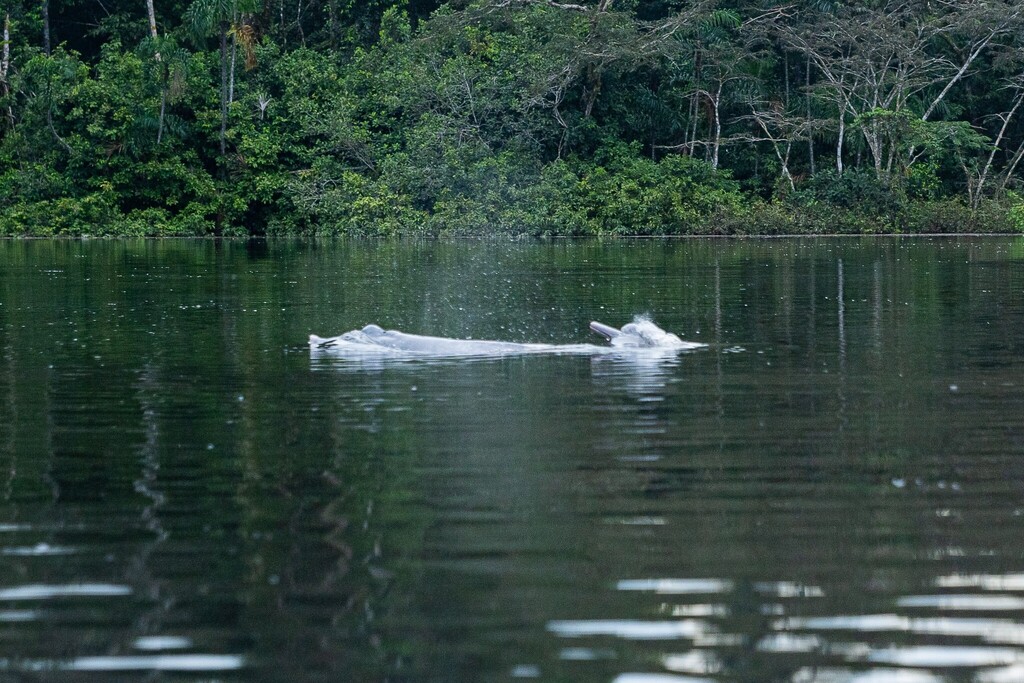
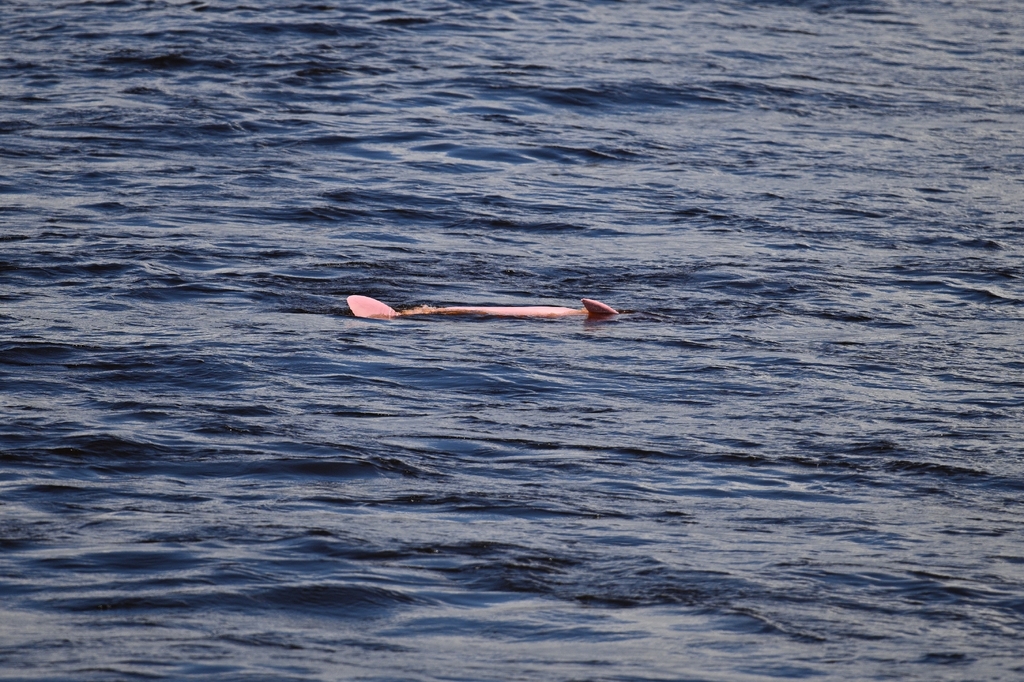
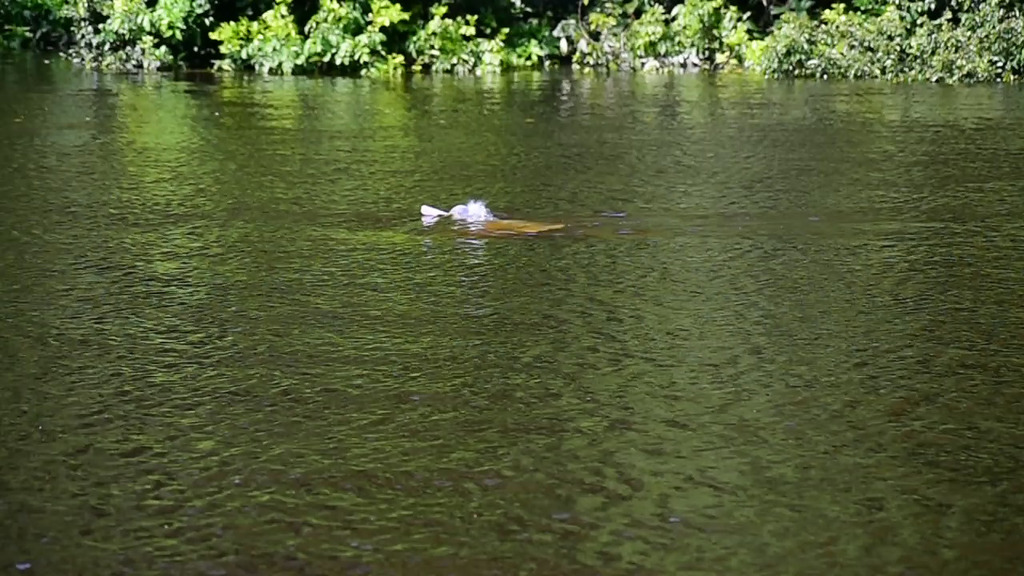
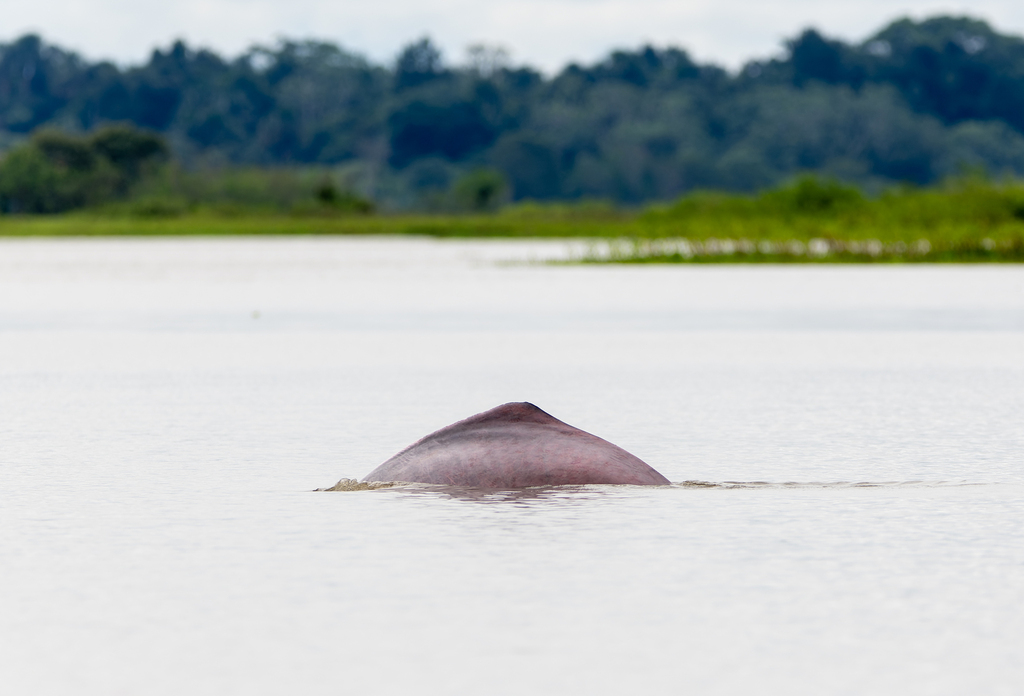
Photos show the species, not always the places on this page.
Length
Adult males about 2.2 to 2.55 m (7.2 to 8.4 ft) and females about 1.8 to 2.2 m (6 to 7.2 ft); the largest recorded males are about 2.8 m (9.2 ft)
Weight
Males about 180 to 185 kg (400 to 410 lb) and females about 100 to 150 kg (220 to 330 lb)
Next to a person
A male is about one and a third to one and a half times an adult's height, and as heavy as two to three adults
What it eats
At least 53 species of fish from 19 families, plus river turtles, freshwater crabs and other small animals. It eats about 5.5 percent of its body weight each day. Its front teeth catch prey and its back teeth crush it.
Around people
Calm, give space
How it lives
The largest river dolphin. Males are bigger and pinker than females. It lives alone or in small groups of about three or four, is mostly active around dawn and dusk, and finds its way in muddy water by echolocation. Births are concentrated in May and June after a pregnancy of about eleven months. Lifespan in the wild is not documented; some captive animals lived 10 to 30 years, and one lived over 46.
Where it goes
It moves with the river. It uses main channels, tributaries, lakes and, in the high-water season, the flooded forest, and it shows strong attachment to particular areas.
We only draw a journey on the map when scientists have tracked it or clearly documented it. For this animal we have not found one yet.
Populations
Endangered (IUCN, assessed 2018), with a declining population. In the Mamirauá Reserve in Brazil, counts fell by about 6.7 percent a year, roughly halving every ten years since 2000 (surveys 1994 to 2017). A later modelling study estimated a decline of about 5.5 percent a year and a 95 percent loss in 50 years if nothing changes. Population estimates elsewhere vary widely. The main threats are deliberate killing for fishing bait, entanglement in nets, mercury pollution and dams. In September 2023, high water temperatures in Lake Tefe were linked to the deaths of 154 dolphins. Three subspecies are recognised. It is listed on CITES and CMS Appendix II.
Meet it respectfully
Watch quietly from a slow boat, and let the dolphin choose how close to come. Never chase, touch, feed or bait it, and keep clear of fishing nets. Give extra room to mothers and calves. Rules differ by place. Follow local rules and your guide.
Fun fact
Tap the bulb to light it up.
It is the largest of the river dolphins, and males are pinker than females.
It eats at least 53 species of fish, as well as river turtles and crabs.
In muddy water it finds its way and its food by echolocation.
Amazon river dolphin in the Ocean Atlas
Places we have researched where this animal is recorded. It is never guaranteed, and some places are for watching from the boat only.
Travel with usComing soonTrusted referralExploringOn pause, story onlyEthics pass
Country colour: pink where we travel, blue where we are exploring or refer, grey for story only.
 Brazil
 Colombia
 Ecuador
 Peru
Peru Venezuela
Sources for this page
- Wikipedia, Amazon river dolphin, 2026
- SeaLifeBase, 2026
- World Land Trust, 2026
- da Silva et al., 2018, PLoS ONE
- Martin and da Silva, 2021, Oryx
- GBIF (IUCN Red List category), 2026
Facts checked 5 October 2026. Photos: Unsplash licence, or Creative Commons as shown on each photo.
Work in ocean travel?
We are always happy to hear from exceptional local operators, accommodation, conservation organisations and destination experts. If your work fits responsible, small-group ocean travel, we would love to learn more.
Partner with Ocean Calling7-day freediving course in Coron, Palawan
CHF 1,480