
Atlantic humpback dolphin
Sousa teuszii
A shy grey dolphin in a tide-swept mangrove estuary, among the rarest on the continent. No sighting is ever a promise.
Critically Endangered (IUCN, 2017) means it faces an extremely high risk of extinction in the wild, with fewer than about 3,000 animals left.
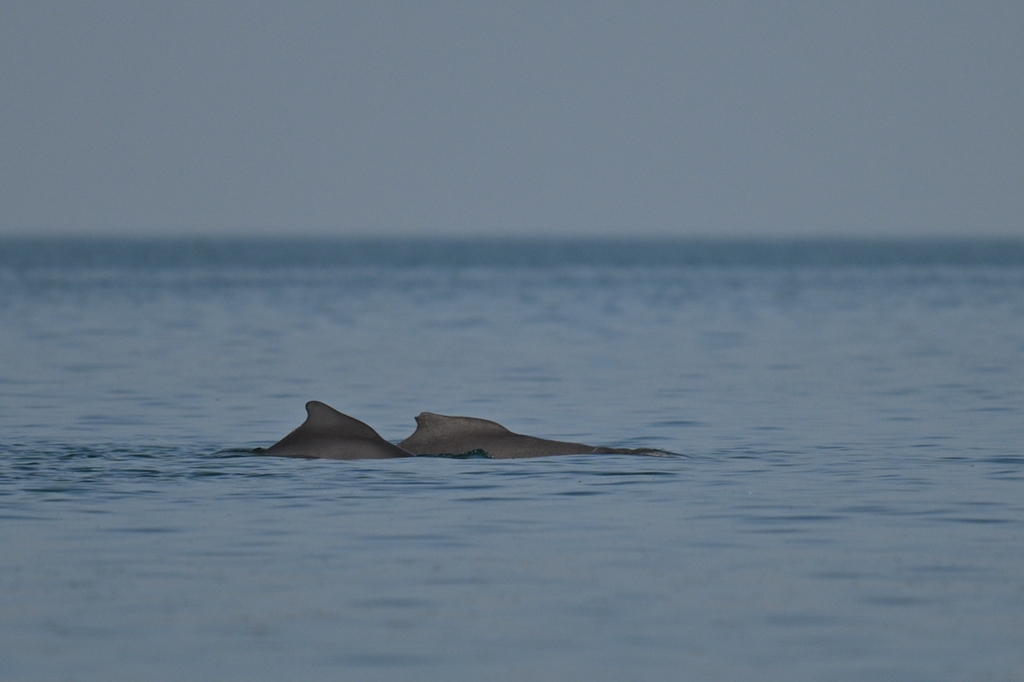
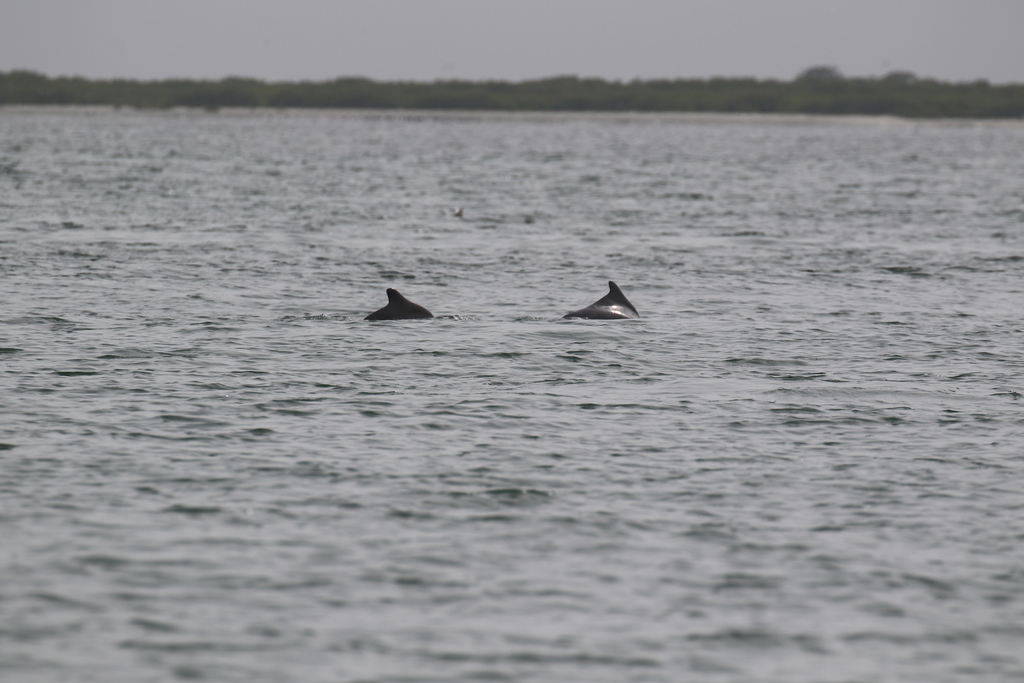
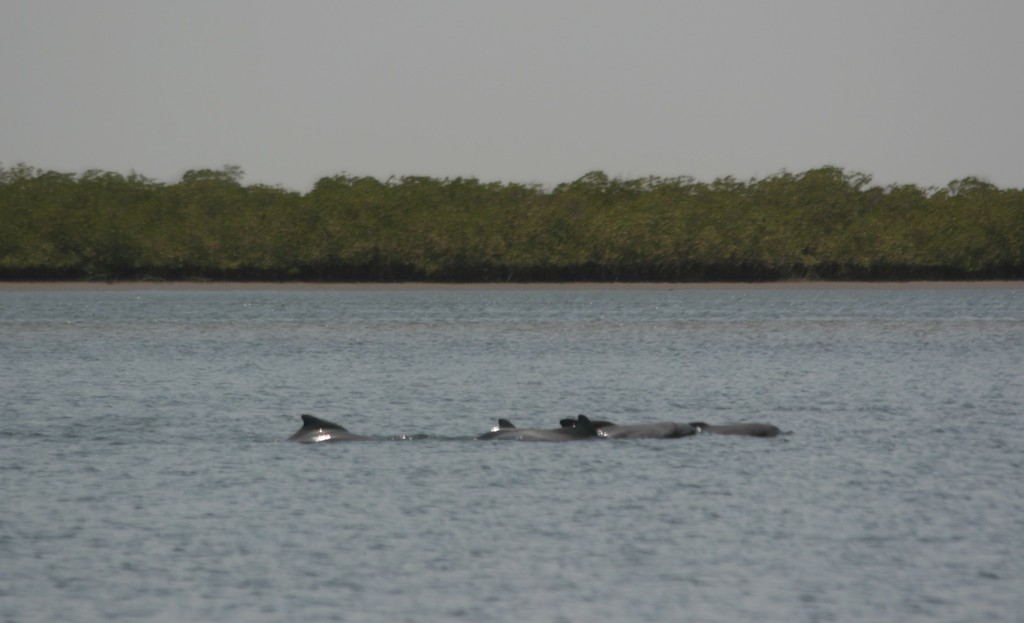
Photos show the species, not always the places on this page.
Length
Up to about 2.8 m (9.2 ft)
Weight
Up to about 280 kg (620 lb); newborns about 14 kg (31 lb)
Next to a person
About one and a half times as long as an adult is tall, and as heavy as three or four adults
What it eats
Confirmed prey includes grunts, mullet, snappers, bonito and croakers. No study has targeted its diet, so it probably eats a wider mix of bottom and open-water fish that varies from place to place.
Around people
Rare, give space
How it lives
Life span and breeding are poorly studied. Groups are small: about 65% of sightings involve 10 animals or fewer, and groups of up to 45 have been reported. Dolphins hunt both together and alone, and swim at about 1 to 7 km/h along the coast.
Where it goes
Atlantic humpback dolphins stay in shallow coastal water, usually less than about 20 to 30 m deep, in estuaries, mangroves and tide-swept bays. They occur only along the western African coast. Most sightings are of 10 animals or fewer, and groups of up to 45 have been reported.
We only draw a journey on the map when scientists have tracked it or clearly documented it. For this animal we have not found one yet.
Populations
Critically Endangered (IUCN, 2017), raised from Vulnerable. Fewer than about 3,000 animals remain, roughly half of them breeding adults, and groups number from tens to low hundreds. Photo-identification found at least 103 dolphins in the Saloum Delta in Senegal, 47 in the Rio Nunez area of Guinea and 10 along Angola's coast. The range runs from Dakhla Bay (Morocco) to Angola. The dolphin is confirmed in 13 to 14 countries, and in about six more its presence is unconfirmed. Sources count the range states slightly differently. The US listed it as Endangered in March 2024.
Meet it respectfully
This dolphin is very rare and wary of boats, so give it a wide berth. Keep the boat slow and steady, never chase or circle it, and never try to touch or feed it. Do not enter the water to approach it. Fishing nets are the main threat, so choose trips that follow local rules and fish responsibly. I did not read a local viewing rule for this species, so follow your guide.
Fun fact
Tap the bulb to light it up.
The name comes from a raised hump of tissue partway along the back.
Fewer than about 3,000 individuals are thought to remain, and it is listed as Critically Endangered.
It lives only in the shallow coastal waters of western Africa, from Morocco to Angola.
Atlantic humpback dolphin in the Ocean Atlas
Places we have researched where this animal is recorded. It is never guaranteed, and some places are for watching from the boat only.
Travel with usComing soonTrusted referralExploringOn pause, story onlyEthics pass
Country colour: pink where we travel, blue where we are exploring or refer, grey for story only.
 Benin
Benin Cameroon
 Gabon
Gabon Gambia
 Guinea
 Guinea-Bissau
 Mauritania
 Morocco
 Nigeria
 Republic of the Congo
 Senegal
 Togo
Togo Western Sahara
Sources for this page
- NOAA Fisheries, Atlantic humpback dolphin
- IUCN SSC Cetacean Specialist Group, Atlantic humpback dolphins
- Consortium for the Conservation of the Atlantic Humpback Dolphin
- Wikipedia, Atlantic humpback dolphin
Facts checked 5 October 2026. Photos: Unsplash licence, or Creative Commons as shown on each photo.
Work in ocean travel?
We are always happy to hear from exceptional local operators, accommodation, conservation organisations and destination experts. If your work fits responsible, small-group ocean travel, we would love to learn more.
Partner with Ocean CallingShop with Ocean Calling
Visit the Ocean Calling storefront on Amazon.
As an Amazon Associate I earn from qualifying purchases. You are not only choosing products that respect the ocean, you are also helping us keep going: paying our local partners fairly and keeping our retreats ethical, sustainable and honestly priced for you. 💗