
Bronze whaler (copper shark)
Carcharhinus brachyurus
Bronze whalers are powerful coastal migrants that can appear in huge numbers around seasonal prey like South Africa's sardine run, then disperse across thousands of kilometres of coastline.
Vulnerable (IUCN, 2020) means it is at high risk of extinction in the wild.
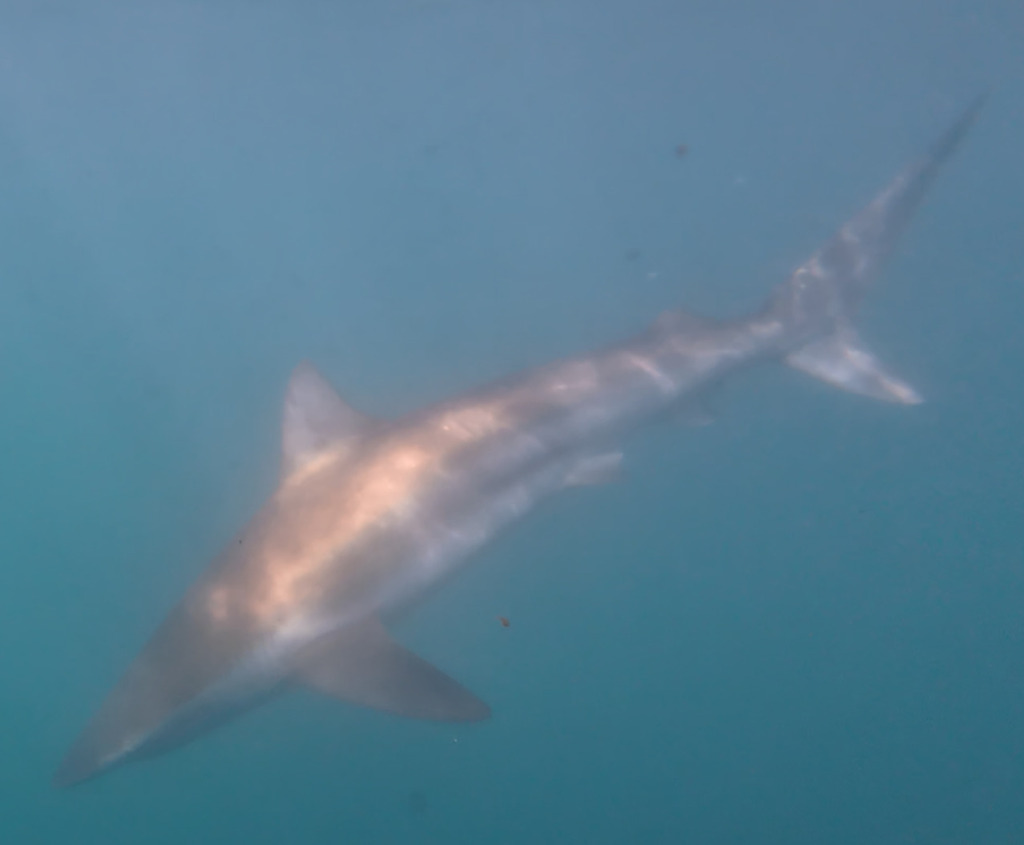
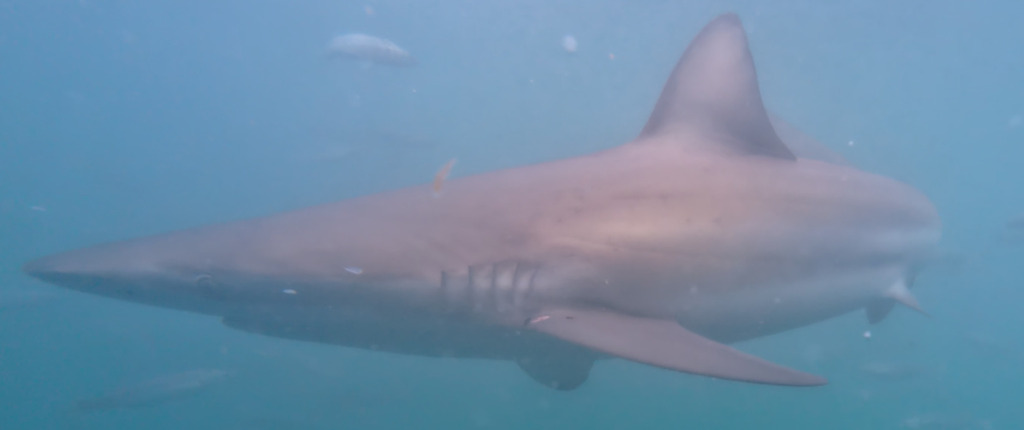
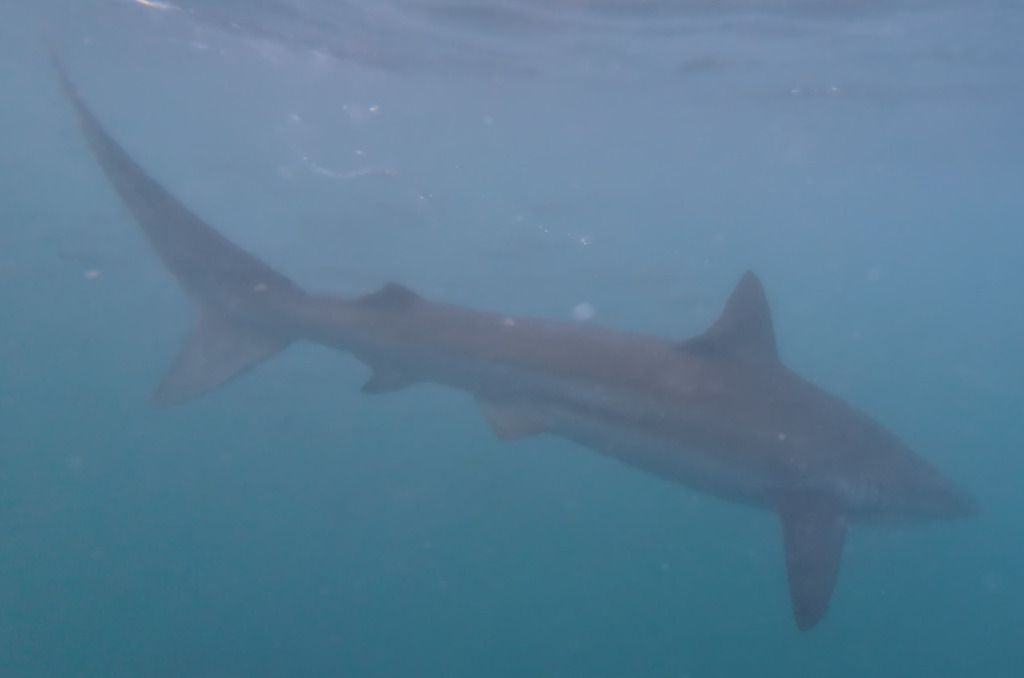
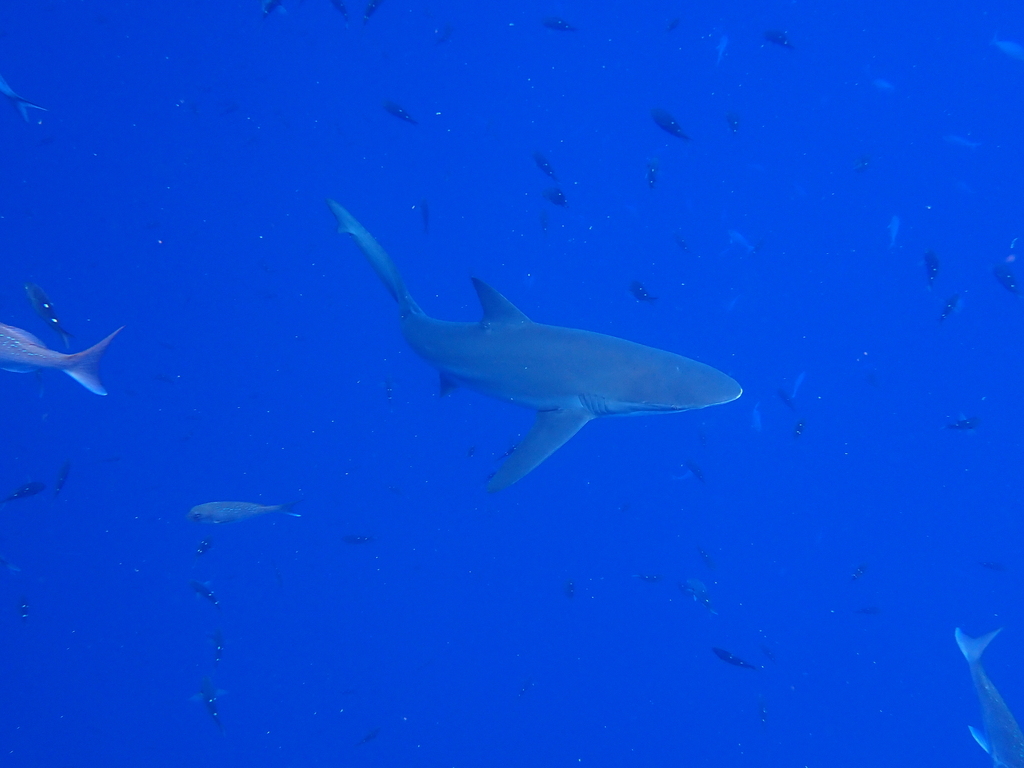
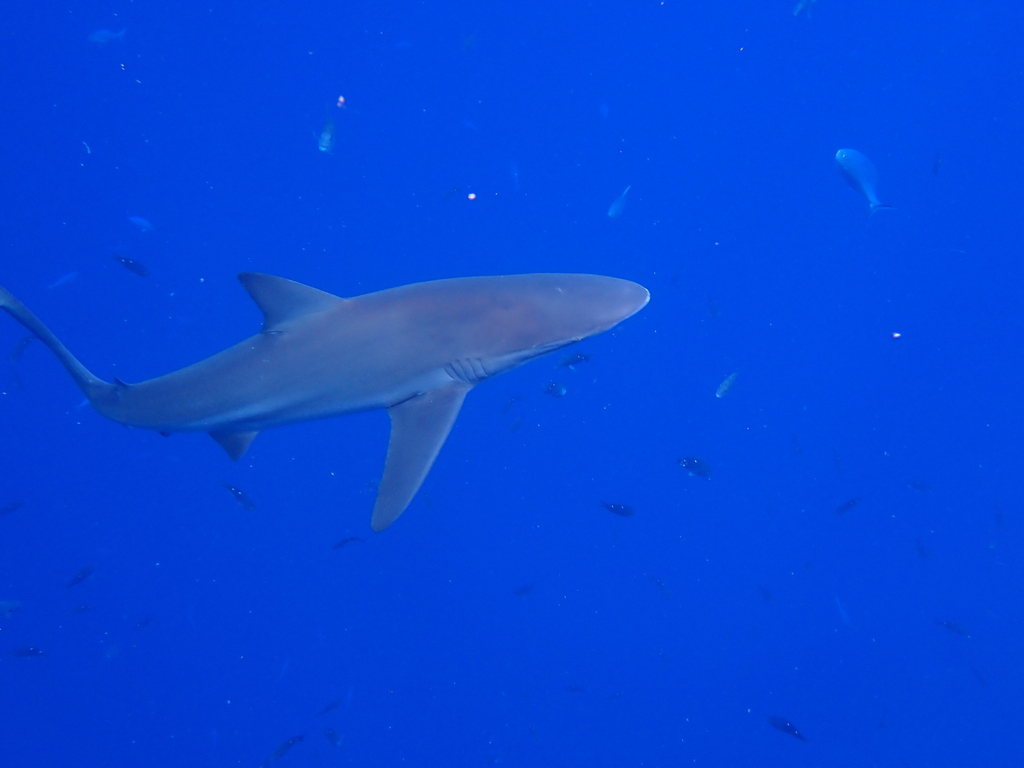
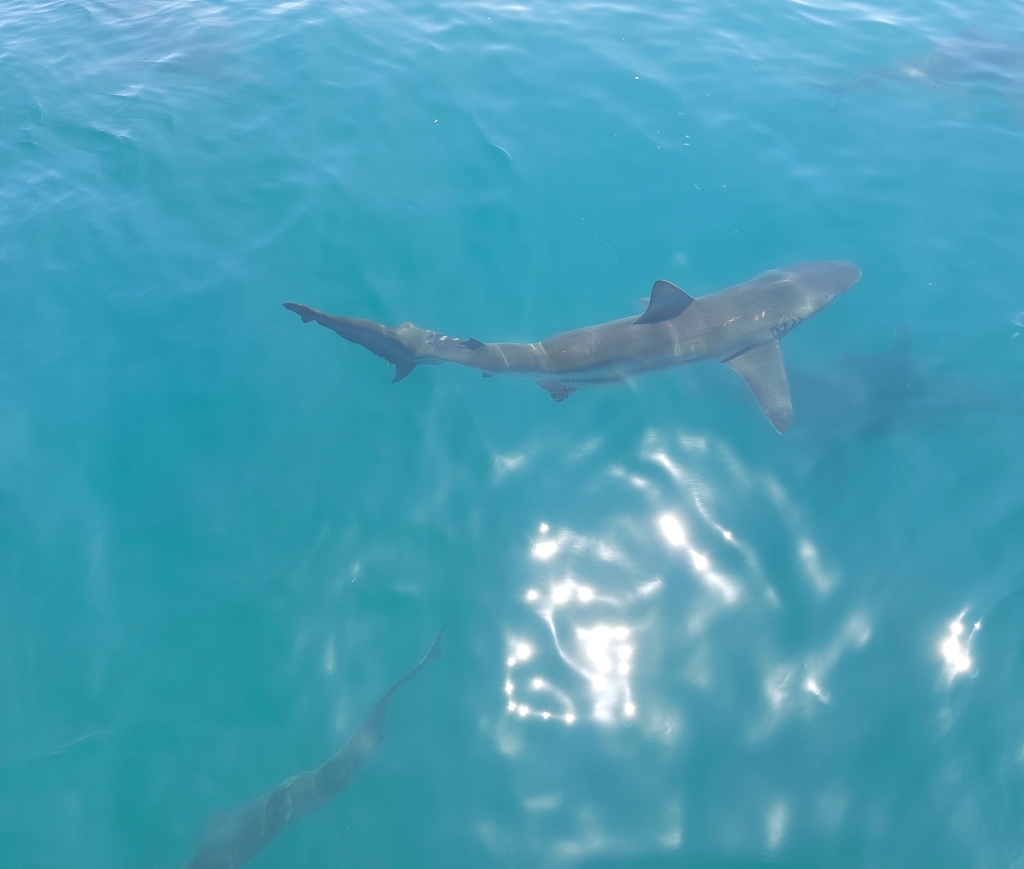
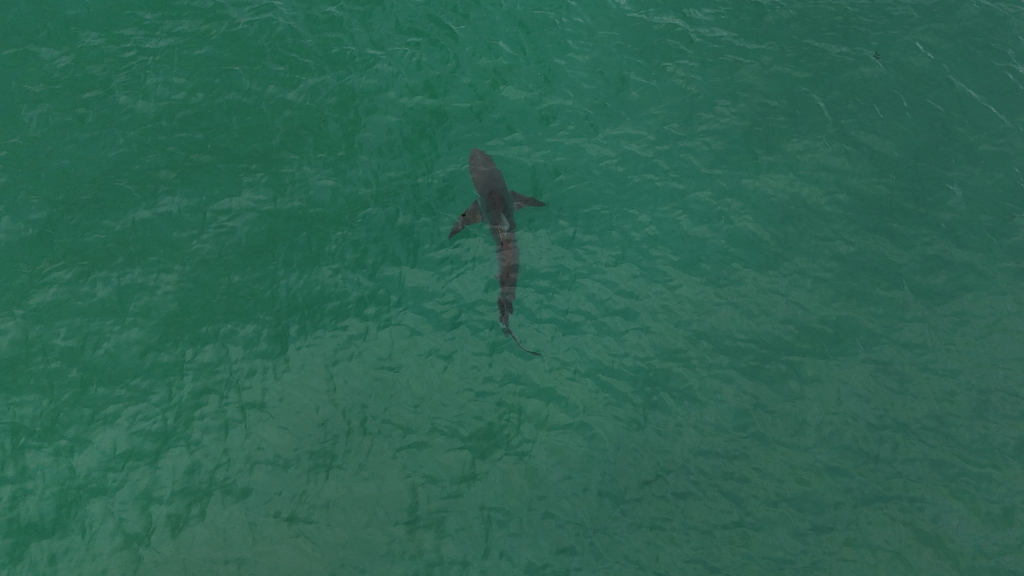
Photos show the species, not always the places on this page.
Length
Commonly about 2.1 to 3 m (6.9 to 9.8 ft); largest published about 3.25 m (10.7 ft)
Weight
Typical adult weight not reliably measured; heaviest published about 305 kg (672 lb)
Next to a person
About one-and-a-quarter to one-and-three-quarter times as long as a person
What it eats
Mainly schooling and bottom-living fish, such as sardines, mackerel, mullet and flatfish, plus squid, octopus, rays and smaller sharks. What it eats changes with region and season.
Around people
Potentially dangerous, respect
How it lives
The bronze whaler is an opportunistic coastal predator that follows seasonal food, eating sardines and other fish, squid, octopus, rays and smaller sharks. Many join South Africa's sardine run, but not all. Females breed every two years, giving birth to about 7 to 20 live pups after 12 months in shallow bays and estuaries.
Where it goes
In parts of its range the bronze whaler migrates with the seasons, following its food. Large numbers follow South Africa's sardine run, and seasonal gatherings along the coast reflect local prey and breeding.
We only draw a journey on the map when scientists have tracked it or clearly documented it. For this animal we have not found one yet.
Populations
Mainly a Southern Hemisphere coastal shark. Populations in Australia and New Zealand, southern Africa and Peru are genetically separate, while sharks within southern Africa and across Australia are well connected. Seasonal coastal gatherings, as in South Africa, follow local prey and breeding. Records from the Mediterranean and north-east Atlantic are few.
Meet it respectfully
Encounters are most likely around sardine runs and bait balls, where sharks are feeding hard. Give feeding sharks and bait balls wide space, stay in a group and never enter or cut through a bait ball. Never bait, feed or chase them, and do not carry bait or speared fish.
Fun fact
Tap the bulb to light it up.
Bronze whaler and copper shark are two names for the same species.
In South Africa they only become adults at about 20 to 22 years old.
Males have longer, more hooked upper teeth than females and young sharks.
Bronze whalers take their time growing up. In South Africa they only become adults at about 20-22 years old, and some have been aged at up to 30.
Source: Oceanographic Research Institute (SAAMBR), Fish Fact Sheet: Copper shark
Male bronze whalers have longer, more hooked upper teeth than females and young sharks do.
Source: Florida Museum of Natural History, Bronze Whaler Shark species profile
Bronze whaler (copper shark) in the Ocean Atlas
Places we have researched where this animal is recorded. It is never guaranteed, and some places are for watching from the boat only.
Travel with usComing soonTrusted referralExploringOn pause, story onlyEthics pass
Country colour: pink where we travel, blue where we are exploring or refer, grey for story only.
 Australia
 Brazil
 Chile
Chile France
 Japan
Japan Mexico
 Namibia
 New Zealand
 South Africa
 South Korea
 United States
Sources for this page
Facts checked 26 September 2026. Photos: Unsplash licence, or Creative Commons as shown on each photo.
Work in ocean travel?
We are always happy to hear from exceptional local operators, accommodation, conservation organisations and destination experts. If your work fits responsible, small-group ocean travel, we would love to learn more.
Partner with Ocean CallingNew: tiger sharks in Fuvahmulah, January or March 2027
from CHF 2,900