
Bulwer's petrel
Bulweria bulwerii
A small dark seabird that skims the open ocean and comes ashore at night. No sighting is a promise.
Least Concern (IUCN) means the species is not currently at high risk of extinction in the wild; the assessment year was not stated in the sources I read.
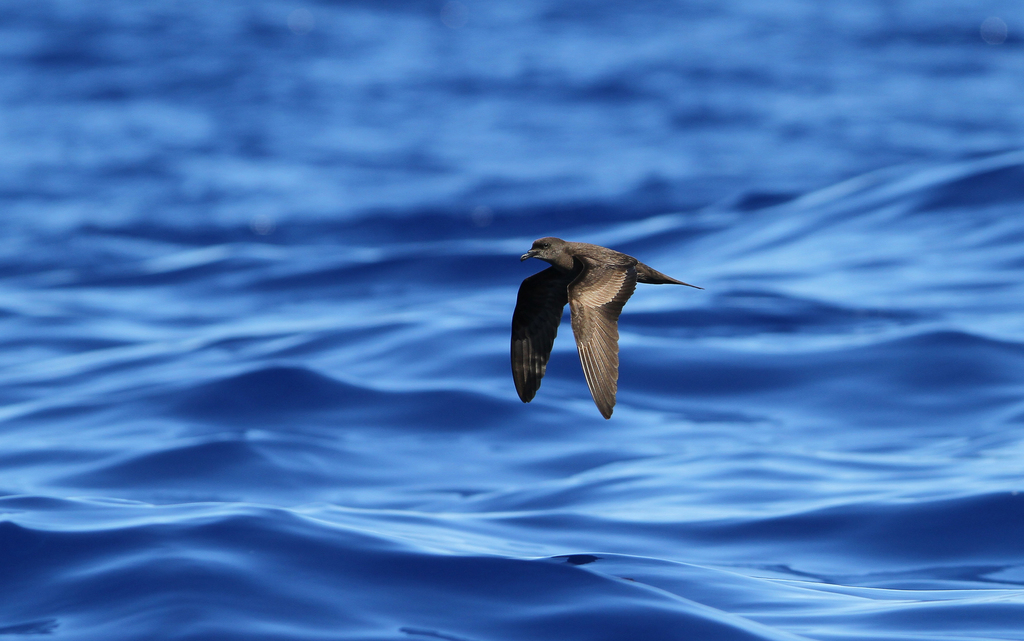
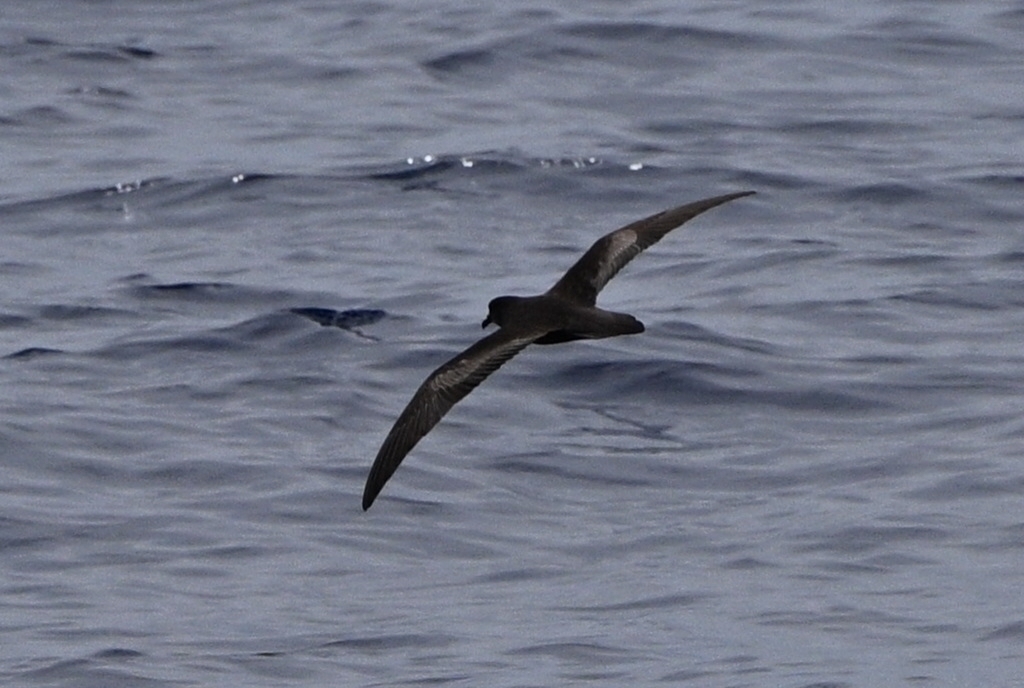
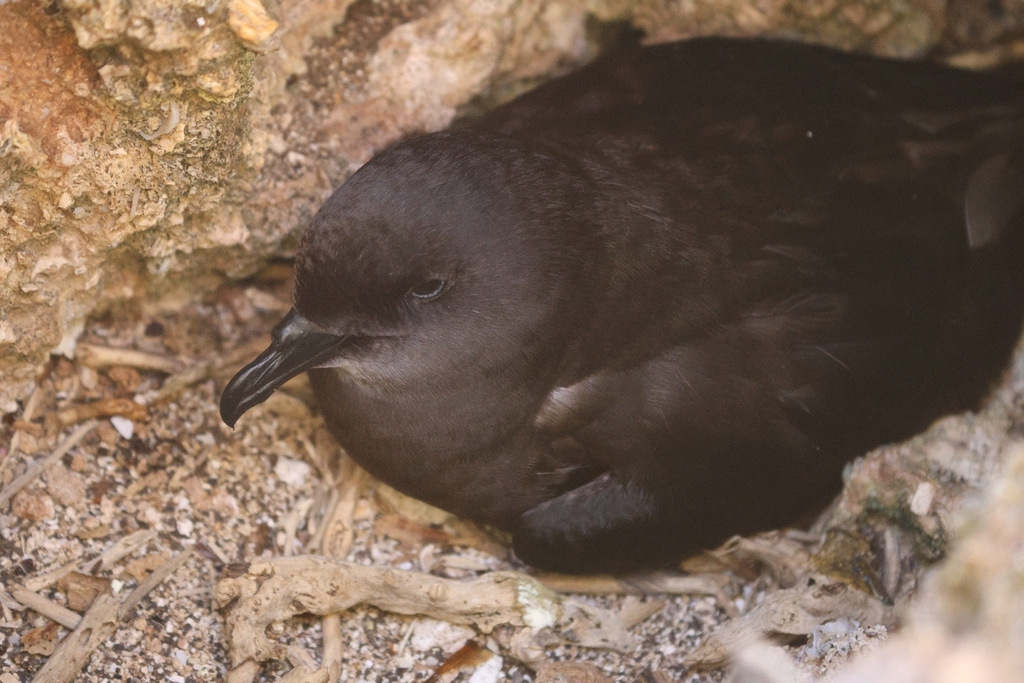
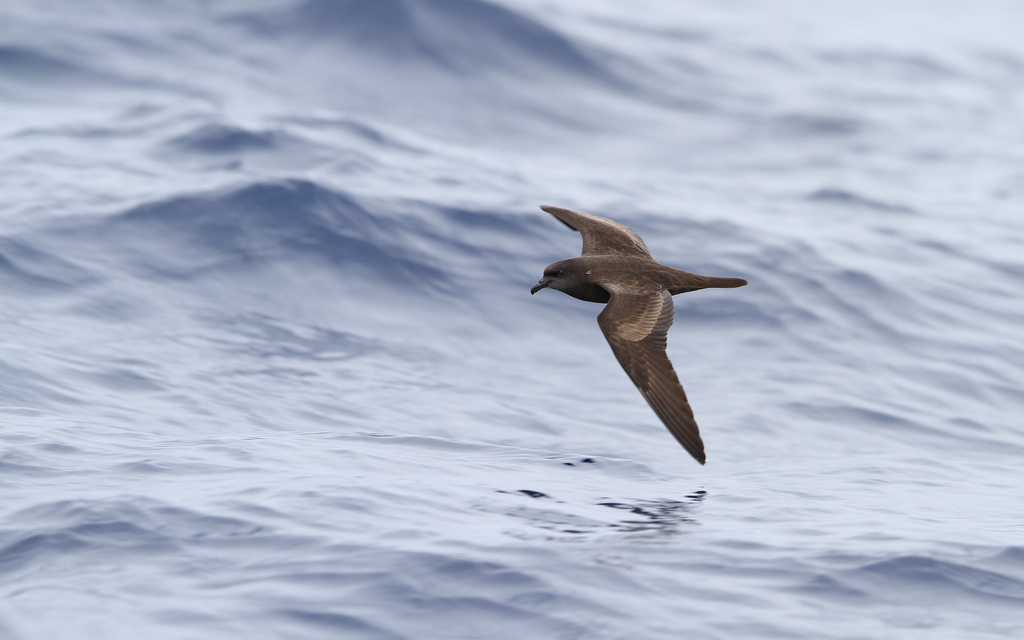
Photos show the species, not always the places on this page.
Length
About 25 to 29 cm (9.8 to 11.4 in) long, with a wingspan of 78 to 90 cm (31 to 35 in) (Wikipedia)
Weight
About 100 g (3.5 oz), a small seabird (PMC)
Next to a person
Longer than a hand and forearm, with a wingspan about half an adult's arm span, and as light as a bar of chocolate
What it eats
Mainly fish and squid, with some crustaceans and plankton (Wikipedia, Kure Atoll Conservancy). Its foraging is poorly documented. It is thought to take prey while flying low over the water and usually feeds alone.
Around people
Distant, give space
How it lives
A highly oceanic, mostly nocturnal petrel. It nests in burrows, rock crevices and cliff caves, and sometimes under man-made debris (Wikipedia). It keeps long-term pairs and returns to the same nest site each year. Each pair lays a single egg (PMC). In Hawai'i, eggs are laid from mid-May to mid-June and chicks fledge by early October. The breeding season lasts about five months.
Where it goes
It is found far out at sea year-round and usually far from land except when breeding. Atlantic birds winter in the southern equatorial regions. In the Pacific, birds from the west head southwest toward the Indian Ocean, and birds from the central Pacific head southeast (PMC).
We only draw a journey on the map when scientists have tracked it or clearly documented it. For this animal we have not found one yet.
Populations
Worldwide: Least Concern on the IUCN Red List (the assessment year was not stated in the sources I read). The Northwestern Hawaiian Islands hold about 75,000 to 103,000 breeding pairs, and Nihoa has the largest known colony. The main Hawaiian Islands hold about 500 to 1,000 pairs. Madeira may hold almost as many as Hawai'i (PMC). Introduced cats and rats, marine pollution and light pollution are listed threats (Wikipedia).
Meet it respectfully
Most people see Bulwer's petrel far offshore, so watch from a steady boat and never chase or crowd it. Never feed or bait it. At breeding islands the birds nest in burrows and crevices where a footstep can crush a nest, and bright lights at night are listed as a threat, so keep lights low and follow your guide and local rules. No sighting is ever a promise.
Fun fact
Tap the bulb to light it up.
Its Hawaiian name is ʻou.
It is named after the English naturalist James Bulwer, who collected the first specimen on Madeira.
It breeds on islands across the Atlantic, Pacific and Indian oceans, nesting in crevices and burrows.
Bulwer's petrel in the Ocean Atlas
Places we have researched where this animal is recorded. It is never guaranteed, and some places are for watching from the boat only.
Travel with usComing soonTrusted referralExploringOn pause, story onlyEthics pass
Country colour: pink where we travel, blue where we are exploring or refer, grey for story only.
 Australia
 Cabo Verde
 China
China French Polynesia
 Indonesia
 Japan
Japan Kiribati
 Micronesia (FSM)
 Northern Mariana Islands
 Papua New Guinea
 Portugal
 Réunion
 Saint Helena
 Senegal
 Spain
Spain Taiwan
 United States
Sources for this page
- Wikipedia, Bulwer's petrel
- PMC, Bulwer's petrel population structure between oceans
- Kure Atoll Conservancy, ʻOu (Bulwer's petrel)
- State of Hawaiʻi Birding Trails, Bulwer's petrel
- GBIF, IUCN category lookup, 2026
Facts checked 5 October 2026. Photos: Unsplash licence, or Creative Commons as shown on each photo.
Work in ocean travel?
We are always happy to hear from exceptional local operators, accommodation, conservation organisations and destination experts. If your work fits responsible, small-group ocean travel, we would love to learn more.
Partner with Ocean CallingShop with Ocean Calling
Visit the Ocean Calling storefront on Amazon.
As an Amazon Associate I earn from qualifying purchases. You are not only choosing products that respect the ocean, you are also helping us keep going: paying our local partners fairly and keeping our retreats ethical, sustainable and honestly priced for you. 💗