
Harbour porpoise
Phocoena phocoena
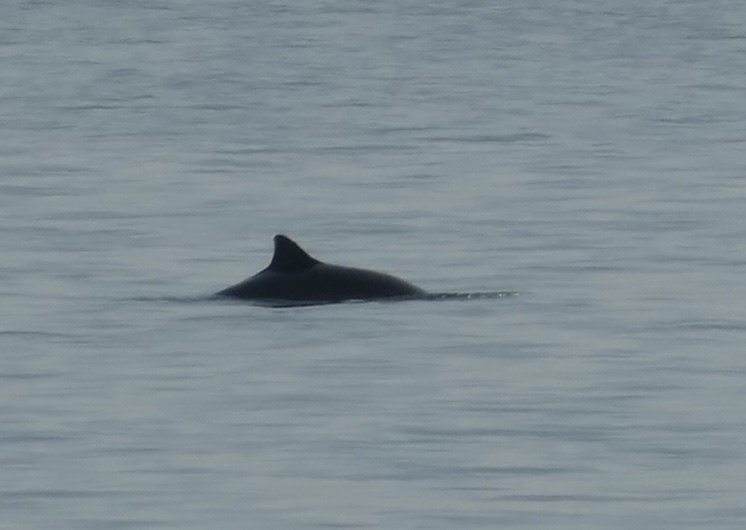
A small, shy coastal porpoise of cool northern seas. Usually you see just a quiet dark roll and a small triangular fin, gone before you look twice.
Least Concern (IUCN, 2020) means it is not at high risk of extinction worldwide today. In the Baltic Sea, the population is Critically Endangered, and in the Black Sea it is Endangered.
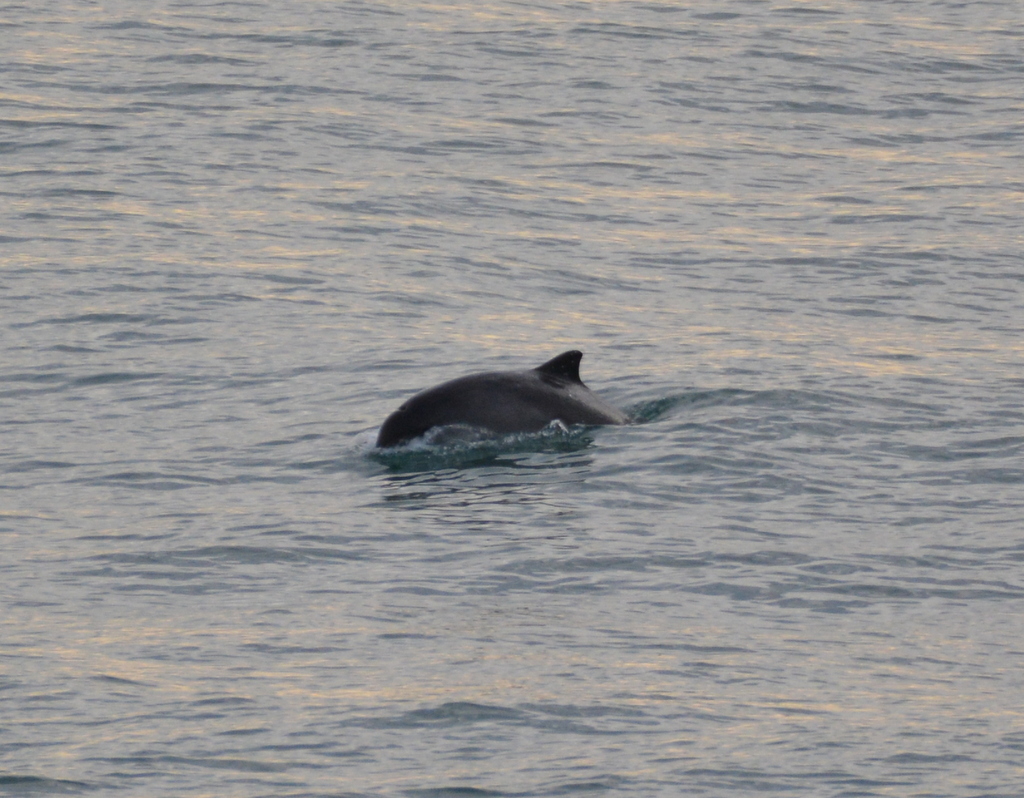
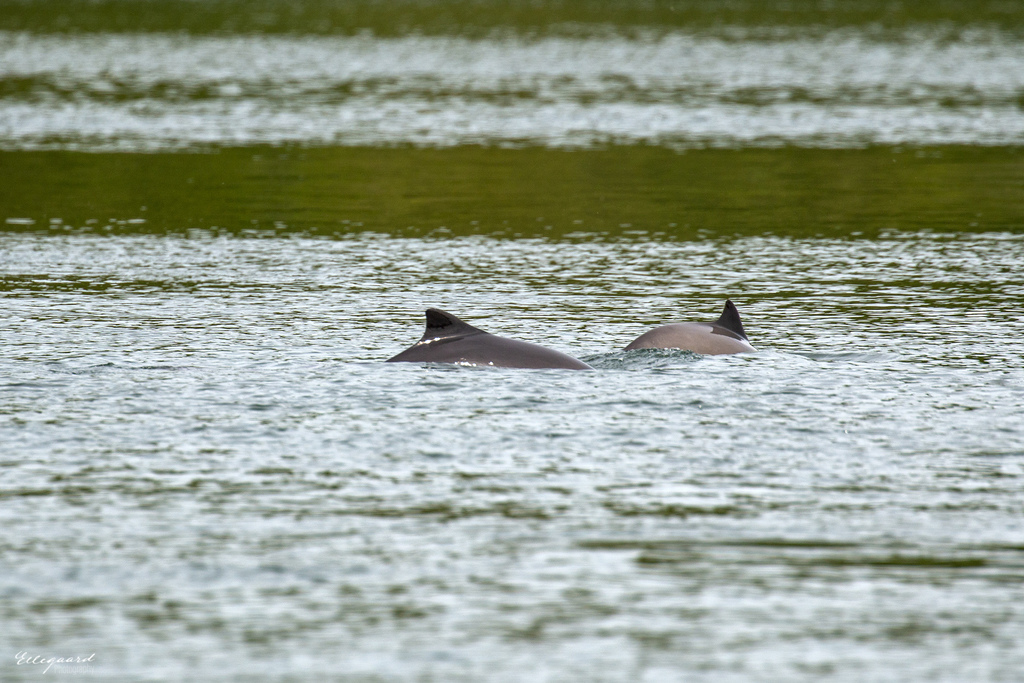
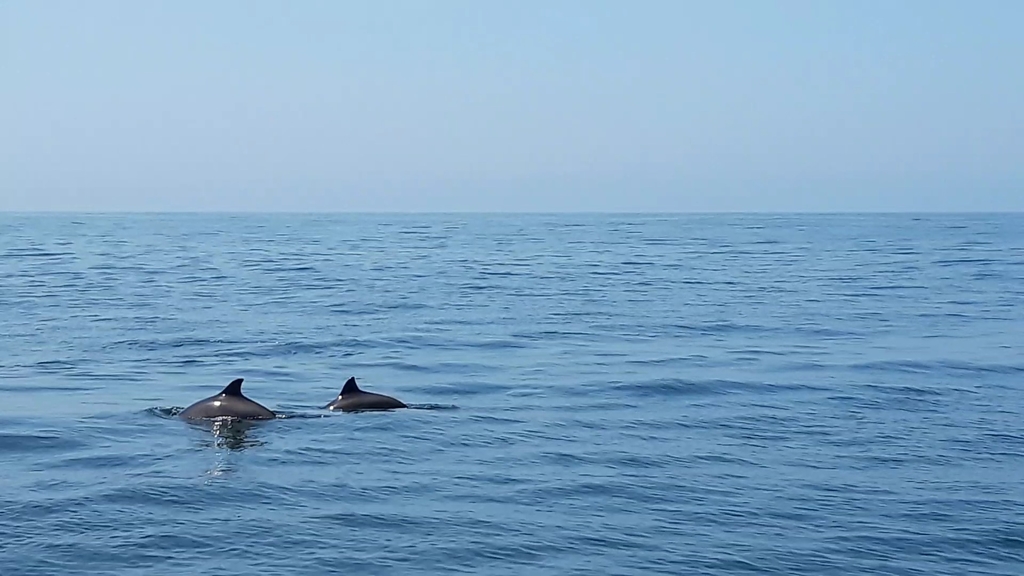
Photos show the species, not always the places on this page.
Length
Adults usually about 1.4 to 1.9 m (4.6 to 6.2 ft); females slightly larger than males
Weight
Published typical weights differ: about 45 to 65 kg (99 to 143 lb) in North Atlantic studies and about 61 to 77 kg (135 to 170 lb) in US figures; females are heavier
Next to a person
Shorter than most adults, about the weight of a slim adult
What it eats
Small schooling and bottom fish such as herring, mackerel, sprat, sand eels, whiting, cod and capelin, plus squid and octopus. The mix changes by sea and season, and porpoises need to eat often.
Around people
Calm, give space
How it lives
Harbour porpoises are small and shy. Most sightings are of one to three animals, and they usually avoid boats and do not bow-ride. When they breathe they roll forward with little splash, so they are easy to miss. They need to eat often and can live up to about 24 years, but most die much younger.
Where it goes
Harbour porpoises do not make one long migration. They shift along coasts with the seasons and with their fish, and some populations stay in the same sea all year, while some West Greenland porpoises make long trips far offshore. In summer the small Baltic Proper population stays mostly in the central Baltic, apart from the larger Belt Sea population to the west.
We only draw a journey on the map when scientists have tracked it or clearly documented it. For this animal we have not found one yet.
Populations
The species is Least Concern worldwide and common in parts of the North Atlantic and North Pacific, but some populations are in trouble. The Black Sea subspecies is Endangered, and the Baltic Proper population is Critically Endangered: acoustic surveys in 2011 to 2013 estimated 491 animals, with a range of 71 to 1,105. Bycatch in nets, noise, pollution and prey change are the main threats.
Meet it respectfully
Rules differ by country. In the United States, official guidance asks people to stay at least 50 yards (about 46 m) from porpoises and to watch for no more than about 30 minutes; in Europe, national rules vary. We keep boats slow and parallel, and never chase, drive towards, block or feed them. We do not swim with porpoises; the porpoise chooses the distance.
Fun fact
Tap the bulb to light it up.
When a harbour porpoise surfaces, it rolls from beak to tail with almost no splash.
The Baltic Proper harbour porpoise was counted by listening: 298 underwater sound stations recorded their clicks for two years.
It is the only cetacean that lives in the Baltic Sea all year.
In the Baltic Proper, a two-year listening survey in 2011 to 2013 estimated only 491 harbour porpoises, and the population is Critically Endangered.
Source: Amundin et al., 2022, Ecology and Evolution, abundance of the Baltic Proper harbour porpoise
Harbour porpoise in the Ocean Atlas
Places we have researched where this animal is recorded. It is never guaranteed, and some places are for watching from the boat only.
Travel with usComing soonTrusted referralExploringOn pause, story onlyEthics pass
Country colour: pink where we travel, blue where we are exploring or refer, grey for story only.
 Canada
 Estonia
 Faroe Islands
 Finland
 France
 Greenland
 Iceland
 Ireland
 Japan
Japan Latvia
 Mauritania
 Norway
 Portugal
 Russia
 Senegal
 Spain
Spain Sweden
 Türkiye
 United Kingdom
 United States
Sources for this page
- NOAA Fisheries, Harbor porpoise
- Amundin et al., 2022, Ecology and Evolution, abundance of the Baltic Proper harbour porpoise
- Koschinski et al., 2024, Ecology and Evolution, protection of the Baltic Proper harbour porpoise
- NOAA Fisheries, Protect wild dolphins: admire them from a distance
- Braulik et al., 2023, IUCN Red List, Phocoena phocoena
- Carlström et al., 2023, IUCN Red List, Baltic Sea harbour porpoise subpopulation
- NAMMCO, Harbour porpoise
- GBIF occurrence records by country, checked 26 Sep 2026
Facts checked 26 September 2026. Photos: Unsplash licence, or Creative Commons as shown on each photo.
Work in ocean travel?
We are always happy to hear from exceptional local operators, accommodation, conservation organisations and destination experts. If your work fits responsible, small-group ocean travel, we would love to learn more.
Partner with Ocean CallingNew: mobula rays in La Ventana, May 2027
CHF 2,720